If you own a Tesla — or are considering buying one — the high-voltage traction battery is the single most expensive component in the vehicle. It's also the least understood. Rumors about catastrophic replacement costs and rapid degradation circulate constantly, but the data tells a more nuanced story. Tesla car batteries have evolved significantly across model years, chemistries, and pack architectures, and understanding what's actually inside your vehicle is the key to both smart ownership and smart purchasing.
This guide breaks down exactly what Tesla uses in its 2026 lineup, how those batteries age in the real world, what the warranty actually covers, and what you'd pay if a replacement were ever needed. We'll also cover the practical habits that extend battery life and the emerging technologies on the horizon.
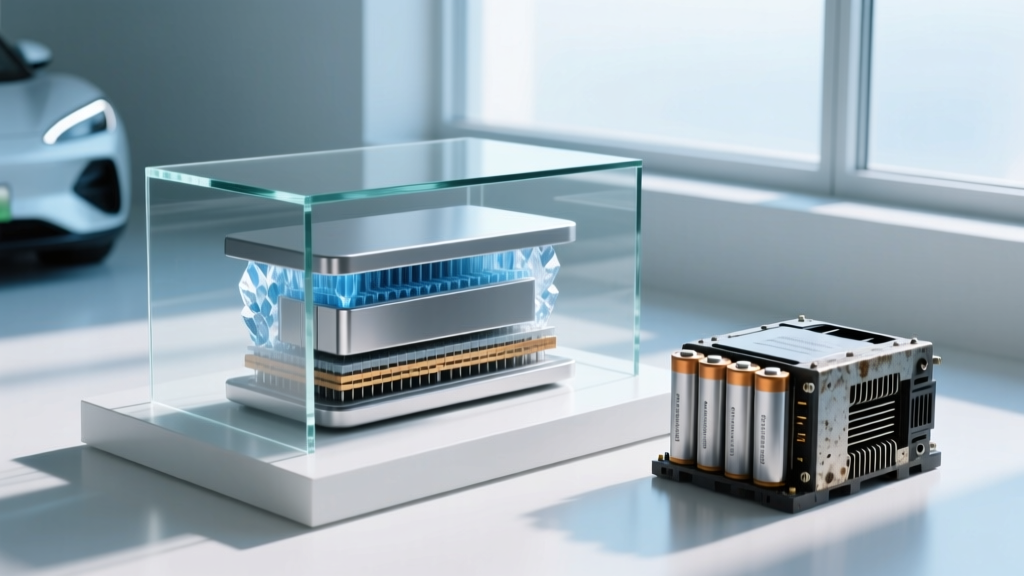
LFP vs. NMC/NCA: Which Chemistry Is Inside Your Tesla?
Tesla uses two primary battery chemistries across its 2026 vehicle lineup, and the chemistry in your specific car has a major impact on range, longevity, charging behavior, and even how you should charge it day-to-day.
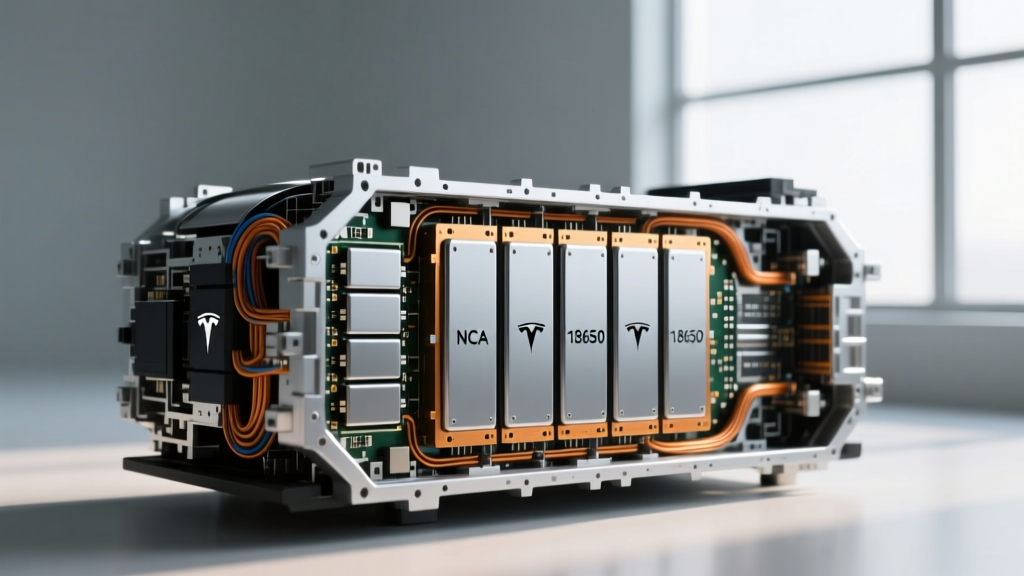
Nickel Manganese Cobalt (NMC) and Nickel Cobalt Aluminum (NCA) are high-energy-density chemistries used in Tesla's Long Range and Performance variants. These packs store more energy per kilogram, which translates to longer EPA range in a given physical package. The trade-off: they degrade slightly faster at high states of charge, perform worse in extreme cold, and carry higher material costs due to cobalt and nickel content.
Lithium Iron Phosphate (LFP) is the chemistry Tesla adopted for Standard Range (now simply "Rear-Wheel Drive") Model 3 and Model Y variants. LFP cells are heavier and less energy-dense, but they offer dramatically longer cycle life, better thermal stability, lower cost, and no cobalt. Tesla recommends charging LFP packs to 100% regularly — something you should not do with NMC/NCA on a daily basis.
| Attribute | LFP (Standard Range / RWD) | NMC / NCA (Long Range / Performance) |
|---|---|---|
| Energy Density | Lower (~160 Wh/kg cell-level) | Higher (~250-270 Wh/kg cell-level) |
| Cycle Life | 3,000-5,000+ cycles to 80% SoH | 1,000-2,000 cycles to 80% SoH |
| Daily Charge Recommendation | 100% OK — Tesla recommends periodic full charges for BMS calibration | 80% daily; 100% only for trips |
| Cold-Weather Performance | Moderate — greater range loss below freezing | Better — heat pump + chemistry handle cold more efficiently |
| Cost | Lower per kWh | Higher per kWh |
| Thermal Stability | Excellent — lower runaway risk | Good — managed via active thermal system |
| Used In (2026) | Model 3 RWD, Model Y RWD | Model 3 LR/Perf, Model Y LR/Perf, Model S, Model X, Cybertruck |
Which is better? Neither is universally superior. If you want maximum range and don't mind managing charge limits, NMC/NCA is the right pick. If you prioritize long-term durability, lower cost, and the simplicity of charging to 100% every day without worry, LFP is arguably the more practical choice for most daily drivers. For a detailed look at cell-level testing data, IEEE and battery research labs like Jeff Dahn's group at Dalhousie University have published extensively on cycle-life comparisons.
How Long Do Tesla Car Batteries Actually Last?
The short answer: almost certainly longer than you'll own the car. Tesla's own 2024 Impact Report (the most recent published dataset) showed that Model 3 and Model Y batteries retain approximately 85% of their original capacity after 200,000 miles. That's 15% degradation over a distance that exceeds the lifespan of most vehicles on the road.
For the Model S and Model X, the data shows slightly higher degradation in earlier model years (2012-2017), with some packs showing 10-15% loss by 150,000 miles. However, post-2020 packs with improved thermal management and cell chemistry have shown degradation curves more consistent with the Model 3/Y data.
Typical Tesla Battery Degradation Curve (NMC/NCA Packs):
- Year 1 / 15,000 mi: ~3-5% loss (initial "break-in" degradation — steepest part of the curve)
- Year 3 / 45,000 mi: ~7-9% total loss
- Year 5 / 75,000 mi: ~9-11% total loss
- Year 8 / 120,000 mi: ~12-15% total loss
- 200,000+ mi: ~15-18% total loss (based on fleet data)
LFP packs typically show slower degradation: ~2-3% in year one, with a flatter curve thereafter. High-mileage LFP data is still accumulating as these packs are newer to the fleet.
The key insight is that degradation is non-linear. The largest capacity drop happens in the first 10,000-20,000 miles, then the curve flattens significantly. A Tesla that shows 5% degradation at 20,000 miles is not on track to lose 25% by 100,000 miles — it will likely plateau well above 85%.
What Does the Tesla Battery Warranty Cover?
Tesla's battery and drive unit warranty is one of the more straightforward in the industry, but the specifics vary by model and trim. The warranty covers defects and capacity loss below a defined threshold — not normal, gradual degradation above that threshold.
| Model / Trim | Warranty Period | Mileage Limit | Minimum Capacity Retention |
|---|---|---|---|
| Model 3 RWD (LFP) | 8 years | 100,000 miles | 70% |
| Model 3 Long Range / Performance | 8 years | 120,000 miles | 70% |
| Model Y RWD (LFP) | 8 years | 100,000 miles | 70% |
| Model Y Long Range / Performance | 8 years | 120,000 miles | 70% |
| Model S | 8 years | 150,000 miles | 70% |
| Model X | 8 years | 150,000 miles | 70% |
| Cybertruck | 8 years | 120,000 miles | 70% |
What this means in practice: If your Model 3 Long Range battery drops below 70% of its original capacity within 8 years or 120,000 miles (whichever comes first), Tesla will replace or refurbish the pack at no cost. If your battery retains 72% after 110,000 miles, that's considered normal wear and is not covered.
It's worth noting that actual warranty claims have been rare. Tesla's fleet data suggests that fewer than 1% of packs have required replacement under warranty. For the latest official warranty terms, always check Tesla's official warranty page, as terms can shift with model-year updates.
How Much Does a Tesla Battery Replacement Cost?
This is the question that generates the most anxiety — and the most misinformation. Here's the reality: most Tesla batteries never need replacement. The vast majority will outlast the vehicle's useful life. But if you do face an out-of-warranty replacement, here are the approximate costs as of 2026:
| Model | Battery Size (Usable) | Chemistry | Estimated Replacement Cost |
|---|---|---|---|
| Model 3 RWD | ~57.5 kWh | LFP | $8,000 – $12,000 |
| Model 3 Long Range | ~75 kWh | NMC | $12,000 – $16,000 |
| Model Y Long Range | ~75 kWh | NMC | $12,000 – $16,000 |
| Model S (2023+) | ~95 kWh | NMC/NCA | $15,000 – $22,000 |
| Model X (2023+) | ~95 kWh | NMC/NCA | $15,000 – $22,000 |
| Cybertruck | ~123 kWh | NMC (4680 cells) | $18,000 – $28,000 |
These figures include the battery pack and labor but can vary based on whether Tesla installs a new, remanufactured, or refurbished unit. Remanufactured packs (which use tested, graded cells from returned packs) are significantly cheaper and are the most common replacement option. Full new-pack replacements are rare and typically reserved for vehicles still under warranty.
For context, a conventional vehicle's engine or transmission replacement can run $5,000-$10,000+ — and those failures are far more common than EV battery failures at equivalent mileage. According to data compiled by fueleconomy.gov, the long-term maintenance savings of EVs over ICE vehicles partially offset the higher upfront battery cost over a typical ownership period.
What Kills a Tesla Battery Faster? 5 Degradation Factors
Not all miles are equal when it comes to battery wear. Here are the factors with the most measurable impact on long-term State of Health (SoH):
- Frequent DC fast charging: Occasional Supercharging is fine — Tesla's thermal management handles it well. But daily DC fast charging at 250 kW generates sustained heat that accelerates cell degradation. If you can charge at home on Level 2 (7-11 kW), do it for daily use and save Superchargers for road trips.
- Sustained high State of Charge (NMC/NCA only): Storing an NMC pack at 100% for days or weeks causes electrolyte oxidation at the cathode. Set your daily charge limit to 80% and only charge to 100% when you're about to drive. LFP owners can ignore this — 100% is fine.
- Extreme heat exposure: Ambient temperatures above 95°F (35°C) combined with high SoC is the worst-case scenario for lithium-ion degradation. If you live in Phoenix or Dubai, keep your charge limit lower and park in shade or a garage when possible. Tesla's active thermal management mitigates this significantly, but physics still applies.
- Deep discharges to 0%: Letting the battery sit at or near 0% for extended periods can cause copper dissolution in the anode current collector. Try not to let SoC drop below 10% for more than a few hours. If you must store the car, leave it at ~50%.
- Cold-weather Supercharging without preconditioning: Charging a cold battery at high power causes lithium plating on the anode — permanent capacity loss. Always use the Tesla app or navigation to precondition the battery before fast charging in cold weather. The car will warm the pack to optimal temperature before allowing peak charge rates.
How to Check and Monitor Your Tesla's Battery Health
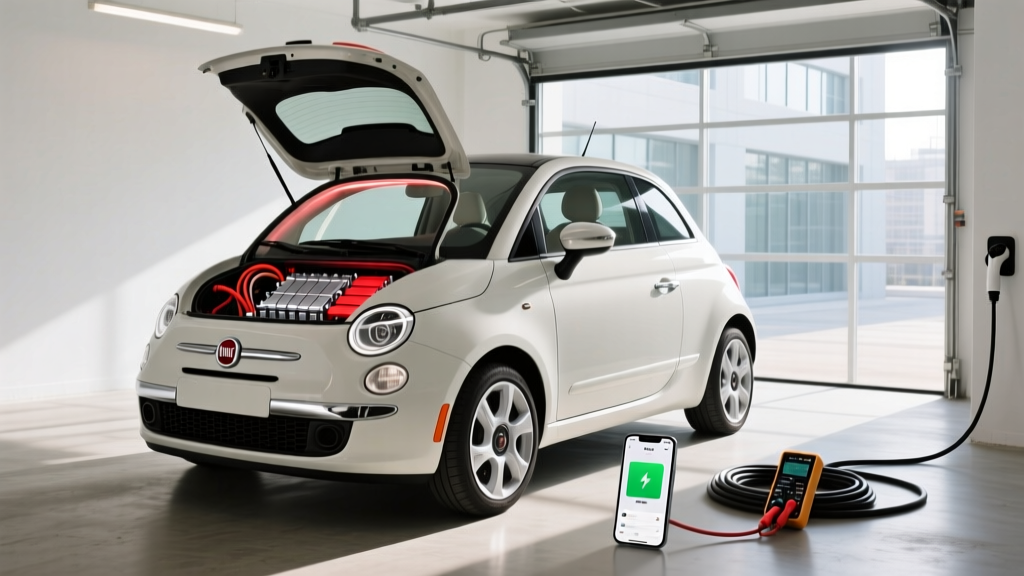
Tesla does not expose a direct State of Health (SoH) percentage in the vehicle's UI the way some other manufacturers do. However, there are several methods to estimate your pack's condition:
Method 1: Range comparison. Charge to 100% (or your known max) and note the displayed range. Compare this to the original EPA-rated range for your model. A Model 3 Long Range that originally showed 341 miles at 100% but now shows 310 miles has experienced roughly 9% degradation. Note: displayed range is an estimate based on recent driving efficiency, so this method has a ±2-3% margin of error.
Method 2: Energy screen and manual calculation. Track the kWh added during a known charge session (from, say, 10% to 90%) using the Tesla app or the car's charging screen. If your 75 kWh pack accepts only 58 kWh from 10-90% (an 80% window that should hold ~60 kWh), you can estimate your usable capacity has declined.
Method 3: Third-party tools. Apps like TeslaFi, Tessie, and Stats log detailed charge data over time and can calculate estimated SoH by comparing energy accepted at specific SoC windows across months and years. These tools use OBD-II data or Tesla's API to build a degradation curve far more accurate than the in-car display.
Method 4: Service center diagnostic. Tesla service can run a full battery health diagnostic that reads individual cell group voltages, internal resistance, and total pack capacity. This is the most accurate method but requires a service appointment. Request it if you're considering buying a used Tesla and want verified SoH data.
What's Next? Solid-State, Silicon Anodes, and Future Tesla Battery Tech
Tesla's 4680 cell format — already in production for Cybertruck and select Model Y vehicles — represents the company's current-generation architecture. These cells use a tabless design for improved thermal management and a dry electrode manufacturing process that reduces cost. But the industry is pursuing several next-generation technologies:
Silicon-dominant anodes: Replacing graphite anodes with silicon can theoretically increase energy density by 20-40%. The challenge is that silicon expands up to 300% during lithiation, causing mechanical failure. Companies like Sila Nanotechnologies and Group14 are working on composite solutions, and Tesla has filed patents in this area. Realistic timeline for production vehicles: 2028-2030.
Solid-state batteries: Replacing the liquid electrolyte with a solid ceramic or polymer eliminates flammability risk and could enable lithium-metal anodes for dramatically higher energy density. Toyota, Samsung SDI, and QuantumScape are the most advanced in this space. However, manufacturing scale-up remains the critical bottleneck. Realistic timeline for mass-market EVs: 2030-2035. Any claims of solid-state batteries being "just around the corner" should be treated with skepticism — the gap between lab prototypes and gigafactory-scale production is enormous.
Sodium-ion batteries: CATL has begun producing sodium-ion cells for lower-cost, shorter-range EVs in China. These offer lower energy density but dramatically lower material costs and better cold-weather performance. Tesla has not announced plans to adopt sodium-ion, but it's a plausible chemistry for a future entry-level vehicle. Timeline: 2027-2029 for possible Tesla adoption, if at all.
None of these technologies are available in current-production Tesla vehicles. If you're buying today, you're choosing between LFP and NMC/NCA — both mature, well-understood chemistries with extensive real-world track records.
Frequently Asked Questions
How long do Tesla car batteries last in years and miles?
Based on Tesla's fleet data, the average Model 3/Y battery retains ~85% capacity at 200,000 miles. In terms of calendar years, most packs will function well beyond 15 years with typical annual mileage. The battery will likely outlast other vehicle components like suspension, interior trim, and electronics.
How much does it cost to replace a Tesla battery?
Out-of-warranty replacement costs range from approximately $8,000 for a Model 3 RWD (LFP) to $28,000 for a Cybertruck pack. Most replacements use remanufactured packs at the lower end of these ranges. However, actual battery failures requiring full replacement are extremely rare — well under 1% of the fleet.
Does the Tesla battery warranty cover degradation?
Yes, but only if capacity drops below 70% within the warranty period (8 years and 100,000-150,000 miles depending on model). Gradual degradation above 70% is considered normal wear and is not covered. See Tesla's warranty page for current terms.
Should I charge my Tesla to 100% every day?
If your Tesla has an LFP battery (Model 3 RWD, Model Y RWD), yes — Tesla recommends periodic 100% charges for battery management system calibration. If you have an NMC/NCA battery (Long Range, Performance), set your daily limit to 80% and charge to 100% only when you need maximum range for a trip.
Does frequent Supercharging damage the battery?
Occasional Supercharging has minimal impact thanks to Tesla's active liquid cooling during fast charges. However, daily DC fast charging over months and years does accelerate degradation compared to Level 2 home charging. Use Superchargers for road trips and rely on home Level 2 charging for daily needs when possible.
LFP vs. NMC — which Tesla battery is better for me?
Choose LFP if you want lower cost, longer cycle life, simpler charging habits (100% daily is fine), and don't need maximum range. Choose NMC/NCA if you need the longest possible range (320-402 mi EPA depending on model), better cold-weather efficiency, and don't mind managing charge limits. For most daily commuters, LFP is the pragmatic choice.
Can I check my Tesla's battery health myself?
Tesla doesn't display a direct SoH percentage, but you can estimate it by comparing your 100% charge range to the original EPA rating, tracking kWh accepted during charges, or using third-party logging apps like TeslaFi or Tessie. For a definitive reading, request a battery diagnostic at a Tesla service center.