Tesla Battery Weight by Model: The Numbers
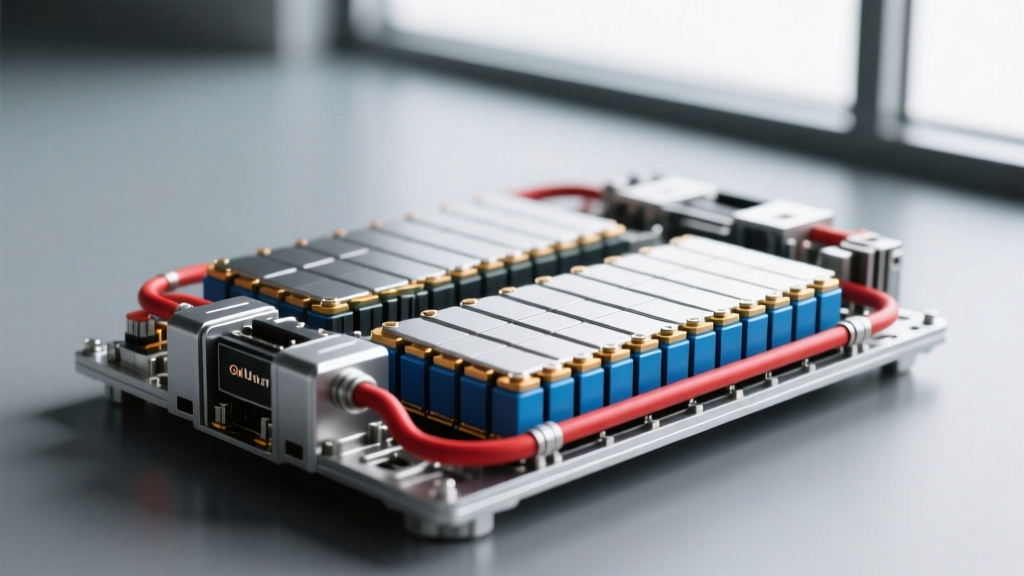
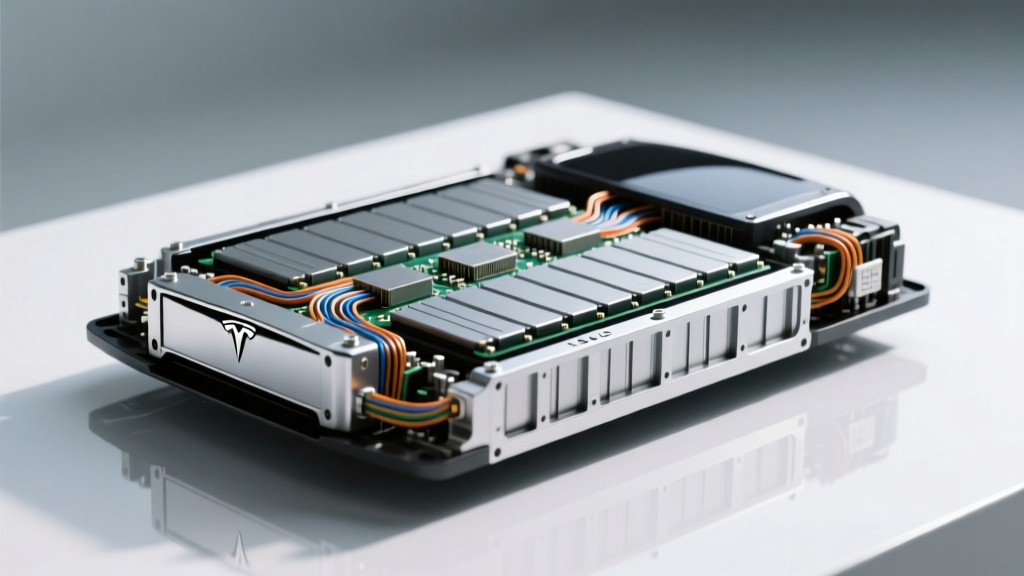
The high-voltage traction battery is the single heaviest component in any electric vehicle, and Tesla's packs are no exception. Battery weight directly affects efficiency, handling, tire wear, and even braking distances. Here's what each current Tesla model carries:
| Model (2025–2026) | Battery Capacity (usable kWh) | Chemistry | Estimated Pack Weight | EPA Range |
|---|---|---|---|---|
| Model 3 RWD | 57.5 kWh | LFP | ~789 lbs (358 kg) | 272 mi |
| Model 3 Long Range AWD | 78.1 kWh | NMC | ~1,054 lbs (478 kg) | 363 mi |
| Model Y RWD | 57.5 kWh | LFP | ~789 lbs (358 kg) | 260 mi |
| Model Y Long Range AWD | 78.1 kWh | NMC | ~1,054 lbs (478 kg) | 330 mi |
| Model S Long Range | 95 kWh | NMC/NCA | ~1,200 lbs (544 kg) | 402 mi |
| Model S Plaid | 95 kWh | NMC/NCA | ~1,200 lbs (544 kg) | 396 mi |
| Model X Long Range | 95 kWh | NMC/NCA | ~1,200 lbs (544 kg) | 348 mi |
| Cybertruck AWD | ~123 kWh | NMC (4680 cells) | ~1,500 lbs (680 kg) | 340 mi |
Weight figures are estimated based on teardown data, manufacturer disclosures, and industry analyses. Tesla does not publish official battery-pack curb weights, but the structural pack in the 4680-cell Cybertruck is among the heaviest in any consumer EV sold today. For context, the battery alone in a Model S weighs roughly as much as a Honda Civic's entire curb weight.
LFP vs. NMC: Tesla's Two Battery Chemistries Explained
Tesla uses two distinct lithium-ion chemistries across its lineup, and the choice affects weight, energy density, longevity, and how you should charge the car.
| Factor | LFP (Lithium Iron Phosphate) | NMC/NCA (Nickel Manganese Cobalt / Nickel Cobalt Aluminum) |
|---|---|---|
| Energy Density | Lower (~160 Wh/kg cell-level) | Higher (~250–300 Wh/kg cell-level) |
| Pack Weight (for same range) | Heavier | Lighter |
| Cycle Life | 3,000–5,000+ cycles | 1,000–2,000 cycles |
| Cold-Weather Performance | Weaker — slower charging, more range loss | Better low-temp discharge and charge acceptance |
| Recommended Daily SoC | 100% (charge fully, regularly) | 80% daily; 100% only for trips |
| Cost | Lower — no cobalt or nickel | Higher — commodity-priced metals |
| Used In | Model 3 RWD, Model Y RWD | Model 3 LR, Model Y LR, Model S/X, Cybertruck |
Which is better? It depends on your use case. LFP packs are heavier for a given capacity, but they last significantly longer in terms of charge cycles and tolerate daily 100% charging without accelerated degradation. If you commute short distances and charge at home nightly, LFP is arguably the superior ownership experience. NMC delivers more range in a lighter package and charges faster in cold weather, making it the better choice for road-trip-heavy drivers or those in northern climates.
How Long Do Tesla Batteries Actually Last?
Tesla's own 2023 Impact Report stated that Model 3 and Model Y batteries retain approximately 88% of original capacity at 200,000 miles — meaning roughly 12% degradation over that distance. Independent fleet data from sources like Recurrent and TeslaFi community aggregations corroborate this, showing most packs lose 8–15% capacity in the first 100,000 miles, after which the degradation curve flattens considerably.
To put this in practical terms: a Model 3 Long Range with an EPA-rated 363 miles would still deliver approximately 315–325 miles of range at 200,000 miles. That's meaningful range retention, and it's why complete battery failure before the vehicle's end-of-life remains uncommon.
- Year 1 / 15,000 mi: ~3–5% loss (initial formation drop)
- Year 3 / 50,000 mi: ~7–9% total loss
- Year 5 / 100,000 mi: ~10–12% total loss
- Year 8 / 150,000 mi: ~12–15% total loss
- Year 10+ / 200,000 mi: ~12–18% total loss
What Does the Tesla Battery Warranty Cover?
Tesla's battery and drive unit warranty is among the more straightforward in the EV industry. Here's the breakdown by model:
| Model | Warranty Period | Mileage Limit | Minimum Capacity Retention |
|---|---|---|---|
| Model 3 RWD (LFP) | 8 years | 100,000 miles | 70% |
| Model 3 Long Range / Performance | 8 years | 120,000 miles | 70% |
| Model Y (all trims) | 8 years | 120,000 miles | 70% |
| Model S / Model X | 8 years | 150,000 miles | 70% |
| Cybertruck | 8 years | 120,000 miles | 70% |
The warranty covers defects in materials or workmanship and guarantees that the battery will retain at least 70% of its original capacity during the coverage period. If your pack drops below 70% State of Health (SoH) within those limits, Tesla will replace or refurbish it at no cost. Importantly, this is a capacity-based warranty — it doesn't require a catastrophic failure to trigger coverage. However, Tesla's diagnostic tools make the final determination, and gradual degradation above the 70% threshold is considered normal wear.
How Much Does It Cost to Replace a Tesla Battery?
Out-of-warranty battery replacement is the number one fear among prospective EV buyers. Here's what it actually costs based on service-center data and owner reports through 2025–2026:
| Model | Battery Size | Replacement Cost Range (Parts + Labor) | When Typically Needed |
|---|---|---|---|
| Model 3 RWD | 57.5 kWh (LFP) | $12,000 – $16,000 | Rarely before 200k+ mi |
| Model 3/Y Long Range | 78.1 kWh (NMC) | $14,000 – $20,000 | Rarely before 200k+ mi |
| Model S / Model X | 95 kWh (NMC/NCA) | $18,000 – $25,000 | 150k–250k mi (older packs) |
| Cybertruck | ~123 kWh (4680 NMC) | $20,000 – $30,000 | Too new for data |
Several context points matter here. First, the vast majority of Tesla batteries never need replacement — they outlast the vehicle's economic life. Second, Tesla increasingly offers refurbished packs at a discount (often $8,000–$12,000 for Model 3/Y) rather than brand-new units. Third, individual module replacement is sometimes possible for isolated cell failures, reducing cost to $3,000–$7,000. Finally, as 4680-cell production scales, per-kWh replacement costs are expected to decline through the late 2020s.
Factors That Accelerate (or Preserve) Battery Life
Battery degradation is not a single-variable equation. Here's what actually moves the needle on State of Health over time:
- Daily charge limit: Set to 80% for NMC packs; 100% is fine for LFP. Avoid holding NMC at 100% for extended periods.
- DC fast charging: Occasional Supercharging is fine. Daily DCFC (especially at 250 kW) adds thermal stress. Precondition the battery before fast charging — Tesla's navigation does this automatically when a Supercharger is set as your destination.
- Extreme heat: Sustained ambient temps above 95°F (35°C) accelerate calendar degradation. Garage parking and the vehicle's thermal management system mitigate this.
- Extreme cold: Cold doesn't cause permanent damage, but charging a frozen LFP pack without preconditioning can cause lithium plating. Always precondition in sub-32°F weather.
- Storage: If leaving the car unused for weeks, set charge to 50% (NMC) or 60–70% (LFP) and leave plugged in so the thermal management system can maintain battery temperature.
- Avoid deep discharge: Don't let the pack sit at 0% SoC. Tesla reserves a buffer (roughly 2–4 kWh below the displayed 0%), but extended periods at the bottom of the buffer stress cells.
How to Check Your Tesla's Battery Health (State of Health)
Tesla does not expose a direct State of Health (SoH) percentage in the vehicle's interface. However, you can assess battery condition through several methods:
- TeslaFi or Tessie (third-party apps): These log every charge session and calculate estimated SoH by comparing actual energy added (kWh) from a known low SoC to a known high SoC against the pack's original usable capacity. This is the most reliable consumer-accessible method.
- Manual calculation: Charge from 10% to 100% on a Level 2 charger (to avoid DCFC measurement inaccuracy). Note the kWh delivered on the charger's display. Divide that by 0.9 (the 10–100% window) and compare to the pack's rated usable kWh. For example, if a 78.1 kWh Model 3 LR pack accepts 65 kWh from 10–100%, the implied total capacity is ~72.2 kWh — roughly 92% SoH.
- Service mode: Tesla service technicians can pull detailed cell-level data, including internal resistance and module imbalance. Request this during a routine service visit if you're concerned.
- Range as a proxy: Compare your displayed range at 100% SoC to the EPA original. A drop from 363 to 330 miles on a full charge suggests roughly 9% degradation. Note: displayed range is based on rated Wh/mi and is not perfectly linear — use energy-based methods for precision.
What's Next: Solid-State, Silicon Anodes, and Future Packs
Tesla's current roadmap centers on scaling its 4680-cell production — a larger cylindrical format that reduces manufacturing cost and improves energy density through a dry-electrode coating process. As of 2026, 4680 cells are in production for the Cybertruck and are expected to expand to other models.
Silicon anode technology (replacing graphite with silicon-dominant anodes) is being tested by multiple suppliers, including Tesla's partner Panasonic. Silicon anodes can theoretically increase energy density by 20–40%, but swelling and cycle-life challenges have kept them in limited or prototype use. Expect initial commercial deployment in premium cells by 2027–2028.
Solid-state batteries — which replace the liquid electrolyte with a solid conductor — remain in pre-commercial stages across the industry. Toyota, QuantumScape, and Samsung SDI have demonstrated prototype cells, but mass production for consumer vehicles is realistically 2029–2032 at the earliest. Solid-state packs promise higher energy density, faster charging, and improved safety, but cost and manufacturing scalability remain unsolved at automotive volumes. Treat any "solid-state EV launching next year" headline with skepticism.
Frequently Asked Questions
How much does a Tesla battery weigh?
Between roughly 789 lbs (Model 3/Y RWD with LFP) and 1,500 lbs (Cybertruck with 4680 NMC). The Model S/X pack weighs approximately 1,200 lbs. Battery weight scales with kWh capacity and cell chemistry — LFP packs are heavier per kWh than NMC.
How long do Tesla batteries last in years and miles?
Tesla's own fleet data shows approximately 88% capacity retention at 200,000 miles for Model 3/Y. In practice, most packs last 15–20+ years under normal use before degradation reaches a point where range becomes impractical. Complete battery failure is rare.
How much does it cost to replace a Tesla battery out of warranty?
Between $12,000 and $30,000 depending on the model and pack size. Refurbished packs are available at a discount, and module-level repairs can cost $3,000–$7,000 for isolated failures. Most owners never need a replacement.
Is LFP better than NMC for a Tesla?
LFP offers longer cycle life, lower cost, and the ability to charge to 100% daily — ideal for commuters. NMC provides higher energy density (more range in a lighter pack) and better cold-weather performance — better for road-trip drivers and cold climates. Neither is universally superior.
Does frequent Supercharging damage the battery?
Occasional DC fast charging has minimal impact. Daily Supercharging, especially without preconditioning, adds cumulative thermal stress that can accelerate degradation by 1–3% over the battery's life compared to exclusive Level 2 home charging. Tesla's preconditioning routine mitigates much of this when you navigate to a Supercharger.
How do I check my Tesla battery's State of Health?
Use third-party apps like TeslaFi or Tessie, which log charge sessions and calculate SoH from energy throughput. Alternatively, perform a manual 10–100% Level 2 charge and compare kWh delivered to the pack's rated capacity. Tesla service can pull detailed diagnostics on request.
Will solid-state batteries make current Teslas obsolete?
Not in the near term. Solid-state technology is not expected to reach mass production until 2029–2032 at the earliest. Current NMC and LFP packs already deliver 250,000+ miles of practical life, and retrofitting future chemistry into existing vehicles is unlikely due to pack-architecture differences.