Cold weather is the single biggest short-term threat to EV range and long-term battery health. When temperatures drop below freezing, lithium-ion cells experience increased internal resistance, slower ion diffusion, and reduced ability to accept a charge — which is why Tesla engineers every Model 3, Model Y, Model S, and Model X with an active battery thermal management system that includes a dedicated battery warmer. Understanding how this system works, what it costs to operate, and how it interacts with Tesla's two battery chemistries (LFP and NMC/NCA) is essential for any current or prospective Tesla owner, especially those in northern climates.
This guide breaks down Tesla's battery heating architecture, how preconditioning leverages it, the real-world range and degradation implications, and the broader battery longevity picture — including warranty coverage, replacement costs, and State of Health monitoring.
How Tesla's Battery Warmer and Thermal System Works
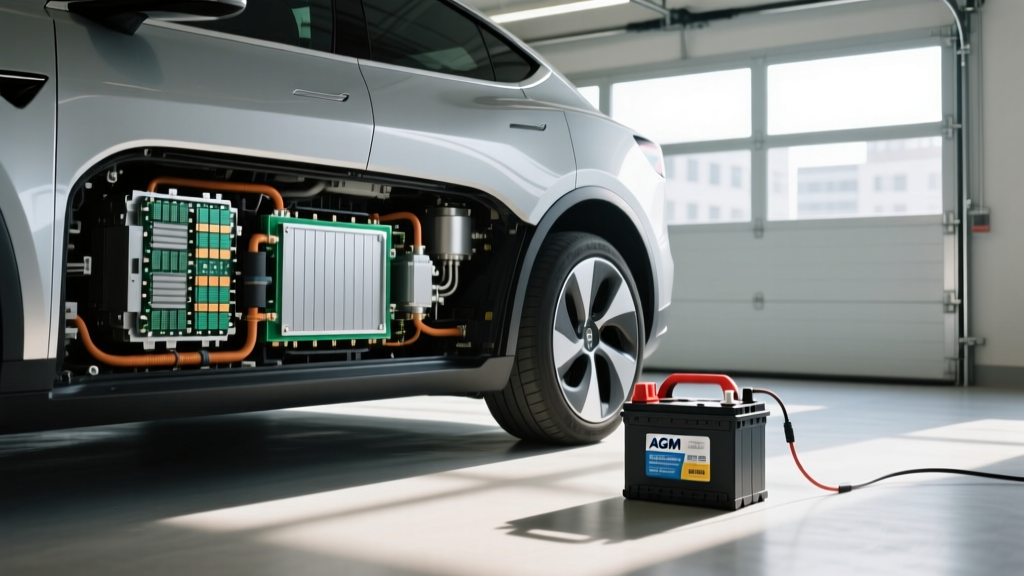
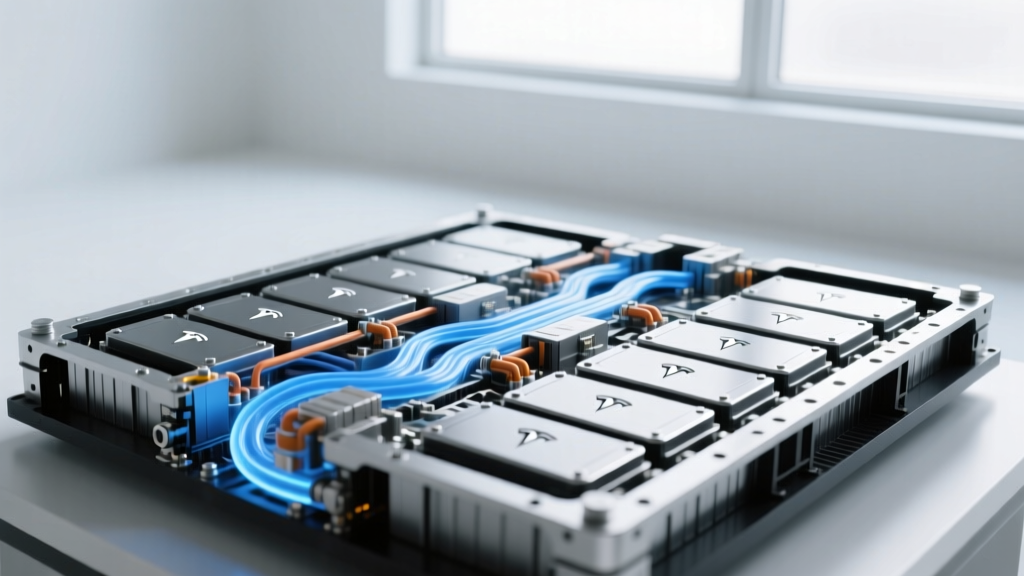
Tesla uses a liquid-based active thermal management system, not a simple resistive heating pad. A glycol-water coolant loop runs through channels integrated into the battery pack's structural housing. A heat pump (standard on Model Y and refreshed Model 3 since the 2021 "Highland" update, and on Model S/X) or a resistive PTC heater (older Model 3 variants) circulates warmed fluid through the pack to bring cells into their optimal operating window of roughly 20°C to 40°C (68°F–104°F).
The battery warmer activates in several scenarios:
- Preconditioning for Supercharging: When you navigate to a Supercharger, the car begins heating the battery 10–15 minutes before arrival so cells can accept peak DC fast-charge rates (up to 250 kW on V3 Superchargers for Model 3/Y Long Range, 170 kW for Model 3 RWD with LFP).
- Cold-weather driving: The system maintains minimum cell temperature to preserve regenerative braking capability and prevent lithium plating — a degradation mechanism where metallic lithium deposits on the anode during charging at low temperatures.
- Scheduled departure: If you set a departure time in the Tesla app or touchscreen, the car preheats the battery and cabin while still plugged in, drawing grid power rather than pack energy.
- Cabin heating synergy: The heat pump (on equipped models) scavenges waste heat from the drive unit and battery to warm the cabin, reducing the energy penalty that older resistive heaters imposed — Tesla estimates the octovalve/heat pump system improves winter efficiency by up to 30% compared to the previous PTC-only setup.
LFP vs. NMC/NCA: Which Tesla Battery Chemistry Is Right for Cold Climates?
Tesla currently offers two cathode chemistries across its lineup, and the battery warmer's importance varies between them:
| Attribute | LFP (Lithium Iron Phosphate) | NMC/NCA (Nickel Manganese Cobalt / Nickel Cobalt Aluminum) |
|---|---|---|
| Models using it (2026) | Model 3 RWD, Model Y RWD (Standard Range) | Model 3 Long Range/Performance, Model Y LR/Perf, Model S, Model X |
| Energy density | ~160 Wh/kg (cell level) — lower | ~250–270 Wh/kg — higher, enabling longer range in same pack volume |
| Cycle life | 3,000–5,000+ full cycles to 80% capacity | 1,500–2,500 full cycles to 80% capacity |
| Cold-weather performance | More affected — higher internal resistance increase below freezing; battery warmer is critical | Better low-temp ion mobility, but still benefits significantly from preconditioning |
| Recommended daily SoC | 100% (Tesla recommends charging to full at least weekly for BMS calibration) | 80% daily, 100% only for trips |
| Cost | Lower — no cobalt or nickel; enables lower vehicle MSRP | Higher raw-material cost; passed through in Long Range/Performance pricing |
| Thermal runaway risk | Extremely low — LFP is inherently more stable | Low with Tesla's cell-level thermal barriers, but chemistry is more reactive |
Bottom line for cold-climate buyers: If you live where winters regularly drop below 32°F and you need maximum winter range, the NMC-equipped Long Range models are the better choice — they start with more range to lose, and the chemistry tolerates cold slightly better. If your daily commute is short (under 40 miles round-trip) and you can charge at home every night, the LFP Model 3 RWD or Model Y RWD at a lower MSRP (starting around $38,990 for the 2026 Model 3 RWD) offers exceptional long-term cycle life, provided you rely on the battery warmer via preconditioning and scheduled departure.
How Long Do Tesla Batteries Last? Degradation Data
Tesla publishes fleet-wide degradation data in its annual Impact Report, and independent tracking from sources like fueleconomy.gov and owner-collected databases consistently show that Tesla battery packs outlast most owners' time with the vehicle.
- Year 1 / ~15,000 miles: ~2–3% capacity loss (initial formation loss)
- Year 3 / ~45,000 miles: ~5–7% total loss
- Year 5 / ~75,000 miles: ~8–10% total loss
- Year 8 / ~120,000 miles: ~10–14% total loss (still above the 70% warranty threshold)
- 150,000+ miles: Degradation curve flattens significantly; many packs retain 85–88% capacity at 200,000 miles
LFP packs show a steeper initial drop (3–5% in year one) but a flatter long-term curve, with many cells projected to exceed 3,000 cycles before hitting 80% State of Health.
For context, the average American driver covers about 13,500 miles per year (FHWA data). A Tesla battery retaining 85%+ capacity at 150,000 miles represents roughly 11 years of typical use — well beyond the average vehicle ownership period of 6–8 years.
Factors That Accelerate Battery Degradation (and How the Warmer Helps)
Battery longevity is not just about miles driven — how you charge, store, and thermally manage the pack matters enormously:
- Avoid sustained 100% SoC (NMC/NCA): Store and daily-drive between 20–80%. Reserve 100% for road-trip departures. LFP owners should still charge to 100% weekly for BMS calibration per Tesla's guidance.
- Precondition before DC fast charging: Always navigate to a Supercharger via the car's built-in navigation — this triggers the battery warmer automatically. Arriving at a cold pack and requesting 250 kW can cause lithium plating on the anode, an irreversible degradation mechanism.
- Limit DC fast charging frequency: Tesla's own data and independent studies (including research from Geotab's fleet analysis) show that vehicles DC fast-charging more than 3 times per week degrade roughly 1–2% faster over 4 years compared to those primarily using Level 2. For daily use, a home Level 2 charger (7–11.5 kW) is ideal.
- Use Scheduled Departure in winter: Setting a departure time while plugged in lets the battery warmer and cabin heater draw from grid power, not the pack. This preserves range and ensures the battery is at optimal temperature when you start driving.
- Avoid prolonged storage at extreme SoC: If leaving the car for weeks, set charge limit to 50% and keep it plugged in so the BMS can manage phantom drain and thermal maintenance.
- Don't ignore the battery warmer in summer: The same liquid loop cools the pack during Supercharging and hot-weather driving. Thermal management is year-round — the system heats and cools as needed.
Tesla Battery Warranty: What's Covered and for How Long
Tesla's battery and drive unit warranty is one of the strongest in the industry, but understanding the specific terms is critical — especially the capacity retention threshold that triggers a claim.
| Model / Trim | Warranty Duration | Mileage Limit | Minimum Capacity Retention |
|---|---|---|---|
| Model 3 RWD (LFP) | 8 years | 100,000 miles | 70% |
| Model 3 Long Range / Performance (NMC) | 8 years | 120,000 miles | 70% |
| Model Y RWD (LFP) | 8 years | 100,000 miles | 70% |
| Model Y Long Range / Performance (NMC) | 8 years | 120,000 miles | 70% |
| Model S / Model X | 8 years | 150,000 miles | 70% |
What the warranty covers: Battery capacity falling below 70% of original usable capacity within the time/mileage window, plus any manufacturing defects in the battery pack or drive unit. Tesla will repair or replace the pack to bring it above the 70% threshold — not necessarily to 100%.
What it does NOT cover: Degradation from normal use above the 70% threshold, damage from accidents, flooding, fire, or unauthorized modifications. Cosmetic issues or minor range loss that stays above 70% are not warrantable.
In practice, warranty claims for battery replacement are rare. Tesla's 2024 Impact Report stated that fewer than 0.1% of vehicles required a battery replacement under warranty due to capacity loss — the vast majority of replacements stem from physical damage or manufacturing defects caught early.
EV Battery Replacement Cost: What Tesla Owners Actually Pay
If a battery fails outside warranty — or if you're buying a high-mileage used Tesla and want to plan for the worst case — here's the current replacement cost landscape as of 2026:
| Model | Battery Size (Usable) | Chemistry | Estimated Replacement Cost (Parts + Labor) | When Typically Needed |
|---|---|---|---|---|
| Model 3 RWD | 57.5 kWh | LFP | $10,000–$13,000 | Rarely before 200,000+ mi; LFP cycle life is exceptionally long |
| Model 3 Long Range | 75 kWh | NMC | $13,000–$16,000 | Typically 180,000–250,000 mi if degraded; failure outside warranty is uncommon |
| Model Y Long Range | 75 kWh | NMC | $13,000–$16,000 | Same as Model 3 LR — shared platform and pack |
| Model S (2023+) | 95 kWh | NMC/NCA | $18,000–$22,000 | Large pack degrades slowly; replacement rarely needed before 200,000 mi |
| Model X (2023+) | 95 kWh | NMC/NCA | $18,000–$22,000 | Same pack architecture as Model S |
Important context: These costs are for a complete pack replacement at a Tesla Service Center. Independent EV repair shops are increasingly offering module-level repairs (replacing only degraded cell groups within the pack) for $3,000–$7,000, depending on the failure. Additionally, Tesla's remanufactured pack program offers refurbished units at a discount, typically 15–25% below new-pack pricing.
The honest framing: for the overwhelming majority of Tesla owners, battery replacement is not a cost they will ever face. The pack is engineered to outlast the vehicle's economic life. The fear of a $20,000 surprise bill is largely driven by early-generation EVs (pre-2018) with less sophisticated thermal management — precisely the problem Tesla's battery warmer system was designed to solve.
Checking Your Tesla's Battery Health (State of Health)
Tesla does not display a simple "battery health percentage" on the touchscreen the way some competitors do. Here's how to monitor State of Health (SoH):
- Tesla App — Energy screen: On newer software versions (2025.38+), Tesla has introduced a battery health estimate under Settings → Service → Battery Health. This provides a percentage estimate based on BMS data.
- Manual calculation: Charge to 100% (or use your known charge limit), note the displayed range, and compare it to the original EPA-rated range for your model. A 2026 Model Y Long Range that showed 320 miles at 100% when new but now shows 295 miles has roughly 92% SoH. This method has a ±2% margin of error due to BMS estimation drift.
- Third-party tools: Apps like Tessie or Teslamate (for tech-savvy owners who run a home server) pull data from Tesla's API and track estimated capacity over time with more granularity than the in-car display.
- Service Mode: Tesla's Service Mode (accessible by holding the model name on the Software screen for 3 seconds, then entering "service" as the access code) displays nominal full-pack energy in kWh, which can be compared to the factory spec.
Looking Ahead: Solid-State and Silicon-Anode Batteries
Next-generation battery technologies promise step-changes in energy density and charge speed, but realistic timelines matter:
- Silicon-anode cells: Companies like Sila Nanotechnologies and Group14 are shipping silicon-dominant anode materials to EV manufacturers now, with initial production vehicles expected in 2027–2028. These cells offer 15–25% higher energy density than current graphite-anode NMC, enabling either more range in the same pack or a smaller, lighter pack at equivalent range. Tesla's 4680 cell program is expected to incorporate incremental silicon content over time.
- Solid-state batteries: Toyota, Samsung SDI, and QuantumScape have all demonstrated prototype solid-state cells with 400+ Wh/kg energy density and 10-minute fast-charge capability. However, manufacturing scale-up remains the bottleneck. Realistic availability in production EVs at consumer-accessible pricing is 2029–2032 at the earliest. Tesla has not announced a solid-state program, and its 4680 dry-electrode manufacturing process represents its current advanced-cell strategy.
- Sodium-ion batteries: CATL has begun mass-producing sodium-ion cells for lower-cost, shorter-range EVs in China. These offer excellent cold-weather performance (less than 10% range loss at –20°C) and could complement LFP in budget models. No Tesla models currently use sodium-ion, but the chemistry is being watched closely for future Standard Range variants.
None of these technologies are available in production Teslas today. If you're buying in 2026, the LFP and NMC packs with active thermal management — including the battery warmer — are the proven, data-backed options.
Frequently Asked Questions
Does the Tesla battery warmer drain the battery significantly?
When preconditioning while plugged in, the battery warmer draws from grid power — zero pack drain. When preconditioning on battery (not plugged in), expect roughly 1–3 kWh of consumption to warm the pack from freezing to operating temperature, equating to about 4–10 miles of range used. This is a worthwhile trade: arriving at a Supercharger with a warm pack can shave 5–8 minutes off a 10–80% charge session and protects long-term cell health.
How long do Tesla batteries last in years and miles?
Based on fleet data, most Tesla NMC/NCA packs retain 85–90% capacity at 150,000 miles (roughly 11 years of average driving). LFP packs are projected to exceed 200,000 miles before reaching 80% capacity. Complete battery failure requiring replacement outside of warranty is statistically rare — Tesla reports fewer than 1 in 1,000 vehicles needing a warranty replacement for capacity loss.
Should I be worried about Supercharging degrading my Tesla battery?
Occasional Supercharging (1–2 times per week for road trips or apartment dwellers without home charging) has a negligible impact on long-term health. The battery warmer preconditioning system is specifically designed to protect cells during high-rate charging. The concern arises with exclusive DC fast charging — Geotab's fleet data shows vehicles that fast-charge more than 3 times per week lose roughly 1–2% more capacity over 4 years than those primarily using Level 2. For daily charging, a home Level 2 setup at 7–11.5 kW is the gold standard.
Does the battery warranty transfer to a second owner?
Yes. Tesla's battery and drive unit warranty is tied to the vehicle VIN, not the original owner. If you buy a used 2023 Model Y Long Range with 45,000 miles, the remaining battery warranty is approximately 5 years or 75,000 miles (whichever comes first), with the same 70% capacity retention threshold. This is verified through Tesla's service system — no paperwork transfer is required.
LFP vs. NMC — which is better for my Tesla?
Neither is universally better; it depends on your use case. Choose LFP (Model 3 RWD, Model Y RWD) if you want lower purchase price, the longest possible cycle life, the ability to charge to 100% daily without concern, and your daily driving is under 200 miles. Choose NMC/NCA (Long Range, Performance) if you need maximum EPA range (320+ miles), plan frequent road trips, live in a very cold climate where every mile of buffer matters, or want the fastest acceleration. Both chemistries benefit from Tesla's battery warmer preconditioning, but LFP is more sensitive to cold-weather charging without it.
Can I check battery health before buying a used Tesla?
Yes. Ask the seller to charge to 100% and photograph the displayed range. Compare it to the original EPA rating for that model year and trim. You can also request a battery health check at a Tesla Service Center (typically $0–$50 for a used-vehicle inspection). Third-party services like Recurrent Auto provide battery health reports based on telematics data if the vehicle has been enrolled in their tracking program.