If you've searched "how many volts is a Tesla battery," you're likely trying to understand what's actually inside the floor of a Model 3, Model Y, Model S, or Model X — and how that high-voltage pack behaves over years of ownership. The short answer: most Tesla traction batteries operate at a nominal voltage between 350V and 400V, depending on the model, battery size, and chemistry. But voltage is only one part of the story. The real questions buyers and owners need answered involve capacity (kWh), chemistry (LFP vs. NMC/NCA), degradation rates, warranty coverage, and what happens when a pack eventually needs replacement.
This guide covers Tesla's battery architecture from a 2026 ownership perspective, with real data on how these packs age, what the warranty actually covers, and how to monitor and maximize your battery's State of Health (SoH) over the life of the vehicle.
Tesla Battery Voltage: What the Numbers Mean
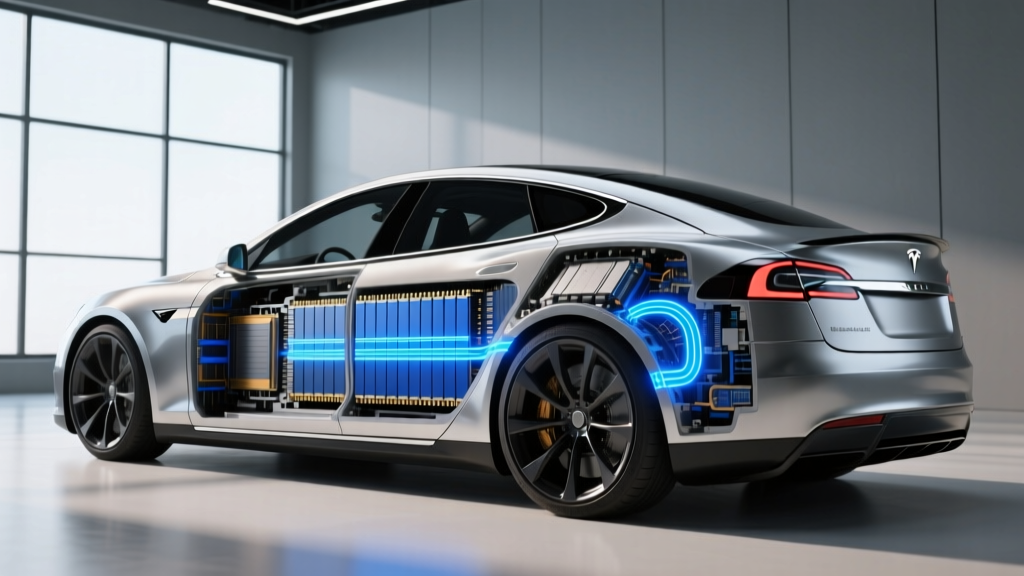
Every Tesla uses a high-voltage traction battery — the large lithium-ion pack mounted in the floorpan that powers the drive motors. This is entirely separate from the 12V (or 16V in newer models) auxiliary battery that runs lights, screens, and control modules.
Tesla's nominal pack voltages vary by model and battery configuration:
- Model 3 / Model Y (Standard Range, LFP): ~350V nominal, ~57-60 kWh usable capacity
- Model 3 / Model Y (Long Range, NMC/NCA): ~350-375V nominal, ~75-82 kWh usable capacity
- Model S / Model X (Plaid and Long Range): ~375-400V nominal, ~95-100 kWh usable capacity
These are nominal voltages — the average operating voltage during discharge. Actual voltage ranges higher when fully charged (up to ~420V on some packs) and drops lower as the State of Charge (SoC) depletes. Tesla's architecture is notably lower than the 800V systems used by Hyundai/Kia (E-GMP platform) and Porsche (Taycan), which means Tesla relies on higher amperage rather than higher voltage to achieve fast charging. This is why Tesla Superchargers can deliver up to 250 kW on V3 stalls despite the ~400V architecture — they push current up to ~600A.
kW (kilowatts) measures power — the rate at which energy flows into or out of the battery. Your Tesla might charge at a peak of 250 kW at a V3 Supercharger.
kWh (kilowatt-hours) measures energy — the total capacity of the battery. A Model Y Long Range has roughly 75-82 kWh of usable capacity, which determines how far you can drive on a full charge.
Voltage (V) × Current (A) = Power (W). Tesla achieves high charge power through high current at moderate voltage.
LFP vs. NMC/NCA: Which Tesla Battery Chemistry Do You Have?
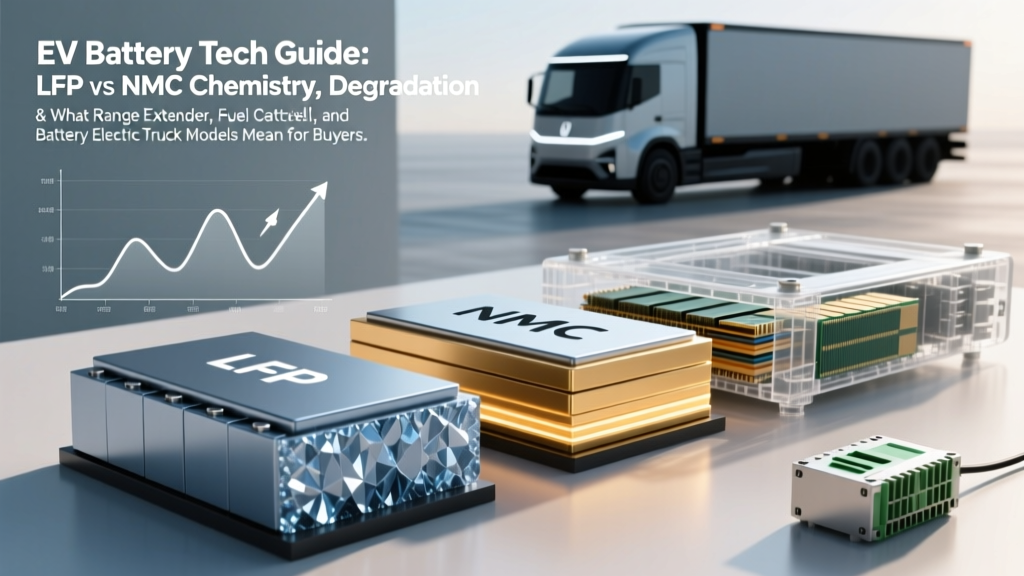
Since late 2021, Tesla has offered two distinct battery chemistries in its consumer vehicles. Which one you get depends on the model and trim level you purchase, and the differences are substantial.
| Attribute | LFP (Lithium Iron Phosphate) | NMC / NCA (Nickel Manganese Cobalt / Nickel Cobalt Aluminum) |
|---|---|---|
| Used In | Model 3 / Model Y Standard Range (RWD) | Model 3 / Model Y Long Range & Performance; Model S; Model X |
| Energy Density | Lower (~160-180 Wh/kg cell-level) | Higher (~250-270 Wh/kg cell-level) |
| Cycle Life | Superior — 3,000-5,000+ cycles to 80% SoH | Good — 1,000-2,000 cycles to 80% SoH |
| Cold-Weather Performance | Weaker — more range loss below freezing | Better — retains more capacity in cold |
| Recommended SoC | Charge to 100% regularly (Tesla recommends at least weekly) | Daily charge to 80%; 100% only for trips |
| Cost | Lower — no cobalt or nickel | Higher — commodity-sensitive materials |
| Thermal Stability | Excellent — very resistant to thermal runaway | Good — requires more active thermal management |
Which is better? Neither is universally superior — it depends on your use case. If you commute short distances, can charge at home nightly, and want maximum long-term cycle life, LFP is arguably the more durable choice. If you need maximum range per charge, frequently drive in cold climates, or want the Performance trim's acceleration, NMC/NCA is the right fit. Tesla's own guidance reflects this: LFP owners are told to charge to 100% regularly, while NMC owners are advised to keep daily charges at 80%.
How Long Do Tesla Batteries Last? Real-World Degradation Data
Tesla batteries are engineered to outlast the useful life of the vehicle for most owners. But all lithium-ion cells lose capacity over time and charge cycles. Here's what the data shows:
- Year 1 / ~15,000 miles: 2-4% capacity loss (initial formation loss is normal)
- Year 3 / ~45,000 miles: 5-8% total loss
- Year 5 / ~75,000 miles: 8-12% total loss (NMC); 5-8% total loss (LFP)
- Year 8 / ~120,000 miles: 10-15% total loss (NMC); 7-10% total loss (LFP)
- 200,000-mile mark: Most NMC packs retain 80-85% SoH; most LFP packs retain 85-92% SoH
Sources: Tesla's 2023 Impact Report (citing fleet data showing ~12% average degradation at 200,000 miles), Recurrent Auto battery health studies, and owner-reported data from TeslaFi and Teslamate communities.
The degradation curve is not linear. Most capacity loss occurs in the first 10,000-20,000 miles as the solid electrolyte interphase (SEI) layer forms on the anode. After this initial period, degradation slows considerably and becomes roughly linear. Tesla's own fleet data, published in their Impact Reports, has consistently shown that their packs retain well above the 70% threshold covered by warranty even at high mileage.
According to aggregated fleet analysis by Recurrent Auto, Tesla Model 3 and Model Y batteries show among the lowest degradation rates in the industry, with median range retention above 90% at 50,000 miles for LFP-equipped vehicles.
Tesla Battery Warranty: What's Covered and What's Not
Tesla's battery and drive unit warranty is one of the most straightforward in the industry, but the details matter when you're evaluating long-term ownership risk.
| Model | Warranty Period | Mileage Limit | Minimum Capacity Retention |
|---|---|---|---|
| Model 3 / Model Y (Standard Range, LFP) | 8 years | 100,000 miles | 70% |
| Model 3 / Model Y (Long Range / Performance) | 8 years | 120,000 miles | 70% |
| Model S / Model X | 8 years | 150,000 miles | 70% |
What this means in practice: If your battery drops below 70% of its original usable capacity within the warranty period (time or mileage, whichever comes first), Tesla will repair or replace it to bring it back to at least 70%. The warranty covers manufacturing defects, cell failures, and abnormal degradation. It does not cover damage from accidents, flooding, or unauthorized modifications.
The 70% threshold is significant. A Model Y Long Range with a 75 kWh usable pack would need to lose more than 22.5 kWh — dropping to below ~52.5 kWh usable — to qualify for a warranty claim. Given that real-world degradation data shows most packs retaining 85%+ at 120,000 miles, warranty claims for degradation alone are rare.
EV Battery Replacement Cost: What Tesla Owners Actually Pay
If your battery fails outside the warranty window — or if you buy a used Tesla with an expired warranty — replacement cost is a legitimate concern. Here's the current landscape:
| Model / Pack Size | Battery Cost (Parts) | Labor | Estimated Total |
|---|---|---|---|
| Model 3 Standard Range (~57 kWh, LFP) | $8,000 - $12,000 | $1,500 - $2,500 | $10,000 - $15,000 |
| Model 3/Y Long Range (~75-82 kWh, NMC) | $12,000 - $16,000 | $1,500 - $2,500 | $14,000 - $19,000 |
| Model S / Model X (~95-100 kWh) | $15,000 - $22,000 | $2,000 - $3,500 | $17,000 - $26,000 |
Important context: Full battery replacements are uncommon. More often, Tesla diagnoses and replaces individual modules within the pack (a pack contains multiple modules, each with dozens of cells). A single module replacement typically costs $2,000-$5,000 including labor. Additionally, Tesla's remanufacturing program means you may receive a refurbished pack with equivalent capacity, reducing cost.
When is replacement typically needed? Based on fleet data, most Tesla batteries don't require replacement due to degradation alone within 15-20 years of normal use. The packs that do get replaced are usually victims of physical damage (road debris, collisions), coolant leaks leading to internal corrosion, or rare manufacturing defects that manifest early — and those are covered by warranty.
Factors That Affect Tesla Battery Lifespan
Not all miles and charge cycles are created equal. These are the variables that meaningfully accelerate or slow degradation:
- Avoid frequent DC fast charging: Supercharging is convenient for road trips, but daily use of 150-250 kW DC charging accelerates degradation. Use Level 2 home charging (7-11 kW) for daily needs.
- Follow chemistry-specific SoC guidance: LFP owners — charge to 100% at least weekly. NMC owners — set daily limit to 80%, charge to 100% only before long trips.
- Minimize time at extreme SoC: Don't leave an NMC pack sitting at 100% for days. Don't let any pack sit below 10% for extended periods.
- Use preconditioning: When navigating to a Supercharger, your Tesla automatically preconditions the battery — warming it to optimal temperature for fast charging. This reduces stress on the cells. In cold weather, precondition before driving to preserve range.
- Garage when possible: Extreme heat is harder on lithium-ion cells than extreme cold. Parking in a garage or shade in hot climates (Arizona, Texas, Southern California) meaningfully slows calendar degradation.
- Don't obsess over regen braking: Tesla's regenerative braking doesn't significantly affect battery longevity. Drive naturally.
The single biggest factor under your control is heat management. Lithium-ion cells degrade fastest when exposed to sustained high temperatures — both from ambient heat and from the internal heat generated during rapid charge/discharge cycles. Tesla's liquid thermal management system is among the best in the industry, actively cooling and heating the pack, but it can't fully eliminate the physics. Owners in Phoenix who Supercharge daily in July will see more degradation than owners in Seattle who Level-2 charge in a garage.
How to Check Your Tesla's Battery Health (State of Health)
Tesla doesn't expose a direct State of Health (SoH) percentage in the vehicle's interface the way some other automakers do. But there are several reliable methods to monitor your pack:
- In-car range estimate method: Charge to 100% and note the displayed range. Compare this to the EPA-rated range when new (e.g., a 2024 Model Y Long Range AWD was EPA-rated at 310 miles). If your 100% charge shows 280 miles, that's roughly 90% SoH. Note: Tesla's displayed range is based on a fixed consumption model, not real-time conditions, so it's a reasonable proxy for capacity.
- TeslaFi or Teslamate: These third-party telemetry platforms pull data from Tesla's API and can track battery capacity over time with much greater precision. Teslamate is free and self-hosted; TeslaFi costs ~$5/month. Both show estimated SoH, charge curves, and degradation trends.
- Service mode: Tesla's Service Mode (accessible via the software menu) shows nominal full-pack capacity in kWh. Compare this to the original spec to calculate SoH directly.
- OBD-II dongles: Tools like the Scan My Tesla app paired with an OBDLink MX+ reader can pull real-time pack data including individual cell voltages, pack voltage, current, and estimated capacity.
For a quick annual check, the 100%-charge range comparison is sufficient. If you notice a sudden drop (more than 3-4% in a short period), contact Tesla Service — it could indicate a failing module rather than normal degradation.
Beyond Today's Cells: Solid-State and Silicon Anode Batteries
The battery industry is actively developing next-generation chemistries that promise higher energy density, faster charging, and longer cycle life. Here's where things stand as of 2026:
Solid-state batteries replace the liquid electrolyte with a solid material (ceramic, sulfide, or polymer), enabling lithium-metal anodes that could double energy density. Companies like Toyota, QuantumScape, and Samsung SDI have demonstrated prototype cells, but mass production at automotive scale remains challenging. Toyota has announced a 2027-2028 target for limited production in a small number of vehicles. Realistic widespread availability is likely 2029-2032 at the earliest. Tesla has not announced plans to adopt solid-state cells.
Silicon anode technology is closer to production. By blending silicon into the graphite anode, manufacturers can increase energy density by 10-20% without the manufacturing challenges of full solid-state cells. Tesla's own 4680 cell (used in the Cybertruck and some Model Y vehicles from the Austin factory) already incorporates silicon-carbon anode material. Expect incremental improvements in silicon content over the next 2-3 years.
What this means for buyers today: Waiting for solid-state batteries is not a practical purchase strategy. Current LFP and NMC cells are mature, well-understood, and backed by real-world data showing they last the life of the vehicle. If you need an EV now, buy now — the next generation of batteries will be a bonus for future buyers, not a reason to delay.
Frequently Asked Questions
How many volts does a Tesla battery produce?
Tesla traction batteries operate at a nominal voltage between 350V and 400V depending on the model and pack configuration. Fully charged, the voltage can reach approximately 420V on larger packs. This is separate from the 12V or 16V auxiliary battery that powers the vehicle's electronics.
How long do EV batteries last in years and miles?
Based on fleet data, most Tesla batteries retain 80-90% of original capacity at 150,000-200,000 miles (roughly 12-15 years of average driving). LFP packs tend to outlast NMC packs in cycle life. Complete failure requiring full replacement is rare — most packs outlive the vehicle's economic life.
How much does an EV battery cost to replace?
For Tesla vehicles, a full pack replacement ranges from approximately $10,000-$15,000 (Model 3 Standard Range LFP) to $17,000-$26,000 (Model S/X). Module-level repairs are significantly cheaper at $2,000-$5,000. Under warranty, replacement is free if capacity drops below 70%.
What does the Tesla battery warranty cover?
Tesla's battery warranty covers 8 years and 100,000-150,000 miles (depending on model) against capacity loss below 70% and manufacturing defects. It does not cover damage from accidents, environmental events, or unauthorized modifications. The drive unit (motor) is covered under the same warranty terms.
Is LFP or NMC better for a Tesla?
LFP offers superior cycle life (3,000-5,000+ cycles), lower cost, better thermal stability, and the convenience of regular 100% charging — ideal for daily commuters with home charging. NMC/NCA offers higher energy density (more range per charge), better cold-weather performance, and is required for Long Range and Performance trims. Neither is universally better; the right choice depends on your driving patterns and climate.
Does frequent Supercharging damage my Tesla's battery?
Exclusive reliance on DC fast charging does accelerate degradation compared to Level 2 charging, but the effect is moderate with Tesla's thermal management system. Owners who Supercharge 2-3 times per week on road trips won't see dramatic effects. Daily Supercharging in hot climates without preconditioning will show measurable additional loss over years. For daily charging, a home Level 2 charger at 7-11 kW is optimal for battery longevity.