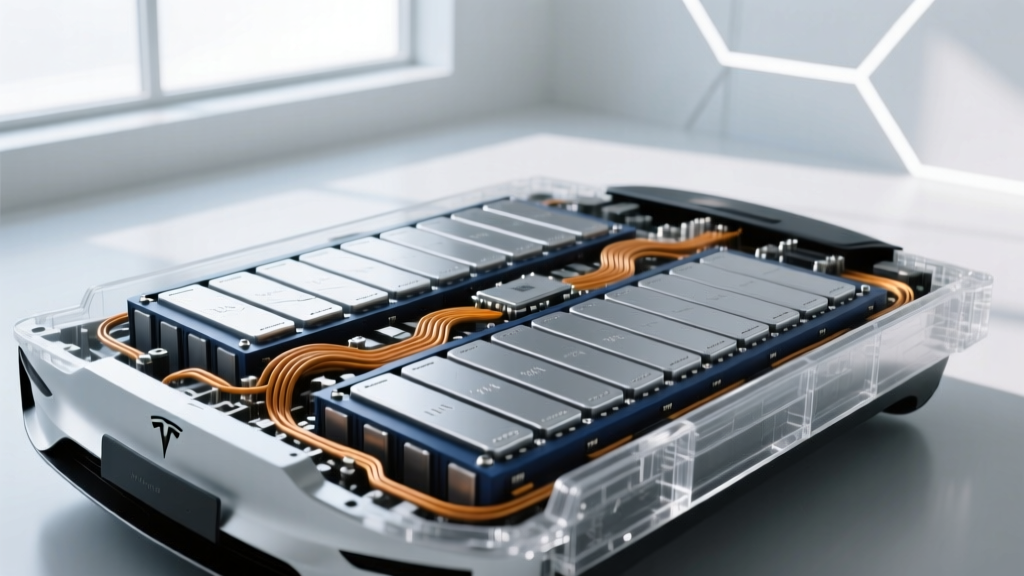
For current and prospective Tesla owners, the high-voltage traction battery is the single most expensive component in the vehicle — and the one that generates the most long-term ownership anxiety. Whether you are researching a Tesla battery upgrade for a degraded pack, evaluating longevity before purchasing a used Model 3 or Model Y, or simply trying to maximize the lifespan of your existing battery, this guide provides the exact numbers, chemistry trade-offs, and real-world data you need.
Tesla does not offer a traditional "upgrade" path to a larger battery after purchase. What owners actually pursue is either a replacement of a degraded or failed pack under warranty, an out-of-warranty replacement, or in rare cases, a retrofit to a newer chemistry. Here is everything that entails in 2026.
How Long Do Tesla Batteries Actually Last?
Tesla's own 2024 Impact Report (the most recent comprehensive dataset published) showed that Model 3 and Model Y batteries retain approximately 85% of their original capacity after 200,000 miles. That translates to roughly 15% degradation over what is, for most owners, 13–15 years of average driving (13,500 miles/year per FHWA data).
Real-world degradation is not linear. Most Tesla packs experience a steeper drop in the first 20,000–30,000 miles (roughly 3–5% loss), followed by a much slower, nearly linear decline for the remainder of the pack's life. Data aggregated by fleet analytics firm Recurrent Auto across thousands of Tesla vehicles confirms this two-phase curve.
| Mileage | Avg. Capacity Retained | Approx. Range Loss (from 310 mi EPA) |
|---|---|---|
| 0 miles (new) | 100% | — |
| 30,000 miles | ~95–96% | ~12–15 mi |
| 60,000 miles | ~93% | ~22 mi |
| 100,000 miles | ~90–91% | ~28–31 mi |
| 150,000 miles | ~87–88% | ~37–40 mi |
| 200,000 miles | ~85% | ~47 mi |
Sources: Tesla Impact Report, Recurrent Auto fleet data. Individual results vary based on charging habits, climate, and chemistry.
For LFP (lithium iron phosphate) packs — standard in Model 3 Rear-Wheel Drive since late 2021 and Model Y RWD in some markets — degradation is generally slower, with many packs retaining 90%+ capacity at 100,000 miles. LFP chemistry trades lower energy density for significantly longer cycle life.
LFP vs. NMC/NCA: Which Tesla Battery Chemistry Is Better?
Tesla uses two primary cathode chemistries across its 2025–2026 lineup. The chemistry in your vehicle fundamentally affects range, longevity, charging behavior, and cold-weather performance.
| Attribute | LFP (Lithium Iron Phosphate) | NMC / NCA (Nickel-based) |
|---|---|---|
| Models (2025–2026) | Model 3 RWD, Model Y RWD (select markets) | Model 3 Long Range/Performance, Model Y LR/Perf, Model S, Model X, Cybertruck |
| Energy Density | Lower (~160 Wh/kg cell-level) | Higher (~250–270 Wh/kg cell-level) |
| Cycle Life | 3,000–5,000+ cycles | 1,000–2,000 cycles |
| Cold Performance | More range loss in freezing temps (~25–35% reduction) | Better cold performance (~15–25% reduction) |
| Recommended Charge Habit | Charge to 100% regularly (weekly) | Daily limit 80%; 100% only for trips |
| Cost per kWh | Lower (no cobalt/nickel) | Higher (nickel/cobalt supply chain) |
| Thermal Stability | Excellent (less prone to thermal runaway) | Good (requires more active thermal management) |
| Typical Usable Capacity | ~57–60 kWh (Model 3 RWD) | ~75–82 kWh (LR), ~100 kWh (Model S/X), ~123 kWh (Cybertruck) |
The practical takeaway: If you live in a mild climate, drive under 250 miles daily, and want maximum battery lifespan with minimal babysitting, LFP is the stronger choice. If you need maximum range, tow frequently, or regularly drive in sub-freezing winters, NMC/NCA packs deliver better real-world performance — at the cost of slightly faster long-term degradation and more careful state-of-charge management.
What Does the Tesla Battery Warranty Cover?
Tesla's battery warranty is one of the most straightforward in the industry, but the specifics vary by model and trim. The warranty covers defects and excessive capacity loss — defined as falling below a specified retention threshold during the warranty period.
| Model / Trim | Duration | Mileage Limit | Minimum Capacity Retention |
|---|---|---|---|
| Model 3 RWD (LFP) | 8 years | 100,000 miles | 70% |
| Model 3 Long Range / Performance | 8 years | 120,000 miles | 70% |
| Model Y (all trims) | 8 years | 120,000 miles | 70% |
| Model S / Model X | 8 years | 150,000 miles | 70% |
| Cybertruck | 8 years | 120,000 miles | 70% |
Key warranty details:
- The 70% threshold means Tesla will replace or refurbish the pack only if usable capacity drops below 70% of original within the warranty window — a level of degradation that is statistically rare before 150,000+ miles under normal use.
- Warranty replacements may use a remanufactured pack (refurbished to meet the retention threshold), not necessarily a brand-new unit. This is standard across the EV industry.
- The warranty does not cover damage from accidents, flooding, improper modifications, or use as a stationary power source unless explicitly covered under a V2H/V2G agreement.
- Warranty is transferable to subsequent owners automatically — important for used Tesla buyers.
Tesla Battery Replacement Cost: What You Will Actually Pay
If your battery falls outside the warranty window or fails due to an uncovered event, out-of-pocket replacement is expensive but, crucially, rarely needed during a typical ownership cycle. Most Tesla batteries outlast the vehicle's useful economic life.
| Model | Battery Size (Usable) | Chemistry | Estimated Replacement Cost |
|---|---|---|---|
| Model 3 RWD | ~57–60 kWh | LFP | $12,000–$15,000 |
| Model 3 Long Range / Performance | ~75–82 kWh | NMC/NCA | $14,000–$18,000 |
| Model Y Long Range / Performance | ~75–82 kWh | NMC/NCA | $14,000–$18,000 |
| Model S (2020+) | ~95–100 kWh | NMC/NCA | $18,000–$22,000 |
| Model X (2020+) | ~95–100 kWh | NMC/NCA | $18,000–$22,000 |
| Cybertruck | ~123 kWh | NMC (4680 cells) | $20,000–$25,000 (est.) |
Cost estimates include the battery pack and Tesla Service Center labor. Third-party EV shops may offer lower labor rates. Prices fluctuate with raw material costs.
When is replacement typically needed? Based on fleet degradation data, most Tesla packs will not fall below the 70% warranty threshold before 200,000+ miles. For an owner driving 13,500 miles/year, that is roughly 15 years. In practice, the more common scenario for out-of-warranty replacement is a sudden failure (manufacturing defect, physical damage, coolant intrusion) rather than gradual wear-out — and these events are rare.
Can You Upgrade a Tesla Battery to a Larger Capacity?
The short answer: not in any practical or supported way.
Tesla does not offer a post-purchase battery upgrade program. You cannot walk into a Service Center and swap a 60 kWh Model 3 RWD pack for an 82 kWh Long Range pack. The reasons are structural:
- Physical packaging: Battery packs are integrated into the vehicle's structural floor (especially on 4680-cell vehicles like the Cybertruck and newer Model Y). The pack is a stressed chassis member.
- Software and BMS pairing: The Battery Management System, thermal management hardware, and drive unit are calibrated to a specific pack capacity and chemistry. Swapping to a different spec requires factory-level reconfiguration that Tesla does not support as a service.
- Safety certification: A modified battery configuration would void NHTSA compliance and Tesla's own safety validation.
What about early Model S owners? In the 2012–2016 era, some owners with software-limited 60 kWh packs (the "60" that was actually a 75 kWh pack capped in software) were able to purchase a software unlock to 75 kWh for roughly $2,000–$4,500. This program has been discontinued, and it was never a physical battery swap — just a software cap removal. No equivalent option exists for current-generation vehicles.
If you need more range than your current Tesla provides, the realistic path is to trade in or sell your vehicle and purchase a Long Range or higher-capacity trim.
Factors That Affect Tesla Battery Life
Battery degradation is inevitable but highly variable. The following factors have the most measurable impact on long-term capacity retention:
- Daily charge limit: Set to 80% for NMC/NCA packs; 100% for LFP packs (Tesla recommends weekly 100% charges for LFP to allow BMS cell balancing).
- Avoid prolonged 100% SoC: For NMC/NCA, charge to 100% only when you plan to drive within a few hours. Sitting at 100% accelerates calendar degradation.
- Minimize DC fast charging: Occasional Supercharging is fine — Tesla's thermal management is excellent. But if you have home Level 2 access, make that your primary charging method. Sustained daily Supercharging correlates with slightly higher degradation in fleet data.
- Precondition before Supercharging: Always navigate to a Supercharger via the Tesla app or in-car nav so the battery preheats/precools to optimal charging temperature. This protects the cells and improves charge speed.
- Extreme cold storage: If parking in sub-20°F conditions for extended periods, keep the vehicle plugged in (even at Level 1) so the thermal management system can maintain the battery at a safe temperature without depleting SoC.
- Avoid deep discharge: Don't let the pack sit at 0% or near-0% for days. If storing the vehicle, Tesla recommends leaving it at approximately 50% SoC and plugged in.
- Sentry Mode and vampire drain: Heavy Sentry Mode use in extreme heat keeps the battery thermally active, which can marginally increase calendar aging. Use judiciously when parked long-term.
How to Check Your Tesla's Battery Health (State of Health)
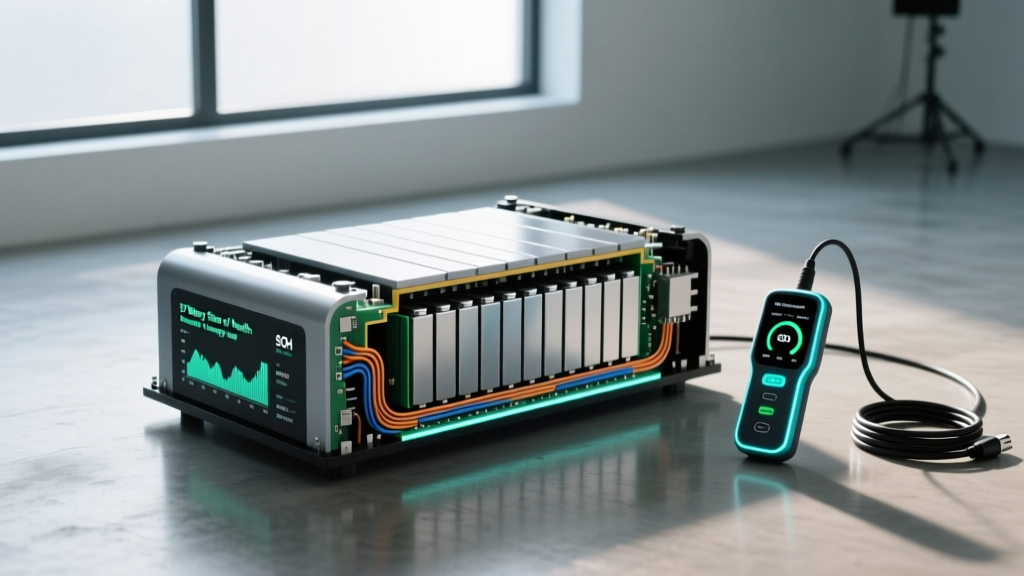
Tesla does not display a dedicated "State of Health" (SoH) percentage in the vehicle UI the way some competitors do. Here are the methods owners use to assess pack condition:
Method 1: Range Comparison at 100% SoC
Charge your NMC/NCA pack to 100% (or your LFP pack after a full balance cycle) and note the displayed range. Compare this to the original EPA-rated range for your model year and trim. For example, a 2023 Model 3 Long Range originally rated at 341 miles EPA that displays 310 miles at 100% has roughly 91% SoH. Note: displayed range is affected by temperature and recent driving efficiency, so perform this check in moderate weather after a full charge cycle.
Method 2: Third-Party Apps
Apps like TeslaFi, Tessie, and Stats (iOS) log charge sessions and can estimate SoH over time by tracking how many kWh are added from a known SoC percentage to a higher one. This is more accurate than the displayed-range method because it accounts for the actual energy stored, not just the range estimate.
Method 3: Tesla Service Diagnostic
If you suspect abnormal degradation (e.g., a sudden range drop), you can open a Service request through the Tesla app. Tesla technicians can run a full diagnostic that reads individual module voltages, internal resistance, and a precise SoH figure. This is typically done during warranty evaluations.
Emerging Battery Technology: What Is on the Horizon?
Several next-generation battery technologies are in development that could eventually reach Tesla vehicles, though none are currently available in production cars as of 2026:
- Solid-state batteries: Replace the liquid electrolyte with a solid conductor, promising higher energy density (potentially 400+ Wh/kg cell-level), faster charging, and improved safety. Toyota has announced a 2027–2028 target for limited production; QuantumScape is in validation with Volkswagen. Tesla has not announced a solid-state timeline. Realistic consumer availability: 2028–2030 at the earliest, and likely in limited, premium applications first.
- Silicon-dominant anodes: Replacing graphite anodes with silicon can increase energy density by 20–40%. Sila Nanotechnologies and Group14 are supplying early production runs for select applications. Tesla's 4680 cells already incorporate incremental silicon content, but a full silicon-dominant anode is not yet in production.
- Sodium-ion batteries: Lower cost and no lithium/cobalt/nickel dependency, but significantly lower energy density (~120–150 Wh/kg). Likely destined for budget EV segments and stationary storage before reaching Tesla vehicles.
- Dry electrode manufacturing (Tesla-specific): Tesla's ongoing refinement of dry electrode coating for 4680 cells aims to reduce manufacturing cost and energy consumption. This is a production-process improvement rather than a chemistry change, but it directly affects the cost of future replacement packs.
Bottom line: None of these technologies will retroactively upgrade an existing Tesla battery. If you own a current-generation Tesla, the pack you have is the pack you will keep. The practical implication is for purchase timing — if a major chemistry shift is 3–4 years out, that may inform whether you buy now or wait for a next-gen vehicle.
Frequently Asked Questions
How long do Tesla batteries last in years and miles?
Based on Tesla's published fleet data and independent analysis from Recurrent Auto, most Tesla batteries retain 85–90% of original capacity at 200,000 miles. In years, that translates to 13–18 years of average driving. Complete pack failure before 150,000 miles is statistically rare under normal use.
How much does it cost to replace a Tesla battery in 2026?
Out-of-warranty Tesla battery replacement costs range from approximately $12,000 (Model 3 RWD, LFP) to $25,000 (Cybertruck, 4680 NMC). Most Long Range Model 3/Y replacements fall in the $14,000–$18,000 range including labor at a Tesla Service Center. However, the vast majority of owners will never need a replacement — the battery typically outlasts the vehicle's economic life.
Does Tesla's battery warranty cover normal degradation?
Yes, but only if degradation exceeds the threshold: dropping below 70% of original capacity within 8 years / 100,000–150,000 miles (depending on model). Normal, gradual degradation that stays above 70% is expected behavior and is not covered. Warranty replacements may use remanufactured packs.
Can I upgrade my Tesla to a bigger battery after purchase?
No. Tesla does not offer post-purchase battery upgrades. The pack is structurally integrated and software-paired to the vehicle. The only historical exception was a software-limited 60 kWh Model S unlock (discontinued). If you need more range, the only option is to sell or trade for a Long Range or higher-capacity model.
Is LFP or NMC better for long-term battery health?
LFP chemistry offers significantly longer cycle life (3,000–5,000+ cycles vs. 1,000–2,000 for NMC) and greater thermal stability, making it the better choice for pure longevity. However, LFP has lower energy density (less range per kWh), worse cold-weather performance, and requires regular 100% charges for cell balancing. NMC offers more range and better cold performance but degrades slightly faster and requires more careful SoC management (80% daily limit).
Does frequent Supercharging damage the battery?
Tesla's thermal management system is highly effective at protecting the pack during DC fast charging. Occasional Supercharging has negligible impact on long-term health. However, fleet data from Recurrent Auto suggests that vehicles that Supercharge exclusively (never using Level 2) show marginally higher degradation over 100,000+ miles. Best practice: use Level 2 at home as your primary charge method and reserve Supercharging for road trips.
How do I check my Tesla battery's State of Health?
Charge to 100% and compare the displayed range to the original EPA rating for a rough estimate. For more precision, use third-party logging apps like TeslaFi or Tessie that track kWh added across charge sessions. For a definitive reading, request a battery diagnostic through the Tesla app Service menu.