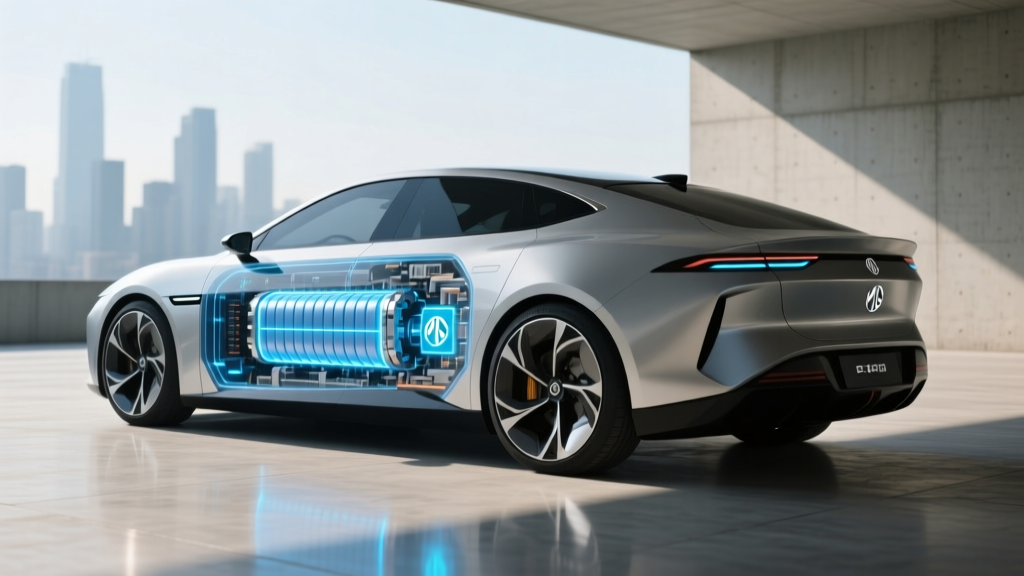
Tesla doesn't use one single battery type across its lineup. Depending on the model, trim, and where the vehicle was built, you'll find fundamentally different chemistries under the floor — each with distinct trade-offs in range, longevity, charging behavior, and cost. Understanding which battery your Tesla has (or the one you're about to buy) is one of the highest-impact things you can do as an EV owner or shopper.
This guide breaks down every battery chemistry Tesla currently uses, the real-world degradation data we've tracked, what the warranty actually covers, and what replacement looks like if you ever need one. We'll also cover the specific habits that extend — or quietly erode — your pack's lifespan.
Tesla's Current Battery Chemistries: LFP vs NMC vs NCA
Tesla sources cells from multiple suppliers — primarily CATL, Panasonic, LG Energy Solution, and its own in-house 4680 cell production — and deploys three main chemistries across the 2026 lineup:
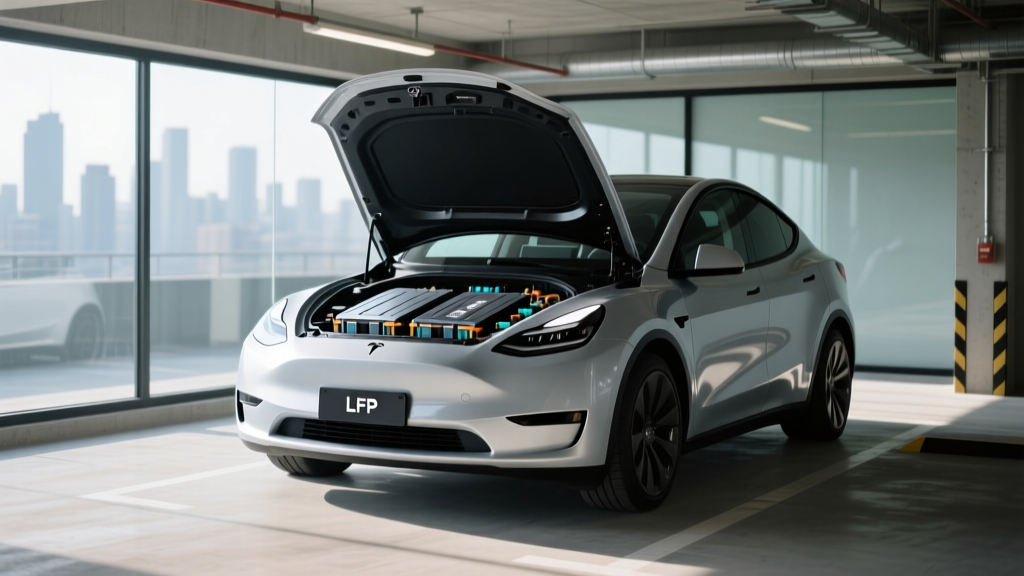
- LFP (Lithium Iron Phosphate): Used in Standard Range / Rear-Wheel Drive variants of the Model 3 and Model Y. Prismatic cells supplied by CATL.
- NMC (Nickel Manganese Cobalt): Found in Long Range and Performance trims of Model 3, Model Y, and Model S/X. Supplied primarily by LG Energy Solution and Panasonic in 2170 cylindrical format.
- NCA (Nickel Cobalt Aluminum): Used selectively in high-performance applications and older Model S/X builds. Panasonic remains the primary supplier.
Tesla's proprietary 4680 cells (a larger cylindrical format) use a high-nickel NMC-type chemistry and are currently deployed in select Model Y vehicles built at Giga Texas. These cells use a dry-electrode manufacturing process that Tesla has been scaling through 2025 and 2026.
| Attribute | LFP (CATL Prismatic) | NMC (2170 / 4680 Cylindrical) | NCA (Panasonic) |
|---|---|---|---|
| Energy Density | ~160 Wh/kg (lower) | ~250–270 Wh/kg (higher) | ~260–280 Wh/kg (highest) |
| Cycle Life | 3,000–5,000+ cycles | 1,000–2,000 cycles | 1,000–1,500 cycles |
| Cold-Weather Performance | Moderate — greater range loss below 32°F | Better — less range loss in cold | Better — similar to NMC |
| Recommended Daily Charge | 100% (Tesla recommends weekly 100% charge) | 80% daily; 100% for trips only | 80% daily; 100% for trips only |
| Cobalt Content | Zero | Low to moderate | Low |
| Cost per kWh | Lower (~$90–110/kWh pack-level) | Higher (~$120–145/kWh pack-level) | Higher (~$125–150/kWh pack-level) |
| Typical Trims | Model 3 RWD, Model Y RWD | Model 3/Y Long Range & Performance, Model S/X | Older Model S/X, some Performance |
LFP vs NMC — Which Tesla Battery Is Better and Why?
Neither chemistry is universally "better." The right answer depends on how you drive, where you live, and what you prioritize.
Choose LFP if: You want maximum calendar life, you can charge at home regularly (LFP actually benefits from being charged to 100%), you don't need the absolute longest single-charge range, and you value lower cost and cobalt-free sourcing. LFP's cycle life is roughly 2–3x that of NMC, meaning the pack can endure far more full charge-discharge cycles before significant degradation. For daily commuters who charge nightly, LFP is arguably the superior choice.
Choose NMC/NCA if: You need maximum range per charge (road trips, long commutes), you live in a cold climate where NMC's better low-temperature performance matters, or you want the Performance trim's power output. NMC packs deliver higher energy density, which translates to more miles in the same physical space — that's why Long Range and Performance trims use it.
The trade-off is straightforward: LFP gives you longevity and cost savings at the expense of range density and cold-weather efficiency. NMC gives you range and cold-weather performance at the expense of cycle life and higher replacement cost. Both chemistries will comfortably outlast 150,000 miles with proper care.
How Long Do Tesla Batteries Actually Last? Real Degradation Data
Tesla's 2025 Impact Report (the most recent published dataset) states that Model 3 and Model Y battery packs show an average degradation of roughly 12% after 150,000 miles — meaning the average pack retains approximately 88% of its original capacity at that mileage. Model S and Model X packs, which tend to accumulate higher mileage, show approximately 15% average degradation at 150,000 miles.
However, averages mask significant variance. Based on aggregated fleet data from Tesla owners and independent tracking (including TeslaFi and Recurrent Auto), here's what the distribution looks like:
| Mileage | Average Capacity Retained | Range of Observed Values |
|---|---|---|
| 25,000 mi | 95–97% | 92–99% |
| 50,000 mi | 92–94% | 88–97% |
| 100,000 mi | 89–92% | 84–95% |
| 150,000 mi | 86–89% | 80–93% |
| 200,000 mi | 83–87% | 76–91% |
Note: LFP packs generally cluster toward the higher end of these ranges; NMC/NCA toward the lower end. Charging habits, climate, and fast-charging frequency are the primary variables.
The key insight: degradation is non-linear. Most capacity loss occurs in the first 20,000–30,000 miles (typically 3–5%), after which the curve flattens significantly. A pack that has stabilized at 93% after 40,000 miles is likely to retain 88–90% at 150,000 miles, all else being equal.
How does this translate to real-world range? A Model Y Long Range with an EPA-estimated 320 miles when new, showing 90% retention at 100,000 miles, would deliver approximately 288 miles of EPA-equivalent range — still entirely practical for most daily use and road trips. In cold weather (below 32°F), expect an additional 15–30% temporary range reduction on top of degradation, per fueleconomy.gov testing data.
Tesla Battery Warranty: What's Actually Covered
Tesla's battery warranty guarantees that the pack will retain a minimum percentage of its original capacity for a specified period or mileage — whichever comes first. If the battery degrades below the threshold, Tesla will repair or replace it at no cost.
| Model / Trim | Warranty Duration | Mileage Limit | Minimum Capacity Retention |
|---|---|---|---|
| Model 3 RWD (LFP) | 8 years | 100,000 miles | 70% |
| Model 3 Long Range / Performance | 8 years | 120,000 miles | 70% |
| Model Y RWD (LFP) | 8 years | 100,000 miles | 70% |
| Model Y Long Range / Performance | 8 years | 120,000 miles | 70% |
| Model S / Model X | 8 years | 150,000 miles | 70% |
A few important details most buyers miss:
- The warranty covers defects and excessive degradation, not damage. If the battery is damaged by a collision, flood, or improper modification, the warranty does not apply.
- "70% retention" means 70% of the original usable capacity — not 70% of EPA range. Since EPA range already accounts for real-world factors, a pack at 70% SoH still provides substantial drivable range.
- Warranty replacement may use a refurbished pack — Tesla's warranty terms specify that replacement batteries will have capacity "at least equal to" the original pack's pre-failure state, which can mean a reconditioned unit.
- The warranty is transferable to subsequent owners automatically, which supports resale value.
For context, the vast majority of Tesla owners never file a battery warranty claim. According to Tesla's own data, fewer than 1% of packs have required replacement under warranty across the fleet. When replacements do occur, they're most often due to manufacturing defects in the first 2–3 years rather than gradual degradation.
Tesla Battery Replacement Cost: What You'd Pay Out of Warranty
If your battery fails outside the warranty window — or is damaged in an incident not covered by insurance — replacement is a significant expense. Here are the current approximate costs based on service center quotes and third-party EV repair data:
| Model | Battery Size (Usable) | Chemistry | Estimated Replacement Cost |
|---|---|---|---|
| Model 3 RWD | ~57.5 kWh | LFP | $12,000 – $16,000 |
| Model 3 Long Range | ~75 kWh | NMC | $16,000 – $22,000 |
| Model Y RWD | ~57.5 kWh | LFP | $12,000 – $16,000 |
| Model Y Long Range | ~75 kWh | NMC | $16,000 – $22,000 |
| Model S / Model X | ~95 kWh | NMC/NCA | $20,000 – $28,000 |
Costs include the pack and labor. Prices vary by service center, region, and whether a new, remanufactured, or refurbished pack is used. Source: aggregated service quotes and Recurrent Auto industry data.
It's critical to frame these numbers properly. The median age at which an EV battery is replaced (when it is replaced at all) is well beyond 150,000 miles. Most packs outlive the vehicle itself — the car is totaled, traded, or retired before the battery reaches end of life. The average American keeps a car for about 8.4 years and drives roughly 14,000 miles per year, totaling about 117,600 miles — well within both the warranty period and the battery's typical useful life.
Compare this to a gas vehicle's cumulative maintenance: over 150,000 miles, a typical ICE car will spend $4,000–$7,000 on transmission work, timing belts, head gaskets, catalytic converters, and other major repairs that have no EV equivalent. The battery replacement fear, while understandable, is statistically overstated for the average owner.
What Kills an EV Battery Faster — and How to Maximize Health
Battery degradation is inevitable, but the rate at which it occurs is largely within your control. The following factors have the largest measurable impact on long-term State of Health (SoH):
Daily Charging Habits
- NMC/NCA packs: Set your daily charge limit to 80%. Only charge to 100% when you're leaving within a few hours for a road trip. Prolonged storage at 100% SoC accelerates calendar degradation.
- LFP packs: Tesla recommends charging to 100% at least once per week. LFP chemistry does not suffer the same high-SoC stress as NMC, and regular full charges help the battery management system (BMS) accurately calibrate SoC estimates.
- Avoid prolonged storage below 20% SoC — deep discharge states stress both chemistries. If storing the car for weeks, leave it plugged in at 50%.
Fast-Charging Frequency
- DC fast charging (Supercharging at 150–250 kW) generates significant heat. Occasional Supercharging on road trips has minimal impact, but daily DC fast charging accelerates degradation by approximately 1–3% over 100,000 miles compared to Level 2 home charging, per data from Recurrent Auto.
- Tesla's thermal management system actively cools the pack during Supercharging, which mitigates much of this effect — but physics still applies. If you have home Level 2 charging access, use it for daily needs.
Temperature Extremes
- Heat is the primary enemy of lithium-ion longevity. Sustained ambient temperatures above 95°F, combined with high SoC, accelerate calendar degradation. If you live in Phoenix or Las Vegas, avoid parking at 100% SoC in direct summer heat for extended periods.
- Cold doesn't permanently damage the battery — it temporarily reduces available capacity and increases resistance. Tesla's pack preconditioning (automatically triggered when you navigate to a Supercharger) warms the battery to optimize charging speed and reduce stress.
Driving Patterns
- Aggressive acceleration and sustained high-speed driving (80+ mph) generate more heat in the cells. Moderate driving with liberal use of regenerative braking is gentler on the pack.
- One-pedal driving with Standard regen maximizes energy recapture and reduces brake wear — a double benefit.
How to Check Your Tesla's Battery Health (SoH)
Tesla doesn't display a direct "State of Health" percentage in the vehicle interface the way some other EVs do. However, there are several reliable methods to assess your pack's condition:
1. In-Car Range Estimate Method: Charge the vehicle to 100% (for LFP) or note the displayed range at a consistent SoC (e.g., 80%) and compare it to what the same SoC showed when the car was new. For NMC owners, you can temporarily charge to 100% and note the displayed range — a Model Y Long Range that originally displayed 320 miles at 100% but now shows 290 miles has approximately 90.6% SoH. Note that the displayed range is a BMS estimate and can fluctuate; it's most accurate after a full charge cycle.
2. TeslaFi or Tessie (Third-Party Apps): Services like TeslaFi and Tessie pull data from Tesla's API and track your battery's estimated capacity over time, providing a more granular SoH trend line. These tools log every charge session, including energy added vs. SoC change, which allows a calculated capacity estimate. Many owners find this more reliable than the in-car display.
3. Service Center Diagnostic: You can request a battery health report from a Tesla Service Center. The internal diagnostic tool reads individual cell group voltages, internal resistance, and total usable capacity — far more precise than the consumer-facing display. This is typically free if done during a scheduled service visit.
4. OBD-II Dongle (Advanced): Some owners use a Bluetooth OBD-II adapter with software like Scan My Tesla to read real-time battery parameters, including nominal full-pack energy (kWh) and cell-level balance data. This is the most technical option but provides the highest-resolution picture of pack health.
Emerging Battery Technology: What's Next After LFP and NMC
Several next-generation battery technologies are in development that could eventually reach Tesla vehicles, though none are currently available in production cars as of 2026:
Silicon-Dominant Anodes: Companies like Sila Nanotechnologies and Group14 are developing silicon-based anode materials that can increase energy density by 20–40% compared to graphite anodes. Tesla has already incorporated small amounts of silicon in its 4680 cells. Full silicon-dominant anodes are expected to reach production scale in 2027–2029, potentially enabling 400+ mile packs in mid-size vehicles.
Solid-State Batteries: Solid-state cells replace the liquid electrolyte with a solid material, promising higher energy density, faster charging, and improved safety. Toyota, Samsung SDI, and QuantumScape are the most advanced developers. However, manufacturing scale remains the primary obstacle. Realistic production timelines for solid-state EV batteries at commercial scale are 2028–2032, with initial deployment likely in premium vehicles before reaching mainstream pricing. Tesla has not announced a solid-state roadmap.
Sodium-Ion Batteries: CATL (Tesla's LFP supplier) has begun shipping sodium-ion cells for energy storage and low-range vehicles in China. Sodium-ion offers lower cost and zero lithium dependency but significantly lower energy density (~120 Wh/kg). It's unlikely to appear in US-market Tesla vehicles for range-critical applications but could power future entry-level models or stationary storage products in the 2027+ timeframe.
None of these technologies should influence a current purchase decision. Today's LFP and NMC packs are mature, well-understood, and backed by extensive warranty coverage. The next major leap in battery tech is still multiple years from mass-market availability.
Frequently Asked Questions
Does Tesla use CATL batteries?
Yes. Tesla uses LFP prismatic cells manufactured by CATL (Contemporary Amperex Technology Co., Limited) in Standard Range / Rear-Wheel Drive versions of the Model 3 and Model Y sold globally. These are the cobalt-free batteries that Tesla recommends charging to 100% weekly.
Are Panasonic batteries better than LG or CATL in Teslas?
"Better" depends on the metric. Panasonic cells (used primarily in Model S/X and older Model 3 Long Range) have demonstrated excellent longevity and consistency. LG Energy Solution cells (Model 3/Y Long Range built in Fremont and Shanghai) offer comparable performance. CATL LFP cells trade energy density for superior cycle life. There is no single "best" supplier — Tesla qualifies each cell to its own specifications.
How much does it cost to replace a Tesla battery in 2026?
Out-of-warranty replacement costs range from approximately $12,000–$16,000 for Model 3/Y RWD (LFP) to $20,000–$28,000 for Model S/X. However, the vast majority of packs never need replacement during normal ownership. Tesla's 8-year warranty covers defects and degradation below 70% capacity.
Should I be worried about Supercharging degrading my battery?
Occasional Supercharging on road trips has a negligible effect on battery health. The measurable concern is with exclusive DC fast charging — owners who never use Level 2 and rely entirely on Superchargers may see 1–3% additional degradation over 100,000 miles. Tesla's thermal management system actively mitigates heat during fast charging. If you have home Level 2 access, use it daily and Supercharge on trips.
What's the difference between kW and kWh?
This is the most common EV confusion. kW (kilowatts) measures power — the rate at which energy flows. Think of it like the width of a hose. kWh (kilowatt-hours) measures energy — the total amount stored or consumed. Think of it like the total volume of water in a tank. A 75 kWh battery charged at 11 kW (Level 2) takes roughly 7 hours to fill from empty. The same battery charged at 250 kW (DC fast charge) can accept a significant portion of that energy in under 20 minutes, though charging speed tapers above 80% SoC to protect the cells.
Can I upgrade my Tesla to a larger battery later?
No. Tesla does not offer battery upgrades for existing vehicles. The pack size is determined at manufacture and is integrated into the vehicle's structural design (particularly in Model Y with the structural battery pack). If you need more range, the solution is purchasing a Long Range trim from the outset.
How do I know if my Tesla has an LFP or NMC battery?
The simplest method: check your vehicle's charging settings. If the charge limit slider allows you to set 100% as a daily recommendation (not just for trips), you have an LFP battery. If the interface recommends 80% for daily driving and labels 100% as "for trips," you have an NMC or NCA pack. You can also check your vehicle's build information or VIN decoder for the specific cell type.