If you've spent any time researching a Tesla purchase, you've likely encountered a confusing detail: not all Tesla batteries are the same. Depending on the model, trim, and model year, Tesla uses fundamentally different battery chemistries — and those differences affect everything from how you should charge the car to how the battery ages over a decade of ownership.
This guide breaks down exactly what type of battery Tesla uses across its 2025–2026 lineup, the real-world trade-offs between lithium iron phosphate (LFP) and nickel-based chemistries (NMC/NCA), what the degradation data actually shows, and what you can expect for warranty coverage and eventual replacement costs.
What Type of Battery Does Tesla Use?
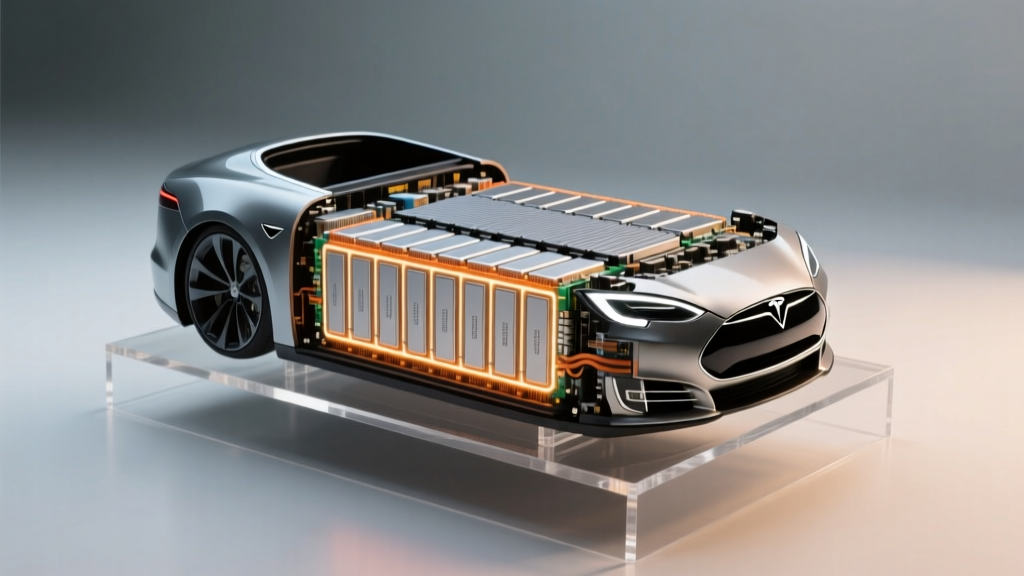
Tesla currently uses two primary battery chemistries across its vehicle lineup:
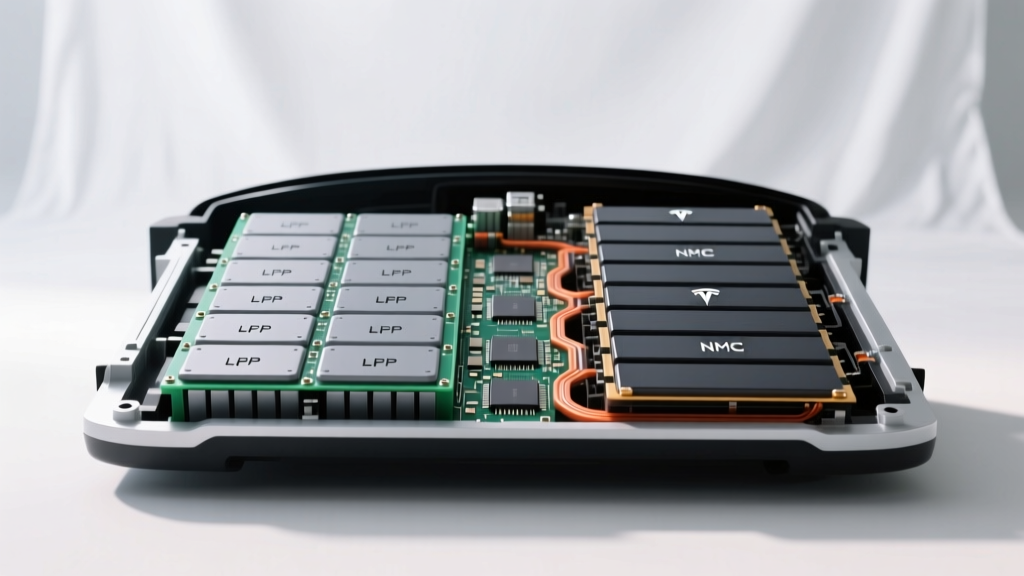
- LFP (Lithium Iron Phosphate / LiFePO4): Used in the standard-range Model 3 and Model Y (Rear-Wheel Drive trims). These cells are supplied primarily by CATL and are prismatic in form factor.
- NCA (Nickel Cobalt Aluminum) and NMC (Nickel Manganese Cobalt): Used in Long Range and Performance variants of the Model 3, Model Y, Model S, and Model X. Tesla's in-house 4680 cells (a nickel-based chemistry) are also deployed in certain Model Y vehicles built at Giga Texas.
The split is deliberate. LFP cells are cheaper to produce, contain no cobalt or nickel, and tolerate frequent full charges well — making them ideal for the most affordable trims. Nickel-based cells offer higher energy density, which translates directly to more range in Long Range and Performance models where maximizing miles per kWh of battery weight is critical.
| Attribute | LFP (Standard Range) | NCA/NMC (Long Range / Performance) |
|---|---|---|
| Energy Density | ~160–180 Wh/kg (lower) | ~250–270 Wh/kg (higher) |
| Typical Usable Capacity | ~57–60 kWh (Model 3/Y RWD) | ~75–82 kWh (LR) / ~100 kWh (Model S/X) |
| Cycle Life | 3,000–5,000+ cycles | 1,500–2,500 cycles |
| Recommended Charge Limit | 100% daily is fine | 80% daily; 100% for trips only |
| Cold-Weather Performance | More range loss in freezing temps (~30–40%) | Better cold performance (~20–30% loss) |
| Cost per kWh | Lower (~$70–90/kWh at cell level) | Higher (~$100–130/kWh at cell level) |
| Thermal Stability | Excellent (less prone to thermal runaway) | Good (requires active thermal management) |
| Cobalt/Nickel Content | None | Contains nickel and small cobalt |
LFP vs NMC/NCA: Which Tesla Battery Is Better?
Neither chemistry is universally "better" — the right answer depends on your driving pattern, climate, and budget.
Choose LFP if: You want the lowest purchase price, you charge at home daily and can charge to 100% without worry, you live in a moderate climate, and you prioritize long-term cycle life over maximum range. Tesla explicitly recommends charging LFP-equipped vehicles to 100% regularly to keep the battery management system (BMS) calibrated.
Choose NCA/NMC if: You need maximum EPA range (300+ miles), you frequently drive in cold weather where LFP's higher internal resistance causes greater range loss, you take regular road trips where every mile of range matters, or you want the fastest acceleration (Performance trims are nickel-based only).
One important nuance: LFP batteries have a flatter voltage curve, which makes state-of-charge (SoC) estimation harder for the BMS. This is why Tesla recommends periodic 100% charges on LFP vehicles — it recalibrates the system. If you routinely charge an LFP car to only 80%, your displayed range estimate may drift over time, even though the battery itself is fine.
Tesla Battery Degradation: What the Real Data Shows
Battery degradation — the gradual loss of total capacity over time and charge cycles — is one of the most common concerns among prospective EV buyers. Tesla publishes fleet-wide degradation data in its annual Impact Report, and third-party studies from owners and researchers provide additional real-world figures.
Tesla Fleet Degradation Data (from Tesla's Impact Report and owner-collected data):
- At 50,000 miles: Most Model 3 and Model Y batteries retain approximately 95–97% of original capacity.
- At 100,000 miles: Average retention is approximately 90–93%.
- At 150,000 miles: Average retention is approximately 85–90%.
- At 200,000 miles: Tesla's fleet data shows an average of approximately 85% capacity retention (roughly 15% degradation) across Model 3/Y vehicles.
Source: Tesla Impact Report, owner-collected data via TeslaFi and Recurrent Auto.
Several important patterns emerge from this data:
Degradation is front-loaded. Most capacity loss occurs in the first 20,000–30,000 miles (roughly 2–5%), after which the curve flattens significantly. A Model 3 that shows 97% health at 30,000 miles is likely on track for 88–92% at 150,000 miles.
LFP batteries may show slower degradation in early years due to their superior cycle life, but their lower energy density means the absolute range you lose (in miles) can feel similar because you started with fewer miles to begin with.
4680 cells (Tesla's newer, larger cylindrical format used in some Model Y vehicles) are still early in their fleet lifecycle. Initial data is promising, but long-term degradation statistics at 150,000+ miles are not yet available as of early 2026.
Tesla Battery Warranty: What's Covered and for How Long
Tesla's battery and drive unit warranty is one of the more straightforward in the industry, though the details vary by model and trim:
| Model / Trim | Warranty Period | Mileage Limit | Minimum Capacity Retention |
|---|---|---|---|
| Model 3 RWD (LFP) | 8 years | 100,000 miles | 70% |
| Model 3 Long Range / Performance | 8 years | 120,000 miles | 70% |
| Model Y RWD (LFP) | 8 years | 100,000 miles | 70% |
| Model Y Long Range / Performance | 8 years | 120,000 miles | 70% |
| Model S | 8 years | 150,000 miles | 70% |
| Model X | 8 years | 150,000 miles | 70% |
The 70% retention threshold is the key number. If your battery's usable capacity drops below 70% of its original capacity within the warranty period (whichever limit — years or miles — comes first), Tesla will repair or replace the battery at no cost. In practice, the vast majority of Tesla owners never approach this threshold during the warranty window. As the degradation data above shows, even at 200,000 miles, average retention hovers around 85%.
One detail worth noting: the warranty covers capacity degradation below the threshold as well as manufacturing defects. It does not cover damage from accidents, flooding, or unauthorized modifications. If you have a salvage-title Tesla, the battery warranty is typically voided.
How Much Does a Tesla Battery Replacement Cost?
This is the question that generates the most anxiety — and the most misleading headlines. Here's the reality based on current out-of-warranty replacement pricing and service data:
| Model | Battery Size | Estimated Parts Cost | Estimated Labor | Total Range |
|---|---|---|---|---|
| Model 3 (Standard Range / LFP) | ~57–60 kWh | $8,000–$11,000 | $1,500–$2,500 | $9,500–$13,500 |
| Model 3 / Y (Long Range) | ~75–82 kWh | $12,000–$16,000 | $1,500–$2,500 | $13,500–$18,500 |
| Model S / X | ~100 kWh | $15,000–$22,000 | $2,000–$3,500 | $17,000–$25,500 |
Context matters enormously here. First, most Tesla batteries never need replacement during the life of the vehicle. The degradation data above shows that even at high mileage, the battery retains well above 70% capacity. A replacement is typically only needed if there's a manufacturing defect (covered under warranty), physical damage, or an extremely rare case of accelerated degradation.
Second, Tesla often replaces individual modules or repairs specific components within the pack rather than swapping the entire battery, which can significantly reduce costs for certain failures. Third, as battery cell prices continue to decline — LFP cells have dropped below $70/kWh at the manufacturing level — out-of-warranty replacement costs are trending downward, not upward.
For comparison, a conventional car's transmission replacement can run $4,000–$8,000, and an engine replacement can exceed $10,000. The "EV batteries are too expensive to replace" narrative ignores that ICE vehicles have equally costly components that also fail.
Factors That Affect Tesla Battery Lifespan
While Tesla's thermal management system (liquid cooling and heating) does an excellent job protecting the pack, your habits still influence long-term degradation:
Practical Battery Care Checklist for Tesla Owners:
- Daily charge limits: Set to 80% for NCA/NMC vehicles. LFP vehicles should be charged to 100% at least once per week for BMS calibration.
- Avoid prolonged storage at extreme SoC: Don't leave an NCA/NMC car sitting at 100% for days. If storing, set to ~50%.
- DC fast charging: Occasional Supercharging is fine. Daily DC fast charging can accelerate degradation slightly, but Tesla's thermal management mitigates most of the impact. Data from Recurrent Auto shows minimal difference between frequent and infrequent fast-chargers in Tesla fleets.
- Extreme heat: The biggest enemy of lithium-ion longevity. Tesla's active cooling handles this well, but if you live in Phoenix or Dubai, expect slightly higher degradation over 10+ years.
- Extreme cold: Cold doesn't permanently damage the battery, but it temporarily reduces range and slows charging. Always precondition before Supercharging in winter — the car does this automatically if you navigate to a Supercharger.
- Regen braking: Using regen (even on "High") does not harm the battery. The BMS manages charge acceptance safely.
How to Check Your Tesla's Battery Health (State of Health)
Tesla does not display a simple "battery health percentage" in the vehicle's UI the way some competitors do. However, there are several reliable methods to estimate your State of Health (SoH):
Method 1: Range comparison. Charge to 100% (or your known charge limit) and compare the displayed estimated range to the original EPA rating. A new Model 3 Long Range shows approximately 341 miles at 100%. If yours shows 315 miles at 100% after 60,000 miles, your rough SoH is ~92%. Note that displayed range is an estimate influenced by recent driving behavior and temperature — it's not a lab measurement.
Method 2: Third-party apps. Services like TeslaFi, Tessie, and Recurrent connect to your Tesla's API and track detailed battery data over time, including estimated degradation curves. Recurrent provides a free battery health report that compares your pack to thousands of similar vehicles.
Method 3: Service diagnostic. If you suspect abnormal degradation (e.g., a sudden range drop that doesn't recover after a full charge cycle), Tesla Service can run a battery health diagnostic remotely or in person.
Future Battery Technology: What's Coming After LFP and NMC?
Tesla is actively developing next-generation battery technology, though timelines remain fluid and should be treated as forward-looking estimates:
4680 cell scaling: Tesla's larger-format cylindrical cell (46mm diameter, 80mm height) is already in production at Giga Texas for certain Model Y vehicles. The 4680 design reduces the number of cells per pack, simplifies manufacturing, and uses a dry electrode process that Tesla acquired via Maxwell Technologies. As of early 2026, 4680 cells are in limited production and not yet available across the full lineup.
Silicon anode improvements: Tesla has been incrementally adding silicon to the graphite anode in its nickel-based cells to increase energy density. Pure silicon anodes (which could boost energy density by 20–40%) remain in the research stage across the industry, with commercial viability estimated for the late 2020s.
Solid-state batteries: Frequently discussed in automotive media, solid-state cells replace the liquid electrolyte with a solid material, promising higher energy density and improved safety. Toyota, Samsung SDI, and several startups have announced prototype solid-state cells, but no automaker — Tesla included — has them in production vehicles as of 2026. Realistic mass-production timelines from industry analysts point to 2028–2032 for meaningful volume. Tesla has not publicly committed to solid-state and may instead continue iterating on liquid-electrolyte chemistries.
Sodium-ion batteries: CATL (a Tesla LFP supplier) has begun shipping sodium-ion cells for certain Chinese-market vehicles. These are cheaper than LFP but have lower energy density, making them suitable for compact, short-range vehicles. Tesla has not announced sodium-ion adoption, but it remains a possibility for a future entry-level model.
Frequently Asked Questions
How long do Tesla batteries last in years and miles?
Based on fleet data, most Tesla batteries retain 85–90% capacity at 200,000 miles. In terms of calendar years, Tesla batteries commonly last 15–20+ years before capacity drops to a level that might prompt replacement (below 70%). Many Tesla vehicles will reach end-of-life from other causes (body damage, electronics, owner upgrade) before the battery becomes unusable.
Does frequent Supercharging damage a Tesla battery?
The impact is smaller than many assume. Tesla's battery preconditioning and active thermal management protect the pack during DC fast charging. Data from Recurrent Auto comparing Tesla vehicles that fast-charge frequently versus those that rarely do shows no statistically significant difference in degradation at 100,000 miles. That said, exclusive reliance on DC fast charging with no Level 2 breaks may add a small amount of additional wear over hundreds of thousands of miles.
Can I upgrade my Tesla's battery to a larger capacity later?
No. Tesla does not offer battery capacity upgrades. The pack your car was built with is the pack it keeps. In rare cases where a warranty replacement is needed, Tesla may install a pack with slightly different capacity depending on parts availability, but you cannot pay to upgrade from a 60 kWh pack to an 82 kWh pack.
Does cold weather permanently damage a Tesla battery?
No. Cold temperatures temporarily reduce range (typically 20–40% in freezing conditions depending on chemistry and driving style) and slow charging speeds, but they do not cause permanent damage. Tesla's battery heater activates automatically during navigation to a Supercharger (preconditioning) and while plugged in if you've scheduled departure. The real degradation risk is prolonged exposure to extreme heat, not cold.
What's the difference between Tesla's 2170 and 4680 cells?
The numbers refer to cell dimensions: 2170 cells are 21mm wide and 70mm tall; 4680 cells are 46mm wide and 80mm tall. The larger 4680 format holds more energy per cell, reduces the total cell count in a pack, and uses Tesla's dry electrode manufacturing process. Both are used in current Tesla vehicles — 2170 cells (supplied by Panasonic) in most Model 3/Y Long Range vehicles, and 4680 cells (manufactured by Tesla) in select Model Y vehicles from Giga Texas.
Is Tesla's LFP battery made in China?
Yes. The LFP cells used in standard-range Model 3 and Model Y vehicles are manufactured by CATL, a Chinese battery company. This is relevant for US buyers because vehicles with Chinese-sourced battery components may not qualify for the full §30D federal tax credit under current battery-sourcing and critical-mineral requirements. Always verify current-year eligibility on the IRS website or through the point-of-sale transfer process at the time of purchase, as these rules are subject to change.