If you've been following Tesla's battery roadmap, you know the company has spent the last half-decade pivoting between chemistries, cell form factors, and manufacturing processes. For buyers and owners in 2026, the result is a lineup that uses multiple battery technologies simultaneously — and understanding which one is under your floor matters for range, charging habits, and long-term ownership cost.
This guide breaks down the current state of Tesla's battery technology, compares LFP and NMC/NCA chemistries with real degradation data, explains what the warranty actually covers, and separates near-term reality from solid-state hype.
Tesla's 2026 Battery Lineup: Which Chemistry Is in Which Car
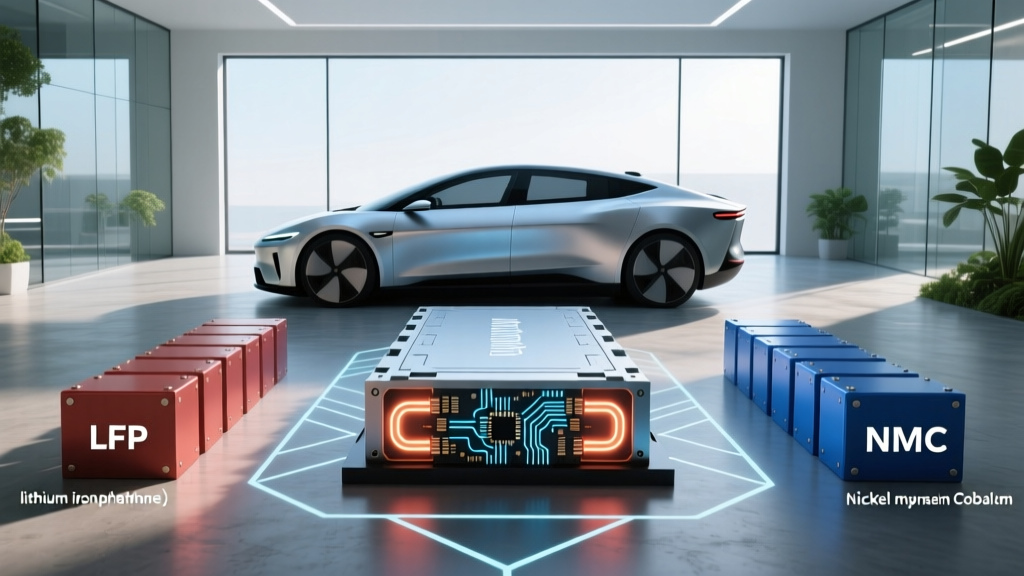
Tesla currently uses two primary cathode chemistries across its consumer vehicles, plus a structural 4680 cell format that appears in specific trims:
- LFP (Lithium Iron Phosphate): Standard Range Model 3 and Model Y vehicles sold in North America. These use prismatic cells primarily sourced from CATL.
- NMC/NCA (Nickel Manganese Cobalt / Nickel Cobalt Aluminum): Long Range and Performance variants of Model 3 and Model Y, plus Model S and Model X. Higher energy density for maximum range.
- 4680 Structural Pack (NMC-based): Select Model Y vehicles built at Giga Texas with the structural battery pack. This uses Tesla's larger cylindrical cell format as a stressed chassis member.
The chemistry you get is not optional — it's tied to the trim level. A Standard Range Model Y Rear-Wheel Drive gets LFP. A Long Range AWD gets NMC. This has practical implications for how you charge, how the battery ages, and how it performs in cold weather.
LFP vs NMC/NCA: The Chemistry Trade-Offs
This is the most consequential battery decision you'll make when choosing a Tesla trim. Here's how the two chemistries compare across the metrics that matter:
| Attribute | LFP (LiFePO4) | NMC / NCA |
|---|---|---|
| Energy density (cell-level) | ~160–180 Wh/kg | ~250–300 Wh/kg |
| Typical pack size in Tesla | ~60 kWh (Model 3/Y RWD) | ~75–82 kWh (LR/Performance) |
| Cycle life (to 80% SoH) | 3,000–5,000+ cycles | 1,000–2,000 cycles |
| Recommended daily charge limit | 100% (Tesla recommends weekly 100% charge) | 80% for daily, 100% for trips |
| Cold-weather range loss | Greater — ~30–40% loss below freezing | Moderate — ~20–30% loss below freezing |
| DC fast-charge speed | Slower peak (~170 kW), broader flat curve | Faster peak (~250 kW), steeper taper |
| Cost per kWh (cell-level) | Lower — ~$70–90/kWh | Higher — ~$100–130/kWh |
| Cobalt content | None | Present (supply chain/ethical concern) |
| Thermal stability | Excellent — higher runaway threshold | Good — requires more active management |
The practical takeaway: LFP wins on longevity, cost, and the convenience of charging to 100% daily without degradation anxiety. NMC wins on range per kWh and cold-weather performance. If you live in Minnesota and regularly drive 200+ miles in January, NMC is the better fit. If you commute 40 miles round-trip in Atlanta and want a battery that will outlast the car's body, LFP is ideal.
The 4680 Cell: What's Real in 2026
Tesla unveiled the 4680 cylindrical cell (46mm diameter, 80mm height) at Battery Day in 2020, promising a 5x increase in energy capacity per cell, 16% range improvement, and dramatic cost reduction through a tabless electrode design and dry-coating manufacturing process.
As of 2026, the 4680 cell is in production at Giga Texas and is used in select Model Y vehicles with the structural battery pack. However, the rollout has been more measured than the original timeline suggested:
- Energy density gains: Real-world range improvement in 4680-equipped Model Y vehicles is modest — roughly 5–8% over the equivalent 2170-cell pack, not the full 16% initially projected. The structural pack design saves weight but the cell-level energy density has not yet reached the original targets.
- Dry electrode coating: Tesla has been scaling this manufacturing process, but yields and throughput remain a constraint. Some 4680 cells still use a wet-coating process as a bridge.
- Availability: You cannot currently order a 4680-equipped vehicle as a distinct option. It's allocated based on production batch and factory.
The 4680 is real, it's in cars on the road, and it works — but it has not yet delivered the step-change cost reduction that would make EVs price-competitive with ICE vehicles at every segment. According to Tesla's official communications, the company continues to ramp 4680 production alongside its established 2170 and prismatic LFP supply chains.
Degradation Data: What Actually Happens Over Time
Battery degradation is the single biggest long-term ownership concern, and Tesla's fleet provides some of the best public data available because of the volume of vehicles and telematics tracking.
Based on aggregated owner data, Tesla Impact Reports, and third-party analysis from sources like fueleconomy.gov and EV testing organizations:
| Mileage | Average Capacity Retention | Notes |
|---|---|---|
| 25,000 mi | ~95–97% | Initial steeper drop, then plateau |
| 50,000 mi | ~92–95% | Degradation curve flattens significantly |
| 100,000 mi | ~88–92% | Most packs well above warranty threshold |
| 150,000 mi | ~84–90% | Approaching warranty threshold for some packs |
| 200,000+ mi | ~80–87% | High-mileage outliers; some packs replaced under warranty |
LFP packs show different behavior: Because LFP chemistry tolerates 100% state-of-charge without the same degradation penalty, LFP-equipped Teslas often show slightly better capacity retention at equivalent mileage — particularly for owners who charge to 100% regularly as Tesla recommends. However, LFP's lower energy density means you start with fewer miles of range, so a 90% retention on a 272-mile EPA range leaves you with ~245 miles versus ~298 miles on a 330-mile NMC pack at the same retention percentage.
Cold-weather acceleration of degradation is minimal thanks to Tesla's active thermal management system, which preconditioning and battery heating mitigate. The bigger degradation risk is sustained high state-of-charge at elevated temperatures — which is why Tesla recommends 80% daily limits for NMC packs.
Warranty Terms: What Tesla Actually Covers
Tesla's battery warranty is one of the stronger guarantees in the industry, but the specifics matter — especially the capacity retention threshold:
| Model / Trim | Warranty Period | Mileage Limit | Minimum Capacity Retention |
|---|---|---|---|
| Model 3 RWD (LFP) | 8 years | 100,000 miles | 70% |
| Model 3 Long Range / Performance | 8 years | 120,000 miles | 70% |
| Model Y RWD (LFP) | 8 years | 100,000 miles | 70% |
| Model Y LR / Performance | 8 years | 120,000 miles | 70% |
| Model S / Model X | 8 years | 150,000 miles | 70% |
Key details owners should know:
- The 70% threshold means Tesla will replace or repair the battery if it drops below 70% of original capacity within the warranty period — whichever comes first (time or miles).
- The warranty covers defects and excessive degradation. It does not cover damage from accidents, flooding, or unauthorized modifications.
- Tesla may replace with a new or remanufactured pack of equivalent or greater capacity.
- Warranty transfers to subsequent owners, which supports resale value.
- The IRS §30D federal tax credit has separate battery-sourcing requirements that are distinct from Tesla's warranty — consult a tax professional for eligibility.
Replacement Cost: What Happens After the Warranty
Most Tesla batteries outlast the warranty period with capacity to spare. But if you're planning to keep a Tesla for 15+ years or buy a high-mileage used example, replacement cost is a legitimate planning factor.
| Model | Pack Size | Estimated Replacement Cost |
|---|---|---|
| Model 3 RWD (LFP) | ~60 kWh | $12,000 – $16,000 |
| Model 3 Long Range (NMC) | ~75–82 kWh | $14,000 – $20,000 |
| Model Y Long Range (NMC) | ~75–82 kWh | $14,000 – $20,000 |
| Model S / Model X | ~90–100 kWh | $18,000 – $25,000 |
These figures include the pack and labor at a Tesla Service Center. Third-party EV repair shops are beginning to offer module-level repairs (replacing individual degraded modules rather than the full pack) for $5,000–$10,000, though availability varies by region and model year.
Context that matters: At an average degradation rate of ~1% per year for NMC packs (and slightly less for LFP), a Tesla battery reaching the 70% threshold would typically require 200,000+ miles or 15+ years of use. The vast majority of Tesla vehicles are scrapped, sold, or traded before the battery needs replacement. According to data referenced by NHTSA and industry analyses, catastrophic battery failure (not gradual degradation) in Teslas is rare — well under 1% of vehicles.
Maximizing Battery Health: A Practical Care Guide
Whether you have LFP or NMC, these practices will help your Tesla's battery retain capacity longer:
Battery Care Checklist
- NMC owners: Set daily charge limit to 80%. Charge to 100% only when you need the full range for a trip, and try to start driving shortly after reaching 100% rather than letting the car sit fully charged.
- LFP owners: Follow Tesla's recommendation to charge to 100% at least once per week. This helps the BMS (Battery Management System) recalibrate and gives you an accurate range estimate — LFP's flat voltage curve makes state-of-charge estimation harder without periodic full charges.
- Minimize DC fast charging to what you need. Occasional Supercharging is fine — Tesla's thermal management handles it well. But if you have home Level 2 charging, use it for daily needs. Repeated daily DC fast charging accelerates degradation by ~1–3% over the battery's life compared to Level 2-only charging.
- Use preconditioning. Navigate to a Supercharger using the car's built-in navigation, and Tesla will automatically precondition the battery for optimal charge speed and reduced stress. In cold weather, precondition before driving to reduce range loss and improve regen braking.
- Avoid prolonged storage at extreme SoC. If leaving your Tesla for weeks (vacation, travel), set the charge limit to ~50% and leave it plugged in. Tesla's vampire drain and Sentry Mode can consume 1–3% per day.
- Park in shade or a garage when possible. Sustained high ambient temperatures with a high state of charge is the worst combination for lithium-ion degradation. Tesla's thermal management runs even when parked, but reducing the thermal load helps.
How to Check Your Tesla's Battery Health (SoH)
Tesla does not expose a direct "State of Health" percentage in the vehicle's interface the way some competitors do. But there are reliable methods to assess your pack's condition:
- Range comparison method: Charge to 100% (for LFP) or your known full charge (for NMC at 100% on a trip). Compare the displayed rated range to the EPA sticker range when the car was new. A Model 3 Long Range that showed 358 miles at 100% when new and now shows 322 miles has roughly 90% capacity retention. Note: displayed range is affected by driving habits and temperature — do this comparison under similar conditions.
- Energy screen / trip data: Monitor your Wh/mi consumption over time. If your average efficiency worsens by 10–15% with the same driving patterns and tire condition, degradation is a likely factor.
- Third-party OBD-II tools: Devices like Scan My Tesla (via OBD-II dongle and app) can read the BMS-reported nominal full pack energy (kWh) and compare it to the original pack capacity. This gives a more precise SoH percentage than the range display alone.
- Tesla Service diagnostic: You can request a battery health report through a Tesla Service Center visit or mobile service appointment. This provides the official capacity assessment that Tesla uses for warranty claims.
Emerging Battery Tech: Solid-State and Silicon Anodes
Tesla, like every major automaker and battery manufacturer, is researching next-generation cell technologies. Here's where things stand — with realistic timelines, not press-release optimism:
Solid-state batteries: These replace the liquid electrolyte with a solid material, promising higher energy density (~400–500 Wh/kg at cell level), faster charging, and improved safety. Companies like QuantumScape, Toyota, and Samsung SDI have demonstrated prototype cells. However, manufacturing scale-up remains the unsolved challenge. Realistic timeline for consumer vehicles: 2029–2032 at the earliest, and likely in premium/limited-production vehicles first. Tesla has not announced a solid-state program and continues to invest heavily in liquid-electrolyte 4680 cells.
Silicon anode technology: Replacing graphite anodes with silicon can boost energy density by 20–40%. Tesla's 4680 cells already incorporate some silicon in the anode. Companies like Sila Nanotechnologies and Group14 are scaling silicon anode materials. Expect incremental adoption through the late 2020s as costs decrease — this is evolution, not revolution.
Sodium-ion batteries: CATL and others are producing sodium-ion cells for lower-cost, lower-range applications. These could appear in future entry-level Tesla vehicles or energy storage products, but their lower energy density (~120–150 Wh/kg) limits them to shorter-range applications. Not expected in US-market Tesla vehicles before 2028.
None of these technologies are available in production Tesla vehicles today. If you're buying now, LFP and NMC/4680 are your options — and both are mature, well-understood chemistries with extensive real-world track records.
Frequently Asked Questions
How long do Tesla batteries last in real-world use?
Based on fleet data, most Tesla NMC/NCA batteries retain 85–92% of original capacity at 100,000 miles and 80–87% at 200,000 miles. LFP packs show slightly better retention. At an average of 12,000–15,000 miles per year, a Tesla battery will typically last 15–20 years before approaching the 70% warranty threshold. Catastrophic failure is rare (under 1%). Most Tesla batteries outlast the car's body, suspension, and interior.
How much does it cost to replace a Tesla battery?
Out-of-warranty replacement at a Tesla Service Center costs approximately $12,000–$25,000 depending on the model and pack size. Third-party module-level repairs can reduce this to $5,000–$10,000. However, the vast majority of Tesla owners never need a battery replacement — the pack typically retains sufficient capacity for the vehicle's useful life.
What does the Tesla battery warranty cover?
Tesla warrants the battery against defects and capacity loss below 70% for 8 years and 100,000–150,000 miles (depending on model). This covers replacement or repair with a pack of equivalent or greater capacity. It does not cover accident damage, flooding, or unauthorized modifications. The warranty transfers to subsequent owners.
LFP vs NMC — which Tesla battery is better?
Neither is universally better; they serve different use cases. LFP is better if you want maximum cycle life, lower cost, the convenience of 100% daily charging, and don't need the longest possible range. NMC is better if you need maximum range (Long Range/Performance trims), live in a cold climate where LFP's greater cold-weather loss is a problem, or frequently take long road trips where the higher energy density matters. For most commuters, LFP is the pragmatic choice. For road-trippers and cold-climate drivers, NMC justifies the premium.
Does frequent Supercharging damage the battery?
Occasional Supercharging causes negligible additional degradation thanks to Tesla's active thermal management, which keeps the pack within safe temperature bounds during DC fast charging. However, exclusive reliance on DC fast charging (daily Supercharging with no Level 2 use) can accelerate degradation by 1–3% over the battery's lifetime compared to predominantly Level 2 charging. For daily needs, home Level 2 charging at 7–11 kW is gentler and more convenient. Use Supercharging for road trips without concern.