If you've searched for "Tesla battery swap" recently, you've likely hit a wall of outdated articles referencing a 2013 pilot program that Tesla quietly shelved over a decade ago. As of 2026, Tesla does not offer battery swapping for any of its consumer vehicles — not the Model 3, Model Y, Model S, or Model X. The company instead relies on its extensive Supercharger network and continuous improvements in battery chemistry and longevity to address range and degradation concerns.
But the question behind the search is real: What happens when my Tesla's battery degrades? How much does replacement cost? How long will it actually last? This guide answers those questions with current data, covering Tesla's specific battery chemistries, real-world degradation figures, warranty coverage, and the actual cost of a replacement pack — while also comparing Tesla's approach to the battery-swap model that companies like NIO continue to pursue overseas.
Why Tesla Killed the Battery Swap Program
In 2013, Tesla demonstrated a 90-second battery swap station at its Harris Ranch, California location, positioning it as an alternative to the then-slower Supercharger network. The pilot served a limited number of Model S owners on the LA-SF corridor. By 2015, the program was effectively dead. Several factors drove the decision:
- Supercharger speed caught up. DC fast charging advanced from ~120 kW in 2013 to 250 kW (V3) and now 350+ kW (V4) in 2026, making 15-25 minute charge stops practical and eliminating the speed advantage of swapping.
- Logistical complexity. Maintaining an inventory of charged, compatible battery packs at each station — across multiple vehicle platforms and battery generations — proved operationally and financially unsustainable at scale.
- Owner preference. Surveys showed Tesla owners preferred charging their own pack over receiving an unknown replacement module with potentially different health and mileage history.
- Battery longevity exceeded expectations. Tesla's own 2024 Impact Report showed Model S/X batteries retained roughly 88% capacity at 200,000 miles, reducing the need for swaps or replacements during typical ownership.
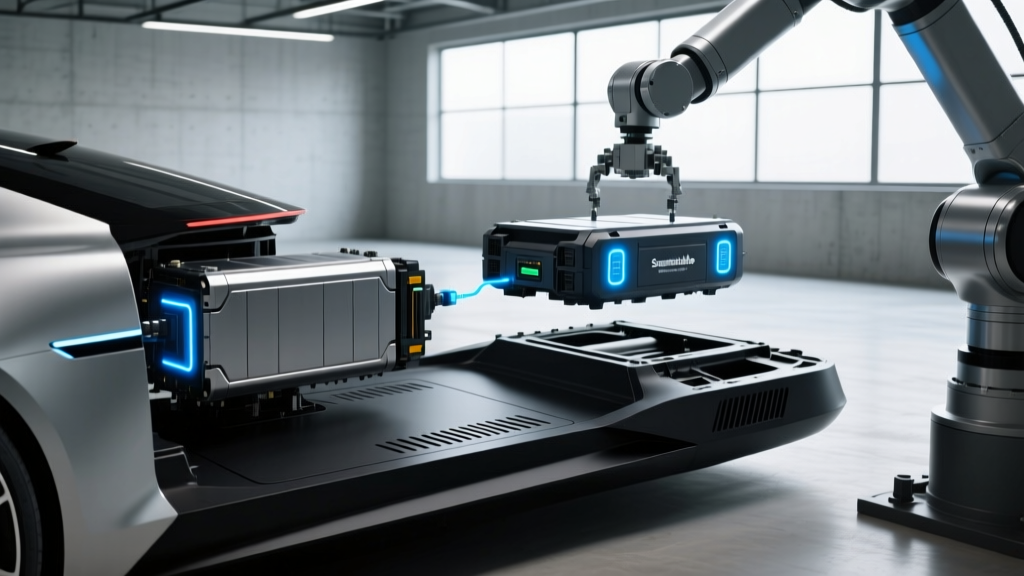
Today, NIO operates over 2,700 battery swap stations (primarily in China and expanding into Europe), offering sub-5-minute swaps for its vehicles. But for the US market and Tesla owners specifically, battery replacement — not swapping — remains the path when a pack eventually needs service.
Tesla Battery Chemistry: LFP vs. NCA/NMC Explained
Tesla uses two primary battery chemistries across its 2026 lineup, and the chemistry in your vehicle significantly affects degradation behavior, charging habits, and cold-weather performance.
| Attribute | LFP (Lithium Iron Phosphate) | NCA/NMC (Nickel-based) |
|---|---|---|
| Vehicles (2026) | Model 3 RWD, Model Y RWD (Standard Range) | Model 3/Y Long Range & Performance, Model S, Model X, Cybertruck |
| Energy Density | Lower (~160 Wh/kg cell-level) | Higher (~250-270 Wh/kg cell-level) |
| Typical Usable Capacity | 57-60 kWh (Model 3 RWD) | 75-100 kWh (varies by model/trim) |
| Cycle Life | 3,000-5,000+ cycles to 80% SoH | 1,500-2,500 cycles to 80% SoH |
| Cold Performance | More range loss in cold (~25-35% at 20°F) | Better cold performance (~15-25% loss at 20°F) |
| Charging to 100% | Recommended weekly to 100% for BMS calibration | Daily limit to 80%; 100% only for trips |
| Cost | Lower (no nickel/cobalt) | Higher (nickel and cobalt exposure) |
| Thermal Stability | Excellent (higher runaway threshold) | Good but requires more active thermal management |
The practical takeaway: LFP batteries trade range per charge for dramatically longer cycle life and lower cost. If you own a Model 3 RWD with LFP, you can charge to 100% daily without meaningful degradation concern. NCA/NMC packs offer more range but benefit from staying between 20-80% for daily use. Tesla's mobile app allows you to set charge limits accordingly.
How Long Do Tesla Batteries Actually Last? Degradation Data
Tesla publishes fleet degradation data in its annual Impact Report, and third-party aggregators like fueleconomy.gov and owner databases (Teslanomics, Recurrent Auto) provide real-world tracking. Here's what the numbers show:
Tesla Fleet Degradation Curve (Aggregated Data):
- Year 1 / 15,000 miles: ~2-4% capacity loss (initial formation loss, stabilizes quickly)
- Year 3 / 45,000 miles: ~5-7% total loss
- Year 5 / 75,000 miles: ~7-10% total loss
- Year 8 / 120,000 miles: ~10-14% total loss
- 200,000 miles: ~12-15% total loss (Model S/X NCA fleet average per Tesla Impact Report)
LFP-equipped vehicles (Model 3 RWD, Model Y RWD) show even slower degradation in Recurrent Auto's 2025 dataset, with many vehicles showing <5% loss at 60,000 miles. The degradation curve flattens significantly after the first 10,000-20,000 miles — the initial drop is the steepest part.
Real-world context: A 2021 Model 3 Long Range (NCA, 82 kWh usable, EPA 353 miles new) with 75,000 miles today would typically retain ~310-325 miles of EPA-equivalent range at full charge — still highly usable and well above what most daily commutes require.
Tesla Battery Warranty: What's Covered and for How Long
Tesla's battery and drive unit warranty is one of the stronger offerings in the EV market. Coverage varies by model and battery type:
| Model | Warranty Period | Mileage Limit | Minimum Capacity Retention |
|---|---|---|---|
| Model 3 RWD (LFP) | 8 years | 100,000 miles | 70% |
| Model 3 Long Range / Performance | 8 years | 120,000 miles | 70% |
| Model Y (all trims) | 8 years | 120,000 miles | 70% |
| Model S / Model X | 8 years | 150,000 miles | 70% |
| Cybertruck | 8 years | 120,000 miles | 70% |
What triggers a warranty claim: If your battery's State of Health (SoH) drops below 70% within the warranty period, Tesla will repair or replace the pack. In practice, this means your 350-mile Model 3 Long Range would need to degrade to under 245 miles of range at full charge — a threshold that fleet data shows very few vehicles hit within 8 years or 120,000 miles.
What's NOT covered: Damage from accidents, flooding, improper modifications, or using the vehicle as a stationary power source beyond Tesla's specified limits. Cosmetic issues or minor range variance from software updates are also excluded.
Tesla Battery Replacement Cost: 2026 Pricing by Model
If your battery degrades beyond the 70% warranty threshold after the warranty expires — or if it's damaged outside warranty coverage — here's what replacement costs look like in 2026:
| Model | Battery Size (Usable) | Chemistry | Replacement Cost Range | Typical When Needed |
|---|---|---|---|---|
| Model 3 RWD | 57 kWh | LFP | $12,000 - $14,500 | 200,000+ miles (if ever) |
| Model 3 LR / Performance | 75-82 kWh | NCA/NMC | $14,000 - $18,000 | 200,000+ miles (if ever) |
| Model Y (all trims) | 60-82 kWh | LFP or NCA | $13,000 - $18,000 | 200,000+ miles (if ever) |
| Model S | 95-100 kWh | NMC/NCA | $18,000 - $22,000 | 200,000+ miles (if ever) |
| Model X | 95-100 kWh | NMC/NCA | $18,000 - $23,000 | 200,000+ miles (if ever) |
| Cybertruck | ~123 kWh | NMC (4680 cells) | $20,000 - $25,000 | Too new for data (announced 2023) |
Important context on these costs:
- These prices include the battery pack, labor, and Tesla service center diagnostics. Third-party EV shops may offer 10-20% savings but can void remaining warranty coverage.
- Tesla increasingly uses remanufactured packs for out-of-warranty replacements — packs that have been tested, had weak modules replaced, and certified to meet minimum capacity thresholds. These cost 15-25% less than new packs.
- Module-level repair is sometimes possible. If only one or two modules within the pack have degraded, Tesla service centers can replace individual modules for $2,000-$5,000 rather than the entire pack.
- Battery costs per kWh have fallen from ~$200/kWh in 2020 to roughly $110-130/kWh in 2026 (pack-level), continuing a downward trend that makes future replacements progressively cheaper.
The honest truth: Based on current degradation data, the vast majority of Tesla owners will sell or trade their vehicle before needing a battery replacement. The pack is statistically likely to outlast the rest of the car's useful life.
Factors That Accelerate (or Slow) Battery Degradation
Your battery's lifespan isn't fixed — it's heavily influenced by how you use and charge the vehicle. Here are the primary factors, ranked by impact:
High-Impact Factors:
- Extreme State of Charge habits: Routinely charging NCA/NMC packs to 100% and leaving them sitting at full charge accelerates degradation. Set daily limits to 80%. LFP packs are exempt — Tesla recommends charging to 100% at least weekly for BMS calibration.
- Deep discharge below 10%: Letting the battery sit at very low SoC (under 5%) for extended periods stresses the cells. Plug in when you arrive home rather than letting it sit depleted overnight.
- Extreme heat exposure: Repeated exposure to ambient temperatures above 100°F, especially while at high SoC, accelerates chemical degradation. Tesla's thermal management system actively cools the pack, but preconditioning and garage parking help in hot climates.
Moderate-Impact Factors:
- DC fast charging frequency: Exclusively using Superchargers (150-350 kW) vs. Level 2 home charging adds roughly 1-3% additional degradation over 100,000 miles based on current data. Occasional fast charging is not a concern — it's daily-exclusive fast charging that shows a measurable (but small) effect.
- Cold-weather charging without preconditioning: Charging a cold battery (below 32°F) at high power causes lithium plating. Always use Tesla's navigation-based preconditioning — the car automatically warms the battery when you navigate to a Supercharger.
Low-Impact Factors:
- Total mileage alone: Calendar aging (time) matters nearly as much as cycle aging (miles). A 5-year-old Tesla with 30,000 miles may show similar degradation to one with 60,000 miles.
- Regenerative braking settings: No measurable impact on battery longevity.
How to Check Your Tesla's Battery Health (State of Health)
Tesla doesn't display a direct State of Health (SoH) percentage in the vehicle's interface the way some competitors do, but there are several reliable methods to assess your pack's condition:
Method 1: The Range Math Method
Charge your Tesla to 100% (for LFP) or 90-100% (for NCA/NMC — do this once for testing, not daily). Note the displayed estimated range. Compare it to the EPA-rated range when new (e.g., 358 miles for a 2024 Model 3 Long Range). Adjust for the charge percentage: if you charged to 90% and see 300 miles, your 100% equivalent is ~333 miles. That's 93% of original — roughly 7% degradation.
Method 2: Tesla Service Mode (2024+ vehicles)
On vehicles running software version 2024.20 or later, you can access limited battery health data through the service menu. Navigate to Controls > Software > hold the model name for 3 seconds. Battery health metrics vary by software version and aren't as granular as third-party tools.
Method 3: Third-Party Apps
Apps like TeslaFi, Tessie, and Stats log charging data over time and can estimate SoH by comparing energy added during charges to the battery's known capacity. These provide a more accurate long-term picture than a single snapshot.
Method 4: Tesla Service Center Diagnostic
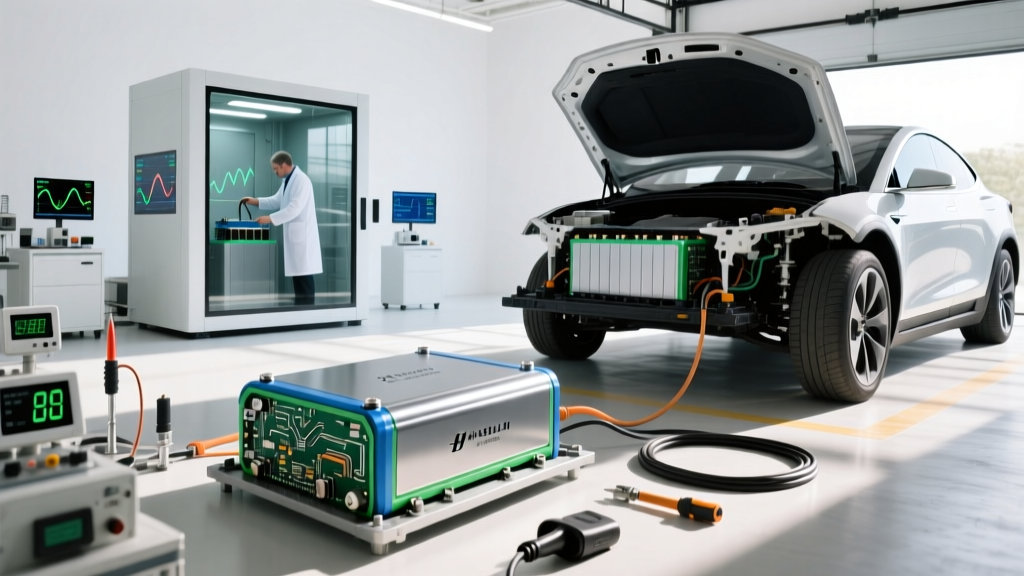
If you suspect abnormal degradation (e.g., approaching the 70% warranty threshold), schedule a service appointment. Tesla can run a full pack diagnostic that provides precise SoH, individual module voltage variance, and internal resistance readings.
Beyond Tesla: The Battery Swap Alternative
While Tesla has committed to charging infrastructure over swapping, it's worth understanding the swap model for context:
NIO's approach (China/Europe): NIO's Power Swap stations replace a depleted battery with a fully charged one in under 5 minutes. Owners can subscribe to different battery sizes (75 kWh for city, 150 kWh for road trips) on a monthly basis, effectively separating battery cost from vehicle cost. The trade-off is that you never truly "own" the battery — you're renting capacity.
Why it hasn't come to the US: The US market lacks the density of NIO vehicles to justify station infrastructure. Tesla's Supercharger network (now open to other brands via NACS) provides a more universal solution. Ample, a US-based battery swap startup focused on commercial fleets, has partnered with companies like UPS but does not serve consumer vehicles.
For Tesla owners: Battery swapping isn't an option, but it's also increasingly unnecessary. With 250-350 kW Superchargers delivering 10-80% in 15-25 minutes and battery packs lasting 200,000+ miles with under 15% degradation, the problem that swapping was meant to solve has largely been addressed by chemistry and charging improvements.
Future Battery Tech: What's Coming (and When)
Several next-generation battery technologies are in development that could further reduce degradation concerns and replacement costs. These are forward-looking and not currently available in any production Tesla:
- Dry electrode manufacturing (4680 cells): Tesla's in-house 4680 cells, currently in production for Cybertruck and some Model Y vehicles, use a dry electrode process that reduces manufacturing cost and energy. This doesn't change chemistry but makes replacement packs cheaper to produce over time.
- Silicon-dominant anodes: Companies like Sila Nanotechnologies and Group14 are developing silicon anode materials that could increase energy density by 20-40%. Expected in limited production EVs by 2027-2028, but longevity data is still being established.
- Solid-state batteries: Toyota, Samsung SDI, and QuantumScape have announced solid-state prototypes promising 500+ mile range and faster charging. Realistic production timelines for consumer vehicles remain 2028-2030 at the earliest, with initial availability likely in premium/limited models. Solid-state is not available in any vehicle you can buy today.
- Sodium-ion batteries: CATL has begun production of sodium-ion cells for lower-cost, shorter-range EVs. These offer excellent cycle life and cold performance but lower energy density. Possible future use in entry-level Tesla models, but unconfirmed.
Does Tesla offer battery swapping in 2026?
No. Tesla discontinued its battery swap pilot program in 2015. The company has invested in its Supercharger network (now 250-350 kW) and battery longevity improvements instead. Battery swapping for consumer vehicles in the US is currently only available through NIO in limited markets.
How much does it cost to replace a Tesla battery out of warranty?
Out-of-warranty Tesla battery replacement costs range from $12,000 for a Model 3 RWD (LFP, 57 kWh) to $22,000-$25,000 for a Model S/X or Cybertruck. Module-level repairs, when possible, cost $2,000-$5,000. Remanufactured packs offer 15-25% savings over new packs.
Will I need to replace my Tesla battery during ownership?
Statistically, very unlikely. Tesla's fleet data shows average battery degradation of 12-15% at 200,000 miles. Most owners sell or trade their vehicle well before reaching a point where replacement is necessary. The 8-year/100,000-150,000-mile warranty covers defects and degradation below 70% capacity.
Is LFP or NCA better for long-term battery health?
LFP (lithium iron phosphate) batteries have significantly longer cycle life — 3,000-5,000+ cycles to 80% SoH vs. 1,500-2,500 for NCA/NMC. However, NCA/NMC offers higher energy density (more range per charge) and better cold-weather performance. LFP is better for owners who prioritize longevity and can accept slightly less range; NCA/NMC suits those who need maximum range and frequently drive in cold climates.
Does frequent Supercharging damage my Tesla battery?
Exclusive DC fast charging adds roughly 1-3% additional degradation over 100,000 miles compared to primarily Level 2 home charging — a small and manageable difference. Tesla's battery management system limits charge rate when the battery is cold or near full. The key is to always use navigation-based preconditioning when heading to a Supercharger, which warms the battery to optimal temperature before charging begins.
How do I check my Tesla battery's State of Health?
Charge to 100% (or a known percentage), note the displayed range, and compare it to the EPA-rated range when new. For more precise tracking over time, third-party apps like TeslaFi or Tessie log charge data and estimate SoH. Tesla Service Centers can run a full diagnostic if you suspect abnormal degradation.