Who Supplies Tesla's Batteries in 2026?
If you've searched for "tesla battery supplier" hoping for a single answer, you'll find a fragmented global supply chain instead. Tesla does not manufacture its own battery cells at scale — it sources from multiple tier-one cell makers, then assembles them into structural packs at its Gigafactories. As of the 2026 model year, Tesla's primary cell suppliers are:
- Panasonic — Longtime partner producing 2170-format NCA/NMC cells at Giga Nevada (and 4680 cells at Giga Texas). Supplies Long Range and Performance variants of the Model 3 and Model Y.
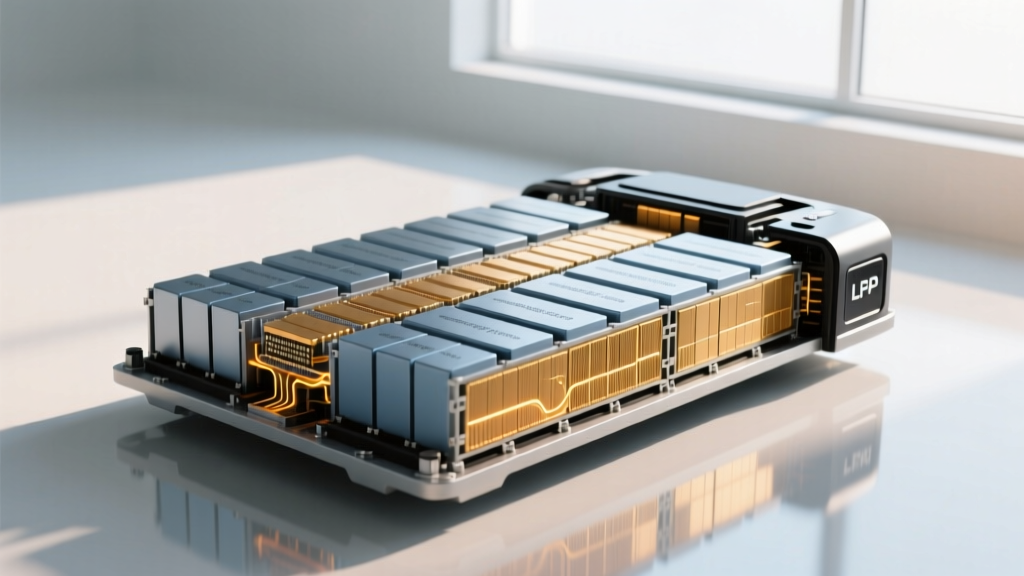
- CATL (Contemporary Amperex Technology Co. Limited) — Supplies prismatic LFP (lithium iron phosphate) cells, primarily for the Model 3 Standard Range and Model Y Standard Range sold in North America, Europe, and China.
- LG Energy Solution — Provides NMC cells for certain Model 3 and Model Y builds, particularly vehicles destined for European and Asian markets, and increasingly for North American production.
- BYD — Has supplied LFP Blade cells for Tesla's Berlin-built Model Y rear-wheel-drive variant, though volumes and allocation shift by quarter.
Why does this matter to you as a buyer? Because the supplier often dictates the chemistry inside your pack, and chemistry determines how you should charge, how the car behaves in winter, and how long the battery is likely to last. A 2026 Model 3 Long Range with Panasonic NCA cells is a fundamentally different ownership proposition from a 2026 Model 3 Standard Range with CATL LFP — even though the badges look identical.
LFP vs NMC/NCA: Which Tesla Chemistry Is Right for You?
Tesla currently uses two major cathode chemistries across its lineup. Here's how they stack up on the metrics that matter:
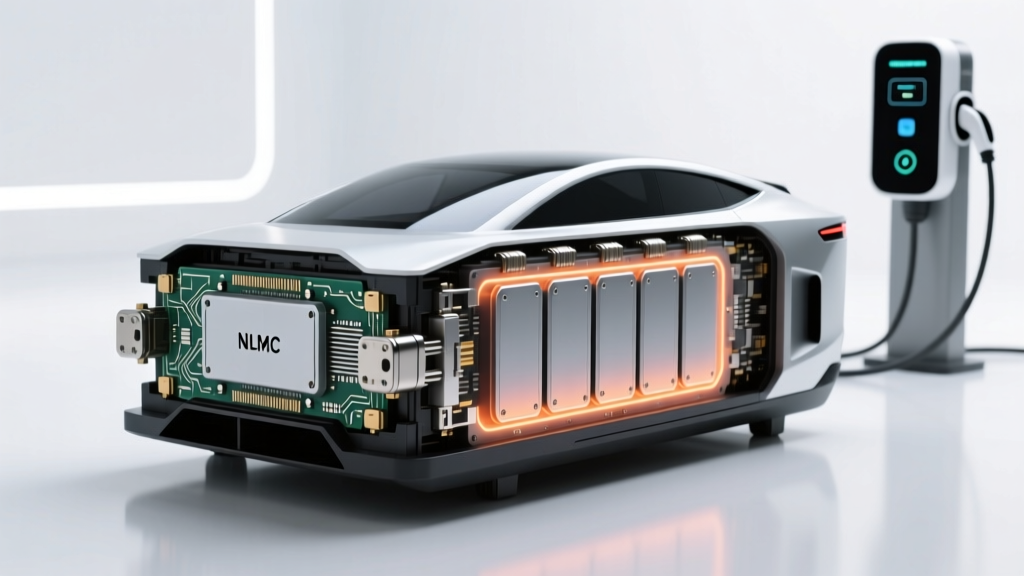
| Attribute | LFP (CATL / BYD) | NMC / NCA (Panasonic / LG) |
|---|---|---|
| Energy density | Lower (~160–180 Wh/kg cell-level) | Higher (~250–290 Wh/kg cell-level) |
| Typical pack size (2026 Tesla) | ~57–60 kWh usable (Standard Range) | ~75–82 kWh usable (Long Range / Performance) |
| EPA range (Model 3, 2026) | ~272 mi | ~341 mi (Long Range AWD) |
| Cycle life | 3,000–5,000+ cycles to 80% SoH | 1,000–2,000 cycles to 80% SoH |
| Cold-weather range loss | Greater (~30–40% at 20°F) | Moderate (~20–30% at 20°F) |
| Recommended daily SoC | 100% (Tesla explicitly recommends) | 80% daily; 100% for trips only |
| Cobalt / nickel content | None | Contains nickel, some cobalt |
| Cost per kWh (cell-level) | Lower | Higher |
| Fast-charge tolerance | Good; less taper anxiety | Excellent peak kW, but taper above 80% |
The practical verdict: If you can charge at home nightly and don't need 340+ miles of EPA range, LFP is the more durable, lower-stress chemistry. You can (and should) charge it to 100% daily, which keeps the BMS calibration accurate and eliminates the "baby the battery" anxiety NMC owners feel. If you road-trip frequently, live in a cold climate, or need maximum range, NMC/NCA in a Long Range model is the better fit — just respect the 80% daily limit.
How Long Do Tesla Batteries Actually Last?
Tesla's 2025 Impact Report (the most recent full-year dataset published) states that Model 3 and Model Y batteries retain an average of ~85% of original capacity after 200,000 miles — roughly 15 years of driving at the US average of ~13,500 miles/year. That lines up with independent fleet data from companies like Recurrent Auto, which tracks over 15,000 Teslas in real-world conditions.
Typical degradation curve (NMC/NCA, Model 3 Long Range):
- Year 1 / 15k mi: ~3–5% loss (initial formation drop)
- Year 3 / 45k mi: ~7–9% total loss
- Year 5 / 75k mi: ~10–12% total loss
- Year 8 / 120k mi: ~13–16% total loss
- Year 10+ / 150k+ mi: ~15–20% total loss (curve flattens significantly)
LFP degradation (Model 3 Standard Range, CATL): Slower linear loss — typically 5–8% at 100,000 miles, with a much flatter curve afterward. Many LFP packs are projected to exceed 300,000 miles before hitting 80% State of Health.
Two important caveats: (1) Degradation is non-linear — the steepest loss happens in the first 10–20k miles, then the curve flattens dramatically. (2) Calendar aging matters. A garage-kept Tesla driven 5,000 miles/year will still lose capacity over time, especially if stored at high SoC in hot climates.
What Does Tesla's Battery Warranty Cover?
Tesla's high-voltage traction battery warranty (not the 12V auxiliary battery — that's a separate, inexpensive component) is one of the stronger guarantees in the EV market:
| Model / Variant | Warranty Period | Mileage Cap | Minimum Capacity Retention |
|---|---|---|---|
| Model 3 RWD (LFP) | 8 years | 100,000 miles | 70% |
| Model 3 Long Range / Performance | 8 years | 120,000 miles | 70% |
| Model Y (all trims) | 8 years | 120,000 miles | 70% |
| Model S / Model X | 8 years | 150,000 miles | 70% |
What's covered: Battery failure, defect, or capacity loss below the 70% threshold within the warranty window. Tesla will repair or replace the pack (sometimes with a remanufactured unit of equivalent capacity) at no cost.
What's NOT covered: Normal degradation above 70%, cosmetic issues, damage from accidents, flooding, unauthorized modifications, or using the vehicle as a stationary power source outside of approved V2H/V2L configurations. Also, if you ignore Tesla's stated charging guidelines (e.g., leaving an NMC vehicle at 100% for weeks), warranty claims may be scrutinized.
According to Tesla's official warranty documentation, the battery warranty transfers to subsequent owners, which supports resale value.
How Much Does a Tesla Battery Replacement Cost?
This is the question that generates the most fear — and the most misinformation. Let's anchor it in real numbers:
| Model / Pack | Approx. Pack Size | Out-of-Warranty Replacement Cost (2026) | Typical Replacement Timeline |
|---|---|---|---|
| Model 3 Standard Range (LFP) | ~57–60 kWh | $10,000–$13,000 | Rarely needed before 200k+ mi |
| Model 3/Y Long Range (NMC/NCA) | ~75–82 kWh | $13,000–$18,000 | Rarely needed before 180k+ mi |
| Model S / Model X | ~90–100 kWh | $18,000–$25,000 | Some early packs replaced at 120–160k mi |
| Cybertruck | ~123 kWh (est.) | $20,000–$28,000 (est.) | Insufficient long-term data |
The reality check: The vast majority of Tesla owners will never pay for a battery replacement. Most packs outlast the vehicle's useful life or are covered under warranty. Out-of-warranty failures in modern 2170 and 4680 packs are statistically uncommon — Tesla's own data suggests fewer than 1% of packs are replaced under warranty for the Model 3/Y generation. When replacements do occur, Tesla increasingly uses remanufactured packs (cells from returned packs that still meet capacity thresholds), which reduces cost.
If you're buying a used Tesla out of warranty, a pre-purchase battery health check (via the car's own SoH readout or a third-party service like Recurrent) is the single most important step.
Factors That Accelerate (or Protect) Battery Life
Habits that protect your pack:
- NMC/NCA owners: Set daily charge limit to 80%. Charge to 100% only when you'll drive within a few hours.
- LFP owners: Charge to 100% at least once per week (Tesla recommends this for BMS calibration).
- Minimize DC fast charging to what you need. Occasional Supercharging is fine — daily Supercharging accelerates degradation modestly (~2–4% additional loss over 100k miles based on fleet data).
- Use scheduled departure + preconditioning in cold weather. Warming the battery while plugged in avoids charging a cold pack, which causes lithium plating.
- Avoid prolonged storage above 90% SoC or below 10% SoC, especially in hot climates. If storing for weeks, target ~50%.
- Keep the car plugged in when possible. The thermal management system runs on shore power, not the pack, keeping the battery in its ideal 20–30°C range.
Habits that accelerate degradation:
- Repeatedly draining to 0% or sitting at 0% for days
- Leaving an NMC pack at 100% SoC in a hot garage for extended periods
- Frequent DC fast charging in extreme heat without preconditioning
- Aftermarket tuning that increases discharge C-rates beyond factory limits
How to Check Your Tesla's Battery Health (SoH)
Tesla does not surface a direct State of Health percentage in the vehicle UI the way some competitors do. Here's how to assess it:
- In-car range method: Charge to 100% (LFP) or your typical max (NMC). Note the displayed range. Compare to the original EPA rating for your trim. Example: a 2024 Model 3 Long Range originally rated at 341 mi EPA showing 300 mi at 100% suggests roughly ~12% degradation. This method is imprecise because displayed range is affected by temperature, driving style, and BMS drift.
- Tesla Service Mode: Accessible via the software menu (tap your VIN, then hold for ~5 seconds). The "Health Test" runs a static capacity estimate. Note: Tesla has restricted access to this in some software versions.
- Third-party tools: Services like Recurrent Auto (free enrollment) pull telemetry from your Tesla and provide a battery health report with range-over-time charts. ScanGauge-style OBD-II dongles that support Tesla's CAN bus can also read pack-level data.
- Tesla Service Center: Request a battery health report during a routine service visit. They can pull cell-level voltage variance data, which is the most reliable indicator of pack imbalance or failing modules.
For used-EV buyers, a documented SoH report is worth requesting before purchase — it's the EV equivalent of a compression test.
Emerging Battery Tech: Solid-State, Silicon Anode, and What's Real
Tesla's 4680 cell (currently produced at Giga Texas with a dry-coated cathode process) is the company's in-house next step — offering a ~16% energy density improvement over the 2170 and a structural pack design that reduces vehicle weight. These are in production now for the Cybertruck and some Model Y builds.
Silicon anode cells: Startups like Sila Nanotechnologies and Group14 are supplying silicon-dominant anode materials that replace graphite, boosting energy density by 20–40%. Tesla has publicly acknowledged testing silicon anode prototypes. Expect limited production integration in the 2027–2029 timeframe, not today.
Solid-state batteries: Toyota, Samsung SDI, and QuantumScape have all announced solid-state prototypes with impressive lab numbers (400+ Wh/kg, 10-minute fast charges). However, manufacturing yield, cost, and scale remain unsolved. No automaker — Tesla included — has a solid-state EV on sale as of 2026. Realistic volume-production timelines point to 2029–2032 for premium segments, with mainstream adoption likely post-2032.
Sodium-ion: CATL has begun shipping sodium-ion packs in Chinese-market vehicles. These are lower-cost, lower-energy-density alternatives suited for city cars and LFP-adjacent applications. Tesla has not announced sodium-ion adoption, but the supply chain is being watched closely.
The bottom line: incremental chemistry improvements (4680, silicon anode) will deliver 10–25% gains over the next 3–5 years. Solid-state is real but not imminent. If you need an EV now, today's LFP and NMC packs are mature, well-warrantied, and data-backed.
Frequently Asked Questions
Does my Tesla battery supplier affect my federal tax credit eligibility?
Indirectly, yes. The IRS §30D clean vehicle credit has battery-component and critical-mineral sourcing requirements that change annually. Vehicles with CATL-supplied LFP cells have faced scrutiny under the Foreign Entity of Concern (FEOC) rules effective 2024–2026. Tesla publishes a clean vehicle credit eligibility page updated by model and build date — always verify your specific VIN's eligibility before purchase, and consult a tax professional for your situation.
Is it true that LFP Tesla batteries are less affected by daily 100% charging?
Yes. LFP chemistry is inherently more stable at high SoC. Tesla's own guidance for LFP-equipped vehicles states: "Charge to 100% at least once per week." This is the opposite of NMC/NCA guidance. The trade-off is lower energy density (less range per kWh) and worse cold-weather performance.
How does cold weather affect Tesla battery range and health?
In sub-freezing temperatures, expect 20–40% range reduction depending on chemistry (LFP loses more), speed, and cabin heat usage. This is temporary — range returns when temperatures rise. For long-term health, always precondition the battery while plugged in before driving or charging in cold weather. Cold charging without preconditioning can cause lithium plating, which is permanent capacity loss.
Will a replacement Tesla battery be new or refurbished?
Under warranty, Tesla may install a remanufactured pack — one built from tested modules that meet or exceed the minimum capacity threshold (typically ≥90% of new). This is standard industry practice and is covered under the remaining warranty term. Out-of-warranty, you can request a new pack, but it will cost significantly more.
Can I upgrade my Tesla's battery to a larger one later?
No. Tesla does not offer battery upgrades as a service. The pack is a structural component in current-generation vehicles (especially the 4680 structural pack in the Cybertruck and newer Model Y). Swapping to a different capacity or chemistry is not supported and would void remaining warranty coverage.