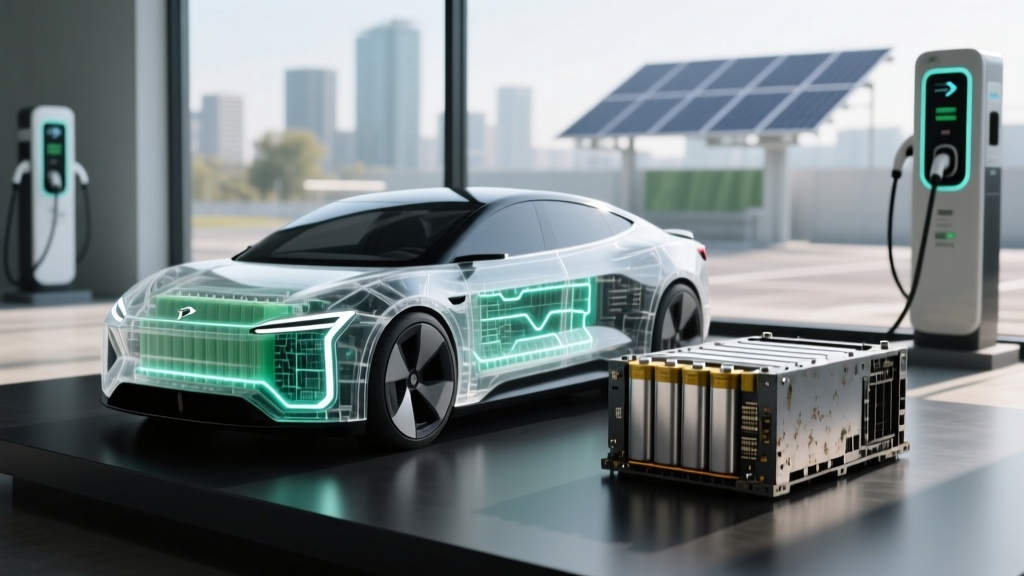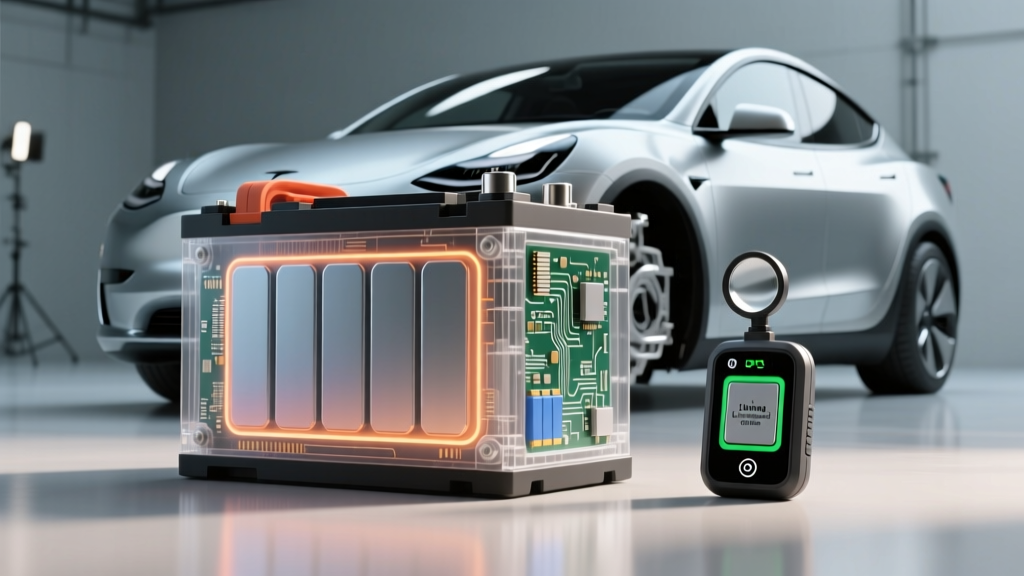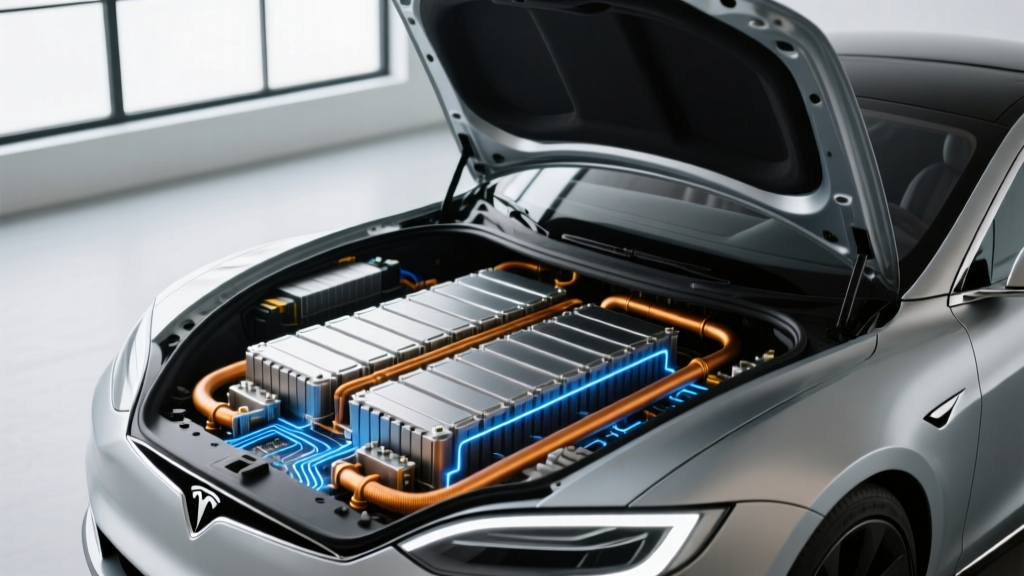
If you own a Tesla or are seriously considering one, the high-voltage traction battery is the single most expensive and consequential component in the vehicle. Yet Tesla battery specs are scattered across owner's manuals, EPA filings, warranty PDFs, and third-party teardowns — rarely consolidated in one place with real-world context.
This guide pulls together the exact numbers: chemistry types by model and trim, usable kWh, degradation curves from fleet data, warranty thresholds, out-of-warranty replacement costs, and the daily habits that meaningfully extend (or shorten) pack life. We'll also cover how to monitor State of Health (SoH) and what's realistically coming in next-generation cell technology.
Tesla's Battery Lineup: LFP vs NCA/NMC Chemistry Explained
Tesla sources cells from multiple suppliers (CATL, Panasonic, LG Energy Solution) and deploys two primary chemistries across its 2025–2026 lineup. The chemistry in your car fundamentally shapes range, charging behavior, longevity, and cold-weather performance.
| Attribute | LFP (Lithium Iron Phosphate) | NCA/NMC (Nickel-Based) |
|---|---|---|
| Models using it | Model 3 RWD, Model Y RWD (Standard Range) | Model 3/Y Long Range & Performance; Model S; Model X; Cybertruck |
| Energy density | Lower (~160–180 Wh/kg cell-level) | Higher (~250–300 Wh/kg cell-level) |
| Cycle life | Higher — 3,000+ full cycles to 80% SoH | Moderate — 1,000–2,000 full cycles to 80% SoH |
| Cold-weather performance | Weaker — more range loss below 32°F, slower cold charging | Better — less range loss, faster cold-weather DC charging |
| Recommended daily SoC | 100% (Tesla recommends charging to full regularly) | 80% for daily use; 100% only before trips |
| Cost per kWh | Lower — no cobalt or nickel | Higher — commodity nickel/cobalt exposure |
| Cell form factors used | Prismatic (CATL); some 4680 LFP variants in testing | 2170 (Panasonic/LG); 4680 (Tesla in-house, dry cathode) |
The practical takeaway: If you mostly drive locally and can charge at home nightly, the LFP pack in the Model 3 RWD offers exceptional longevity and lower cost. If you need maximum range, frequent road-trip fast charging, or live in a cold climate, the NCA/NMC Long Range packs are the better fit — but they demand more careful state-of-charge management.
Tesla Battery Specs by Model: Usable kWh, Range, and Cell Type
Here are the key pack-level figures for current-production Tesla models. Note that usable kWh is what matters — Tesla reserves a top and bottom buffer (typically 2–4 kWh total) to protect cells from overcharge and deep discharge.
| Model / Trim | Usable kWh (approx.) | Chemistry | EPA Range | Peak DC Fast Charge | 10–80% Time |
|---|---|---|---|---|---|
| Model 3 RWD | ~57 kWh | LFP (CATL) | 272 mi | 170 kW | ~25 min |
| Model 3 Long Range AWD | ~75 kWh | NMC (LG) / NCA (Panasonic) | 363 mi | 250 kW | ~27 min |
| Model 3 Performance | ~75 kWh | NCA (Panasonic) | 315 mi | 250 kW | ~27 min |
| Model Y RWD | ~57 kWh | LFP (CATL) | 260 mi | 170 kW | ~25 min |
| Model Y Long Range AWD | ~75 kWh | NMC / NCA | 330 mi | 250 kW | ~27 min |
| Model S Long Range | ~95 kWh | NCA (Panasonic 18650) | 402 mi | 250 kW | ~30 min |
| Model X Long Range | ~95 kWh | NCA (Panasonic 18650) | 348 mi | 250 kW | ~31 min |
| Cybertruck AWD | ~123 kWh | NCA (4680, Tesla) | 340 mi | 250+ kW | ~28 min |
Real-world range caveat: EPA estimates assume mixed driving. On sustained 75 mph highway runs in moderate temperatures, expect 85–90% of the EPA figure. In sub-freezing weather with cabin heat, LFP packs can lose 25–35% of rated range; NCA/NMC packs typically lose 15–25%. Preconditioning the battery before departure (built into Tesla's scheduled departure and navigation-to-Supercharger features) recovers some of this loss by warming the pack.
How Long Do Tesla Batteries Actually Last? Degradation Data
Tesla publishes fleet-wide degradation data in its annual Impact Report, and independent researchers (notably the TeslaFi community and researchers like those behind the Teslanomics tracker) have aggregated owner-reported data across hundreds of thousands of vehicles.
The consistent pattern across data sets:
- Year 1 / ~15,000 miles: 2–4% capacity loss (initial "break-in" degradation)
- Years 2–5 / 30,000–75,000 miles: Degradation slows to ~1–1.5% per year
- 100,000 miles: Typical NCA/NMC packs retain 88–92% of original capacity; LFP packs often retain 93–96%
- 150,000 miles: NCA/NMC packs average ~85–90% retention; LFP packs often 90–94%
- 200,000 miles: Tesla's fleet data shows an average of ~88% retention for Model 3/Y packs
According to Tesla's 2023 Impact Report, Model 3 and Model Y packs retain approximately 85% of their original capacity at 200,000 miles. Model S and Model X packs show approximately 88% retention at the same mileage. These figures are fleet averages — individual results vary based on charging habits and climate exposure.
Key insight: The degradation curve is not linear. Most loss occurs in the first 10,000–20,000 miles, then flattens significantly. This means that a 5-year-old Tesla with 60,000 miles has likely already passed through its steepest degradation phase and will lose capacity slowly for many more years.
Tesla Battery Warranty: What's Covered and What Isn't
Tesla's battery and drive unit warranty is one of the stronger guarantees in the industry, but understanding the exact threshold matters for evaluating a used vehicle or projecting long-term ownership costs.
| Model | Warranty Period | Mileage Cap | Minimum Capacity Retention |
|---|---|---|---|
| Model 3 RWD (LFP) | 8 years | 100,000 miles | 70% |
| Model 3 Long Range / Performance | 8 years | 120,000 miles | 70% |
| Model Y RWD (LFP) | 8 years | 100,000 miles | 70% |
| Model Y Long Range / Performance | 8 years | 120,000 miles | 70% |
| Model S | 8 years | 150,000 miles | 70% |
| Model X | 8 years | 150,000 miles | 70% |
| Cybertruck | 8 years | 120,000 miles | 70% |
What triggers a warranty claim: If your battery's usable capacity drops below 70% of its original capacity within the warranty period, Tesla will repair or replace the pack at no cost. The replacement may be a new or remanufactured pack with at least 70% capacity.
What's NOT covered: Damage from accidents, flooding, fire, tampering, improper charging equipment, or using the vehicle as a stationary power source beyond V2L specifications. Normal degradation above the 70% threshold is also not a warranty event — a pack at 72% capacity at 119,000 miles on a Long Range model is functioning within spec.
EV Battery Replacement Cost: What Tesla Owners Actually Pay
Out-of-warranty battery replacement is the scenario that generates the most anxiety. Here's the current cost landscape based on service center estimates, third-party EV shops, and owner reports as of early 2026:
| Model | Pack Size | Tesla Service Center (est.) | Third-Party EV Shop (est.) | Remanufactured Pack Option |
|---|---|---|---|---|
| Model 3 RWD (LFP) | ~57 kWh | $12,000–$15,000 | $9,000–$12,000 | $7,000–$9,000 |
| Model 3/Y Long Range | ~75 kWh | $14,000–$18,000 | $11,000–$14,000 | $8,000–$11,000 |
| Model S/X | ~95 kWh | $18,000–$24,000 | $14,000–$18,000 | $10,000–$14,000 |
| Cybertruck | ~123 kWh | $22,000–$30,000 | Limited availability | Limited availability |
Context that matters: The vast majority of Tesla owners never need a battery replacement. Based on current degradation data, a typical Model 3 or Model Y pack will retain 80%+ capacity at 200,000 miles — well beyond the mileage at which most vehicles are retired or sold. Catastrophic pack failures (sudden cell group death, coolant intrusion) do happen but are rare and typically occur within the warranty period.
For perspective, a $15,000 battery replacement at 180,000 miles still represents a lower per-mile cost than the cumulative fuel and maintenance expenses of a comparable gasoline vehicle over the same distance, according to DOT and EPA total-cost comparisons on fueleconomy.gov.
Five Factors That Actually Affect Tesla Battery Longevity
Not all miles are equal when it comes to cell wear. Here are the variables with the most measurable impact on long-term State of Health:
1. State of Charge Habits
For NCA/NMC packs, routinely charging to 100% and letting the car sit at full charge accelerates calendar degradation. Tesla's own charge-limit slider exists for a reason — set daily charging to 80% and only charge to 100% when departing on a trip. For LFP packs, Tesla explicitly recommends charging to 100% at least once per week for accurate BMS calibration, as LFP's voltage curve is flatter and harder for the BMS to estimate.
2. DC Fast Charging Frequency
Occasional Supercharging (1–2 times per week) has a modest effect on degradation. Daily DC fast charging, especially at peak rates above 150 kW, generates sustained high temperatures that accelerate electrolyte breakdown. Tesla's battery management system actively throttles charge speed when cells are hot, but repeated thermal stress accumulates. Owners who primarily Level 2 charge at home consistently show 2–4% better retention at 100,000 miles versus those relying heavily on DCFC.
3. Extreme Temperature Exposure
Prolonged exposure to ambient temperatures above 95°F — particularly while parked at high SoC — drives calendar degradation. Tesla's thermal management system is among the best in the industry (active liquid cooling/heating), but a car parked for weeks at 100% SoC in a Phoenix summer will degrade faster than one stored at 50% in a garage. In cold climates, the risk is less about degradation and more about temporary range loss and slower regenerative braking until the pack warms.
4. Depth of Discharge
Regularly driving the battery down below 10% SoC stresses cells more than shallow cycling. The BMS buffer prevents true zero, but habitually arriving at destinations with single-digit percentages isn't ideal. Aim to keep daily driving within the 20–80% window for NCA/NMC packs.
5. Software and BMS Updates
Tesla periodically releases over-the-air updates that refine charge algorithms, thermal management thresholds, and cell-balancing routines. Keeping your vehicle updated ensures you benefit from the latest battery management improvements. Some owners have reported small range recoveries after BMS-related OTA updates recalibrated their pack's usable window.
How to Check and Monitor Your Tesla's Battery Health
Tesla does not expose a direct "State of Health" percentage in the vehicle UI the way some competitors do. However, there are several reliable methods to assess your pack's condition:
- Tesla Service Mode (built-in): On 2023+ software versions, you can access Service Mode by holding the model name on the Software screen for 3 seconds, then entering "service" as the access code. The "Health Test" under the Battery section runs a capacity measurement that compares current usable energy to original capacity. This is the most accurate built-in method.
- TeslaFi or Tessie (third-party apps): These tools log every charge session and calculate estimated SoH over time by comparing energy added (kWh in) against the change in displayed SoC. After several full charge cycles, the estimate becomes reliable within ±1%.
- Manual calculation: Charge to 100% (after a BMS-calibrating full charge on LFP, or a rare 100% on NCA/NMC), note the displayed range, and compare it to the original EPA-rated range at delivery. A Model 3 Long Range that originally displayed 363 miles at 100% but now shows 330 miles has approximately 91% SoH — consistent with typical degradation curves.
- Tesla Service Center diagnostic: Requesting a battery health report during a service visit provides an official capacity measurement, useful for pre-purchase inspections on used vehicles.
What's Next: Solid-State, Silicon Anodes, and Realistic Timelines
Several next-generation battery technologies are in development, but it's essential to separate laboratory progress from production readiness:
Silicon-dominant anodes: Companies like Sila Nanotechnologies and Group14 are producing silicon-carbon composite anode materials that increase energy density by 20–40% over graphite. Tesla's 4680 cells already incorporate incremental silicon content. Expect gradual adoption across 2026–2028 production, with meaningful energy-density gains in 2028–2030 vehicles.
Solid-state batteries: Toyota, Samsung SDI, and QuantumScape have demonstrated solid-state cells in lab settings with 500+ mile range potential and faster charging. However, manufacturing at automotive scale remains the bottleneck. Toyota has announced limited solid-state deployment in 2027–2028, but high costs will restrict initial use to premium/low-volume applications. Mass-market solid-state EVs are realistically a 2030+ proposition.
Tesla's 4680 dry-cathode process: Tesla continues to ramp 4680 production at its Austin and Fremont facilities, focusing on reducing manufacturing cost per kWh rather than chasing exotic chemistries. The dry cathode process eliminates solvent use in electrode manufacturing, cutting energy and factory footprint. As of early 2026, 4680 cells are in production for Cybertruck and selected Model Y variants, with broader rollout expected through 2027.
For current buyers, these timelines mean today's LFP and NCA/NMC packs represent mature, well-understood technology. Waiting for solid-state is not a practical strategy for anyone needing a vehicle in the next 3–5 years.
Frequently Asked Questions
How long do Tesla batteries last in years and miles?
Based on fleet data, Tesla's NCA/NMC packs typically retain 85–90% capacity at 200,000 miles (roughly 13–15 years of average driving). LFP packs often show even slower degradation, retaining 90%+ at the same mileage. The battery will likely outlast other vehicle components — suspension, interior, electronics — before reaching a point where range loss becomes impractical.
How much does it cost to replace a Tesla battery?
Out-of-warranty replacement costs range from approximately $12,000 for a Model 3 RWD LFP pack to $24,000+ for a Model S/X pack at Tesla service centers. Third-party shops and remanufactured packs can reduce this to $7,000–$14,000 depending on the model. However, most owners will never need a replacement — packs routinely last 200,000+ miles with usable capacity remaining.
What does the Tesla battery warranty cover?
Tesla's battery warranty guarantees a minimum of 70% capacity retention for 8 years and 100,000–150,000 miles (depending on model and trim). If the pack drops below 70% within this window, Tesla repairs or replaces it at no cost. The warranty does not cover damage from accidents, misuse, or environmental events.
How do I check my Tesla's battery health?
Use Tesla's built-in Service Mode Health Test for the most accurate reading. Third-party apps like TeslaFi or Tessie track SoH estimates over multiple charge cycles. You can also manually compare your displayed range at 100% SoC to the original EPA rating as a rough gauge.
LFP vs NMC — which Tesla battery is better?
Neither is universally "better." LFP excels in cycle life, cost, and daily convenience (charge to 100% freely), making it ideal for commuter-heavy owners with home charging. NMC/NCA offers higher energy density, better cold-weather performance, and faster DC charging, making it the right choice for road-trippers, cold-climate drivers, and those who need maximum range. The best chemistry depends on your driving pattern, not an abstract ranking.