If you're researching Tesla battery specifications, you're likely weighing one of the most consequential decisions in EV ownership: how long the pack will last, what chemistry sits under the floor, and what happens if it ever needs replacing. Tesla has deployed more battery chemistries across its lineup than any other automaker, which makes understanding the specifics essential before you sign a purchase agreement.
This guide breaks down the exact battery sizes, chemistries, degradation curves, warranty protections, and replacement economics across the current Tesla fleet — the Model 3, Model Y, Model S, Model X, and Cybertruck — with real-world ownership data and practical care strategies.
Current Tesla Battery Specifications by Model
Tesla doesn't publish official kWh figures on its consumer site, but teardowns, regulatory filings, and EPA efficiency data give us reliable numbers. Here's what powers the 2026 lineup:
| Model / Trim | Usable Capacity (kWh) | Chemistry | EPA Range (mi) | Real-World Range* | Peak DC Charge (kW) |
|---|---|---|---|---|---|
| Model 3 RWD | ~60 | LFP | 272 | ~230–250 | 170 |
| Model 3 Long Range AWD | ~78 | NMC | 363 | ~300–320 | 250 |
| Model 3 Performance | ~78 | NMC | 315 | ~265–285 | 250 |
| Model Y RWD | ~60 | LFP | 260 | ~220–240 | 170 |
| Model Y Long Range AWD | ~78 | NMC | 330 | ~280–300 | 250 |
| Model Y Performance | ~78 | NMC | 285 | ~245–265 | 250 |
| Model S Long Range | ~98 | NMC | 402 | ~340–370 | 250 |
| Model S Plaid | ~98 | NMC | 396 | ~330–360 | 250 |
| Model X Long Range | ~98 | NMC | 335 | ~285–310 | 250 |
| Cybertruck AWD | ~123 | NMC (4680 cells) | 340 | ~290–310 | 250+ |
*Real-world range reflects mixed highway driving at 70–75 mph. Expect 15–30% reduction in sub-freezing temperatures depending on preconditioning and heat-pump usage.
LFP vs. NMC: Which Chemistry Powers Your Tesla?
Tesla is unique among mainstream EV makers in deploying two distinct lithium-ion chemistries across its consumer fleet. Understanding which one sits in the car you're buying fundamentally changes how you should charge, maintain, and think about longevity.
| Attribute | LFP (Lithium Iron Phosphate) | NMC (Nickel Manganese Cobalt) |
|---|---|---|
| Energy Density | Lower (~160 Wh/kg cell-level) | Higher (~250–280 Wh/kg cell-level) |
| Typical Tesla Use | Model 3 RWD, Model Y RWD | Long Range, Performance, Model S/X, Cybertruck |
| Cycle Life | 3,000–5,000+ cycles to 80% SoH | 1,500–2,500 cycles to 80% SoH |
| Daily Charge Recommendation | 100% SoC is fine (and recommended weekly) | 80% SoC for daily; 100% only for trips |
| Cold-Weather Performance | More range loss in freezing temps (~25–35%) | Better cold tolerance (~15–25% loss) |
| Cost per kWh | Lower — no cobalt or nickel | Higher — commodity-sensitive metals |
| Thermal Stability | Excellent — higher thermal runaway threshold | Good — requires active thermal management |
| Degradation Curve | Flatter, more linear over time | Steeper initial drop, then plateaus |
The practical takeaway: If you buy a Model 3 RWD or Model Y RWD with LFP, Tesla explicitly recommends charging to 100% at least once a week. The battery management system (BMS) needs the top-of-charge voltage to recalibrate, and LFP's flat voltage curve makes this essential for accurate range estimation. With NMC packs in Long Range and Performance models, daily charging to 80% minimizes stress on the cathode and extends usable life.
Tesla Battery Degradation: What the Data Actually Shows
Unlike early EVs that suffered dramatic capacity loss, Tesla's thermal management system and cell chemistry have produced some of the best degradation profiles in the industry. Here's what aggregated owner data and third-party studies reveal:
- Year 1 / 15,000 mi: ~2–4% capacity loss (initial formation loss)
- Year 3 / 45,000 mi: ~5–8% total loss
- Year 5 / 75,000 mi: ~8–12% total loss
- Year 8 / 120,000 mi: ~10–15% total loss (warranty threshold period)
- Year 10+ / 150,000+ mi: ~12–20% total loss (based on high-mileage owner reports)
Sources: Tesla's own Impact Report, Recurrent Auto battery studies, and owner-collected data from TeslaFi and Teslamate communities.
The critical insight: degradation is non-linear. Most capacity loss occurs in the first 20,000–30,000 miles as the solid electrolyte interphase (SEI) layer stabilizes on the anode. After that, the curve flattens considerably. A Model 3 Long Range that shows 95% State of Health (SoH) at 30,000 miles is tracking normally and will likely retain 85–90% at 100,000 miles.
Tesla's 2024 Impact Report stated that Model 3 and Model Y batteries retain approximately 85% of original capacity after 150,000 miles — among the best figures in the industry. The Model S and Model X, with larger packs that undergo shallower charge cycles for equivalent mileage, show similar or slightly better retention.
Tesla Battery Warranty Terms Explained
Tesla's battery and drive unit warranty is one of the most straightforward in the EV market, but the details matter when you're evaluating a used vehicle or planning long-term ownership.
| Model | Warranty Duration | Mileage Limit | Capacity Retention Threshold |
|---|---|---|---|
| Model 3 RWD (LFP) | 8 years | 100,000 miles | 70% minimum SoH |
| Model 3 Long Range / Performance | 8 years | 120,000 miles | 70% minimum SoH |
| Model Y RWD (LFP) | 8 years | 100,000 miles | 70% minimum SoH |
| Model Y Long Range / Performance | 8 years | 120,000 miles | 70% minimum SoH |
| Model S / Model X | 8 years | 150,000 miles | 70% minimum SoH |
| Cybertruck | 8 years | 120,000 miles | 70% minimum SoH |
What's covered: If the battery drops below 70% of its original usable capacity within the warranty period, Tesla will repair or replace it to bring retention back to at least 70%. The warranty also covers manufacturing defects and failures of the battery management system.
What's not covered: Normal capacity degradation above 70%, damage from accidents, flooding, or improper modifications, and range reduction that isn't tied to measurable capacity loss. Tesla evaluates warranty claims using internal diagnostic data pulled directly from the vehicle's BMS logs.
The 70% threshold is important context: a Model 3 Long Range with a 78 kWh usable pack at 70% SoH still holds ~54.6 kWh — enough for roughly 250 miles of real-world range. Most owners never approach this threshold within the warranty window based on current fleet data.
Tesla Battery Replacement Cost: When and How Much
This is the question that generates the most anxiety, but the data tells a reassuring story: the vast majority of Tesla batteries outlast the vehicle itself. Full pack replacements outside of warranty are rare, typically occurring only after collision damage, extreme abuse, or at very high mileages (200,000+ miles).
| Model | Estimated Out-of-Warranty Replacement Cost | Typical Scenario |
|---|---|---|
| Model 3 RWD (LFP, ~60 kWh) | $8,000–$12,000 | Post-warranty failure, collision damage |
| Model 3/Y Long Range (NMC, ~78 kWh) | $12,000–$16,000 | Post-warranty failure, manufacturing defect after coverage |
| Model S/X (~98 kWh) | $15,000–$22,000 | Older 2013–2018 packs reaching end of life |
| Cybertruck (4680, ~123 kWh) | $18,000–$25,000 (est.) | Structural pack — labor-intensive replacement |
Costs include parts and labor at Tesla Service Centers. Third-party EV repair shops may offer lower pricing as the aftermarket matures. Prices reflect 2025–2026 estimates and may decline as cell costs continue falling.
For context, Tesla's modular pack design on older Model S and Model X vehicles allows individual module replacement rather than a full pack swap, potentially reducing costs to $3,000–$7,000 for isolated cell-group failures. The newer Model 3/Y structural packs are more integrated, making full-pack replacement the standard procedure.
According to fueleconomy.gov, the average EV battery replacement timeline, when needed at all, falls well beyond 150,000 miles — far past the point where most owners have moved on to a newer vehicle.
Factors That Accelerate (or Preserve) Battery Life
Not all miles are equal when it comes to battery wear. The following factors have the most measurable impact on long-term State of Health:
- Minimize DC fast charging frequency: Occasional Supercharging is fine, but daily use of 150–250 kW charging accelerates degradation by an estimated 1–3% over the pack's lifetime compared to Level 2 home charging. Tesla's BMS actively manages charge rates to limit damage, but heat accumulation is cumulative.
- Avoid prolonged high SoC (NMC only): Storing an NMC pack at 100% for days or weeks accelerates cathode degradation. Charge to 100% only when you plan to drive within a few hours. LFP packs are exempt — 100% storage is acceptable.
- Don't let SoC sit near 0%: Deeply discharged packs stress the anode. If you're parking for an extended period, leave the car at ~50% SoC and plugged in if possible.
- Use preconditioning: Tesla's navigation-to-charger preconditioning warms the battery before DC fast charging, reducing lithium plating risk and improving charge speed. Always navigate to a Supercharger rather than driving there without route guidance.
- Manage extreme temperature exposure: Parking in a garage during extreme heat or cold reduces thermal cycling stress. The battery's active thermal management draws energy when plugged in — keeping the car plugged in at home lets the system maintain optimal temperature without draining the pack.
- Prefer Level 2 home charging: Overnight charging at 7–11.5 kW generates minimal heat and is the gentlest charging method for long-term health.
The single highest-impact habit: charge at home on Level 2 most of the time, and follow the SoC recommendation for your chemistry. Owners who do this consistently see degradation on the lower end of the fleet averages.
How to Check Your Tesla's Battery Health
Tesla doesn't surface a direct State of Health (SoH) percentage in the vehicle's UI, but there are several reliable methods to assess pack condition:
1. In-car energy graph: Navigate to Controls > Settings > Trip > Energy. The projected range at 100% SoC compared to the original EPA figure gives a rough degradation estimate. A Model 3 Long Range that projected 363 miles at 100% when new but now projects 330 miles has roughly 91% SoH.
2. Third-party apps: Tools like TeslaFi, Teslamate (self-hosted, open-source), and Scan My Tesla (via OBD-II adapter) pull detailed BMS data including nominal full-pack energy (kWh), cell voltage imbalance, and calculated SoH. These give far more granular insight than the in-car display.
3. Tesla Service diagnostic: Requesting a battery health check through the Tesla app will generate a remote diagnostic report. Service advisors can provide the nominal full-pack capacity and compare it to the original specification.
4. Recurrent Auto or similar services: Some fleet analytics platforms offer battery health reports for individual vehicles, particularly useful when evaluating a used Tesla purchase.
For used-car buyers: always check the projected range at 100% SoC and cross-reference it against the original EPA figure. A variance of more than 15% on a vehicle under 80,000 miles warrants further investigation and may indicate a warranty-eligible pack.
What's Next: Solid-State, 4680 Cells, and Future Tesla Battery Tech
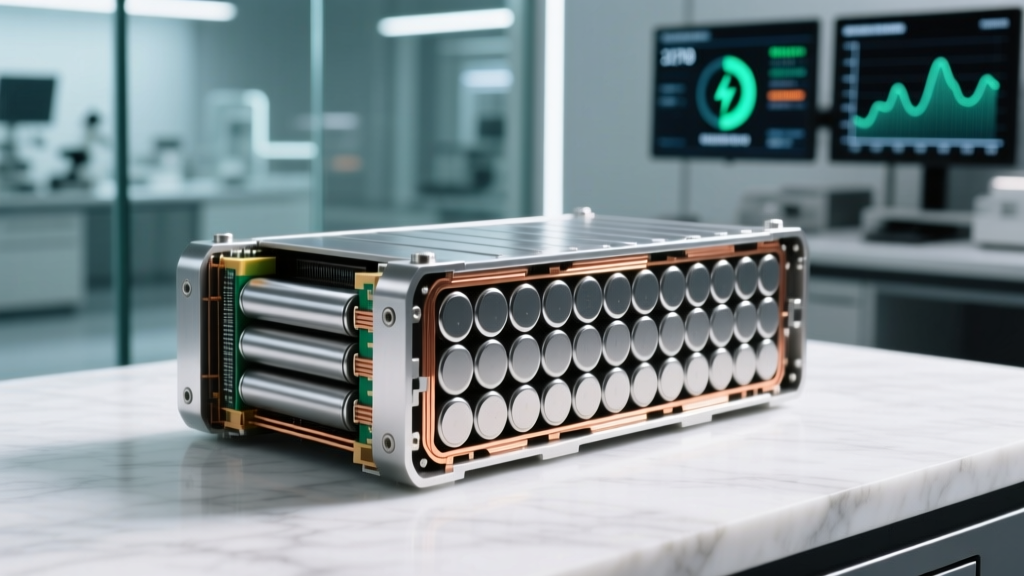
Tesla's current battery roadmap centers on the 4680 cell format — a 46mm-diameter, 80mm-tall cylindrical cell already deployed in the Cybertruck and some Model Y vehicles built at Giga Texas. The 4680 offers a tabless electrode design that reduces internal resistance, improves thermal management, and enables a structural battery pack where the cells bear vehicle load.
Current 4680 cells use NMC chemistry. Tesla has projected that mature 4680 production will reduce per-kWh costs by roughly 50% compared to the 2170 cells in Model 3 and Model Y, though full-scale production ramp has been gradual.
Solid-state batteries — which replace the liquid electrolyte with a solid conductor — remain in the research and pilot-production phase across the industry. Companies like QuantumScape, Toyota, and Samsung SDI have announced prototype results, but commercial availability in a production vehicle remains estimated for 2028–2030 at the earliest. Tesla has not announced a solid-state timeline.
Silicon-anode technology, which increases energy density by replacing graphite anodes with silicon-dominant composites, is closer to mainstream deployment. Companies like Sila Nanotechnologies and Enovix are shipping early products, but scaling to automotive volumes remains a multi-year challenge.
The realistic outlook: Tesla's current LFP and NMC chemistries, combined with the 4680 form factor, will serve the fleet through at least the end of the decade. Buyers should not delay a purchase in anticipation of solid-state batteries, as the current generation already delivers 150,000+ mile longevity with manageable degradation.
Frequently Asked Questions
How long do Tesla batteries last in years and miles?
Based on fleet data, Tesla batteries typically retain 85–90% of original capacity at 150,000 miles. Most packs are projected to deliver usable service for 300,000–500,000 miles before reaching 70% capacity — the point at which range reduction becomes noticeable for daily driving. In years, that translates to 15–25+ years for the average driver covering 12,000–15,000 miles annually. The battery will almost certainly outlast the rest of the vehicle.
How much does a Tesla battery cost to replace?
Out-of-warranty replacement costs range from approximately $8,000 for a Model 3 RWD LFP pack to $22,000+ for a Model S/X pack. Cybertruck 4680 structural pack replacement may cost $18,000–$25,000. However, full replacements are uncommon — most battery issues involve individual module failures or BMS faults, which cost significantly less to repair. The majority of Tesla batteries never require replacement during typical ownership.
What does the Tesla battery warranty cover?
Tesla's battery warranty covers the pack for 8 years and 100,000–150,000 miles (depending on model) against capacity loss below 70% of original capacity, manufacturing defects, and BMS failures. It does not cover normal degradation above 70%, accident damage, or modifications. If the pack falls below the threshold, Tesla will repair or replace it to restore at least 70% capacity. See Tesla's official warranty page for current terms.
How do I check and maximize my Tesla's battery health?
Check health using the in-car energy projection at 100% SoC, third-party apps like TeslaFi or Teslamate, or a Tesla Service diagnostic. To maximize longevity: charge at home on Level 2 whenever possible, follow the SoC recommendation for your chemistry (80% daily for NMC, 100% weekly for LFP), precondition before Supercharging, avoid storing the car at very low or very high SoC for extended periods, and keep the car plugged in during extreme temperatures.
LFP vs. NMC — which Tesla battery chemistry is better?
Neither is universally better — they serve different priorities. LFP wins on longevity (more charge cycles), cost (lower per-kWh price), daily convenience (charge to 100% freely), and thermal safety. NMC wins on energy density (more range in a smaller pack), cold-weather performance, and fast-charging speed. If you prioritize maximum range and live in a cold climate, NMC (Long Range) is the better fit. If you want the longest-lasting, most affordable pack and don't need 350+ miles of range, LFP (RWD) is the smarter buy.
Does frequent Supercharging damage the battery?
Exclusively relying on DC fast charging (250 kW Superchargers) adds measurable but modest wear — roughly 1–3% additional capacity loss over the pack's lifetime compared to predominant Level 2 charging. Tesla's BMS throttles charge speed when the pack is too cold or too warm to protect the cells. Occasional Supercharging for road trips has negligible impact; daily Supercharging as your only charging method will accelerate degradation slightly. For best results, install a Level 2 home charger and use Superchargers for trips.
Is Tesla's 4680 battery better than the 2170?
The 4680 cell offers lower manufacturing cost, improved thermal characteristics from the tabless design, and structural pack integration that reduces vehicle weight. However, the 2170 cells in most Model 3 and Model Y vehicles currently deliver excellent energy density and well-proven degradation data over hundreds of millions of fleet miles. The 4680's long-term degradation profile is still being established. Neither is "better" in isolation — the 4680 is a cost and manufacturing innovation more than a dramatic performance leap for the driver.
For current federal tax credit eligibility on new Tesla purchases, consult the IRS §30D guidelines, as MSRP caps, buyer income limits, and battery-sourcing requirements apply and change periodically. A tax professional can confirm your specific eligibility.