The Real Cost of Replacing a Tesla Battery
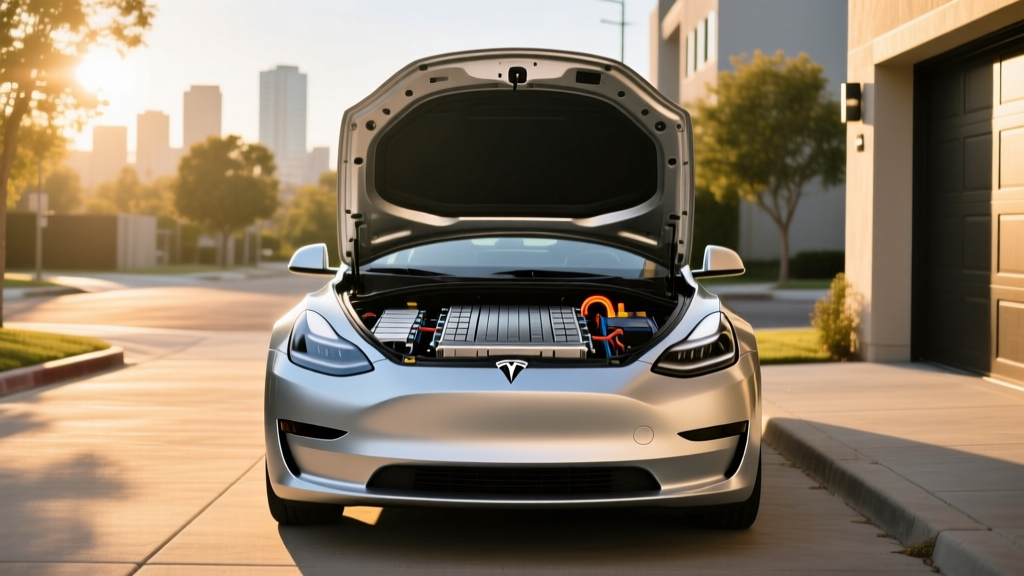
If you own a Tesla — or are considering buying one — the high-voltage traction battery is the single most expensive component in the vehicle. Unlike a gas car's engine, which rarely needs full replacement, EV batteries degrade slowly over time. The question most buyers eventually ask: how much do Tesla batteries cost if something goes wrong out of warranty?
The short answer is that a full Tesla battery replacement in 2026 typically ranges from $5,000 to $16,000+ depending on the model and pack size. But that figure requires significant context. The vast majority of Tesla batteries outlast the usable life of the vehicle itself, and Tesla's warranty covers catastrophic failures and excessive degradation for 8 years. Before you panic about a five-figure repair bill, here's what the data actually shows.
| Model | Battery Pack Size | Chemistry | Estimated Replacement Cost | Labor (Est.) |
|---|---|---|---|---|
| Model 3 RWD | ~60 kWh (usable) | LFP | $5,000 – $7,500 | $500 – $1,000 |
| Model 3 Long Range / Performance | ~75–82 kWh | NMC/NCA | $8,000 – $12,000 | $500 – $1,000 |
| Model Y RWD | ~60 kWh | LFP | $5,000 – $7,500 | $500 – $1,000 |
| Model Y Long Range / Performance | ~75–82 kWh | NMC/NCA | $8,000 – $12,000 | $500 – $1,000 |
| Model S (current gen) | ~100 kWh | NMC/NCA | $12,000 – $16,000+ | $800 – $1,500 |
| Model X (current gen) | ~100 kWh | NMC/NCA | $12,000 – $16,000+ | $800 – $1,500 |
These figures reflect out-of-warranty pricing based on third-party EV repair shops and Tesla service center estimates as of early 2026. Costs have trended downward as battery cell manufacturing scales, but labor and diagnostics add to the total. Critically, Tesla often replaces individual modules or the battery management system rather than the entire pack — which can cut costs by 40–60%.
Tesla Battery Warranty: What's Actually Covered
Tesla's battery and drive unit warranty is one of the strongest in the industry, and understanding its terms is essential before worrying about replacement costs. The warranty covers both manufacturing defects and excessive capacity loss.
| Model | Warranty Period | Mileage Limit | Minimum Capacity Retention |
|---|---|---|---|
| Model 3 RWD (LFP) | 8 years | 100,000 miles | 70% |
| Model 3 Long Range / Performance | 8 years | 120,000 miles | 70% |
| Model Y RWD (LFP) | 8 years | 100,000 miles | 70% |
| Model Y Long Range / Performance | 8 years | 120,000 miles | 70% |
| Model S | 8 years | 150,000 miles | 70% |
| Model X | 8 years | 150,000 miles | 70% |
The 70% retention threshold means Tesla will repair or replace the battery if its usable capacity drops below 70% of the original rated capacity within the warranty window. According to Tesla's own Impact Report, the average Model 3 and Model Y battery retains approximately 85–88% of its original capacity after 200,000 miles — well above the warranty floor. This data point is significant: it means the average Tesla battery will likely never need warranty replacement for degradation alone.
The warranty does not cover damage from accidents, flooding, improper modifications, or using the vehicle as a stationary power source outside of approved V2H/V2G configurations. It also does not cover the 12V auxiliary battery, which is a separate, far cheaper component (typically $200–$400 to replace).
How Long Do Tesla Batteries Actually Last?
Tesla designs its battery packs for a useful life of 300,000 to 500,000 miles depending on chemistry, according to statements from CEO Elon Musk and Tesla's engineering disclosures. In practice, "end of life" for an EV battery doesn't mean the car stops working — it means the pack has degraded to a point (usually 70–80% of original capacity) where range reduction becomes meaningfully noticeable.
Real-world degradation data compiled by Tesla owners and independent researchers tells a consistent story:
- Year 1 / 20,000 miles: ~3–5% capacity loss (initial formation loss, steepest part of the curve)
- Year 3 / 60,000 miles: ~6–9% total loss
- Year 5 / 100,000 miles: ~8–12% total loss
- Year 8 / 150,000 miles: ~10–15% total loss (most packs still above 85%)
- 200,000+ miles: ~12–18% total loss based on Tesla fleet data
The degradation curve is not linear. Most capacity loss occurs in the first 20,000–30,000 miles as the battery's chemistry stabilizes. After that, degradation slows significantly — often to less than 1% per year under normal use. This pattern holds across both LFP and NMC chemistries, though LFP packs tend to show slightly less long-term degradation due to their more stable iron-phosphate cathode structure.
For context, the average American drives approximately 14,500 miles per year according to FHWA data. At that rate, a Tesla battery would need to last over 20 years to reach 300,000 miles — longer than most owners keep a vehicle.
LFP vs. NMC/NCA: Which Tesla Battery Chemistry Is Right for You?
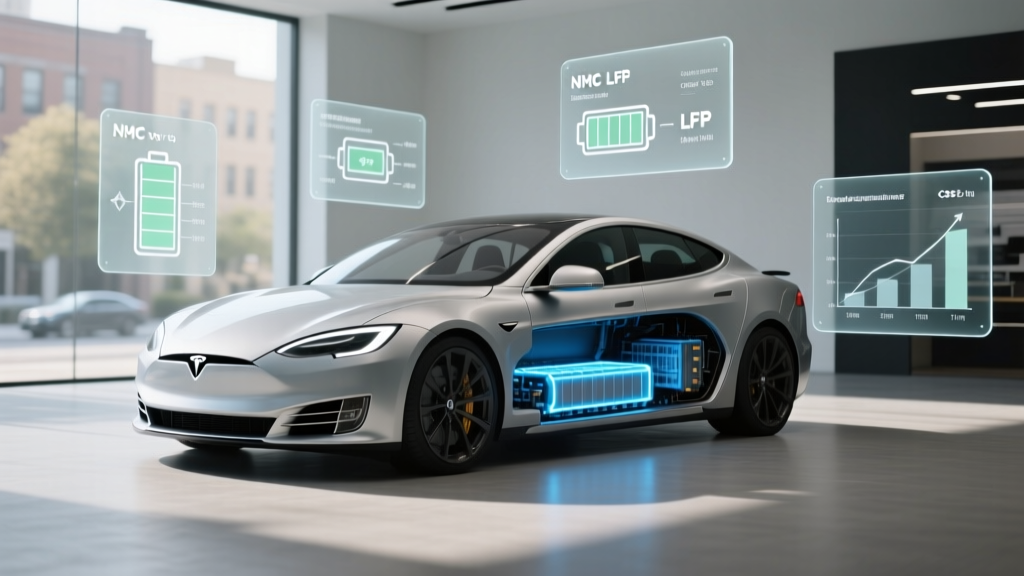
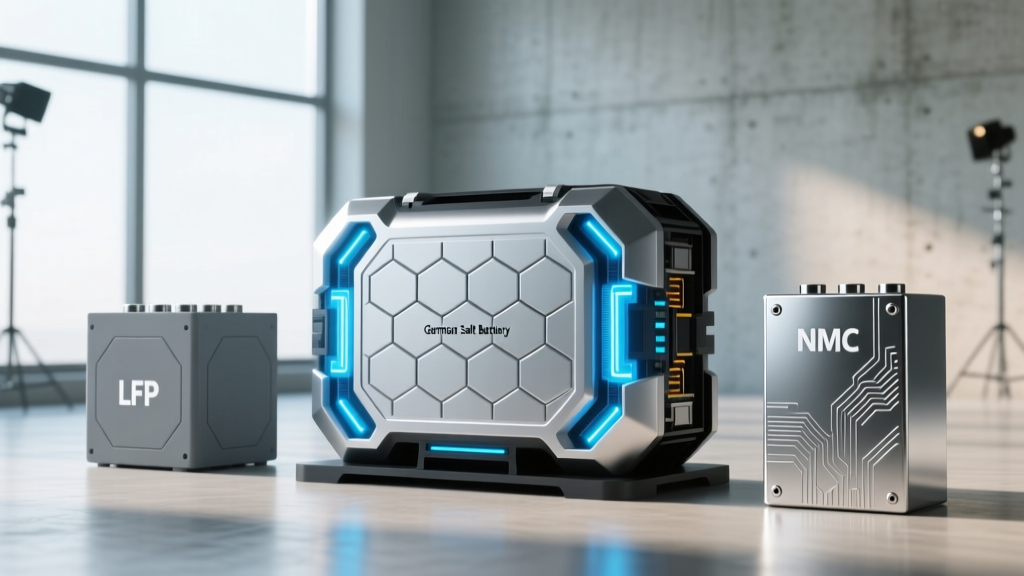
Tesla uses two primary battery chemistries across its 2026 lineup, and the choice between them affects cost, range, longevity, and charging behavior. Understanding this distinction is critical when evaluating both purchase price and long-term ownership cost.
| Attribute | LFP (Lithium Iron Phosphate) | NMC/NCA (Nickel Manganese Cobalt / Nickel Cobalt Aluminum) |
|---|---|---|
| Used In | Model 3 RWD, Model Y RWD | Model 3 LR/Perf, Model Y LR/Perf, Model S, Model X |
| Energy Density | Lower (~160 Wh/kg cell-level) | Higher (~250–280 Wh/kg cell-level) |
| Range (EPA) | ~272 mi (Model 3 RWD) | ~341 mi (Model 3 LR) |
| Cycle Life | 3,000–5,000+ cycles | 1,000–2,000 cycles |
| Recommended SoC | 100% daily charging OK | 80% daily; 100% for trips only |
| Cold Performance | Moderate (10–20% range loss in freezing) | Better (5–15% range loss in freezing) |
| Cost per kWh | Lower (~$80–100/kWh cell) | Higher (~$110–140/kWh cell) |
| Cobalt Content | None | Contains cobalt/nickel |
| Thermal Stability | Excellent (higher runaway threshold) | Good (requires more active thermal management) |
Choose LFP if: You prioritize long-term battery longevity, plan to charge to 100% regularly, want a lower purchase price, and your daily commute fits within ~220–250 real-world miles. LFP is the chemistry of choice for fleet operators and high-mileage drivers because of its superior cycle life.
Choose NMC/NCA if: You need maximum range for road trips, live in a very cold climate where NMC's better low-temperature performance matters, or want the performance variants with higher power output. The trade-off is slightly faster long-term degradation and a recommendation to keep daily charge below 80%.
Both chemistries benefit from Tesla's active thermal management system, which uses a liquid cooling/heating loop to keep cells in their optimal temperature range — a major reason Tesla packs outlast many competitors.
What Affects Tesla Battery Life — and What You Can Control
Battery degradation is influenced by physics, chemistry, and your habits. While some factors are unavoidable (calendar aging, ambient temperature), others are squarely within your control.
Do: Best Practices for Tesla Battery Longevity
- Set daily charge limits appropriately: 80% for NMC/NCA packs, 100% for LFP. Tesla's app lets you set this easily.
- Precondition before DC fast charging: Navigate to a Supercharger and the car preheats the battery to optimal temperature (~95°F), reducing stress and improving charge speed.
- Use Level 2 home charging as your primary method: Slow charging (7–11.5 kW) generates far less heat than DC fast charging and is gentler on cells.
- Keep the car plugged in during extreme heat or cold: Tesla's thermal management system will maintain battery temperature using grid power rather than battery energy.
- Drive it regularly: Batteries prefer moderate, regular cycling over sitting at high SoC for weeks.
Don't: Common Battery Mistakes
- Don't leave an NMC/NCA pack at 100% SoC for extended periods: High voltage accelerates electrolyte decomposition. Charge to 100% only when you'll drive soon.
- Don't rely exclusively on DC fast charging: Occasional Supercharging is fine, but daily use of 150–250 kW chargers adds cumulative heat stress. Research from Idaho National Laboratory showed measurable additional degradation in packs that DC fast-charged exclusively vs. Level 2 only.
- Don't let the battery sit at 0% for long: Deep discharge can damage cells and brick the 12V system. Keep it above 10% if storing.
- Don't ignore tire pressure and alignment: Increased rolling resistance forces the battery to work harder, generating more heat per mile.
One often-overlooked factor: calendar aging. Even a Tesla that sits in a garage will lose a small amount of capacity over time simply due to chemical processes inside the cells. This effect is accelerated at high SoC and high temperatures. Storing the car at ~50% SoC in a cool garage is ideal for long-term parking.
How to Check Your Tesla's Battery Health (State of Health)
Tesla does not expose a direct "State of Health" (SoH) percentage in the vehicle's native interface — unlike some competitors such as Hyundai or Nissan. However, there are several reliable methods to monitor your battery's condition:
Method 1: The Range Calculation Method
Charge your Tesla to 100% (or a known percentage like 90%) and note the displayed range. Compare this to the original EPA-rated range at 100%. For example, if your Model 3 Long Range originally showed 341 miles at 100% and now shows 307 miles at 100%, that's approximately 90% SoH. This method isn't perfectly precise (displayed range is influenced by recent driving patterns and temperature) but gives a solid approximation.
Method 2: Third-Party Apps
Apps like TeslaFi, Tessie, and Stats for Tesla pull detailed telemetry from Tesla's API and can estimate SoH more accurately by tracking energy consumed vs. distance driven over time. These apps typically charge $5–$10/month but provide granular data on charge curves, energy usage, and degradation trends.
Method 3: Tesla Service Center Diagnostic
If you suspect a problem — or simply want an official reading before a warranty expiration — a Tesla Service Center can run a full battery health diagnostic. This is sometimes available remotely via an over-the-air check initiated through the Tesla app. Request a "battery health test" through the app's service section.
Method 4: OBD-II Dongles (Advanced)
Devices like the OBDeleven or Scan My Tesla app paired with a compatible OBD-II reader can pull cell-level voltage data, internal resistance readings, and module balance information. This is the most detailed approach but requires technical comfort.
When Is a Tesla Battery Replacement Actually Needed?
Here's the reassuring data point most fear-driven articles omit: full Tesla battery replacements are rare. Tesla's own fleet data shows that battery failure rates (requiring full pack replacement) are well under 1% in the first 8 years. When replacements do happen, they're usually due to:
- Manufacturing defects (covered under warranty): Cell imbalance, BMS failures, or coolant leaks that damage cells. Most of these surface in the first 2–3 years.
- Physical damage (not covered): Impact damage from road debris, accidents, or flooding. Tesla's underbody armor protects against most road hazards, but severe impacts can breach the pack.
- Extreme degradation (covered if below 70%): Very rare — typically only in vehicles subjected to constant DC fast charging in extreme heat without preconditioning.
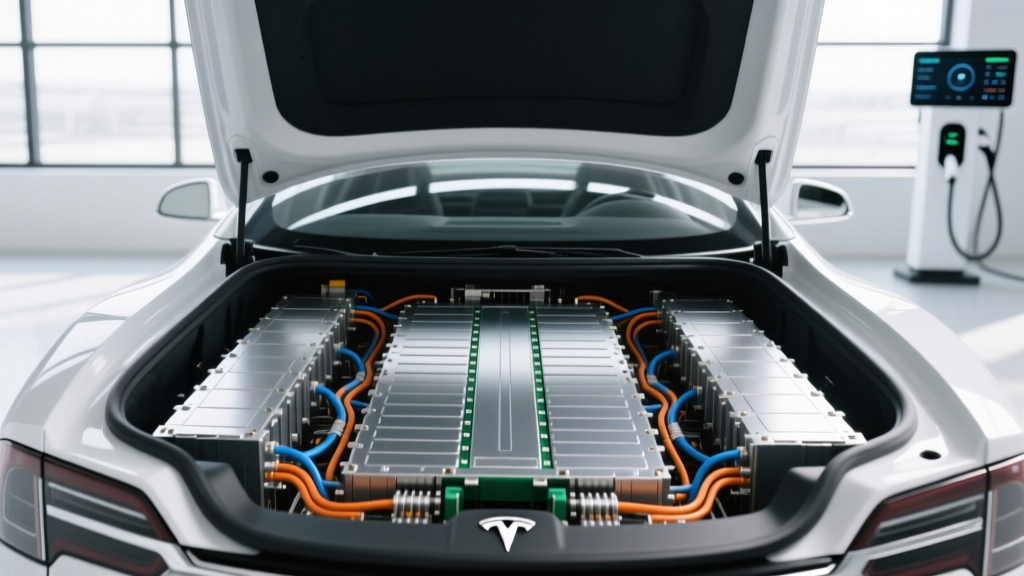
More commonly, Tesla replaces individual battery modules rather than the entire pack. A Model 3/Y pack contains 4–5 modules, and a single module replacement typically costs $1,500–$3,500 out of warranty. This modular design is one reason Tesla's repair costs are often lower than expected.
Looking Ahead: Solid-State and Next-Gen Battery Tech
The battery industry is actively developing next-generation chemistries that could eventually make today's concerns about degradation and replacement cost largely moot. Here's a realistic timeline based on current industry progress:
- Silicon-dominant anodes (2026–2028): Companies like Sila Nanotechnologies and Group14 are already shipping silicon-anode cells in limited production. These boost energy density by 15–25% without changing the cathode chemistry. Expect gradual adoption in premium EVs first.
- Semi-solid-state batteries (2027–2030): Toyota, Samsung SDI, and QuantumScape are targeting this window for semi-solid-state cells that replace the liquid electrolyte with a solid or gel separator. Benefits include faster charging, improved safety, and potentially 20–40% more energy density. Production scale remains the major unknown.
- Full solid-state batteries (2030+): True all-solid-state packs with lithium metal anodes could double energy density and virtually eliminate degradation concerns. However, manufacturing challenges and cost remain formidable barriers. Realistic mass-market availability is likely 2032 or later.
For Tesla specifically, the company's 4680 cell (a larger-format cylindrical cell with a tabless design) is already in production for Model Y vehicles built at Giga Texas. The 4680 offers improved thermal management and lower manufacturing cost per kWh, though energy density gains have been more modest than initially projected. As Tesla scales dry-electrode manufacturing for 4680 cells, expect continued cost reductions that will further lower replacement pricing over time.
The practical takeaway: if you're buying a Tesla in 2026, you're getting a mature, well-proven battery system. The next generation of breakthroughs will benefit future buyers, but today's packs are already engineered to outlast the car around them.
Frequently Asked Questions
How much does a Tesla battery cost to replace out of warranty?
Between $5,000 and $16,000+ depending on the model and pack size, plus $500–$1,500 in labor. Model 3 and Model Y RWD (LFP) packs are the least expensive at $5,000–$7,500. Model S and Model X packs are the most costly at $12,000–$16,000+. Individual module replacements are often possible for $1,500–$3,500, significantly reducing cost.
How long do Tesla batteries last in years and miles?
Tesla batteries are engineered for 300,000–500,000 miles. At the US average of 14,500 miles per year, that translates to 20–35 years. Fleet data shows most Tesla batteries retain 85–88% capacity at 200,000 miles. In practice, the vehicle's body, suspension, and interior typically wear out before the battery reaches end-of-life.
What does the Tesla battery warranty cover?
Tesla covers battery defects and capacity loss below 70% of original capacity for 8 years. Mileage limits vary: 100,000 miles (RWD models), 120,000 miles (Model 3/Y Long Range), and 150,000 miles (Model S/X). The warranty does not cover accident damage, flooding, unauthorized modifications, or the 12V auxiliary battery.
Is LFP better than NMC for Tesla batteries?
It depends on your priorities. LFP offers longer cycle life (3,000–5,000 cycles vs. 1,000–2,000), can be charged to 100% daily without degradation concerns, and costs less. NMC/NCA offers higher energy density (more range per kWh), better cold-weather performance, and higher power output. For high-mileage drivers and fleet use, LFP is generally preferable. For maximum range and cold-climate driving, NMC/NCA is the better fit.
Does frequent Supercharging damage the Tesla battery?
Occasional DC fast charging has minimal impact. However, exclusive reliance on DC fast charging (daily Supercharging without Level 2 use) does accelerate degradation slightly due to repeated heat exposure. Tesla's preconditioning system mitigates this by warming the battery before charging. Best practice: use Level 2 home charging as your primary method and Supercharge for road trips.
Can I check my Tesla's battery health myself?
Yes. The simplest method is to charge to 100% and compare the displayed range to the original EPA rating. For more precision, third-party apps like TeslaFi or Tessie track degradation trends via Tesla's API. Tesla Service Centers can also run an official battery health diagnostic, sometimes remotely through the app.
Will solid-state batteries make current Teslas obsolete?
Not in the near term. Semi-solid-state batteries are expected in limited production around 2027–2030, with full solid-state packs unlikely before 2032+. Current NMC and LFP chemistries are mature, well-understood, and already deliver 300,000+ mile lifespans. Any future battery tech will debut in new vehicles and won't be retrofittable to existing cars.