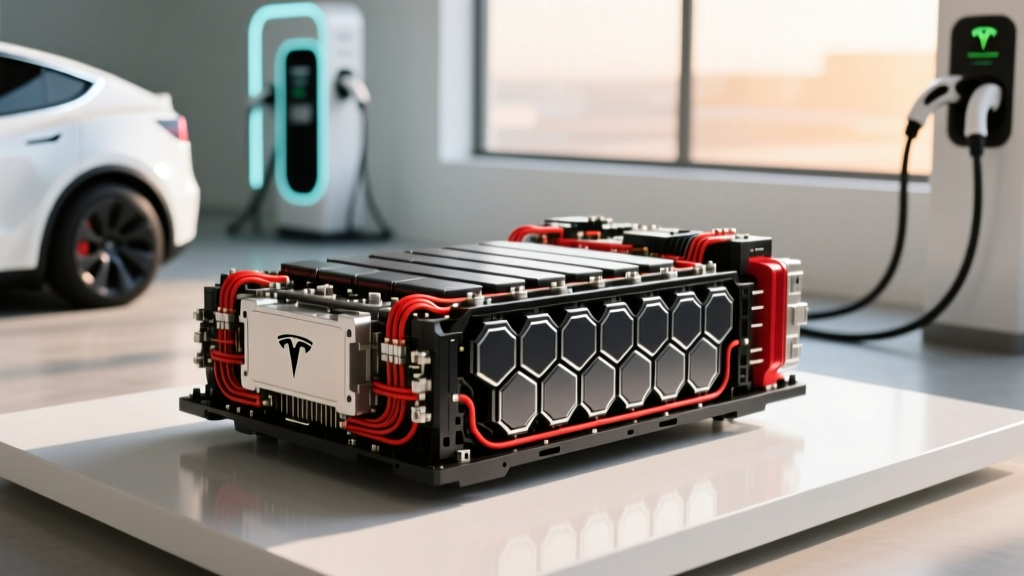
If you own a Tesla—or are shopping for one—the single most expensive component lurking beneath the floor is the high-voltage traction battery. Search forums and you will find horror stories of $20,000 replacement bills, but you will also find hundreds of thousands of Teslas running original packs well past 150,000 miles. The truth about Tesla battery cost sits somewhere in between, and it depends heavily on which model you drive, which chemistry is under the floor, and how the pack was treated during its first few years.
This guide breaks down the actual replacement costs by model, the chemistry differences that affect longevity, real-world degradation data from high-mileage fleets, and the habits that meaningfully extend (or shorten) your pack's usable life.
How Much Does a Tesla Battery Replacement Actually Cost?
Tesla does not publish a retail price list for battery replacements, and costs vary by model, battery size (kWh), chemistry, and whether you receive a brand-new pack or a remanufactured unit. Based on service invoices shared by owners, independent EV shop estimates, and Tesla's own out-of-warranty quotes through early 2026, here is the realistic range:
| Model | Battery Size (Usable kWh) | Chemistry | Replacement Cost Range | Typical Scenario |
|---|---|---|---|---|
| Model 3 RWD | ~57.5 kWh | LFP | $5,000 – $8,000 | Remanufactured pack, post-2021 |
| Model 3 Long Range / Performance | ~75–82 kWh | NMC/NCA | $10,000 – $15,000 | New or remanufactured |
| Model Y RWD | ~57.5 kWh | LFP | $6,000 – $9,000 | Remanufactured pack |
| Model Y Long Range / Performance | ~75–82 kWh | NMC/NCA | $12,000 – $16,000 | New or remanufactured |
| Model S (2021+ Plaid / LR) | ~95–100 kWh | NMC/NCA | $15,000 – $22,000 | Structural pack, new |
| Model X (2021+ LR / Plaid) | ~95–100 kWh | NMC/NCA | $16,000 – $22,000 | Structural pack, new |
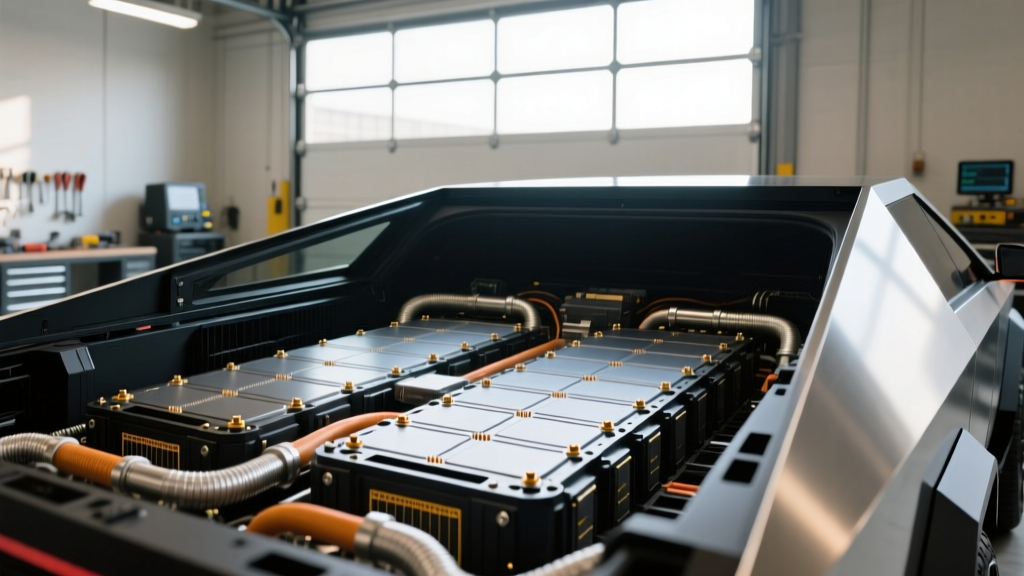
| Cybertruck (AWD / Cyberbeast) | ~123 kWh | NMC (4680 cells) | $18,000 – $25,000 | Structural 4680 pack |
A few critical caveats: these figures include the battery pack and labor but not ancillary repairs (coolant lines, contactors, or BMS modules that may need service simultaneously). Remanufactured packs—rebuilt with a mix of new and tested used cells—are significantly cheaper and are what Tesla typically installs for out-of-warranty Model 3 and Model Y replacements. Brand-new packs are standard for Model S, Model X, and Cybertruck due to their structural integration.
For context, the vast majority of Tesla owners never pay this bill. Tesla's battery warranty covers catastrophic failure and excessive degradation during the coverage period, and data from Tesla's Impact Reports consistently shows median degradation of roughly 12–15% at 150,000 miles across the fleet—well within the warranty threshold.
What Does Tesla's Battery Warranty Actually Cover?
Tesla's battery and drive unit warranty is one of the stronger guarantees in the EV industry, but the details matter. The warranty covers two distinct failure modes: defects in materials or workmanship (a cell or module fails outright) and excessive capacity loss (the pack degrades below a specified threshold).
| Model | Warranty Duration | Mileage Limit | Minimum Capacity Retention |
|---|---|---|---|
| Model 3 RWD (LFP) | 8 years | 100,000 miles | 70% |
| Model 3 Long Range / Performance | 8 years | 120,000 miles | 70% |
| Model Y RWD (LFP) | 8 years | 100,000 miles | 70% |
| Model Y Long Range / Performance | 8 years | 120,000 miles | 70% |
| Model S / Model X | 8 years | 150,000 miles | 70% |
| Cybertruck | 8 years | 120,000 miles | 70% |
The 70% retention threshold means that if your 82 kWh Model 3 Long Range pack drops below roughly 57.4 kWh of usable capacity within 8 years or 120,000 miles (whichever comes first), Tesla will repair or replace the battery at no cost. In practice, fleet data shows that very few packs fall below this threshold during the warranty period—most retain 85–88% capacity at the 8-year mark under normal use.
What the warranty does not cover: damage from accidents, flooding, fire, unauthorized modifications, or using the vehicle as a stationary power source in ways not approved by Tesla. It also does not cover normal cosmetic range reduction from gradual degradation above the 70% line.
LFP vs NMC/NCA: Which Tesla Battery Chemistry Is Better for Longevity?
Tesla uses two primary lithium-ion chemistries across its 2026 lineup, and the choice has a direct impact on lifespan, cost, cold-weather behavior, and how you should charge the vehicle day to day.
| Attribute | LFP (Lithium Iron Phosphate) | NMC / NCA (Nickel Manganese Cobalt / Nickel Cobalt Aluminum) |
|---|---|---|
| Energy Density | Lower (~160 Wh/kg cell-level) | Higher (~250–270 Wh/kg cell-level) |
| Typical Cycle Life | 3,000–5,000+ cycles to 80% SoH | 1,500–2,500 cycles to 80% SoH |
| Recommended Daily Charge | 100% (Tesla recommends periodic full charges) | 80–90% daily; 100% only for trips |
| Cold-Weather Performance | Weaker — more range loss below 32°F | Better low-temp discharge efficiency |
| Cost per kWh | Lower — no cobalt or nickel | Higher — commodity-sensitive |
| Used In | Model 3 RWD, Model Y RWD | Model 3 LR, Model Y LR, Model S/X, Cybertruck |
| Thermal Stability | Excellent — higher runaway threshold | Good — requires more active thermal management |
How Long Do Tesla Batteries Actually Last? Real Degradation Data
The question "how long do EV batteries last" does not have a single answer—it depends on chemistry, climate, charging habits, and mileage. But Tesla's fleet data and third-party tracking give us solid benchmarks.
According to Tesla's published fleet statistics and independent analysis from sources like fueleconomy.gov and EV fleet trackers, here is what degradation looks like over time:
- Year 1–2 (0–30,000 miles): Most packs lose 3–5% capacity. This initial drop is normal and reflects cell formation stabilization.
- Year 3–5 (30,000–80,000 miles): Degradation slows to roughly 1–2% per year. Total loss at 80,000 miles is typically 8–12%.
- Year 6–8 (80,000–150,000 miles): Loss continues at ~1% per year. Median fleet data shows 12–15% total degradation at 150,000 miles for NMC packs and 8–12% for LFP packs.
- Beyond 150,000 miles: Data is thinner, but high-mileage taxi and rideshare Teslas have been documented at 18–22% loss at 250,000+ miles—still above the 70% warranty threshold.
LFP packs degrade more slowly in terms of cycle count, but they can exhibit a quirk: the battery management system (BMS) may lose calibration accuracy if the pack is never charged to 100%. Tesla recommends charging LFP vehicles to 100% at least once per week to maintain accurate range estimation and cell balancing.
A critical real-world note: degradation is not linear, and it is not the same as failure. A pack at 85% State of Health (SoH) still functions perfectly—it simply delivers 85% of its original range. A 330-mile Model Y Long Range at 85% SoH still provides roughly 280 miles of EPA-rated range, which is more than adequate for most daily driving.
What Factors Accelerate (or Slow) Tesla Battery Degradation?
Not all miles are equal when it comes to battery wear. The following factors have the most measurable impact on long-term State of Health:
- Frequent DC fast charging above 150 kW: Occasional Supercharging is fine, but daily use of 250 kW V3 Superchargers without preconditioning increases thermal stress. Tesla's thermal management system mitigates this well, but data from fleet studies shows packs that fast-charge more than 80% of the time degrade ~2–3% faster over 100,000 miles.
- Sustained high State of Charge (NMC/NCA only): Storing an NMC pack at 100% SoC for days or weeks accelerates electrolyte decomposition. Set your daily charge limit to 80% and only charge to 100% immediately before long trips.
- Extreme heat exposure: Parking in sustained 100°F+ ambient temperatures without thermal management active (the car handles this automatically if plugged in) increases calendar aging. Garage parking in hot climates measurably extends pack life.
- Deep discharge cycles: Routinely driving the battery below 10% SoC stresses the cells. Try to keep the pack between 20–80% for daily use on NMC vehicles.
- Use Level 2 home charging (7–11 kW) as your primary charging method — slower charging generates less heat
- Set charge limits appropriately: 100% for LFP, 80% for NMC/NCA daily
- Precondition the battery before Supercharging (the car does this automatically when you navigate to a Supercharger)
- Keep the vehicle plugged in during extreme heat or cold so the thermal management system can operate
- Avoid leaving the car at 0% or 100% SoC for extended periods (days/weeks)
- Drive moderately in extreme cold — aggressive acceleration on a cold pack increases internal resistance stress
How to Check Your Tesla's Battery Health (State of Health)
Tesla does not expose a direct "State of Health" percentage in the vehicle's touchscreen the way some competitors do (Hyundai and BMW, for example, show SoH in their apps). But there are several reliable methods to estimate your pack's condition:
Method 1: Range Comparison at 100% SoC. Charge the vehicle to 100% and note the displayed rated range. Compare this to the EPA-rated range when the car was new. A Model 3 Long Range that originally displayed 341 miles at 100% and now shows 295 miles has roughly 86.5% SoH (295 ÷ 341). This method is approximate because the BMS can drift, especially on NMC packs that are rarely charged to full.
Method 2: Third-Party OBD-II Apps. Tools like TeslaFi, Stats, or Scan My Tesla can read the BMS-reported nominal full-pack energy (in kWh) via the vehicle's OBD-II port or API. Dividing the current nominal capacity by the original capacity gives a more accurate SoH figure. For example, if your 82 kWh pack now reports a nominal capacity of 72 kWh, your SoH is approximately 87.8%.
Method 3: Tesla Service Diagnostic. During a service visit, Tesla technicians can run a full battery health report. If you suspect your pack is approaching the 70% warranty threshold, request this diagnostic before the warranty expires.
For LFP owners: the BMS calibration method matters. If your displayed range seems to have dropped suddenly, try charging to 100% and leaving the car plugged in at 100% for a few hours. This allows the BMS to recalibrate the top-of-charge voltage reference, often restoring several "lost" miles on the display.
When Is a Tesla Battery Replacement Actually Needed?
The fear of a sudden $15,000 battery bill is the most common objection to EV ownership—and the most overstated. Here is the reality of when replacement actually occurs:
Under warranty (most common scenario): If a cell group or module fails, or if capacity drops below 70%, Tesla replaces or remanufactures the pack at no cost. This is rare during the warranty period but does happen, particularly in early-production vehicles.
Out of warranty, high mileage (150,000+ miles): Most packs at this mileage are degraded to 80–85% SoH but are still functional. Replacement is typically an economic decision: is the cost of a new pack justified by the remaining value and utility of the vehicle? For a 2018 Model 3 with 180,000 miles and a trade-in value of $12,000, a $12,000 battery replacement rarely makes financial sense. For a 2022 Model S Plaid with 160,000 miles, it might.
Catastrophic failure (rare): Physical damage from road debris, flooding, or manufacturing defects can kill a pack at any mileage. If the vehicle is under warranty and the damage is not from an accident or abuse, Tesla covers it. If out of warranty, this is where the full replacement cost applies.
Independent EV repair shops are increasingly capable of module-level repairs—replacing individual cell modules rather than the entire pack—for $2,000–$5,000. This is a growing option for out-of-warranty vehicles and can extend a pack's life by several more years without the cost of a full replacement.
What's Next? Solid-State Batteries and Tesla's 4680 Cells
Tesla's current-generation 4680 cells (used in the Cybertruck and some Model Y vehicles built at Giga Texas) represent an incremental improvement in energy density and manufacturing cost but are still lithium-ion chemistry—not a fundamental breakthrough. These cells use a tabless design that improves thermal management and allows faster charging, but real-world degradation data is still accumulating given the platform's relative youth.
Solid-state batteries—which replace the liquid electrolyte with a solid conductor, promising higher energy density, faster charging, and improved safety—remain in the development and early pilot-production phase across the industry. Toyota has announced a target of 2027–2028 for limited production, and companies like QuantumScape are working with Volkswagen on prototype validation. However, no solid-state EV battery is currently available for purchase in any production vehicle as of 2026.
Silicon-dominant anode technology (used in small quantities in current cells to boost energy density) is being scaled by companies like Sila Nanotechnologies and Group14. Tesla's 4680 cells already incorporate silicon-carbon anode elements. Expect incremental 5–10% energy density improvements over the next 2–3 model years rather than a step-change revolution.
The practical implication for today's buyers: current lithium-ion technology is mature, well-understood, and proven to last 150,000–250,000+ miles with moderate care. Waiting for solid-state is not a sound strategy if you need a vehicle now—the timeline for affordable, mass-produced solid-state packs remains 2029 at the earliest.
Frequently Asked Questions
How much does a Tesla battery cost to replace in 2026?
Out-of-warranty replacement costs range from approximately $5,000 for a remanufactured LFP pack in a Model 3 RWD to $22,000+ for a new structural pack in a Model S or Cybertruck. Most owners never pay this—Tesla's 8-year warranty covers defects and degradation below 70% capacity.
How long do Tesla batteries last in years and miles?
Fleet data shows median Tesla batteries retaining 85–88% capacity at 150,000 miles and 8 years. LFP packs in the Model 3 RWD and Model Y RWD tend to degrade more slowly over cycle count. Many high-mileage Teslas exceed 200,000 miles on the original pack with 78–82% capacity remaining.
Is it better to get LFP or NMC for battery longevity?
LFP (lithium iron phosphate) offers superior cycle life—3,000–5,000 cycles versus 1,500–2,500 for NMC—and lower replacement cost. If you plan to keep the vehicle for 10+ years and 150,000+ miles, LFP is the more durable choice. NMC delivers more range per kWh and better cold-weather performance, making it preferable for long-range trims.
Does frequent Supercharging damage my Tesla battery?
Occasional Supercharging causes minimal additional wear thanks to Tesla's active thermal management and automatic preconditioning. However, fleet data suggests that vehicles fast-charging more than 80% of the time show 2–3% additional degradation over 100,000 miles compared to predominantly Level 2 charging. For daily use, a home Level 2 charger (7–11 kW) is gentler on the pack.
How do I check my Tesla battery's State of Health?
Charge to 100% and compare the displayed rated range to the original EPA figure. For a more precise reading, use a third-party app like TeslaFi or Scan My Tesla to read the BMS-reported nominal capacity in kWh. Tesla Service can also run a diagnostic health report on request.
Does the federal tax credit apply to battery replacements?
No. The IRS §30D clean vehicle credit applies only to the purchase of new or qualifying used electric vehicles—not to replacement parts or battery swaps. If your battery fails out of warranty, the replacement cost is an out-of-pocket expense (or covered by an extended warranty if you purchased one).