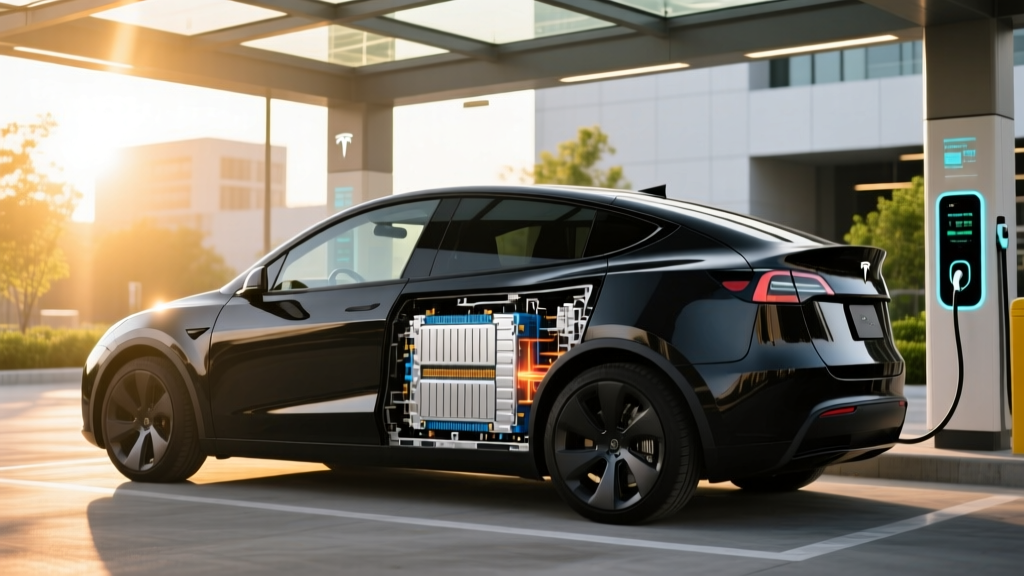
For prospective and current Tesla owners, the high-voltage traction battery is both the most expensive component and the biggest source of long-term anxiety. Questions about degradation curves, out-of-warranty replacement costs, and end-of-life recycling dominate EV forums for good reason: a battery swap on a Model S or Model X can exceed $20,000, while a Model 3 or Model Y pack runs between $12,000 and $16,000 depending on capacity and labor.
But the data tells a more reassuring story than the headlines suggest. Tesla's own impact reports and third-party fleet analyses show that most battery packs retain well above 80% of their original capacity after 150,000 miles, and the company's recycling infrastructure now recovers upwards of 92% of critical minerals from end-of-life cells. This guide breaks down exactly what happens to a Tesla battery across its full lifecycle — from chemistry choice and daily degradation to eventual recycling — using real fleet data and 2026 warranty terms.
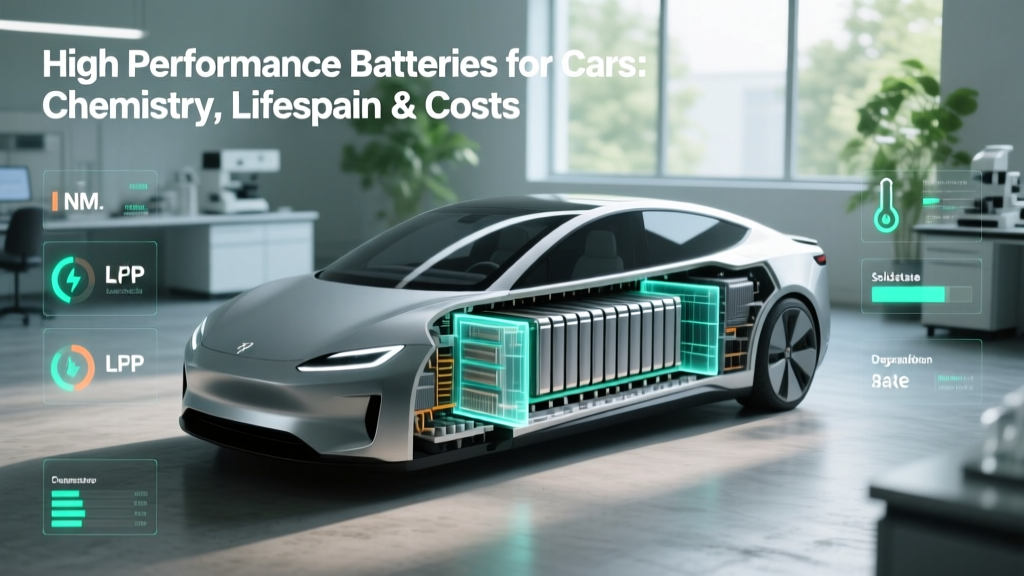
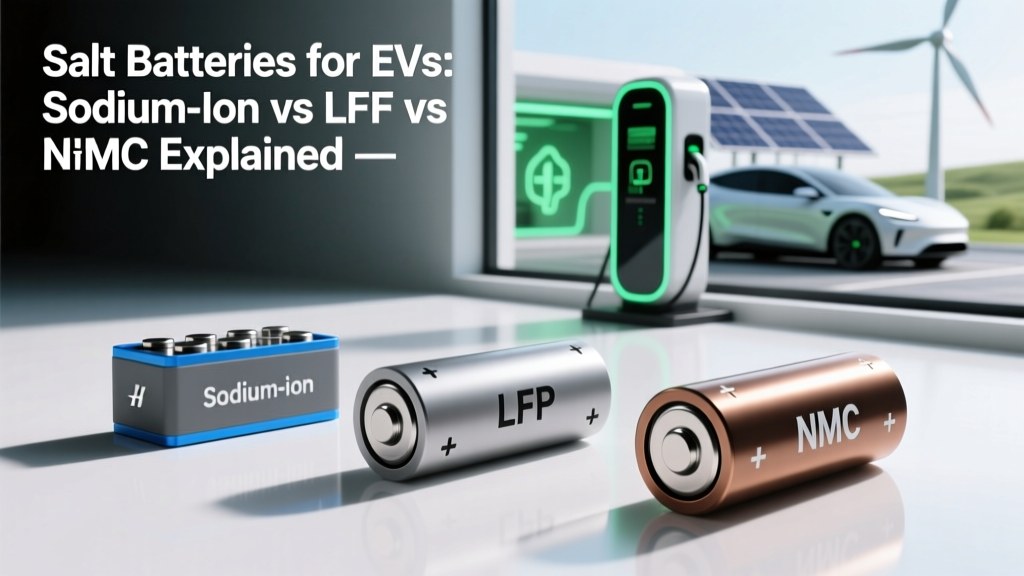
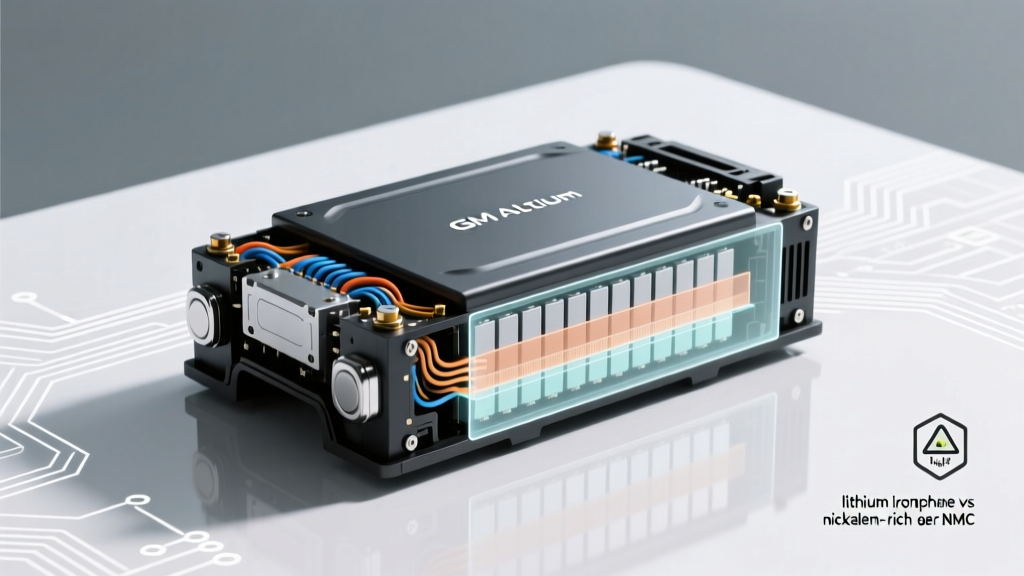
Tesla Battery Chemistry: LFP vs. NMC/NCA Explained
Tesla uses two primary lithium-ion chemistries across its 2026 lineup, and the choice affects everything from range to charging habits to longevity. Understanding which chemistry is under your floor is the first step in managing battery health.
| Attribute | LFP (Lithium Iron Phosphate) | NMC / NCA (Nickel-based) |
|---|---|---|
| Models using it | Model 3 RWD, Model Y RWD (Standard Range) | Model 3 Long Range, Model Y LR/Performance, Model S, Model X, Cybertruck |
| Energy density | Lower (~160 Wh/kg cell-level) | Higher (~250-270 Wh/kg cell-level) |
| Typical pack size | 57-60 kWh usable | 75-100 kWh usable |
| Cycle life | 3,000-5,000+ cycles | 1,000-2,000 cycles |
| Cold-weather performance | Moderate — greater range loss below freezing | Better low-temp discharge capability |
| Charging to 100% | Recommended weekly for BMS calibration | Daily limit to 80-90% advised |
| Cost per kWh | Lower (~$80-100/kWh cell) | Higher (~$110-140/kWh cell) |
| Recyclability | No cobalt/nickel — lower recovery value | High nickel/cobalt value drives recycling economics |
The practical takeaway: If you own a Standard Range Model 3 or Y with LFP, you can (and should) charge to 100% regularly. The chemistry tolerates full state-of-charge far better, and the battery management system (BMS) actually requires periodic full charges to maintain accurate range estimation. NMC/NCA owners should default to an 80% daily charge limit and reserve 100% for road trips. This single habit difference is one of the largest controllable factors in long-term degradation.
How Long Do Tesla Batteries Actually Last? Real Degradation Data
Tesla's 2025 Impact Report (the most recent published data as of early 2026) states that Model 3 and Model Y battery packs retain approximately 85% of original capacity at 200,000 miles. Model S and Model X packs show similar retention at roughly 88% over the same distance, owing in part to larger packs that experience shallower depth-of-discharge cycles in typical use.
Typical Tesla Battery Degradation Curve (Fleet Average):
- 0-30,000 miles: ~3-5% capacity loss (initial formation period — steepest early drop)
- 30,000-100,000 miles: ~1-2% additional loss per 30,000 miles (linear, gradual phase)
- 100,000-200,000 miles: ~1% per 30,000 miles (plateau phase)
- 200,000+ miles: Most packs still above 80% SoH; failure before 300,000 miles is statistically uncommon
Sources: Tesla 2025 Impact Report; tesla.com/impact; independent fleet data from Recurrent Auto.
The degradation curve is non-linear and this matters for used-EV buyers. The biggest capacity drop occurs in the first year or two — typically 3-5% — as the solid electrolyte interphase (SEI) layer forms on the anode. After that, degradation slows significantly. A 2022 Model 3 Long Range with 60,000 miles showing 93% State of Health (SoH) is not cause for alarm; it's tracking exactly where fleet averages predict.
Catastrophic battery failure (sudden, total loss of capacity) is rare. When it occurs, it is almost always within the warranty period and is covered. The more realistic end-of-life scenario is gradual capacity fade to 70-75% SoH at 250,000-350,000 miles, at which point the vehicle may still be functional but with meaningfully reduced range.
Tesla Battery Warranty: What's Covered and for How Long
| Model | Warranty Period | Mileage Limit | Minimum Capacity Retention |
|---|---|---|---|
| Model 3 RWD (LFP) | 8 years | 100,000 miles | 70% |
| Model 3 Long Range / Performance | 8 years | 120,000 miles | 70% |
| Model Y (all trims) | 8 years | 120,000 miles | 70% |
| Model S / Model X | 8 years | 150,000 miles | 70% |
| Cybertruck | 8 years | 120,000 miles | 70% |
Tesla's warranty covers the battery pack and drive unit against defects and excessive capacity loss. The threshold is 70% retention — if your pack drops below 70% of its original usable capacity within the warranty window, Tesla will repair or replace it at no cost. The replacement may be a new or remanufactured pack that meets the 70% threshold; it is not guaranteed to be brand-new.
Important caveats: the warranty does not cover damage from accidents, flooding, improper modifications, or using the vehicle as a stationary power source outside of approved V2H/V2L configurations. It also does not cover normal cosmetic range reduction from software-limited buffers. If your displayed range drops but the underlying capacity test still shows above 70%, that is considered normal operation.
EV Battery Replacement Cost: What Tesla Owners Actually Pay
Out-of-warranty battery replacement is the nightmare scenario most EV skeptics point to. Here's what it actually costs in 2026, based on service center invoices shared across Tesla owner communities and third-party repair shops:
| Model | Pack Size | Parts Cost | Labor | Total Range |
|---|---|---|---|---|
| Model 3 RWD (LFP) | ~57 kWh | $8,000 - $10,000 | $2,000 - $3,500 | $10,000 - $13,500 |
| Model 3 Long Range | ~75 kWh | $12,000 - $14,000 | $2,000 - $3,500 | $14,000 - $17,500 |
| Model Y Long Range / Perf | ~75 kWh | $12,000 - $15,000 | $2,500 - $4,000 | $14,500 - $19,000 |
| Model S (current gen) | ~100 kWh | $16,000 - $20,000 | $3,000 - $5,000 | $19,000 - $25,000 |
| Model X (current gen) | ~100 kWh | $17,000 - $22,000 | $3,500 - $5,500 | $20,500 - $27,500 |
These are significant sums, but context matters. The vast majority of Tesla battery packs never require replacement during typical ownership. Fleet data from Recurrent Auto shows fewer than 1.5% of Tesla packs replaced under warranty, and out-of-warranty replacements before 250,000 miles remain uncommon. For most owners, the battery will outlast the vehicle's body, suspension, and interior. If you plan to keep a Tesla past 200,000 miles and beyond the 8-year warranty, budgeting for a potential replacement is prudent — but statistically, it's more likely you'll sell or total the car before the pack needs swapping.
How Tesla Battery Recycling Works in 2026
When a Tesla battery pack does reach end-of-life — whether from degradation, accident damage, or vehicle retirement — it enters one of the most developed recycling pipelines in the EV industry. Tesla contracts with and partially owns recycling operations through Redwood Materials (founded by Tesla co-founder JB Straubel) and also works with Li-Cycle and other processors.
Here's the recycling pathway:
- Collection & triage: The pack is removed, tested, and sorted. Packs with 70-80% SoH may be repurposed for stationary energy storage (Tesla Megapack or Powerwall second-life applications).
- Discharge & disassembly: Packs are fully discharged, modules separated, and wiring/housing removed for conventional metal recycling.
- Shredding & black mass production: Cells are shredded in an inert atmosphere to produce "black mass" — a powder containing lithium, nickel, cobalt, manganese, copper, and aluminum.
- Hydrometallurgical recovery: Chemical processes (typically acid leaching followed by solvent extraction) separate individual metals at recovery rates of 92-98% for nickel, cobalt, and copper, and approximately 80-85% for lithium.
- Cathode precursor manufacturing: Recovered metals are refined into cathode-active material that can re-enter battery cell production — closing the loop.
Tesla claims that no end-of-life battery pack goes to landfill. In their 2025 Impact Report, the company stated they recycled or repurposed 100% of returned packs. The economics of recycling NMC/NCA packs are strong because of the nickel and cobalt value; LFP packs are less profitable to recycle (no nickel or cobalt), but the iron and lithium are still recoverable, and regulatory pressure under emerging EPA and DOE battery lifecycle rules ensures processing.
For context, a single 75 kWh Model Y NMC pack contains roughly $1,200-$1,800 worth of recoverable metals at 2026 commodity prices, making recycling economically viable even without mandates. As more first-generation Tesla packs reach end-of-life in the late 2020s and 2030s, recycling volume will scale substantially.
Factors That Accelerate (or Slow) Tesla Battery Degradation
Not all Tesla batteries age equally. Fleet data shows a wide spread in SoH at any given mileage, and the variance is largely explained by owner behavior and climate. Here's what the data shows matters most:
Habits that preserve battery health:
- Keep daily SoC between 20-80% (NMC/NCA) or charge to 100% weekly (LFP) — this single factor accounts for the largest controllable variance in degradation
- Use Level 2 home charging as your primary method — slower charging generates less heat and reduces cell stress
- Precondition the battery before DC fast charging (Tesla's navigation-to-Supercharger does this automatically) to optimize charge temperature
- Avoid letting the car sit at 100% SoC for extended periods — if you charge to full, drive within a few hours
- Use scheduled departure preconditioning in cold weather rather than cold-soaking the pack
Factors that accelerate degradation:
- Frequent DC fast charging — exclusive Supercharging correlates with ~2-4% additional capacity loss over 100,000 miles vs. primarily Level 2 charging (per Recurrent data)
- Regularly charging to 100% on NMC/NCA and letting it sit — high SoC + high temperature is the worst combination for lithium-ion
- Extreme heat exposure — vehicles regularly parked in 100°F+ environments without garage or shade show measurably faster calendar aging
- Deep discharge cycles — routinely running the battery below 10% stresses the anode
- High-mileage Supercharging in hot climates — the combination of thermal load from fast charging and ambient heat is the most stressful real-world scenario
How to Check Your Tesla's Battery Health (State of Health)
Tesla does not display a direct State of Health (SoH) percentage on the vehicle's touchscreen the way some competitors do. However, there are several reliable methods to estimate your pack's condition:
Method 1: The 100% Range Test
Charge your Tesla to 100% (for LFP, this is routine; for NMC, do this once for testing purposes). Note the displayed range at full charge. Compare it to the EPA-rated range for your specific model and year. For example, a 2024 Model 3 Long Range AWD has an EPA range of 341 miles. If your 100% charge shows 310 miles, your estimated SoH is approximately 310/341 = 91%. Note that displayed range is influenced by driving habits and temperature, so perform this test at moderate temperatures (60-75°F) for the most accurate reading.
Method 2: Third-Party Apps
Apps like Tessie, Stats (for iOS), and TeslaFi can log charge data over time and calculate SoH estimates by comparing energy added during charges against the battery's known capacity. These tools are generally accurate within 1-2% when fed several weeks of data.
Method 3: Tesla Service Diagnostic
If you suspect abnormal degradation (e.g., a sudden range drop), you can request a battery health check through the Tesla app. A service technician can run a diagnostic that provides a more precise capacity measurement, though Tesla typically only acts on results below the 70% warranty threshold.
Method 4: OBD-II Dongles
Devices like the OBDLink MX+ paired with apps such as Scan My Tesla can read the BMS-reported nominal full pack energy (in kWh) directly. This is the most accurate consumer-accessible method. Compare the reported kWh to your pack's original usable capacity (e.g., ~75 kWh for a Model 3 LR) for a precise SoH percentage.
What's Next: Solid-State Batteries and Future Tesla Cell Tech
Tesla's 4680 cell format — now in production at the Austin Gigafactory and used in select Model Y variants and the Cybertruck — represents the company's current-generation advancement. These cells use a dry-coated electrode process and a tabless design that improves thermal management, enables faster charging (peak rates above 250 kW), and reduces per-kWh manufacturing cost.
Looking further ahead, the broader EV industry is pursuing solid-state batteries, which replace the liquid electrolyte with a solid ceramic or polymer separator. Solid-state cells promise:
- 20-40% higher energy density (enabling 400+ mile packs at similar weight)
- Faster charging without lithium plating risk
- Improved safety (no flammable liquid electrolyte)
- Potentially longer cycle life
Realistic timeline: Solid-state batteries remain in pre-commercial stages as of 2026. Toyota has announced limited production for 2027-2028, and companies like QuantumScape are in pilot validation with VW. Tesla has not announced a solid-state timeline. Industry consensus places meaningful solid-state volume production at 2029-2032, with initial deployment in premium segments. Current lithium-ion chemistry, particularly with ongoing 4680 refinements and silicon-anode incremental improvements, will remain dominant through at least 2030.
For today's buyers, this means current Tesla battery technology is mature, well-understood, and backed by substantial fleet data. Waiting for solid-state is not a practical purchase strategy — it's a decade-long horizon.
Tesla Battery FAQ
How long do Tesla batteries last in years and miles?
Based on fleet data, most Tesla battery packs retain 80-88% of original capacity at 200,000 miles. In terms of years, a typical pack should provide 15-20+ years of service under normal driving patterns (10,000-15,000 miles/year). Complete failure before 150,000 miles is rare (under 1.5% of packs per Recurrent Auto data).
How much does a Tesla battery replacement cost in 2026?
Out-of-warranty replacement costs range from approximately $10,000-$13,500 for a Model 3 RWD (LFP pack) to $20,500-$27,500 for a Model X (100 kWh NMC pack), including parts and labor. Most owners never need a replacement during typical ownership.
What does Tesla's battery warranty cover?
Tesla covers the battery and drive unit for 8 years with mileage limits of 100,000-150,000 miles depending on model. The warranty guarantees at least 70% capacity retention. If SoH drops below 70% within the warranty window, Tesla repairs or replaces the pack at no cost.
Is LFP or NMC better for my Tesla?
Neither is universally better — they serve different priorities. LFP offers longer cycle life, lower cost, and tolerance for 100% daily charging, but with lower energy density and worse cold-weather range. NMC/NCA provides more range and better cold performance but requires more careful charge management (20-80% daily). Choose LFP if you want simplicity and lower cost; choose NMC if range is your priority.
Does frequent Supercharging damage my Tesla battery?
Exclusive DC fast charging correlates with modestly higher degradation — approximately 2-4% more capacity loss over 100,000 miles compared to primarily Level 2 home charging. It's not catastrophic, and Tesla's thermal management and battery preconditioning mitigate much of the stress. Occasional Supercharging on road trips has negligible impact; daily Supercharging as your only charge method will measurably accelerate aging.
What happens to my Tesla battery when the car is retired?
Tesla states that 100% of returned battery packs are recycled or repurposed. Packs with remaining capacity may enter second-life stationary storage. Fully degraded packs are processed by partners like Redwood Materials, which recovers 92-98% of nickel, cobalt, and copper, and 80-85% of lithium through hydrometallurgical processes. No Tesla battery goes to landfill.
Can I check my Tesla battery health myself?
Yes. The simplest method is charging to 100% and comparing displayed range to the original EPA rating. For more precision, use an OBD-II dongle with Scan My Tesla to read BMS-reported nominal capacity in kWh, or use third-party apps like Tessie or TeslaFi that track SoH over time based on charge session data.
Sources: Tesla 2025 Impact Report; Recurrent Auto — How Long Do EV Batteries Last; EPA Fuel Economy for model-specific range data.