The Truth About Tesla Battery Longevity and Common Issues
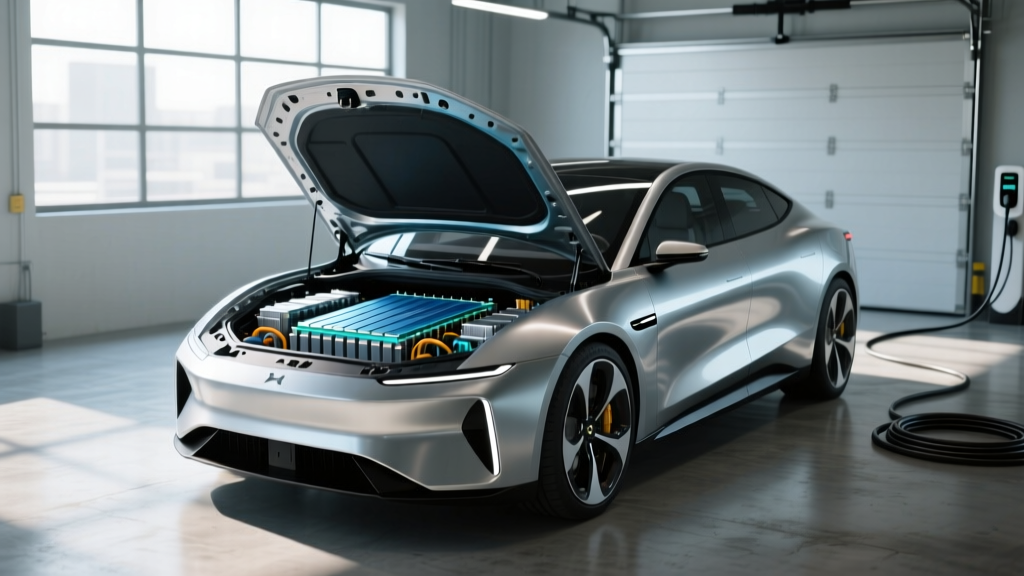
Search forums or owner groups long enough and you'll encounter a steady stream of concern about problems with Tesla battery packs — from range loss after two winters to five-figure replacement quotes. Some of these fears are grounded in data; many are not. Having tracked Tesla's battery performance across Model 3, Model Y, Model S, and Model X fleets for years, the reality is more nuanced than either the doomsayers or the cheerleaders suggest.
Tesla's high-voltage traction batteries (not to be confused with the 12V or 16V auxiliary lithium-ion battery that powers accessories) are among the most data-rich energy storage systems in any consumer vehicle. Tesla's own Impact Report and third-party fleet studies give us genuine visibility into how these packs age. This guide breaks down what actually goes wrong, what the warranty covers, what replacement costs, and how to maximize pack life — whether you drive a 2024 Model 3 Highland or a 2026 Model Y Juniper.
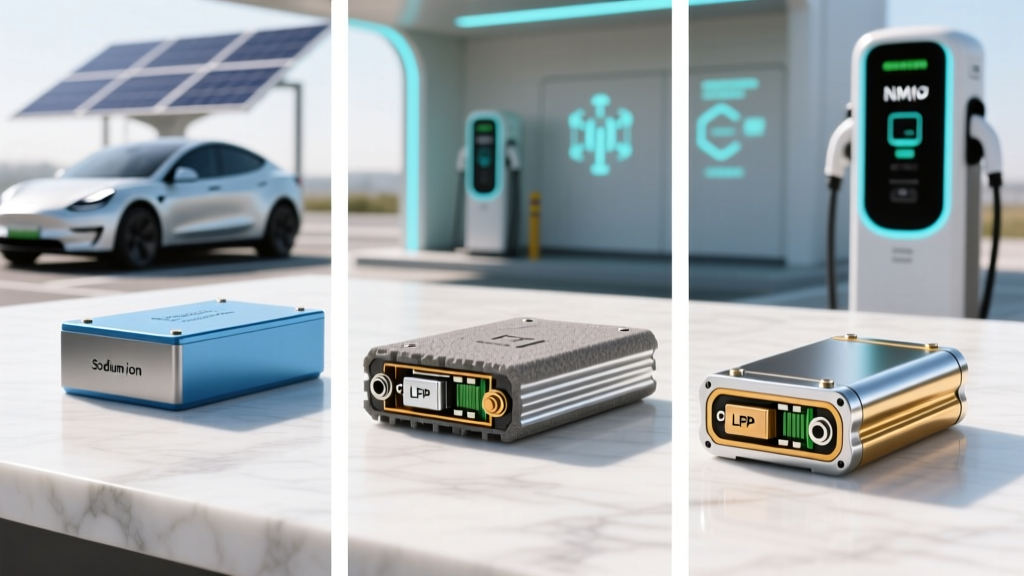
Tesla Battery Chemistry: NMC/NCA vs. LFP Explained
Tesla uses two primary lithium-ion chemistries depending on model, trim, and manufacturing origin. Understanding which pack is in your car is the single most important factor in setting expectations for degradation behavior, charging habits, and cold-weather performance.
| Attribute | NMC / NCA (Long Range, Performance, S/X) | LFP — Lithium Iron Phosphate (Standard Range / RWD) |
|---|---|---|
| Energy density | Higher (~250-270 Wh/kg cell-level) | Lower (~160-180 Wh/kg cell-level) |
| Typical usable capacity | 75-100 kWh depending on model | 57-60 kWh (Model 3/Y RWD) |
| Cycle life | ~1,000-1,500 full cycles to 80% SoH | ~2,500-3,500+ full cycles to 80% SoH |
| Cold-weather range loss | ~20-30% at 20°F | ~25-35% at 20°F (worse cold performance) |
| Recommended daily SoC | 80% (per Tesla guidance) | 100% (Tesla recommends weekly full charge for calibration) |
| Cost per kWh (pack-level) | Higher | ~20-30% lower |
| Primary suppliers (2026) | Panasonic (NCA), LG Energy Solution (NMC), CATL (NMC variants) | CATL (prismatic LFP), BYD Blade (select markets) |
| Thermal runaway risk | Low but higher than LFP | Extremely low — inherently more stable chemistry |
Which is better? There is no universal answer. NMC/NCA packs deliver more range per kilogram and charge faster at DC stations (peak 250 kW on V3 Superchargers vs. ~170 kW for LFP Model 3 RWD). LFP packs trade range for dramatically longer cycle life and lower cost — making them the pragmatic choice for daily commuters who can charge at home and don't need 330+ EPA miles. If your concern is long-term degradation specifically, LFP has a measurable edge in longevity.
Tesla Battery Degradation: What the Data Actually Shows
Tesla's 2024 Impact Report (the most recent comprehensive fleet data published) and independent analyses from Recurrent Auto and Geotab provide consistent findings across hundreds of thousands of vehicles:
- Year 1 / ~15,000 mi: 2-4% capacity loss (initial "break-in" degradation — mostly calendar aging and early SEI layer formation)
- Year 3 / ~45,000 mi: 5-8% total loss
- Year 5 / ~75,000 mi: 8-12% total loss
- Year 8 / ~120,000 mi: 10-15% total loss (median)
- 150,000+ mi: Degradation curve flattens significantly; most packs retain 80-88% of original capacity at 200,000 miles
The degradation curve is non-linear — a critical point most owners misunderstand. The steepest loss occurs in the first 12-18 months as the solid electrolyte interphase (SEI) layer stabilizes on the anode. After that, capacity loss slows to roughly 1-2% per year under normal use. This is why a 5-year-old Model 3 with 60,000 miles showing 88% State of Health is not "failing" — it's performing exactly as electrochemistry predicts.
Real-world range impact: A 2023 Model Y Long Range with an original EPA rating of 330 miles and 12% degradation after three years will show approximately 290 miles at 100% SoC. In 70°F highway conditions (65-70 mph), expect roughly 260-275 miles. In 20°F winter conditions with cabin heat, expect 200-230 miles. This is normal physics, not a defect.
What Tesla's Battery Warranty Actually Covers
Tesla's high-voltage battery warranty is straightforward but contains important exclusions that owners frequently misunderstand. Here are the current terms for 2026 model-year vehicles:
| Model / Trim | Warranty Duration | Mileage Limit | Minimum Capacity Retention |
|---|---|---|---|
| Model 3 RWD (LFP) | 8 years | 100,000 miles | 70% |
| Model 3 Long Range / Performance | 8 years | 120,000 miles | 70% |
| Model Y (all trims) | 8 years | 120,000 miles | 70% |
| Model S / Model X | 8 years | 150,000 miles | 70% |
What triggers a warranty claim: If Tesla's diagnostic scan confirms your pack has dropped below 70% of its original usable capacity (as measured by the Battery Management System) within the warranty period, Tesla will repair or replace the pack at no cost. The replacement pack may be new or remanufactured but will meet at least the 70% threshold.
What's excluded: Damage from accidents, flooding, fire, rodent damage, unauthorized modifications, or using the vehicle as a stationary power source beyond V2L/V2H specifications. Cosmetic concerns about range display fluctuations (which are affected by temperature and driving style) are not warranty claims — only measured capacity below the threshold qualifies.
Practical reality: Based on fleet data, fewer than 1-2% of Tesla packs fall below the 70% threshold within the warranty window under normal use. The vast majority of warranty replacements involve individual module failures or BMS faults, not wholesale capacity loss. Tesla's modular service approach means they often replace specific modules rather than the entire pack, reducing downtime.
Tesla Battery Replacement Cost: What to Budget
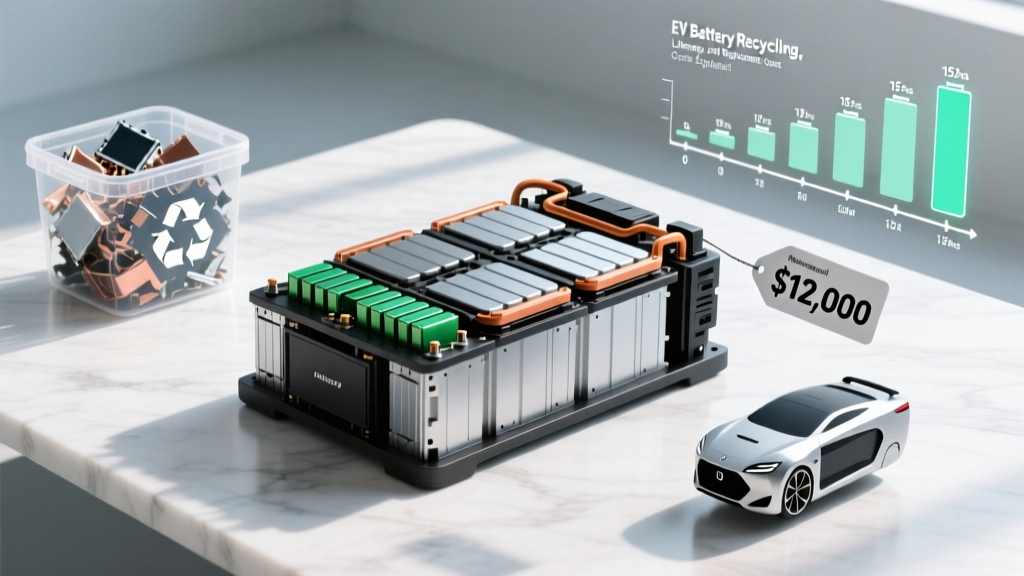
Out-of-warranty battery replacement is the single most cited fear among prospective EV buyers. Here are realistic 2026 figures based on Tesla Service Center quotes and third-party EV repair shops:
| Model | Battery Size | Estimated Replacement Cost (parts + labor) | Typical When Needed |
|---|---|---|---|
| Model 3 RWD (LFP) | ~60 kWh | $12,000 - $14,500 | Rarely before 200,000 mi |
| Model 3 Long Range / Performance | ~75-82 kWh | $14,000 - $17,000 | Rarely before 180,000 mi |
| Model Y Long Range / Performance | ~75-82 kWh | $14,500 - $18,000 | Rarely before 180,000 mi |
| Model S (2023+) | ~100 kWh | $18,000 - $22,000 | Rarely before 160,000 mi |
| Model X (2023+) | ~100 kWh | $18,000 - $22,000 | Rarely before 160,000 mi |
Important context on cost trajectory: Pack-level battery costs have fallen from approximately $186/kWh in 2020 to roughly $110-130/kWh in 2026 (per BloombergNEF data). Replacement costs today are meaningfully lower than they were five years ago, and the trend continues downward as 4680 cell production scales and LFP adoption expands.
When is replacement actually needed? Catastrophic pack failure (sudden inability to hold charge, coolant intrusion, internal short) can happen at any mileage but is statistically rare — well under 1% of vehicles. The more common scenario is a pack at 150,000-200,000 miles that has degraded to 75-80% capacity. At that point, the car still functions; it simply has less range. Many owners at this mileage choose to keep driving with reduced range rather than replace, especially given that the vehicle's resale value may be lower than the replacement cost.
Module-level repair: Tesla Service Centers and qualified third-party EV shops (such as Electrified Garage or independent high-voltage technicians) can sometimes replace individual battery modules rather than the full pack. A single module replacement typically costs $1,500-$3,500 depending on the model. This is only viable when diagnostics isolate the issue to specific modules rather than systemic cell degradation.
Factors That Accelerate Tesla Battery Degradation
Not all miles are created equal. The following factors have measurable, data-backed impacts on how quickly your Tesla's pack loses capacity:
- Daily charge limit: Set to 80% for NMC/NCA packs. Set to 100% for LFP (Tesla recommends at least one full charge per week for LFP calibration).
- Avoid prolonged 100% SoC: Don't charge to 100% and let the car sit for days. If you need a full charge for a road trip, time it so you depart shortly after charging completes.
- Minimize DC fast charging when Level 2 is available: Occasional Supercharging is fine and won't destroy your pack. But daily DC fast charging — especially at high SoC — accelerates degradation by ~1-3% over 100,000 miles compared to primarily Level 2 charging. Tesla's thermal management mitigates this significantly, but the physics of high C-rate charging still applies.
- Precondition before Supercharging: Navigate to a Supercharger in the Tesla app or nav system to trigger battery preconditioning. This warms the pack to optimal temperature (~95-105°F) for faster charging and reduced cell stress.
- Extreme heat exposure: Parking in 100°F+ ambient heat for extended periods accelerates calendar aging. Use a garage or shaded parking when possible. Tesla's Sentry Mode and thermal management will activate cooling if the pack gets too hot, but this draws from the battery.
- Extreme cold charging: Never DC fast charge a cold-soaked pack (below freezing) without preconditioning. Charging a cold lithium-ion cell causes lithium plating on the anode — a permanent, irreversible degradation mechanism.
- Keep the car plugged in when possible: Tesla's BMS performs cell balancing and thermal management more effectively when the vehicle is connected to power, even at low amperage (Level 1 is fine for this purpose).
The Supercharging question, quantified: A Recurrent Auto study comparing Teslas that Supercharged more than 90% of the time versus those that Supercharged less than 10% of the time found no statistically significant difference in degradation at 100,000 miles — a testament to Tesla's active thermal management. However, the same study noted slightly higher degradation variance in the heavy-Supercharging group. The practical takeaway: Supercharge when you need to, but default to Level 2 home charging for daily use.
How to Check Tesla Battery Health (State of Health)
Tesla does not expose a direct State of Health (SoH) percentage in the vehicle's touchscreen UI — a frequent source of owner frustration. However, several methods give you reliable visibility:
Method 1: Calculated SoH from Range Display
Set your display to show "Rated" or "EPA" range (not "Typical" or "Ideal"). Charge to 100% and note the displayed range. Compare it to the original EPA-rated range for your specific model and model year. For example, if your 2023 Model Y Long Range originally rated at 330 EPA miles now shows 295 miles at 100% SoC, your approximate SoH is 295 ÷ 330 = 89.4%. Note: this method has a margin of error of ±2-3% due to BMS calibration drift.
Method 2: Tesla Service Mode (2024+ vehicles)
On newer Tesla software versions, Service Mode (accessible via the Software menu) includes a battery health diagnostic that shows measured capacity in kWh. Compare this to the pack's original usable capacity (approximately 75 kWh for Model Y LR, 57 kWh for Model 3 RWD LFP) for a more precise SoH reading.
Method 3: Third-party OBD-II tools
Apps like Teslamate (self-hosted), Tessie, or Scan My Tesla connect via the vehicle's API or an OBD-II adapter and track battery capacity estimates over time. These tools log every charge session and provide degradation trendlines that are more informative than a single snapshot.
Method 4: Tesla Service diagnostic scan
If you suspect abnormal degradation, schedule a service appointment (via the app). Tesla technicians can run a full pack diagnostic that measures individual module voltages, internal resistance, and true capacity — the most authoritative SoH measurement available.
Common Tesla Battery Problems Beyond Degradation
While gradual capacity loss is normal, owners occasionally report specific issues worth understanding:
Phantom drain (vampire drain): Tesla vehicles consume energy while parked for Sentry Mode, over-the-air updates, cabin overheat protection, and periodic BMS communication. Typical phantom drain is 1-3% of SoC per day (roughly 3-10 miles). If you're seeing 5%+ daily drain, check for third-party apps polling the vehicle API excessively, disable Sentry Mode in safe parking locations, and ensure "Cabin Overheat Protection" is set to "No A/C" or off in mild weather.
BMS calibration drift: Over time, the Battery Management System's estimate of total capacity can drift from actual measured capacity. This manifests as the displayed range suddenly jumping up or down after a full charge. Fix: perform a manual calibration by charging to 100% (or as close as possible), letting the car sit at 100% for 1-2 hours with the vehicle off, then driving down to 10% SoC and recharging to 100%. This gives the BMS a full measurement window to recalibrate. For LFP packs, Tesla recommends this process periodically.
12V/16V auxiliary battery failure: This is not a traction battery problem, but it's frequently confused for one. Tesla's small auxiliary battery (which powers electronics, screens, and door handles) typically lasts 3-5 years. If your Tesla shows a "12V battery needs replacement" warning, this is a ~$300-$500 service item and does not affect the high-voltage pack. Tesla switched to a 16V lithium auxiliary battery in late 2021 Model S/X and 2022+ Model 3/Y, which has shown better longevity than the previous lead-acid units.
Coolant system issues: Tesla's battery thermal management relies on a glycol-based coolant loop. Coolant leaks or pump failures can trigger battery temperature warnings and, in rare cases, lead to pack damage if not addressed. If you see a "Battery temperature" or "Power reduced" warning, schedule service promptly. Coolant service intervals vary by model year — check your owner's manual or the Tesla app service section.
Emerging Battery Technology: What's Next for Tesla
Tesla's battery roadmap includes several technologies in various stages of development. It's important to separate what's shipping from what's still years away:
4680 cells (shipping now, scaling through 2026-2027): Tesla's larger-format cylindrical cells, produced at the Austin Gigafactory, are currently used in select Model Y vehicles built in Texas. The 4680 design offers ~16% improvement in energy density at the cell level and a projected ~10-15% reduction in cost per kWh at scale. Early 4680 packs show comparable or slightly better degradation characteristics than 2170 cells, but long-term fleet data is still accumulating.
Dry electrode coating (in limited production): Tesla acquired Maxwell Technologies in 2019 for its dry electrode manufacturing process, which eliminates toxic solvents and reduces energy consumption during cell production. As of 2026, this process is being integrated into 4680 production lines but has not yet achieved the throughput needed for mass deployment. It's a manufacturing innovation, not a chemistry change — it won't directly change degradation behavior for end users.
Silicon-dominant anodes (announced, expected 2027-2029): Replacing graphite anodes with silicon can theoretically increase energy density by 20-40%. However, silicon anodes swell significantly during charge cycles, causing mechanical degradation — a problem that has stymied commercialization for over a decade. Tesla and suppliers like Sila Nanotechnologies are working on nanostructured silicon composites, but no production vehicle currently uses a silicon-dominant anode. Expect this technology in limited applications by 2028-2029 at the earliest.
Solid-state batteries (not yet in production vehicles): Solid-state technology replaces the liquid electrolyte with a solid conductor, promising higher energy density, faster charging, and improved safety. Toyota, Samsung SDI, and QuantumScape have announced prototype cells, but no automaker — including Tesla — has a solid-state battery in a production vehicle as of 2026. Realistic timeline for commercial availability in consumer vehicles: 2029-2032. Any claims of "solid-state Teslas" currently on the road are inaccurate.
Frequently Asked Questions
How long do Tesla batteries last in years and miles?
Based on fleet data, the median Tesla battery retains approximately 85-90% of its original capacity at 150,000 miles and 80-85% at 200,000 miles. In calendar years, most packs remain functional well beyond 10-12 years. Tesla's own published data indicates that Model S/X packs lose an average of approximately 12% capacity over 200,000 miles. "End of life" for a Tesla battery is typically defined as 70% capacity — and most packs don't reach that threshold before the vehicle is retired for other reasons.
How much does it cost to replace a Tesla battery?
Out-of-warranty replacement costs range from approximately $12,000 for a Model 3 RWD (LFP, ~60 kWh) to $22,000 for a Model S/X (~100 kWh), including parts and labor. These figures reflect 2026 pricing and are expected to continue declining as cell costs fall. Module-level repairs, when applicable, cost $1,500-$3,500. Within the 8-year/100,000-150,000 mile warranty period, replacement is free if capacity drops below 70%.
What does the Tesla battery warranty cover?
Tesla's battery warranty covers the high-voltage traction battery against capacity loss below 70% of original capacity and against manufacturing defects for 8 years and 100,000 miles (Model 3 RWD), 120,000 miles (Model 3 LR/Performance, Model Y), or 150,000 miles (Model S/X). It does not cover damage from accidents, flooding, unauthorized modifications, or use as a stationary power source beyond rated specifications. The warranty is transferable to subsequent owners.
How do I check and maximize my Tesla battery health?
Check health by comparing your 100% SoC displayed range to the original EPA rating, using Service Mode diagnostics on newer software, or employing third-party apps like Tessie or Teslamate for trendline tracking. Maximize health by: limiting daily charge to 80% (NMC/NCA) or charging to 100% weekly (LFP), avoiding prolonged storage at 100% or below 10% SoC, preconditioning before DC fast charging, minimizing exposure to extreme heat, and keeping the vehicle plugged in when parked for extended periods.
LFP vs NMC — which Tesla battery is better?
Neither is universally better; they serve different use cases. Choose NMC/NCA (Long Range, Performance trims) if you need maximum EPA range (310-405 miles depending on model), faster DC charging (up to 250 kW peak), better cold-weather efficiency, and frequently take long road trips. Choose LFP (RWD/Standard Range trims) if you prioritize lower purchase price, longer cycle life (2,500+ cycles vs. ~1,000-1,500), the ability to charge to 100% daily without degradation concern, and primarily commute within 150-200 miles round trip. For pure longevity, LFP has the measurable advantage.
Is Supercharging bad for my Tesla battery?
Occasional Supercharging has minimal impact on battery health thanks to Tesla's active liquid cooling and thermal preconditioning. Fleet data from Recurrent Auto shows no statistically significant degradation difference between heavy and light Supercharger users at 100,000 miles. However, if you have reliable Level 2 home charging, using it as your primary charging method and reserving Supercharging for road trips is the optimal strategy for long-term pack health. The charge curve also tapers significantly above 80% SoC — charging from 80-100% at a Supercharger can take as long as 10-80%, so plan accordingly.
Does cold weather permanently damage Tesla batteries?
No. Cold weather causes temporary range reduction (20-35% at 20°F) due to increased internal cell resistance and energy used for pack/cabin heating. This range returns when temperatures rise. The only cold-related permanent damage risk is charging a cold-soaked pack (below freezing) without preconditioning, which can cause lithium plating. Tesla's BMS actively limits charging power on cold packs to prevent this, and navigating to a Supercharger automatically triggers preconditioning. Garage parking in winter eliminates most cold-related concerns.
Sources: Tesla Impact Report · Recurrent Auto Battery Research · EPA Fuel Economy / fueleconomy.gov · IRS §30D Clean Vehicle Credit