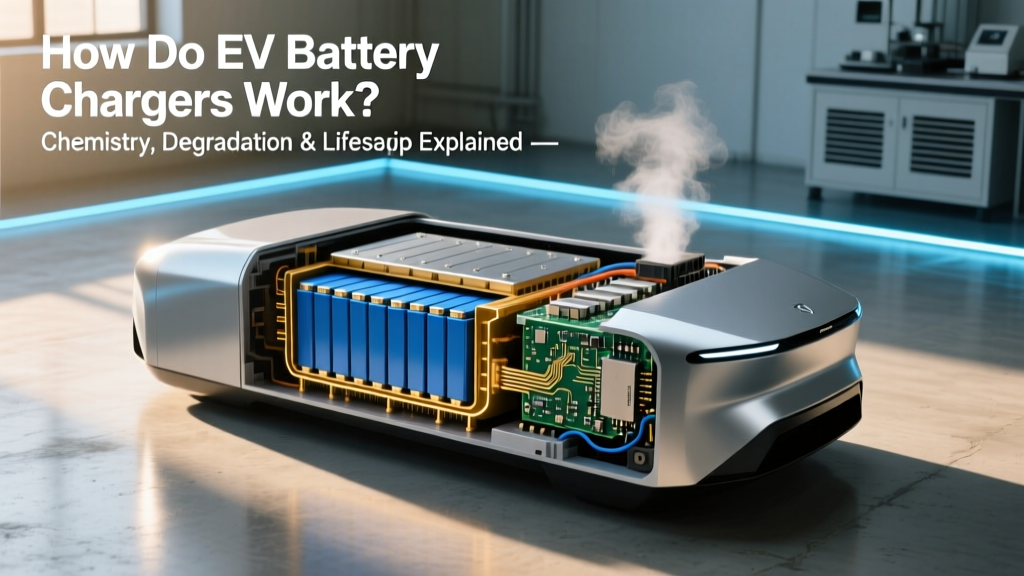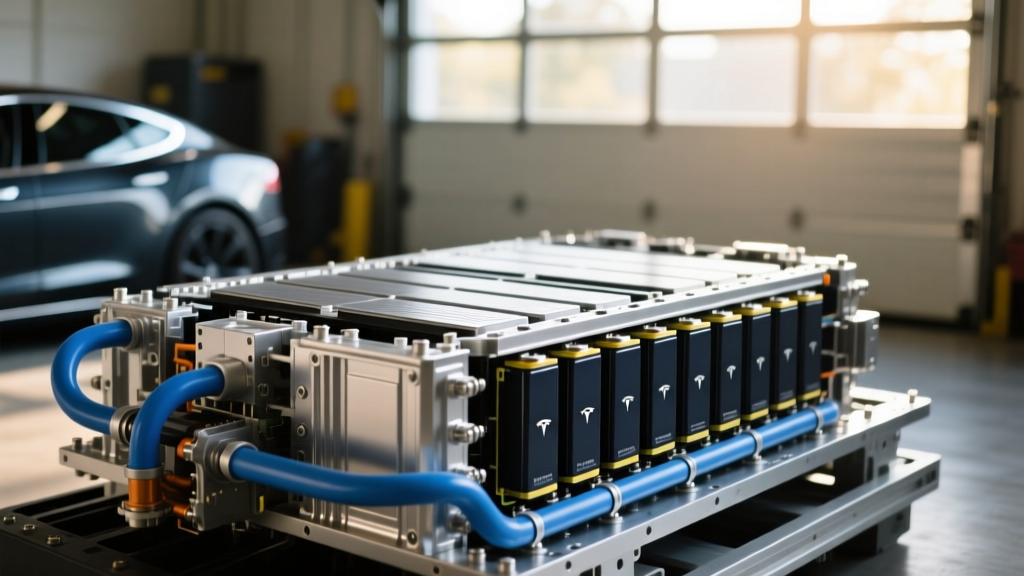
The Tesla battery pack is the single heaviest and most expensive component in any Tesla vehicle. Whether you're evaluating a Model 3, Model Y, Model S, or the Cybertruck, understanding what's inside that pack — its weight, chemistry, expected lifespan, and eventual replacement cost — is essential to making an informed purchase or ownership decision.
This guide breaks down Tesla battery pack weight across the current lineup, explains the two chemistries Tesla uses (LFP and NMC/NCA), provides real-world degradation data, and details what the warranty actually covers. We'll also cover how to monitor your battery's State of Health (SoH) and what emerging technologies like solid-state cells could mean down the road.
How Heavy Is a Tesla Battery Pack? Weight by Model
Tesla does not publish official battery pack weights in consumer spec sheets, but teardown data, regulatory filings, and engineering analyses give us reliable figures. The pack weight scales with capacity (measured in kWh) and is a major contributor to each model's curb weight.
| Model | Pack Capacity (kWh, usable) | Chemistry | Estimated Pack Weight (lbs) | Vehicle Curb Weight (lbs) | Pack as % of Curb |
|---|---|---|---|---|---|
| Model 3 RWD | ~57.5 | LFP | ~800–900 | 3,862 | ~22% |
| Model 3 Long Range AWD | ~75 | NMC | ~1,000–1,100 | 4,034 | ~26% |
| Model Y RWD | ~57.5 | LFP | ~800–900 | 4,171 | ~20% |
| Model Y Long Range AWD | ~75 | NMC | ~1,000–1,100 | 4,363 | ~24% |
| Model S Long Range | ~95 | NMC/NCA | ~1,200–1,350 | 4,561 | ~28% |
| Model S Plaid | ~95 | NMC/NCA | ~1,200–1,350 | 4,766 | ~27% |
| Model X Long Range | ~95 | NMC/NCA | ~1,200–1,350 | 5,185 | ~25% |
| Cybertruck AWD | ~123 | NMC (4680 cells) | ~1,500–1,700 | 6,603 | ~24% |
For context, the battery pack accounts for roughly 20–28% of a Tesla's total curb weight. This is typical across the EV industry — the Hyundai Ioniq 5's 77.4 kWh pack weighs roughly 1,050 lbs, and the Ford F-150 Lightning's extended-range pack is estimated at over 1,800 lbs.
Why weight matters: Heavier packs increase energy consumption (lowering MPGe), extend braking distances, and accelerate tire wear. Tesla offsets some of this through low center-of-gravity packaging (the pack sits flat under the floor), which improves handling dynamics relative to the vehicle's mass.
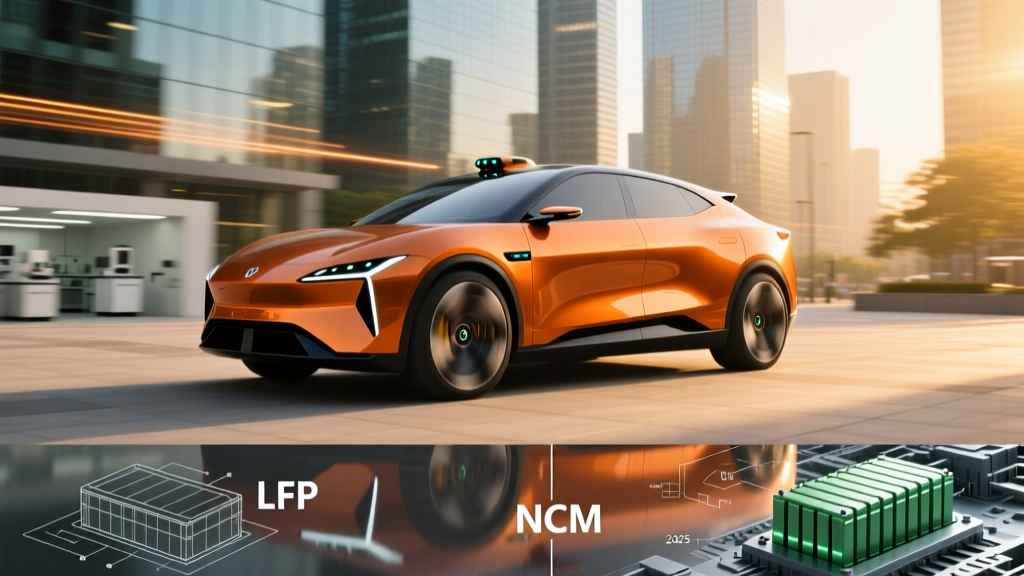
LFP vs NMC/NCA: Tesla's Two Battery Chemistries Explained
Tesla uses two distinct lithium-ion chemistries across its lineup, and the choice has real implications for range, longevity, charging behavior, and cold-weather performance.
| Attribute | LFP (Lithium Iron Phosphate) | NMC / NCA (Nickel Manganese Cobalt / Nickel Cobalt Aluminum) |
|---|---|---|
| Used in | Model 3 RWD, Model Y RWD | Model 3 LR, Model Y LR, Model S, Model X, Cybertruck |
| Energy density | Lower (~160 Wh/kg cell-level) | Higher (~250–280 Wh/kg cell-level) |
| Cycle life | 3,000–5,000+ cycles to 80% SoH | 1,000–2,000 cycles to 80% SoH |
| Cold performance | Weaker — more range loss below 32°F | Better low-temp discharge capability |
| Charging recommendation | Tesla recommends charging to 100% regularly | Tesla recommends daily limit of 80–90%; 100% only for trips |
| Cost | Lower — no cobalt or nickel | Higher — commodity-priced nickel and cobalt |
| Thermal stability | Excellent — less prone to thermal runaway | Good, but requires more active thermal management |
| Weight for same kWh | Heavier per kWh | Lighter per kWh |
Which is better? Neither is universally superior — it depends on your use case.
Choose LFP if: You want maximum cycle life, lower replacement-cost risk, and you charge at home daily (where 100% charging is recommended). LFP suits commuters and high-mileage drivers who prioritize longevity over maximum single-charge range. The trade-off is reduced cold-weather range and slightly lower energy density, which is why Tesla reserves LFP for the standard-range (RWD) trims.
Choose NMC/NCA if: You need maximum EPA range, faster DC charging speeds, better cold-weather performance, or you're buying a Long Range, Plaid, or Cybertruck model. The trade-off is a lower total cycle count over the pack's life and a recommendation to avoid sitting at 100% SoC for extended periods.
Tesla's 4680 cell format (used in the Cybertruck and some Model Y variants) is an NMC chemistry in a larger cylindrical form factor with a tabless electrode design that improves thermal management and enables higher sustained charge rates.
How Long Do Tesla Batteries Last? Real-World Degradation Data
Tesla batteries are engineered to outlast the useful life of the vehicle for most owners. But "outlast" doesn't mean "zero degradation." Here's what the data shows.
Tesla's own Impact Report (2023, the most recent comprehensive data published) states:
- Model 3 and Model Y packs (NMC, rear-wheel-drive and all-wheel-drive) retain approximately 85% of original capacity after 200,000 miles — roughly 15% degradation over the average vehicle lifetime.
- Model S and Model X packs show roughly 80–85% capacity retention after 150,000–200,000 miles.
- LFP packs (Model 3 RWD, Model Y RWD) show even slower degradation curves in early data, with many owners reporting less than 5% loss in the first 50,000 miles.
Independent data from Recurrent Auto, which tracks over 15,000 Tesla vehicles in real-world conditions, corroborates these figures. Their 2024 analysis found:
- Average range degradation for the Model 3 at 100,000 miles: approximately 8–10%.
- Degradation is non-linear: the steepest loss occurs in the first 10,000–20,000 miles (typically 2–4%), then the curve flattens significantly.
- Vehicles that frequently DC fast-charge show marginally higher degradation (1–2% more over 100k miles) compared to vehicles primarily charged on Level 2.
What does this mean in real miles? A 2025 Model 3 Long Range with an EPA-estimated 363 miles of range would likely deliver roughly 310–330 miles of real-world range at 100,000 miles — still ample for most daily driving and road trips.
What Does the Tesla Battery Warranty Cover?
Tesla's battery and drive unit warranty is one of the more straightforward in the industry, but the details matter — especially the capacity retention threshold.
| Model | Warranty Duration | Mileage Limit | Minimum Capacity Retention |
|---|---|---|---|
| Model 3 RWD (LFP) | 8 years | 100,000 miles | 70% |
| Model 3 Long Range / Performance | 8 years | 120,000 miles | 70% |
| Model Y RWD (LFP) | 8 years | 100,000 miles | 70% |
| Model Y Long Range / Performance | 8 years | 120,000 miles | 70% |
| Model S (all trims) | 8 years | 150,000 miles | 70% |
| Model X (all trims) | 8 years | 150,000 miles | 70% |
| Cybertruck (all trims) | 8 years | 150,000 miles | 70% |
Key warranty details:
- What's covered: Defects in materials or workmanship, and capacity loss below the 70% threshold within the warranty period.
- What's not covered: Damage from accidents, flooding, fire, improper use (e.g., using the vehicle as a stationary power source beyond V2L specs), or modifications to the battery system.
- Replacement standard: Tesla may replace the pack with a new or remanufactured unit that meets the 70% capacity threshold — not necessarily a brand-new pack.
- The 70% threshold is generous for the manufacturer but significant for the owner: a pack at 69% capacity on a Model 3 LR (originally ~75 kWh usable) would deliver roughly 52 kWh — enough for about 230 real-world miles instead of the original 330.
For full warranty terms, refer to the Tesla New Vehicle Limited Warranty page.
How Much Does a Tesla Battery Replacement Cost?
This is the question that generates the most anxiety — and the most misinformation. Here are the facts as of 2025–2026.
| Model | Pack Size | Estimated Replacement Cost (Parts + Labor) | Typical When Needed |
|---|---|---|---|
| Model 3 RWD (LFP) | ~57.5 kWh | $10,000–$13,000 | Rarely within vehicle lifetime; 200k+ miles |
| Model 3 LR / Performance | ~75 kWh | $13,000–$16,000 | Rarely within vehicle lifetime; 200k+ miles |
| Model Y RWD (LFP) | ~57.5 kWh | $10,000–$13,000 | Rarely within vehicle lifetime; 200k+ miles |
| Model Y LR / Performance | ~75 kWh | $13,000–$16,000 | Rarely within vehicle lifetime; 200k+ miles |
| Model S / X | ~95 kWh | $15,000–$22,000 | 150k–250k+ miles if at all |
| Cybertruck | ~123 kWh | $18,000–$25,000 | Insufficient long-term data; projected 200k+ miles |
Critical context most articles omit:
- Most Tesla battery packs never need replacement. Based on current degradation data, the vast majority of packs will retain 75–85% capacity at 200,000 miles — well above the warranty threshold and still functional for daily driving.
- Out-of-warranty replacements are rare. The most common scenario is a manufacturing defect caught within the 8-year warranty window, where Tesla covers the cost entirely.
- Costs are declining. Battery pack prices have fallen from over $1,000/kWh in 2010 to approximately $130–$150/kWh at the cell level in 2025 (per BloombergNEF). Full pack replacement costs will continue to trend downward.
- Partial repairs are sometimes possible. Tesla service centers can sometimes replace individual modules within a pack rather than the entire unit, reducing cost to $3,000–$7,000 depending on the issue.
Factors That Affect Tesla Battery Longevity
Not all miles are created equal. How you charge, drive, and store your Tesla has a measurable impact on long-term battery health.
What Accelerates Degradation
- Exclusive DC fast charging: Vehicles that rely almost entirely on Superchargers and third-party DC fast chargers show 1–3% more capacity loss at 100,000 miles compared to predominantly Level 2-charged vehicles. The heat generated during high-rate charging (150–250 kW) stresses cells over time.
- Prolonged high State of Charge (NMC/NCA): Leaving an NMC or NCA pack at 100% SoC for days or weeks — especially in hot weather — accelerates calendar degradation. Tesla's recommendation to set daily charge limits to 80–90% for NMC packs exists for this reason.
- Extreme heat exposure: Sustained ambient temperatures above 95°F, particularly when combined with high SoC, increase electrolyte decomposition. Tesla's thermal management system mitigates this, but it can't eliminate the effect entirely.
- Frequent deep discharges to 0%: Running the pack to near-zero regularly stresses the cells. Tesla's buffer (typically 2–5 kWh below the displayed 0%) protects against catastrophic damage, but habitual deep cycling still accelerates wear.
What Preserves Battery Health
- Predominant Level 2 home charging: Slower charging (7–11.5 kW) generates far less heat and is gentler on cells.
- Moderate SoC habits: For NMC/NCA packs, keeping daily SoC between 20% and 80% is optimal. For LFP packs, Tesla recommends charging to 100% at least once per week to allow the BMS to calibrate accurately.
- Preconditioning: Using the Tesla app to precondition the battery before Supercharging (the car does this automatically when a Supercharger is set as your navigation destination) optimizes cell temperature for fast charging, reducing stress.
- Garaging in extreme climates: Keeping the vehicle in a garage during peak summer heat or deep winter cold reduces thermal cycling stress on the pack.
How to Check Your Tesla's Battery Health (State of Health)
Tesla does not display a direct "State of Health" percentage in the vehicle's UI, unlike some competitors (e.g., Nissan Leaf's health bars or the detailed SoH readouts in Hyundai/Kia EVs). But there are several ways to assess your pack's condition.
Method 1: The Range Comparison Method
Charge your Tesla to 100% (for LFP) or your normal limit, then note the displayed range. Compare this to the original EPA-estimated range for your model and model year. For example, if your 2023 Model 3 LR originally displayed 341 miles at 100% and now displays 310 miles at 100%, that's approximately 9% degradation. Note that displayed range also factors in recent driving efficiency, so this is an approximation.
Method 2: TeslaFi or Third-Party Logging
Services like TeslaFi and Tessie log detailed charge data, including energy added during charges and estimated capacity. By comparing energy added from a known low SoC to a known high SoC, you can calculate usable capacity over time. Many long-term owners track this monthly.
Method 3: Service Center Diagnostic
Tesla service centers can run a full battery health diagnostic that provides a more precise SoH reading. This is typically done during warranty-related visits or pre-purchase inspections for used Teslas. Request this if you're evaluating a high-mileage used Tesla.
Method 4: The OBD-II / CAN Bus Reader Approach
Advanced owners use OBD-II dongles paired with apps like Scan My Tesla to read raw BMS (Battery Management System) data, including nominal full pack capacity (in kWh), energy remaining, and cell voltage imbalance. The "nominal full pack" value compared to the pack's original rated capacity gives a direct SoH estimate.
Emerging Battery Technology: What's on the Horizon
While current Tesla packs use proven lithium-ion technology, several advancements are in development that could reshape EV batteries within the next decade.
Solid-state batteries: These replace the liquid electrolyte with a solid conductor, promising higher energy density (potentially 400+ Wh/kg at the cell level), faster charging, and improved safety. Toyota has announced a commercialization target of 2027–2028 for limited production vehicles, and Samsung SDI is targeting 2027. However, mass production at automotive scale remains unproven, and costs are currently prohibitive. This technology is not currently available in any production vehicle.
Silicon-dominant anodes: Companies like Sila Nanotechnologies and Group14 are developing silicon-based anode materials that can increase energy density by 20–40% over current graphite anodes. Mercedes-Benz has partnered with Sila for the upcoming electric G-Class. Tesla has filed patents related to silicon anode integration but has not announced production timelines.
Tesla's 4680 cell evolution: Tesla continues to ramp 4680 cell production at its Austin and Fremont facilities. The dry-electrode coating process (still being refined for the cathode side) promises lower manufacturing costs and higher energy density once fully implemented. Incremental improvements to the 4680 format are expected through 2027–2028.
Sodium-ion batteries: CATL and BYD have begun limited production of sodium-ion cells, which eliminate lithium entirely. These offer lower energy density but significantly lower cost and better cold performance. Tesla has not announced plans to adopt sodium-ion, but it could be viable for future entry-level models or energy storage products.
All of these technologies are forward-looking. None are currently available in Tesla vehicles, and commercialization timelines are subject to delay.
Frequently Asked Questions
How long do Tesla batteries last in years and miles?
Based on Tesla's published data and independent tracking by Recurrent Auto, Tesla battery packs are designed to retain at least 70–85% of their original capacity at 200,000 miles. In years, most packs will outlast 12–15 years of average use (roughly 13,500 miles/year per FHWA data). Catastrophic failure requiring full replacement within the first decade is uncommon and typically covered by the 8-year warranty.
How much does it cost to replace a Tesla battery out of warranty?
Out-of-warranty replacement costs range from approximately $10,000 for a Model 3 RWD (LFP, ~57.5 kWh) to $25,000 for a Cybertruck (~123 kWh), including parts and labor. However, most Tesla battery packs never require full replacement during the vehicle's usable life. Module-level repairs can reduce costs to $3,000–$7,000 in some cases.
Does frequent Supercharging damage the battery?
Exclusive reliance on DC fast charging (Superchargers or third-party networks) results in marginally higher degradation — approximately 1–3% more capacity loss at 100,000 miles compared to predominantly Level 2 charging. Tesla's thermal management system and charge-curve tapering (reducing kW above ~80% SoC) mitigate the impact, but heat from sustained high-rate charging does accelerate cell aging over time. For daily use, Level 2 home charging is gentler; Supercharging is best reserved for road trips.
Is LFP better than NMC for Tesla batteries?
LFP offers superior cycle life (3,000–5,000+ cycles vs. 1,000–2,000 for NMC), lower cost, and better thermal stability — making it ideal for daily commuters and high-mileage drivers. NMC/NCA offers higher energy density (more range in a lighter, smaller pack), better cold-weather performance, and faster DC charging — making it the right choice for Long Range models and drivers in cold climates. Neither is universally "better"; the optimal chemistry depends on your driving pattern and climate.
Does Tesla's battery warranty cover normal degradation?
Yes, but only if degradation drops below 70% of original capacity within the warranty period (8 years / 100,000–150,000 miles depending on model). Normal degradation that stays above 70% is not covered. In practice, reaching the 70% threshold within the warranty window is rare for Tesla packs based on current field data.
Can I check my Tesla battery health myself?
Tesla does not provide a built-in SoH percentage, but you can approximate it by comparing your 100%-charge displayed range to the original EPA estimate, or by using third-party tools like TeslaFi, Tessie, or an OBD-II CAN bus reader to pull nominal full pack data from the BMS. For a definitive reading, a Tesla service center can run a full diagnostic.
How does cold weather affect Tesla battery range and health?
Cold temperatures (below 32°F) temporarily reduce usable range by 15–30% due to increased internal resistance and energy used for cabin/battery heating. This is not permanent degradation — range returns as temperatures rise. LFP packs show slightly more cold-weather range loss than NMC/NCA packs. Preconditioning the battery (automatic when navigating to a Supercharger, or manually via the app) mitigates both range loss and charging-speed reduction in cold weather.
Sources: Tesla Impact Report, Tesla New Vehicle Limited Warranty, EPA fueleconomy.gov, Recurrent Auto battery degradation research.