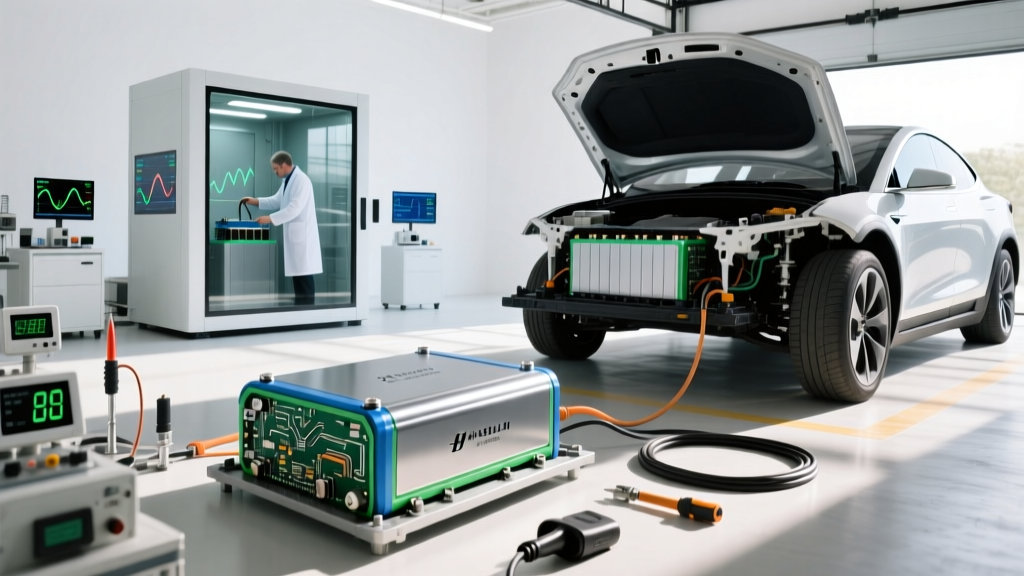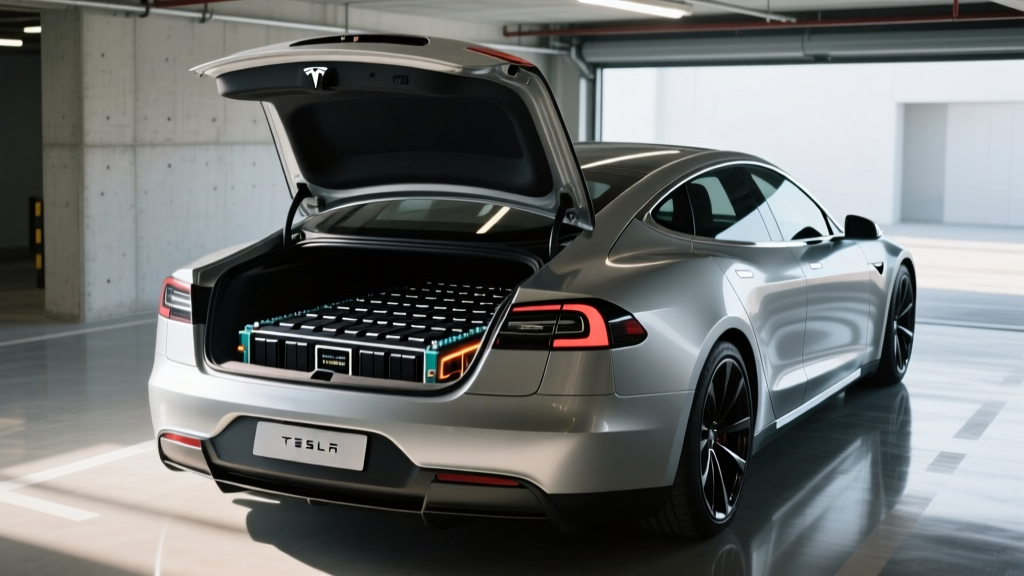
If you're evaluating a Tesla—or already own one—the high-voltage traction battery is the single most expensive component in the vehicle. Understanding exactly what the battery limited warranty Tesla provides, how the pack degrades in real-world driving, and what a replacement actually costs is essential for making a confident ownership decision.
This guide covers every 2026 Tesla model's warranty terms, the chemistry differences between LFP and NMC/NCA packs, verified degradation data, and practical steps to maximize your battery's lifespan.
Tesla Battery Limited Warranty: What's Actually Covered
Tesla structures its battery warranty around two thresholds: time and mileage. If your battery's usable capacity drops below a defined percentage before either limit is reached, Tesla will repair or replace it. Here's the current coverage matrix across the 2026 lineup:
| Model / Trim | Warranty Period | Mileage Limit | Minimum Capacity Retention | Chemistry |
|---|---|---|---|---|
| Model 3 RWD | 8 years | 100,000 miles | 70% | LFP |
| Model 3 Long Range / Performance | 8 years | 120,000 miles | 70% | NMC/NCA |
| Model Y RWD | 8 years | 100,000 miles | 70% | LFP |
| Model Y Long Range / Performance | 8 years | 120,000 miles | 70% | NMC/NCA |
| Model S (all trims) | 8 years | 150,000 miles | 70% | NCA |
| Model X (all trims) | 8 years | 150,000 miles | 70% | NCA |
Key warranty details buyers often miss:
- The 70% threshold is a floor, not an expectation. Most Tesla packs retain 85–92% capacity at 100,000 miles based on fleet data. The warranty protects against outlier defects.
- Transferability. The battery warranty transfers automatically to subsequent owners if the vehicle is sold within the coverage window—no paperwork required.
- What voids coverage: aftermarket modifications to the high-voltage system, salvage titles, using the vehicle as a stationary power source beyond Tesla's approved V2H/V2L accessories, or physical damage from collisions/flooding.
- What it doesn't cover: normal capacity loss above the 70% threshold, the 12V auxiliary battery (covered under the separate 4-year/50,000-mile vehicle warranty), or range reduction from software updates that adjust charge limits.
For the full legal text, always reference Tesla's official warranty documentation.
LFP vs NMC/NCA: Which Tesla Battery Chemistry Is Right for You?
Tesla uses two distinct lithium-ion chemistries across its 2026 lineup. The choice affects your daily charging habits, cold-weather range, and long-term degradation profile.
| Attribute | LFP (Lithium Iron Phosphate) | NMC/NCA (Nickel Manganese Cobalt / Nickel Cobalt Aluminum) |
|---|---|---|
| Models using it | Model 3 RWD, Model Y RWD | Model 3 LR/Perf, Model Y LR/Perf, Model S, Model X |
| Energy density | Lower (~160 Wh/kg cell-level) | Higher (~250–270 Wh/kg cell-level) |
| EPA range (typical) | 272 mi (Model 3 RWD) | 363 mi (Model 3 LR AWD) |
| Usable battery capacity | ~57.5 kWh | ~75 kWh (LR) / ~100 kWh (S/X) |
| Recommended daily SoC | 100% (charge to full daily) | 80–90% (avoid sustained 100%) |
| Cycle life | 3,000–5,000+ cycles | 1,000–2,000 cycles |
| Cold-weather performance | More range loss (~30–40% at 20°F) | Better cold retention (~20–30% loss at 20°F) |
| Cost | Lower (no cobalt/nickel) | Higher |
| Thermal stability | Excellent (very low thermal runaway risk) | Good (requires active thermal management) |
The practical takeaway: If you can charge at home every night and prioritize longevity and lower cost, the LFP-equipped RWD models are the smarter buy. If you need maximum range for road trips or live in a cold climate, the NMC/NCA Long Range models deliver more miles per charge and better winter efficiency.
Real-World Degradation: What Fleet Data Actually Shows
Tesla publishes degradation figures in its annual Impact Report, and independent fleet analyses from sources like fueleconomy.gov and owner-collected databases corroborate the trend. Here's the typical trajectory:
Tesla Battery Degradation Curve (Fleet Average, NMC/NCA Packs):
- Year 1 / ~15,000 miles: 2–4% capacity loss (initial formation loss)
- Year 2 / ~30,000 miles: 4–6% total loss
- Year 3–4 / ~60,000 miles: 6–9% total loss
- Year 5 / ~75,000 miles: 8–11% total loss
- Year 8 / ~120,000 miles: 10–15% total loss
- 150,000+ miles: 12–18% total loss (many packs still above 82% SoH)
LFP packs degrade more slowly in the middle years but show a steeper initial drop. At 100,000 miles, LFP packs in Model 3 RWD vehicles commonly retain 90–94% of original capacity.
According to Tesla's Impact Report, the average Model S/X battery retains approximately 88% of its original capacity at 150,000 miles. Model 3/Y data (which has a shorter fleet history) shows similar or better retention curves, particularly for LFP variants.
Real-world caveat: These are fleet averages. Individual results depend heavily on charging habits, climate, and how often you use DC fast charging. A vehicle that lives in Phoenix and Supercharges daily will degrade faster than one garage-parked in Seattle on Level 2.
How Much Does a Tesla Battery Replacement Cost?
Out-of-warranty battery replacement is the concern that keeps prospective EV buyers up at night. Here's what the numbers actually look like in 2026:
| Model | Battery Size (Usable) | Replacement Cost Range | When Typically Needed |
|---|---|---|---|
| Model 3 RWD (LFP) | ~57.5 kWh | $12,000 – $14,500 | Rarely before 200,000 mi |
| Model 3 Long Range (NMC) | ~75 kWh | $14,000 – $17,000 | Rarely before 180,000 mi |
| Model Y Long Range (NMC) | ~75 kWh | $14,500 – $17,500 | Rarely before 180,000 mi |
| Model S (NCA) | ~100 kWh | $18,000 – $22,000 | Rarely before 160,000 mi |
| Model X (NCA) | ~100 kWh | $18,000 – $22,000 | Rarely before 160,000 mi |
Important context: These costs include the battery pack and labor at a Tesla Service Center. Third-party EV shops are beginning to offer module-level repairs for $5,000–$9,000, where only degraded modules are replaced rather than the entire pack. Full replacements before 150,000 miles are uncommon—most packs outlive the vehicle's economic life. The fear of a sudden $20,000 bill at year 5 is not supported by fleet data.
Tesla also offers remanufactured packs at a lower cost (typically 15–25% less than new) when available. These are refurbished units that meet Tesla's capacity and safety standards.
Factors That Accelerate (or Slow) Battery Degradation
Battery wear is not purely a function of time or mileage—it's driven by how you charge, what temperatures you expose the pack to, and how deeply you cycle it. Here's the hierarchy of impact:
High-Impact Factors
- Sustained high State of Charge (NMC/NCA): Storing a nickel-based pack at 100% SoC for days accelerates electrolyte decomposition. Set your daily charge limit to 80% and only charge to 100% before road trips.
- Frequent DC fast charging: Supercharging at 150–250 kW generates significant heat. Tesla's thermal management mitigates this, but packs that Supercharge 3+ times per week show measurably higher degradation than those primarily on Level 2. Preconditioning the battery (navigating to a Supercharger in the Tesla app) reduces this effect by warming the pack to optimal charge temperature.
- Extreme heat exposure: Prolonged parking in 100°F+ ambient temperatures without cabin overheat protection or plugged-in thermal management accelerates calendar aging.
Moderate-Impact Factors
- Deep discharge cycles: Regularly driving below 10% SoC stresses the pack. Try to keep it above 15–20%.
- Cold-weather charging without preconditioning: Charging a cold NMC/NCA pack at high rates can cause lithium plating. Always precondition in freezing weather.
- High-mileage fast driving: Sustained 80+ mph highway driving generates more pack heat than city driving with regen braking.
Battery Care Checklist for Maximum Longevity:
- ☐ Set daily charge limit to 80% (NMC/NCA) or 100% (LFP)
- ☐ Plug in whenever possible—let the BMS manage thermal conditioning
- ☐ Precondition before Supercharging (set Supercharger as nav destination)
- ☐ Avoid leaving the car at 100% SoC for more than a few hours
- ☐ Keep cabin overheat protection enabled in hot climates
- ☐ Minimize DC fast charging to road trips when Level 2 is available
- ☐ Don't let the car sit below 10% SoC for extended periods
- ☐ Use Scheduled Departure to preheat/cool while plugged in
How to Monitor Your Tesla's Battery Health (SoH)
Tesla does not expose a direct State of Health (SoH) percentage in the vehicle UI or app. But you can estimate it using these methods:
Method 1: Rated Range at 100% Charge
Charge your vehicle to 100% (or for LFP, your normal full charge) and note the displayed rated range. Compare it to the original EPA-rated range for your model. A Model 3 Long Range that originally displayed 358 miles at 100% but now shows 322 miles has approximately 89.9% SoH (322 ÷ 358).
Method 2: Third-Party Telemetry Apps
Apps like Tessie, Stats, or TeslaFi pull data from Tesla's API and track estimated SoH over time, logging each charge session's energy delivered vs. pack capacity. These provide a more granular view than the in-car display.
Method 3: Tesla Service Diagnostic
You can request a battery health check through the Tesla app. A service technician can run a diagnostic that reports precise capacity and internal resistance figures. This is the most authoritative method and is free if you suspect a warranty issue.
How Long Do Tesla Batteries Actually Last?
The short answer: longer than most owners keep the car.
Based on fleet data, a Tesla NMC/NCA battery pack can reasonably be expected to deliver 200,000–300,000 miles before reaching 70% capacity (the warranty floor). LFP packs, with their higher cycle life, may exceed 300,000–400,000 miles before hitting that same threshold.
In years, that translates to 15–20+ years for the average American driver (roughly 13,500 miles/year per FHWA data). The vehicle's motor, suspension, and interior will likely need attention long before the battery becomes unusable.
The battery isn't a ticking time bomb—it's a slowly fading asset. A pack at 80% SoH still provides perfectly usable daily range; it just means a Model 3 LR that once did 358 EPA miles now does about 286.
Emerging Battery Technology: What's on the Horizon
Several next-generation battery technologies are in development that could shift the landscape for future Tesla models and the broader EV market:
- Solid-state batteries: Promising 30–50% higher energy density and faster charging with improved safety. Toyota, Samsung SDI, and QuantumScape are targeting production in 2028–2030. Not currently available in any production vehicle.
- Silicon-dominant anodes: Replacing graphite anodes with silicon can boost energy density by 20–40%. Sila Nanotechnologies and Group14 are supplying early production cells. Tesla has been testing silicon anode prototypes. Expected in limited production applications by 2027–2028.
- 4680 cell improvements: Tesla's in-house 4680 cells (used in Model Y Austin-built vehicles) continue to see manufacturing yield and energy density improvements. Dry electrode coating processes are being scaled. Incremental improvements ongoing through 2026–2027.
- Sodium-ion batteries: Lower cost and no lithium/cobalt required, but lower energy density limits them to shorter-range urban vehicles. CATL has begun production. Not expected in Tesla vehicles in the near term.
Forward-looking note: None of these technologies are available in current production Teslas. If you're buying in 2026, you're choosing between proven LFP and NMC/NCA chemistries—and both are mature, well-understood, and backed by extensive fleet data.
Frequently Asked Questions
Does the Tesla battery warranty cover normal degradation?
No. The warranty covers defects and capacity loss that drops below 70% within 8 years or the mileage limit. Normal degradation—typically 10–15% over 8 years—is expected and not warrantable unless it breaches the 70% floor.
Will Supercharging void my Tesla battery warranty?
No. Using Tesla Superchargers does not void the warranty. Tesla designs its packs and thermal management system to handle DC fast charging. However, exclusively Supercharging (never using Level 2) may accelerate degradation slightly over time.
Is LFP better than NMC for battery longevity?
For pure cycle life and calendar longevity, LFP has a measurable advantage—3,000–5,000+ cycles vs. 1,000–2,000 for NMC. However, NMC offers higher energy density (more range in the same pack size) and better cold-weather performance. The "better" chemistry depends on your priorities: LFP for longevity and daily full-charge convenience; NMC for range and cold-climate driving.
How do I know if my Tesla battery qualifies for a warranty replacement?
If your pack's usable capacity drops below 70% of its original capacity within 8 years or the applicable mileage limit (100K, 120K, or 150K miles depending on model), you qualify. Request a diagnostic through the Tesla app. Tesla will evaluate the pack and, if it meets the threshold, replace it at no cost.
Can I replace a Tesla battery with a higher-capacity pack?
Generally, no. Tesla does not offer official battery upgrades to higher-capacity packs. Replacement is like-for-like or with a remanufactured pack of equivalent capacity. Aftermarket swaps are technically possible but will void any remaining warranty and may cause software compatibility issues.
Does the Tesla battery warranty transfer if I sell the car?
Yes. The battery limited warranty is tied to the vehicle's VIN, not the original owner. It transfers automatically upon sale with no action required.