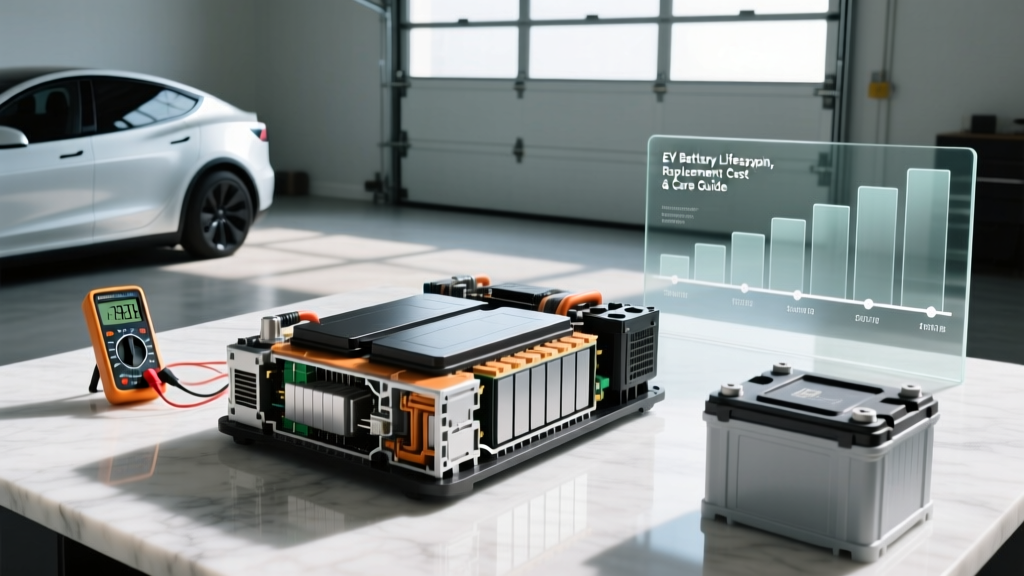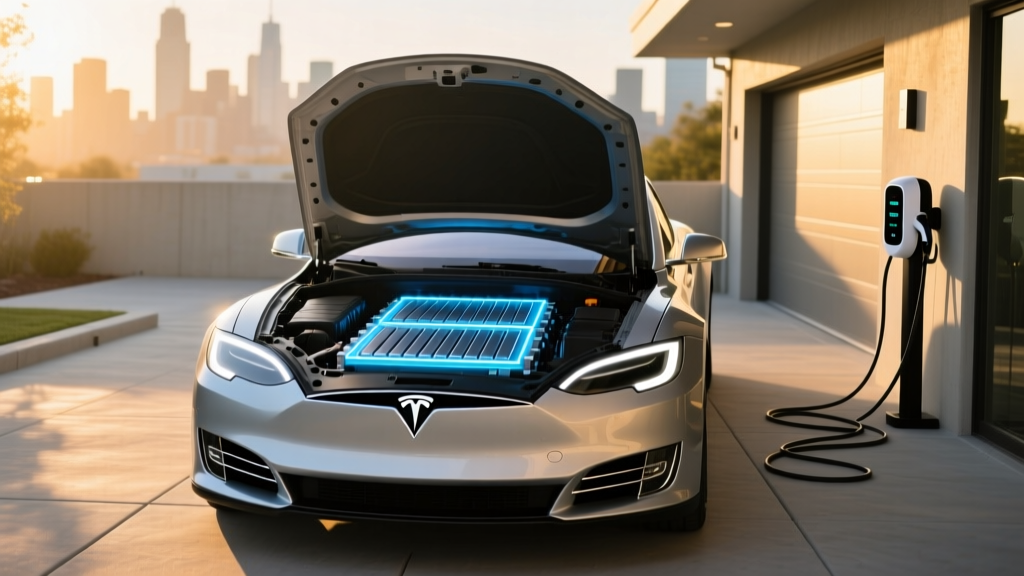
The Short Answer: Tesla Battery Mileage Expectations
If you're shopping for a Tesla or evaluating a used model, the high-voltage traction battery is the single most expensive component in the vehicle. The good news, backed by Tesla's own fleet data and independent analysis, is that most Tesla battery packs outlast the useful life of the car itself. For the current 2026 lineup, you can reasonably expect a Tesla battery to deliver 300,000 to 500,000 miles before capacity drops below 70% of its original level — and many packs exceed that threshold.
But that headline number masks important nuances. Battery longevity depends heavily on chemistry (LFP vs. NMC/NCA), charging habits, climate, and the specific model you drive. A Model 3 Standard Range with an LFP pack ages very differently from a Model S Plaid with an NCA pack pushed through repeated Supercharger sessions. Let's break down exactly what the data shows.
LFP vs. NMC/NCA: Which Tesla Battery Chemistry Lasts Longer?
Tesla currently uses two primary battery chemistries across its 2026 lineup, and the choice has a direct impact on longevity, range, and daily usability.
| Attribute | LFP (Lithium Iron Phosphate) | NMC/NCA (Nickel-based) |
|---|---|---|
| Models (2026) | Model 3 RWD, Model Y RWD | Model 3 LR/Performance, Model Y LR/Performance, Model S, Model X, Cybertruck |
| Cycle Life | 3,000–5,000+ cycles | 1,000–2,000 cycles |
| Energy Density | Lower (~160 Wh/kg cell-level) | Higher (~250–300 Wh/kg cell-level) |
| Cold-Weather Performance | More range loss in freezing temps (~30–35%) | Moderate cold loss (~20–25%) |
| Optimal Daily Charge | 100% (recommended at least weekly) | 80–90% daily; 100% only for trips |
| Cost | Lower ($/kWh) | Higher ($/kWh) |
| Degradation Profile | Slow, linear degradation | Faster initial drop, then plateaus |
The longevity winner: LFP. Lithium iron phosphate cells can endure 3,000 to 5,000+ full charge cycles before reaching 80% capacity, compared to roughly 1,000–2,000 cycles for NMC/NCA. In mileage terms, an LFP-equipped Model 3 RWD with a ~60 kWh usable pack could theoretically cover 350,000+ miles before hitting the 80% threshold — effectively the life of the vehicle.
However, NMC/NCA's higher energy density means longer EPA range per charge (363 miles for Model 3 Long Range vs. 272 miles for Model 3 RWD), which matters if you road-trip frequently or have a long commute. The trade-off is that NMC/NCA degrades somewhat faster and requires more careful state-of-charge management — keeping it at 80% daily rather than 100%.
Tesla Battery Degradation: What the Data Actually Shows
Tesla publishes fleet-wide degradation data in its annual Impact Report, and independent sources like Recurrent Auto track real-world battery health across thousands of vehicles. Here's what the combined data reveals for typical Tesla packs:
- Year 1 / 15,000 miles: ~3–5% capacity loss (initial formation loss)
- Year 3 / 45,000 miles: ~7–10% total loss
- Year 5 / 75,000 miles: ~10–12% total loss
- Year 8 / 120,000 miles: ~12–15% total loss
- 200,000 miles: ~15–18% total loss (per Tesla fleet data)
The degradation curve is not linear. Most packs experience a steeper drop in the first 20,000–30,000 miles as cells undergo initial formation, then the curve flattens considerably. This "plateau" phase can last hundreds of thousands of miles. Tesla's own data indicates that Model 3/Y packs retain roughly 85% capacity at 200,000 miles — meaning a car with 200k miles still has substantial usable range.
Tesla Battery Warranty: What's Covered and for How Long
Tesla's battery and drive unit warranty is one of the strongest in the EV industry. Here's the breakdown for 2026 models:
| Model | Warranty Period | Mileage Limit | Minimum Capacity Retention |
|---|---|---|---|
| Model 3 RWD (LFP) | 8 years | 100,000 miles | 70% |
| Model 3 Long Range / Performance | 8 years | 120,000 miles | 70% |
| Model Y (all trims) | 8 years | 120,000 miles | 70% |
| Model S / Model X | 8 years | 150,000 miles | 70% |
| Cybertruck | 8 years | 150,000 miles | 70% |
The warranty covers defects in materials or workmanship and guarantees that the battery will retain at least 70% of its original capacity during the warranty period. If your pack drops below 70% within those limits, Tesla will repair or replace it at no cost. In practice, very few Tesla owners have needed to make a warranty claim for capacity loss — the data shows most packs stay well above 80% within the warranty window.
It's important to note that the warranty does not cover damage from accidents, improper use, or modifications. It also does not cover normal cosmetic range loss above the 70% threshold. For full warranty terms, always check Tesla's official warranty documentation for your specific model year.
Tesla Battery Replacement Cost: When and How Much
While most Tesla batteries outlast the vehicle's practical life, replacement costs are a legitimate concern for high-mileage drivers and used-EV buyers. Here's what out-of-warranty replacements typically cost in 2026:
| Model | Battery Size (Usable) | Replacement Cost Range | Typical Replacement Mileage |
|---|---|---|---|
| Model 3 RWD (LFP) | ~60 kWh | $10,000–$13,000 | 300,000+ mi (if ever) |
| Model 3 Long Range | ~75 kWh | $13,000–$16,000 | 250,000+ mi |
| Model Y Long Range | ~75 kWh | $13,000–$16,000 | 250,000+ mi |
| Model S (2024+) | ~95 kWh | $18,000–$22,000 | 200,000+ mi |
| Cybertruck AWD/Cyberbeast | ~123 kWh | $20,000–$25,000 | 200,000+ mi |
These figures include the battery pack and labor at a Tesla Service Center. Third-party EV repair shops may offer lower pricing, and refurbished packs (using salvaged modules) are an emerging option for older Model S/X vehicles, typically costing 30–50% less than new packs.
For context, the average American drives about 13,500 miles per year (FHWA data). At that rate, reaching 200,000 miles takes nearly 15 years. Most vehicles are scrapped or retired for reasons unrelated to battery health well before a replacement is needed.
Factors That Affect Tesla Battery Life
Not all miles are created equal when it comes to battery wear. These factors have the greatest impact on long-term capacity retention:
1. DC Fast Charging Frequency
Tesla's Supercharger network delivers up to 250 kW (V3) or 350 kW (V4) to compatible models. While convenient, frequent DC fast charging accelerates degradation. Tesla's battery management system (BMS) actively manages heat and charge rates, but packs that Supercharge daily will degrade faster than those that primarily charge at Level 2 (7–11.5 kW) at home. For optimal longevity, aim for 80%+ of your charging at Level 2 and reserve Supercharging for road trips.
2. State of Charge (SoC) Habits
For NMC/NCA packs, regularly charging to 100% and letting the car sit accelerates calendar aging. Tesla's in-car charge limit slider defaults to 80% for a reason. LFP packs are different — Tesla recommends charging to 100% at least once per week to maintain accurate state-of-charge calibration and cell balancing.
3. Extreme Temperatures
Both hot and cold climates stress batteries. Sustained exposure to ambient temperatures above 95°F accelerates chemical degradation, while charging in sub-freezing temperatures without preconditioning can cause lithium plating. Tesla's thermal management system actively heats and cools the pack, and navigation-based preconditioning (when you route to a Supercharger) significantly mitigates cold-weather charging stress.
4. Depth of Discharge
Regularly draining the battery to near 0% before recharging puts more stress on cells than shallow, frequent top-ups. Ideally, keep your SoC between 20% and 80% for daily driving on NMC/NCA packs.
- ✅ Set charge limit to 80% for daily use (NMC/NCA) or 100% weekly (LFP)
- ✅ Use Level 2 home charging as your primary charging method
- ✅ Enable preconditioning when navigating to Superchargers in cold weather
- ✅ Avoid leaving the car at 100% SoC for extended periods (days)
- ✅ Don't let SoC sit near 0% — plug in when you get home
- ✅ Use scheduled charging to finish charging right before departure, minimizing time at high SoC
- ✅ Park in shade or a garage during extreme heat when possible
How to Check Tesla Battery Health (State of Health)
Tesla does not display a direct State of Health (SoH) percentage in the vehicle's UI, unlike some competitors. However, you can estimate your pack's health using these methods:
Method 1: The 100% Range Test. Charge your NMC/NCA Tesla to 100% (for LFP, this is normal practice). Note the projected range displayed. Compare it to the original EPA rating for your model. For example, if your 2024 Model 3 Long Range originally displayed 363 miles at 100% and now shows 327 miles, that's roughly 90% SoH. Note that the displayed range is an estimate based on recent driving efficiency and may fluctuate.
Method 2: Third-party apps. Apps like TeslaFi, Tessie, and Stats log charging data over time and can calculate a more precise SoH estimate by comparing energy added during a full charge session to the pack's original usable capacity in kWh.
Method 3: Tesla Service diagnostic. If you're considering a used Tesla or want an official reading, a Tesla Service Center can run a battery health diagnostic that provides a more accurate capacity measurement. This is particularly useful for pre-purchase inspections on used models.
Emerging Battery Tech: What's Next Beyond Current Cells
Looking forward, several battery technologies promise further improvements in longevity and performance — though none are available in production Tesla vehicles as of 2026:
Solid-state batteries replace the liquid electrolyte with a solid material, potentially offering 2–3x cycle life, faster charging, and improved safety. Toyota and Samsung SDI have announced solid-state production timelines for 2027–2028, but these are expected to debut in limited, premium applications first. Tesla has not confirmed a solid-state timeline.
Silicon-dominant anodes (used in limited form in some current cells) can increase energy density by 20–40%. Companies like Sila Nanotechnologies and Group14 are scaling production, and wider adoption in Tesla's 4680 cells could improve both range and cycle life in future model years.
Sodium-ion batteries offer lower cost and excellent cycle life but significantly lower energy density. Tesla and CATL have discussed sodium-ion for entry-level models, potentially in markets where range expectations are lower. No US-market Tesla currently uses sodium-ion.
Frequently Asked Questions
How long do Tesla batteries last in years?
Based on current degradation data, a Tesla battery will typically last 15–25 years at average US driving rates (13,500 miles/year) before reaching 70% capacity. Most packs will exceed 300,000 miles. The vehicle's body, suspension, and electronics are more likely to reach end-of-life before the battery does.
How much does it cost to replace a Tesla battery in 2026?
Out-of-warranty Tesla battery replacement costs range from approximately $10,000 for a Model 3 RWD (LFP, ~60 kWh) to $20,000–$25,000 for a Cybertruck (~123 kWh). These costs include parts and labor at a Tesla Service Center. Under warranty, replacement is free if capacity drops below 70% within 8 years / 100,000–150,000 miles (depending on model).
Does frequent Supercharging damage the battery?
Frequent DC fast charging does accelerate degradation compared to Level 2 charging, but Tesla's BMS and thermal management significantly limit the damage. A pack that Supercharges 2–3 times per week will degrade faster than one that primarily charges at home at 7–11.5 kW, but the difference is measured in single-digit percentage points over 100,000 miles — not a catastrophic loss.
Is LFP better than NMC for longevity?
Yes, in pure cycle-life terms. LFP cells can handle 3,000–5,000+ cycles vs. 1,000–2,000 for NMC/NCA. LFP also tolerates 100% state of charge better, making it simpler to maintain. However, NMC/NCA offers higher energy density (more range per charge) and better cold-weather performance, which may matter more for road-trip-heavy drivers.
Should I worry about buying a used Tesla with high mileage?
A used Tesla with 80,000–120,000 miles is typically well within the battery's useful life. Check the projected range at 100% charge, review service history, and verify whether any warranty remains. At 150,000+ miles, expect 12–18% capacity loss — still providing substantial range, but factor potential out-of-warranty replacement costs into your purchase decision for vehicles approaching 200,000 miles.
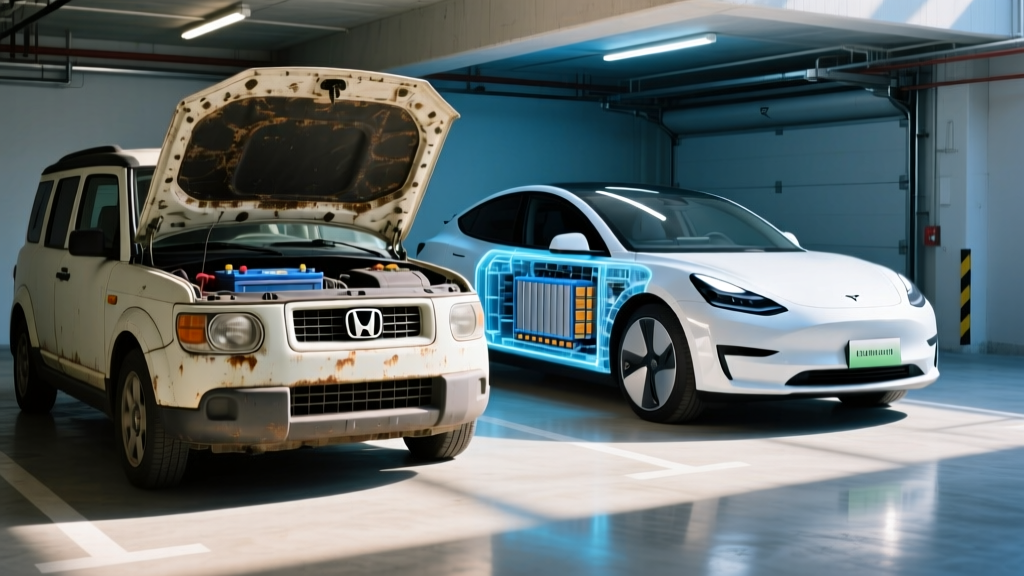
Does the 12V battery affect the high-voltage traction battery?
No. The 12V auxiliary battery (now a lithium-ion unit in current Teslas) powers the vehicle's electronics, displays, and computers — it does not affect the high-voltage traction battery's capacity or longevity. If the 12V fails, the car won't start, but the main pack is unaffected. Tesla's 12V lithium battery is expected to last the life of the vehicle, unlike the lead-acid units used in older Model S/X.