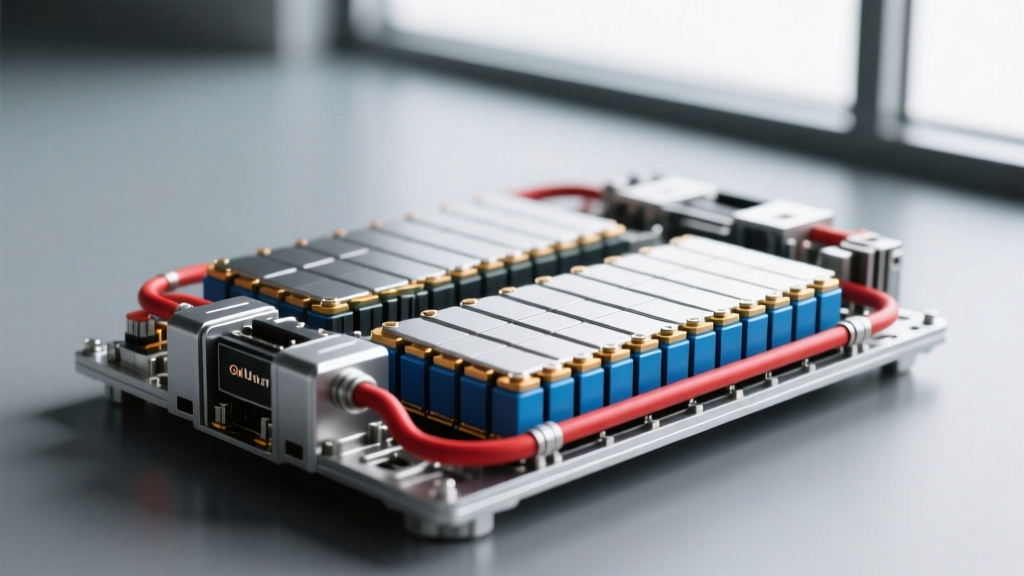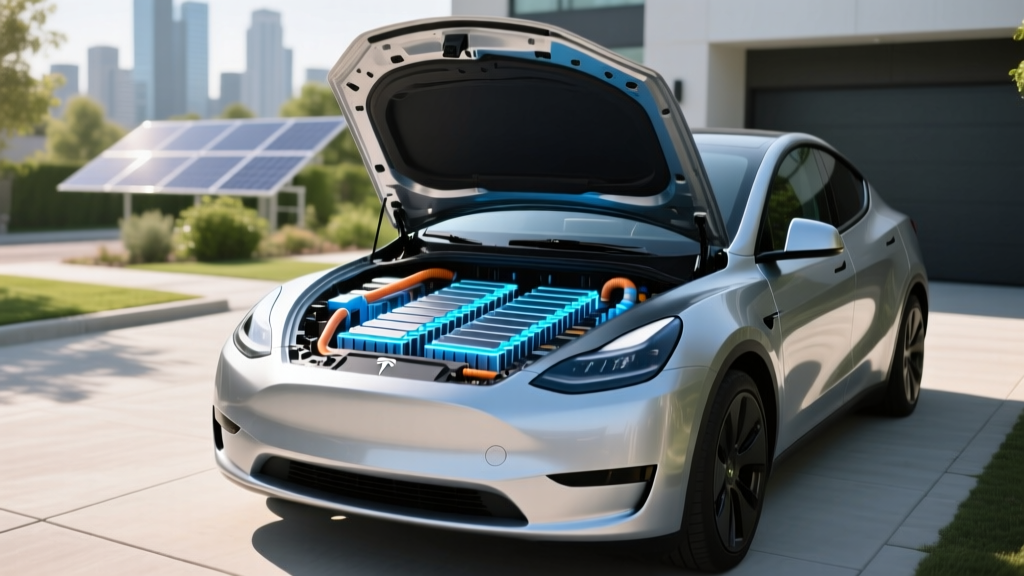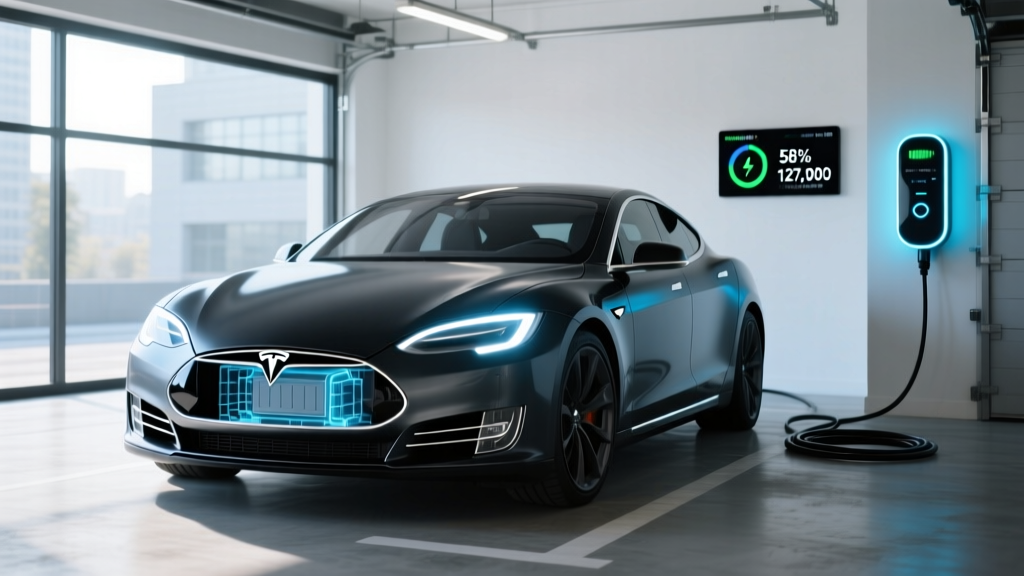
The Short Answer: Tesla Battery Lifespan in Miles and Years
Based on aggregated fleet data and Tesla's own impact reports, the high-voltage traction battery in a Tesla vehicle typically retains 85–90% of its original capacity after 200,000 miles. For most owners driving 12,000–15,000 miles annually, that translates to roughly 13–17 years before the pack degrades to the 70% threshold that triggers a warranty claim. In practice, the vast majority of Tesla batteries outlast the vehicle's useful economic life.
This is not marketing optimism. Tesla's 2023 Impact Report (the most recent with comprehensive fleet data) showed that Model 3 and Model Y packs retained approximately 85% of range at 200,000 miles. Model S and Model X data showed similar curves, with slightly more variance due to older pack architectures in early production years.
Tesla Battery Chemistry: LFP vs. NMC Explained
Tesla uses two distinct cathode chemistries across its 2026 lineup, and the choice directly affects longevity, range, charging behavior, and cost. Understanding which chemistry is in your car is essential for setting proper charging habits.
| Attribute | LFP (Lithium Iron Phosphate) | NMC/NCA (Nickel Manganese Cobalt / Nickel Cobalt Aluminum) |
|---|---|---|
| Models (2026) | Model 3 RWD, Model Y RWD | Model 3 Long Range/Performance, Model Y Long Range/Performance, Model S, Model X, Cybertruck |
| Energy Density | Lower (~160 Wh/kg cell-level) | Higher (~250–270 Wh/kg cell-level) |
| Cycle Life | 3,000–5,000+ cycles to 80% SoH | 1,000–2,000 cycles to 80% SoH |
| Cold-Weather Performance | More range loss in freezing temps (15–25% reduction common below 32°F) | Better cold performance (10–15% reduction typical) |
| Recommended Charge Limit | 100% daily (Tesla recommends periodic full charges for BMS calibration) | 80–90% daily; 100% only before long trips |
| Cost | Lower per kWh — contributes to lower vehicle MSRP | Higher per kWh due to nickel/cobalt content |
| Thermal Stability | Superior — less prone to thermal runaway | Good, but requires more active thermal management |
Which is better? Neither is universally superior. LFP packs offer exceptional cycle life and tolerate daily 100% charging, making them ideal for commuters who charge at home every night. NMC packs deliver more range per pound and perform better in cold climates — the right choice for road-trip-heavy drivers or those in northern states. If longevity is your primary concern, LFP has a measurable edge in total charge cycles before meaningful degradation.
Degradation Data: What Real Tesla Fleet Numbers Show
Tesla battery degradation follows a predictable pattern: an initial drop of roughly 3–5% in the first 25,000 miles, followed by a slow, nearly linear decline. Here's what aggregated fleet data indicates across major milestones:
| Mileage | Typical Capacity Retained (NMC) | Typical Capacity Retained (LFP) | Notes |
|---|---|---|---|
| 0 miles (new) | 100% | 100% | Baseline |
| 25,000 miles | ~95–97% | ~96–98% | Initial formation loss |
| 50,000 miles | ~93–95% | ~94–97% | Curve flattens |
| 100,000 miles | ~90–93% | ~92–95% | Still well above warranty threshold |
| 150,000 miles | ~87–91% | ~90–94% | Noticeable but manageable |
| 200,000 miles | ~85–89% | ~88–93% | Approaching warranty boundary |
These figures align with data published by Tesla's Impact Report and third-party fleet analyses from sources like Tesloop and Recurrent Auto. Individual results vary based on charging habits, climate, and Supercharger frequency.
Key insight: The battery management system (BMS) in Tesla vehicles reserves a top and bottom buffer — typically 2–4 kWh combined — that is invisible to the driver. This buffer protects the cells from the most damaging extremes of state of charge and is a major reason Tesla packs age more gracefully than early-generation EVs from other manufacturers.
Tesla Battery Warranty: What's Covered and for How Long
Tesla's battery and drive unit warranty is one of the most straightforward in the industry. Here is the current coverage by model for 2026:
| Model | Warranty Period | Mileage Limit | Minimum Capacity Retention |
|---|---|---|---|
| Model 3 RWD (LFP) | 8 years | 100,000 miles | 70% |
| Model 3 Long Range / Performance | 8 years | 120,000 miles | 70% |
| Model Y (all trims) | 8 years | 120,000 miles | 70% |
| Model S | 8 years | 150,000 miles | 70% |
| Model X | 8 years | 150,000 miles | 70% |
| Cybertruck | 8 years | 150,000 miles | 70% |
What triggers a warranty claim? If your battery's usable capacity drops below 70% of its original value within the warranty period (whichever limit — time or mileage — comes first), Tesla will repair or replace the pack at no cost. In practice, very few owners hit this threshold within the warranty window. According to fleet data, a pack would need to degrade roughly three times faster than the average to reach 70% at 120,000 miles.
The warranty covers defects in materials and workmanship as well as excessive capacity loss. It does not cover damage from collisions, flooding, or unauthorized modifications. Per Tesla's official warranty documentation, the replacement pack may be new or remanufactured, but must meet or exceed the 70% retention standard.
How Much Does a Tesla Battery Replacement Cost?
This is the question that generates the most anxiety — and the most misinformation. Let's ground it in actual numbers.
| Model / Pack Size | Estimated Replacement Cost (Out of Warranty) | Typical Replacement Context |
|---|---|---|
| Model 3 RWD (~60 kWh LFP) | $8,000 – $12,000 | Catastrophic damage; degradation replacements are rare before 300,000+ mi |
| Model 3/Y Long Range (~75–82 kWh NMC) | $12,000 – $16,000 | Same as above |
| Model S/X (~100 kWh NMC) | $15,000 – $22,000 | Higher for older packs; remanufactured units may be less |
| Cybertruck (~123 kWh NMC structural pack) | $18,000 – $25,000 | Structural pack adds complexity; limited out-of-warranty data as of 2026 |
When is replacement actually needed? For the overwhelming majority of Tesla owners, the answer is never. Battery replacement due to degradation alone is exceptionally uncommon within the first 200,000 miles. The cases where out-of-warranty replacements occur are typically:
- Physical damage — bottoming out on debris, collision damage to the pack enclosure, or flood submersion.
- Cell or module failure — rare manufacturing defects that appear outside the warranty window (uncommon but documented).
- Very high-mileage fleet vehicles — Teslas used as taxis or rideshare vehicles accumulating 300,000+ miles may see packs approach the 70% threshold.
Tesla also offers remanufactured battery packs at lower cost than new units, and third-party EV repair shops are increasingly capable of replacing individual modules rather than the entire pack — a procedure that can cut costs by 40–60%.
Factors That Accelerate (or Slow) Battery Degradation
Not all miles are equal when it comes to battery wear. The following factors have the most measurable impact on long-term State of Health (SoH):
Charging Habits
- Daily charge limit: For NMC packs, consistently charging to 100% and letting the car sit accelerates calendar degradation. Tesla's default recommendation of 80–90% for daily use is well-supported by cell-level testing. LFP packs are an exception — Tesla recommends charging to 100% at least once per week to keep the BMS calibrated.
- Depth of discharge: Regularly draining below 10% SoC stresses cells. Try to keep the battery between 20–80% for NMC, or 10–100% for LFP (since LFP tolerates the full range better).
Fast Charging Frequency
- Exclusive Supercharging does measurably increase degradation compared to predominantly Level 2 home charging — but the difference is smaller than many assume. Tesla's own data shows that vehicles that Supercharge frequently have only ~1–2% more degradation at 100,000 miles compared to those that primarily charge at home. The pack's active thermal management system is highly effective at limiting heat damage during DC fast charging.
- That said, if you have home charging access, using Level 2 for daily top-ups and reserving Superchargers for road trips remains the optimal strategy.
Temperature Extremes
- Cold weather temporarily reduces range (not permanent degradation) but repeated deep-cold cycling without preconditioning can slightly accelerate wear over years.
- Sustained high heat is more damaging than cold. Parking in direct sun regularly in Arizona or Texas with a high SoC (above 90%) is one of the worst combinations for long-term cell health. Tesla's thermal management mitigates this, but garage parking in hot climates is a genuine longevity advantage.
Preconditioning
- Navigating to a Supercharger triggers battery preconditioning — warming the pack to the optimal temperature for fast charging. This reduces stress on the cells and improves charge speed. Always use the car's navigation to route to Superchargers rather than driving to one manually to ensure preconditioning activates.
- Set daily charge limit to 80–90% (NMC) or 100% (LFP)
- Avoid letting SoC sit below 10% for extended periods
- Use Level 2 home charging for daily needs; Supercharge for trips
- Navigate to Superchargers via the car's nav to enable preconditioning
- In hot climates, park in shade or a garage when possible
- In cold climates, use Scheduled Departure to precondition the battery while plugged in
- Update firmware regularly — Tesla pushes BMS optimizations via OTA updates
How to Check Your Tesla's Battery Health (State of Health)
Tesla does not expose a direct State of Health (SoH) percentage in the vehicle's UI the way some competitors do. However, there are several reliable methods to assess your pack's condition:
Method 1: Range Comparison at Full Charge
Charge to 100% (or your known maximum) and note the displayed range. Compare this to the EPA-rated range when the car was new. For example, if your 2023 Model 3 Long Range originally displayed 358 miles at 100% and now shows 330 miles, that suggests roughly 92% SoH. Note: displayed range is affected by temperature and recent driving patterns, so perform this check when the battery is at moderate temperature (above 60°F) for the most accurate reading.
Method 2: Third-Party Apps
Apps like Tessie, Stats, and Scan My Tesla (via OBD-II dongle) can read BMS data directly and provide a more precise SoH estimate, including individual module voltage variance — a useful early indicator of cell imbalance.
Method 3: Tesla Service Diagnostic
If you suspect abnormal degradation (e.g., a sudden range drop), a Tesla Service Center can run a full battery health diagnostic. This is sometimes available remotely via Tesla's mobile service team.
What's Next: Solid-State and Silicon-Anode Batteries
The next major leap in EV battery technology involves solid-state electrolytes and silicon-dominant anodes, both of which promise higher energy density, faster charging, and potentially longer cycle life. Here is where these technologies stand as of 2026:
- Solid-state batteries: Companies including Toyota, QuantumScape, and Samsung SDI have demonstrated prototype cells with 400+ Wh/kg energy density and 10-minute fast-charge capability. However, manufacturing scale and cost remain significant barriers. Realistic timeline for mass-market EV deployment: 2028–2032. Tesla has not announced a solid-state roadmap.
- Silicon-anode batteries: Startups like Sila Nanotechnologies and Group14 are already supplying silicon-composite anode materials to manufacturers including Mercedes-Benz (for the G-Class EV). These cells offer 20–40% more energy density than graphite anodes. Tesla's 4680 cells incorporate incremental silicon content in the anode, but a full silicon-dominant anode is not yet in production.
- Sodium-ion batteries: CATL has begun shipping sodium-ion packs in Chinese-market vehicles. These offer lower energy density but dramatically lower cost and better cold-weather performance. Potential use case for Tesla: an ultra-affordable entry-level model, though no official plans have been confirmed.
None of these technologies are available in Tesla vehicles sold today. If you're deciding whether to buy now or wait, the current NMC and LFP chemistries are mature, well-proven, and will serve reliably for the life of the vehicle.
Frequently Asked Questions
How long do the batteries last in a Tesla car in real-world driving?
Based on fleet data, Tesla batteries retain approximately 85–90% of original capacity at 200,000 miles. At an average of 13,500 miles per year, that's roughly 15 years of driving before reaching the 70% warranty threshold. Many packs exceed 300,000 miles before requiring replacement.
How much does it cost to replace a Tesla battery?
Out-of-warranty replacement costs range from approximately $8,000 for a Model 3 RWD LFP pack to $25,000 for a Cybertruck structural pack. However, most Tesla batteries never require replacement due to degradation — physical damage is the more common reason for out-of-warranty swaps. Remanufactured packs and module-level repairs can reduce costs significantly.
Does frequent Supercharging damage the battery?
The impact is smaller than commonly believed. Tesla's fleet data shows roughly 1–2% additional degradation at 100,000 miles for vehicles that Supercharge frequently versus those using primarily Level 2 charging. The onboard thermal management system actively cools the pack during DC fast charging to limit heat stress.
Is LFP or NMC better for long-term battery life?
LFP chemistry offers superior cycle life (3,000–5,000+ cycles vs. 1,000–2,000 for NMC) and tolerates daily 100% charging without accelerated degradation. If you plan to keep the car for 10+ years or 200,000+ miles, LFP has a measurable longevity advantage. NMC provides more range and better cold-weather performance, which may matter more depending on your use case.
What voids the Tesla battery warranty?
The warranty does not cover damage from collisions, flooding, fire (non-battery-origin), unauthorized modifications, or use of non-Tesla-approved charging equipment that causes damage. Normal degradation and manufacturing defects are covered. Full terms are available on Tesla's warranty page.
How can I check my Tesla battery's State of Health?
Charge to 100% and compare displayed range to the original EPA rating. For a more precise reading, third-party apps like Tessie or Stats can pull BMS data via Tesla's API or an OBD-II adapter. Tesla Service can also run a diagnostic if you suspect abnormal degradation.
Should I wait for solid-state batteries before buying a Tesla?
No. Solid-state batteries are not expected in mass-market vehicles until 2028–2032 at the earliest, and Tesla has not announced a specific timeline. Current LFP and NMC chemistries are proven, durable, and will serve reliably for the vehicle's full lifespan. Waiting for next-generation battery tech means delaying an EV purchase by many years with no guaranteed benefit.