The single most expensive component in any electric vehicle is the high-voltage traction battery. For Tesla owners and prospective buyers, understanding Tesla battery lifespan isn't academic — it directly affects total cost of ownership, resale value, and long-term peace of mind. The good news, backed by fleet data and Tesla's own Impact Reports, is that modern Tesla battery packs are engineered to outlast the vehicles they're installed in. But "outlast" doesn't mean "zero degradation." Here's exactly what the data shows about how Tesla batteries age, what replacement costs in 2026, and what you can do to maximize longevity.
How Long Do Tesla Batteries Actually Last?
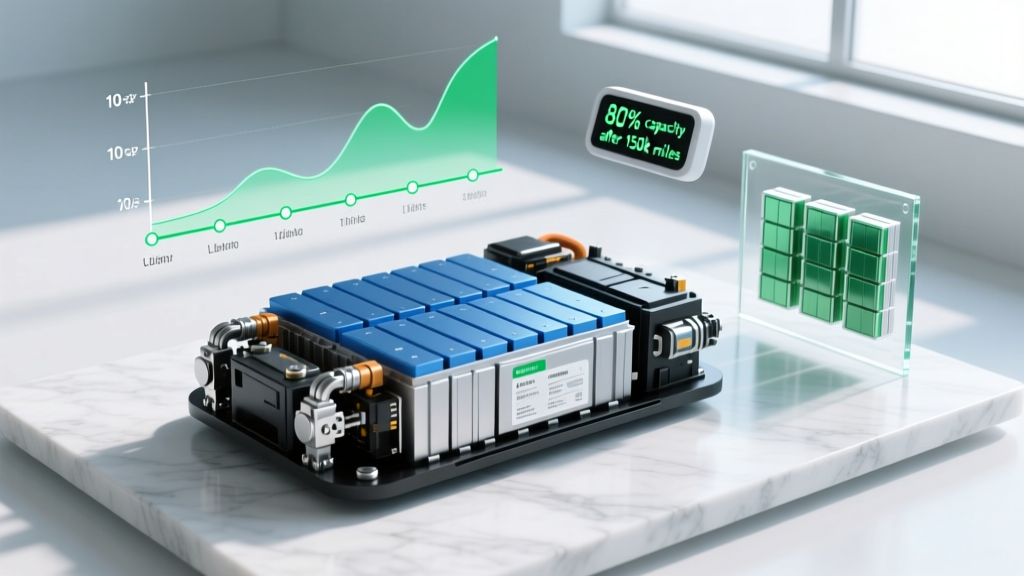
Tesla's official position, reiterated in its 2024 Impact Report and consistent through current 2026 model documentation, is that its battery packs are designed to retain at least 70% of original capacity over the warranty period — 8 years or 120,000 miles for Model 3/Model Y Standard Range, and 8 years or 150,000 miles for Long Range and Performance variants. Whichever comes first.
But real-world fleet data tells a more nuanced — and generally more encouraging — story. According to aggregated data from Tesla's fleet telemetry and third-party tracking services like Teslabros and Recurrent Auto:
- At 50,000 miles: Average capacity retention is approximately 95-97% across Model 3 and Model Y fleets.
- At 100,000 miles: Retention averages 90-93%, with NMC/NCA packs showing slightly more early degradation than LFP packs.
- At 150,000 miles: Data is sparser, but available fleet samples suggest 85-90% retention for well-maintained packs.
- At 200,000+ miles: Tesla has cited internal data showing Model S/X packs retaining roughly 88% capacity at 200,000 miles. These are older NCA packs with more accumulated cycles.
Degradation curve pattern: Tesla batteries — like most lithium-ion packs — exhibit a steeper initial drop in the first 10,000-20,000 miles (roughly 2-4% loss), then settle into a much slower linear decline. This "hockey stick" curve means the worst degradation happens early. If your Tesla shows 96% capacity at 15,000 miles, that's normal physics, not a defect.
The critical takeaway: catastrophic battery failure (dropping below 70% capacity within the warranty period) is statistically rare. Most Tesla batteries will deliver 200,000+ miles before reaching the 70% threshold — well beyond the average American's ownership period of 6-8 years.
LFP vs NMC/NCA: Which Tesla Battery Chemistry Lasts Longer?
Tesla uses two primary battery chemistries across its 2026 lineup, and the choice significantly affects lifespan characteristics, charging behavior, and cold-weather performance.
| Factor | LFP (Lithium Iron Phosphate) | NMC / NCA (Nickel-based) |
|---|---|---|
| Found in (2026) | Model 3 RWD, Model Y RWD (Standard Range) | Model 3/Y Long Range & Performance, Model S, Model X, Cybertruck |
| Cycle life | 3,000-5,000+ cycles to 80% SoH | 1,500-2,500 cycles to 80% SoH |
| Energy density | Lower (~160-180 Wh/kg cell-level) | Higher (~250-280 Wh/kg cell-level) |
| Cold-weather performance | More range loss in freezing temps (15-25% reduction) | Better cold performance (10-18% reduction) |
| Charging recommendation | Can and should be charged to 100% regularly | Best kept at 80% daily; 100% only for trips |
| Cost per kWh | Lower (no cobalt/nickel) | Higher (commodity-sensitive) |
| Typical usable capacity | ~57-60 kWh (Model 3 RWD) | ~75-82 kWh (Long Range); ~100 kWh (Model S/X) |
| Lifespan advantage | Significantly longer cycle life; tolerates 100% SoC | Higher range per charge; better cold-climate usability |
The bottom line on chemistry: If your priority is maximum battery lifespan and you can accept lower range (~272 miles EPA for Model 3 RWD vs. ~363 miles for Long Range), LFP is the more durable choice. Its ability to sit at 100% state of charge without accelerated degradation eliminates the daily charging-anxiety trade-off that NMC/NCA owners manage. However, if you regularly drive in sub-freezing climates or need maximum range for road trips, NMC/NCA's superior energy density and cold performance make it the pragmatic pick.
Tesla Battery Warranty: What's Covered and What Isn't
Tesla's battery and drive unit warranty is among the clearest in the industry, but the details matter — especially the capacity retention threshold.
| Model / Trim | Warranty Duration | Mileage Limit | Minimum Capacity Retention |
|---|---|---|---|
| Model 3 RWD (LFP) | 8 years | 120,000 miles | 70% |
| Model 3 Long Range / Performance | 8 years | 120,000 miles | 70% |
| Model Y RWD (LFP) | 8 years | 120,000 miles | 70% |
| Model Y Long Range / Performance | 8 years | 120,000 miles | 70% |
| Model S (all trims) | 8 years | 150,000 miles | 70% |
| Model X (all trims) | 8 years | 150,000 miles | 70% |
| Cybertruck AWD / Cyberbeast | 8 years | 120,000 miles | 70% |
What the warranty covers: Battery replacement or repair if capacity drops below 70% of original within the warranty period, or if the battery suffers a manufacturing defect or catastrophic failure. Tesla will replace with a pack that provides at least 70% of original capacity — it does not have to be brand new.
What it does NOT cover:
- Normal degradation above the 70% threshold (e.g., 72% at 130,000 miles is "normal")
- Damage from accidents, flooding, fire, or improper modifications
- Cosmetic issues or range reduction due to software updates (though this is legally contested in some jurisdictions)
- The 12V auxiliary battery (lithium-ion in current models, covered under a separate 4-year/50,000-mile vehicle warranty)
Worth noting: under Tesla's New Vehicle Limited Warranty, the battery warranty is fully transferable to subsequent owners, which supports resale value.
How Much Does a Tesla Battery Replacement Cost?
This is the question that dominates EV forums, and it deserves an honest, data-grounded answer — not fear-mongering. First, context: the vast majority of Tesla owners will never need an out-of-warranty battery replacement. Battery failure before 150,000 miles is statistically uncommon, and most owners sell or trade their vehicles well before that mileage.
That said, if you're buying a high-mileage used Tesla or planning to keep one for 300,000+ miles, here's what replacement looks like in 2026:
| Model | Battery Size (Usable) | Chemistry | Estimated Replacement Cost (Parts + Labor) |
|---|---|---|---|
| Model 3 RWD | ~57 kWh | LFP | $12,000 - $14,000 |
| Model 3 Long Range / Performance | ~75 kWh | NMC | $14,000 - $17,000 |
| Model Y RWD | ~60 kWh | LFP | $12,500 - $15,000 |
| Model Y Long Range / Performance | ~75 kWh | NMC | $14,000 - $17,500 |
| Model S (current gen) | ~95 kWh | NMC/NCA | $18,000 - $22,000 |
| Model X (current gen) | ~95 kWh | NMC/NCA | $18,000 - $22,000 |
| Cybertruck | ~100 kWh (est.) | NMC (4680 cells) | $16,000 - $20,000 |
These figures are based on out-of-warranty service invoices shared by owners and third-party repair estimates. Tesla does not publish a standard replacement price list, and costs fluctuate with cell commodity pricing. The 4680-cell structural battery pack in the Cybertruck and some Model Y variants is more complex to service, potentially pushing labor costs higher.
When is replacement typically needed? In practice, Tesla battery replacements fall into three categories:
- Under warranty (most common for replacements): Manufacturing defect, cell imbalance, or capacity below 70% within 8 years / mileage limit. Cost to owner: $0.
- Out-of-warranty failure (rare): Typically at 200,000+ miles or after physical damage. This is where the $12K-$22K figures apply.
- Voluntary upgrade (very rare): Some owners of older Model S/X vehicles have explored battery upgrades, though Tesla's support for this varies.
Factors That Accelerate (or Preserve) Tesla Battery Health
Lithium-ion degradation is governed by well-understood electrochemistry. Here's what actually moves the needle on your Tesla's battery State of Health (SoH):
✅ Do — Habits That Extend Battery Life
- NMC/NCA owners: Set daily charge limit to 80%. Use the Tesla app or in-car settings. Reserve 100% for road trips. Tesla's own recommendation.
- LFP owners: Charge to 100% at least once per week. LFP chemistry needs periodic full charges for the Battery Management System (BMS) to calibrate accurately. Tesla explicitly recommends this in the owner's manual.
- Use Level 2 home charging as your primary method. Slow, steady charging at 7-11 kW generates far less heat than DC fast charging and is gentler on cells.
- Precondition the battery before Supercharging. Navigate to a Supercharger in the Tesla navigation system, and the car will automatically warm the battery to optimal charging temperature. This reduces charge time and cell stress.
- Park in shade or a garage when possible in extreme heat. Sustained battery temperatures above 95°F (35°C) accelerate calendar degradation even when the car is off.
- Keep the car plugged in during extreme cold. Tesla's battery thermal management will maintain the pack at a safe temperature using grid power rather than battery energy.
⚠️ Avoid — Habits That Accelerate Degradation
- Exclusive DC fast charging. Owners who rely solely on Superchargers or third-party DC fast chargers (150-250 kW) see measurably higher degradation. A 2023 study by Recurrent Auto found that Teslas charged via DCFC more than 90% of the time showed approximately 2-3% additional capacity loss at 100,000 miles compared to predominantly Level 2-charged vehicles. Not catastrophic, but statistically significant.
- Leaving an NMC/NCA pack at 100% SoC for extended periods. If you charge to 100%, drive away promptly. Sitting at full charge accelerates electrolyte decomposition.
- Letting the battery sit at very low SoC (below 10%) for days. This stresses the anode. If you're storing the car, Tesla recommends leaving it at approximately 50%.
- Ignoring tire pressure and alignment. While not directly battery-related, poor rolling efficiency forces the battery to work harder, increasing cycle count over time.
How to Check Your Tesla's Battery Health (State of Health)
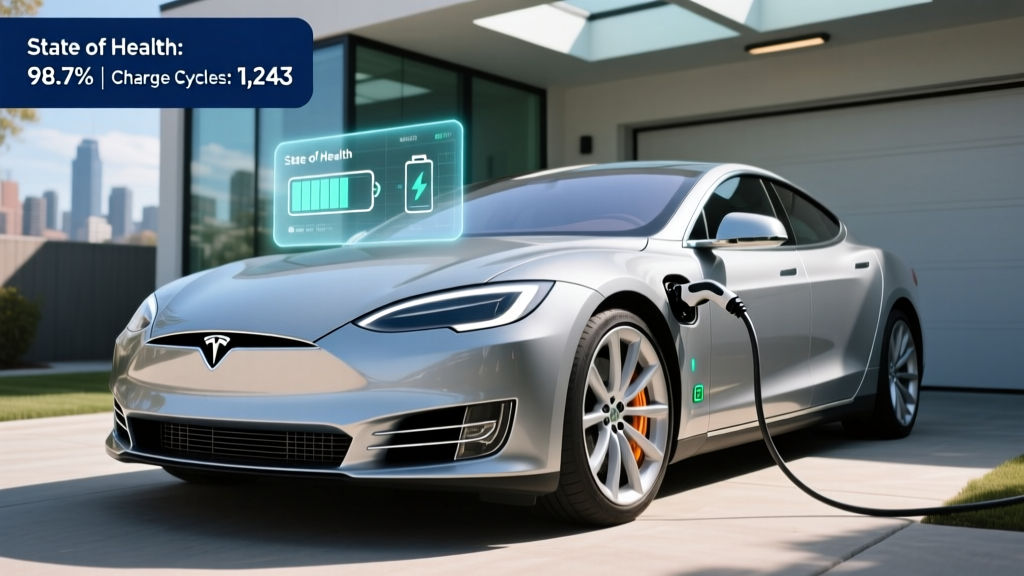
Tesla does not display a dedicated "battery health percentage" in the vehicle UI the way some competitors do. However, there are several reliable methods to assess your pack's State of Health:
Method 1: Range comparison at 100% charge. Charge your Tesla to 100% (for NMC/NCA, do this only occasionally for calibration). Note the displayed range. Compare it to the original EPA-rated range for your specific model and trim. For example, if your 2024 Model 3 Long Range originally displayed 363 miles at 100% and now shows 340 miles, that's roughly 93.7% capacity retention. Note: displayed range is affected by driving habits and temperature, so this is an approximation.
Method 2: Third-party apps. Services like TeslaFi, Teslamate (self-hosted), and Stats (iOS) pull data directly from Tesla's API and can track estimated battery capacity over time with far greater precision. These tools log energy added during charges and correlate it with SoC changes to calculate a more accurate SoH percentage.
Method 3: Service Mode diagnostic. Tesla's in-car Service Mode (accessible via the Software screen — tap and hold the model name for 3 seconds, then enter "service" as the access code) includes a battery health test. This runs a more rigorous capacity calculation and is the method Tesla service centers use for warranty evaluations.
Method 4: Pre-purchase inspection. If you're buying a used Tesla, request a battery health report from a Tesla Service Center. Some independent EV shops also offer this service using OBD-II diagnostic tools compatible with Tesla's CAN bus.
Beyond Lithium-Ion: Solid-State and Silicon-Anode Batteries
Next-generation battery technologies promise higher energy density, faster charging, and longer lifespans. Here's where they stand as of 2026 — with realistic timelines, not hype:
Silicon-anode batteries: Companies like Sila Nanotechnologies and Group14 are producing silicon-dominant anode materials that increase energy density by 20-40% over graphite anodes. These are beginning to appear in limited production vehicles (notably the Mercedes G-Class electric) and are expected to reach broader Tesla integration in the 2027-2029 timeframe, likely starting with high-performance trims. Cycle life remains a challenge — silicon expands significantly during charging, which can cause cracking.
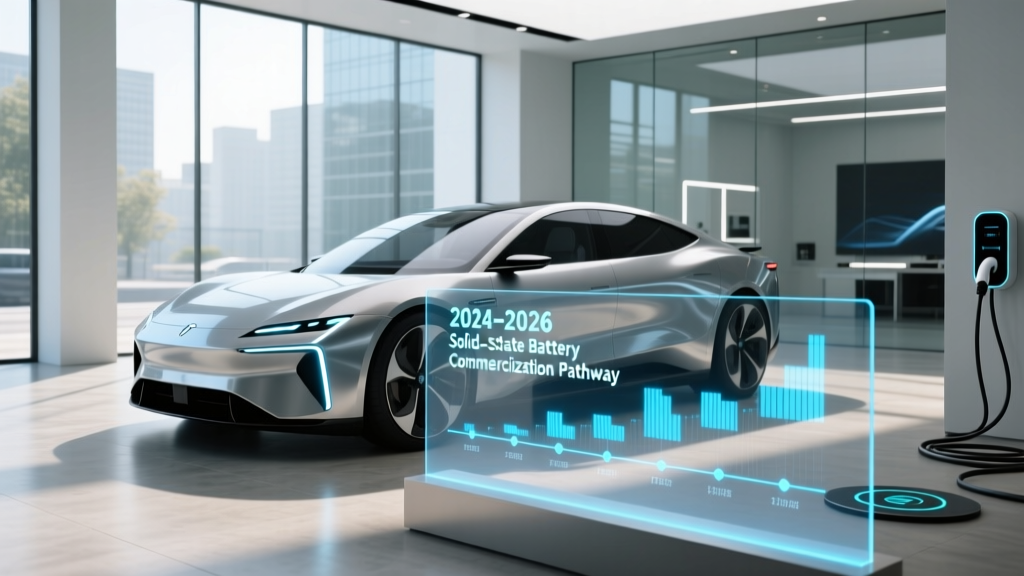
Solid-state batteries: Toyota has announced a solid-state battery targeting 2027-2028 production with a claimed 750 km (466-mile) range and 10-minute fast-charge capability. QuantumScape is working with Volkswagen. However, solid-state manufacturing at automotive scale remains unproven, and costs are currently 3-5x higher than conventional lithium-ion. Realistic mass-market availability for Tesla-class volumes is 2029-2032 at the earliest.
What this means for current buyers: Waiting for next-gen battery technology is not a practical purchase strategy. Current lithium-ion (LFP and NMC) batteries are mature, well-understood, and demonstrably long-lasting. By the time solid-state reaches cost parity, today's Teslas will have already delivered 150,000+ miles of service.
Frequently Asked Questions
Do Tesla batteries need to be replaced regularly?
No. Unlike the 12V auxiliary battery in conventional cars (or the 12V lithium battery in Teslas, which may need replacement every 4-6 years), the high-voltage traction battery is designed to last the life of the vehicle. Based on fleet data, the average Tesla battery retains approximately 85-90% of its capacity at 150,000 miles. Full replacement is rare and typically only necessary after catastrophic failure or extreme mileage well beyond 200,000 miles.
Does frequent Supercharging damage a Tesla battery?
Frequent DC fast charging causes slightly more degradation than Level 2 charging — approximately 2-3% additional capacity loss over 100,000 miles based on Recurrent Auto's fleet analysis. The primary mechanism is heat generation during high-current charging. However, Tesla's thermal management system actively cools the pack during Supercharging, which mitigates much of this effect. If Supercharging is your only option (apartment living, for example), the additional degradation is manageable and unlikely to push you below the 70% warranty threshold.
What happens when a Tesla battery degrades to 70%?
Your car doesn't stop working. A Tesla at 70% capacity still functions normally — it simply has 30% less range. A Model 3 Long Range that originally delivered 363 miles EPA would provide approximately 254 miles of range at 70% capacity. For most daily driving (the average American commute is under 40 miles round-trip), this remains entirely practical. If the drop occurs within the warranty period, Tesla will replace or repair the battery to restore capacity above 70%.
Is it better to buy a Tesla with LFP or NMC battery?
It depends on your priorities. Choose LFP (Model 3/Y RWD) if you want maximum cycle life, lower cost, and the simplicity of charging to 100% daily without degradation worry — and you can accept ~272 miles of EPA range. Choose NMC/NCA (Long Range/Performance) if you need 330+ miles of range, better cold-weather performance, or faster acceleration — and you're willing to manage an 80% daily charge limit. For battery lifespan specifically, LFP has a measurable advantage in cycle count.
Can I upgrade my older Tesla to a newer, larger battery?
Tesla does not officially offer battery upgrades for existing vehicles. Some third-party shops have performed swaps using salvaged packs from newer vehicles, but this is unsupported by Tesla, may void remaining warranty, and can cause software compatibility issues. It is generally not recommended or cost-effective.
How does cold weather affect Tesla battery lifespan?
Cold weather reduces range temporarily (10-25% depending on severity and chemistry) but does not cause permanent degradation as long as the battery is not charged at high rates while frozen. Tesla's BMS prevents high-current charging when the pack is below safe temperatures. Keeping your Tesla plugged in during extreme cold allows the thermal management system to maintain the battery at a safe temperature using grid power, which is the single best practice for cold-climate battery preservation.
Sources: Tesla 2024 Impact Report, Tesla New Vehicle Limited Warranty, Recurrent Auto Fast Charging Study, EPA Fuel Economy for model-specific range data.