Tesla's high-voltage traction battery is the most expensive component in the vehicle — and the single biggest source of anxiety for prospective buyers. The good news, backed by millions of miles of fleet data: Tesla battery packs routinely outlast 200,000 miles with manageable degradation, and the vast majority of owners will never need a replacement. But "manageable" is not "zero," and the chemistry under your floor (LFP or NMC/NCA) dictates how you should charge, store, and think about long-term health.
This guide breaks down exactly how long Tesla's batteries last in 2026, using Tesla's own Impact Report data, real-world fleet studies, and current warranty and replacement pricing. We'll separate the traction battery (the 50–82 kWh pack that drives the car) from the 12V/16V auxiliary battery (a separate, far cheaper component), and give you a concrete care framework.
How Long Do Tesla's Batteries Last? The Real Numbers
Based on Tesla's 2024 Impact Report (the most recent comprehensive fleet dataset published) and independent analysis from sources like Recurrent Auto, Tesla battery packs show the following degradation curve:
- At 50,000 miles: ~3–5% capacity loss (roughly 95–97% State of Health, or SoH)
- At 100,000 miles: ~6–8% capacity loss
- At 150,000 miles: ~8–12% capacity loss
- At 200,000 miles: ~12–15% capacity loss on average
Tesla's own fleet data indicates that Model 3 and Model Y packs retain approximately 85% of original capacity after 200,000 miles. Model S and Model X, with larger packs and typically less extreme cycling, show similar or slightly better retention. The curve flattens after the initial 20,000–30,000 miles, meaning most degradation happens early, then slows significantly.
The critical takeaway: battery replacement is rarely needed before the vehicle itself reaches end-of-life. Out-of-warranty failures do occur, but they are statistically uncommon — well under 1% of Tesla's fleet has required a pack replacement due to degradation below the warranty threshold.
LFP vs NMC/NCA: Which Tesla Battery Chemistry Do You Have?
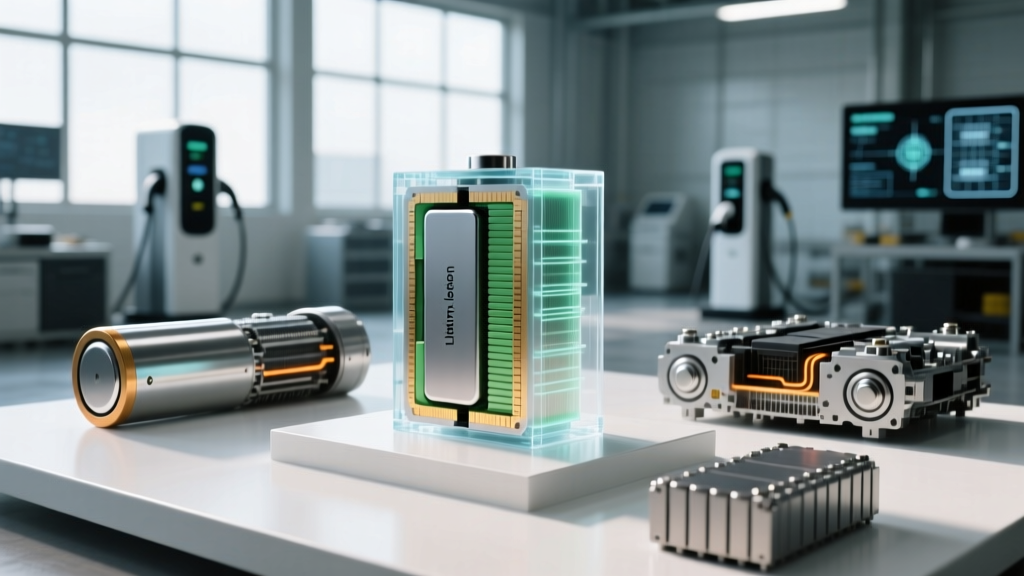
Tesla uses two primary lithium-ion chemistries across its 2026 lineup, and which one is under your floor profoundly affects charging habits, longevity, and cold-weather behavior.
| Attribute | LFP (Lithium Iron Phosphate) | NMC / NCA (Nickel-based) |
|---|---|---|
| Models using it | Model 3 RWD, Model Y RWD (Standard Range) | Model 3 Long Range/Performance, Model Y Long Range/Performance, Model S, Model X, Cybertruck |
| Energy density | Lower (~160 Wh/kg cell-level) — heavier pack for same kWh | Higher (~250–280 Wh/kg) — lighter, more range per kg |
| Cycle life | 3,000–5,000+ cycles to 80% SoH | 1,500–2,500 cycles to 80% SoH |
| Recommended daily charge | 100% — Tesla explicitly recommends weekly full charges | 80% daily; 100% only for trips |
| Cold-weather performance | Weaker below freezing — slower charge acceptance, more range loss | Better cold tolerance, faster preconditioning |
| Cost per kWh | ~20–30% cheaper — no cobalt or nickel | Higher due to nickel/cobalt content |
| Thermal stability | Superior — less prone to thermal runaway | Good, but requires more active thermal management |
| Typical usable capacity (2026) | ~57.5 kWh (Model 3 RWD) | ~75 kWh (Model 3 LR), ~95 kWh (Model S) |
Which is better? Neither is universally superior — it depends on your use case. If you charge at home nightly, drive under 250 miles daily, and live in a moderate climate, LFP's longer cycle life and lower cost make it the pragmatic choice. If you road-trip frequently, live in cold climates, or need maximum range, NMC/NCA's energy density and cold performance justify the slightly faster degradation curve and higher cost.
Tesla Battery Warranty: What's Covered and for How Long
Tesla's battery and drive unit warranty is among the strongest in the industry, but the specifics vary by model and trim. Here is the current coverage for 2026 models:
| Model / Trim | Warranty Period | Mileage Limit | Minimum Capacity Retention |
|---|---|---|---|
| Model 3 RWD (LFP) | 8 years | 100,000 miles | 70% |
| Model 3 Long Range / Performance | 8 years | 120,000 miles | 70% |
| Model Y RWD (LFP) | 8 years | 100,000 miles | 70% |
| Model Y Long Range / Performance | 8 years | 120,000 miles | 70% |
| Model S / Model X | 8 years | 150,000 miles | 70% |
| Cybertruck (AWD / Cyberbeast) | 8 years | 120,000 miles | 70% |
What the warranty covers: If your battery's usable capacity drops below 70% of its original kWh within the warranty period, Tesla will repair or replace the pack at no cost. The warranty also covers manufacturing defects and drive unit failures. It does not cover damage from accidents, flooding, improper modifications, or deliberate abuse.
What this means practically: A Model 3 Long Range with ~75 kWh usable that degrades to 52.5 kWh or below within 8 years / 120,000 miles qualifies for warranty service. Given the degradation data above (most packs retain 85–92% at those mileages), hitting the 70% threshold during the warranty period is rare under normal use.
How Much Does a Tesla Battery Replacement Cost?
If you are out of warranty and face a pack failure — or you buy a high-mileage used Tesla with degraded cells — replacement costs are significant but not catastrophic relative to the vehicle's value. Here are approximate 2026 pricing ranges based on service-center data and third-party EV repair shops:
| Model | Battery Size (Usable) | Replacement Cost Range | Typical Labor |
|---|---|---|---|
| Model 3 RWD (LFP) | ~57.5 kWh | $12,000 – $15,000 | Included or ~$1,500 |
| Model 3 Long Range / Performance | ~75 kWh | $14,000 – $18,000 | Included or ~$1,500 |
| Model Y Long Range / Performance | ~75 kWh | $14,000 – $18,000 | Included or ~$1,500 |
| Model S (2021+ Plaid / LR) | ~95 kWh | $18,000 – $22,000 | Included or ~$2,000 |
| Model X (2021+) | ~95 kWh | $18,000 – $22,000 | Included or ~$2,000 |
| Cybertruck | ~123 kWh | $20,000 – $25,000 (est.) | Varies |
When is replacement actually needed? Most Tesla owners never replace the traction battery. The pack is designed to outlast 200,000 miles with 85%+ retention. Replacement is typically driven by one of three scenarios: (1) a rare manufacturing defect outside the warranty window, (2) physical damage from road debris or collision, or (3) extreme high-mileage use (300,000+ miles, often in fleet/taxi service). For the average owner driving 12,000–15,000 miles per year, the battery will still hold 80%+ capacity at the 15-year mark.
Independent shops like Electrified Garage and others now offer refurbished pack swaps at 30–50% lower cost than Tesla service centers, which is increasingly relevant for out-of-warranty vehicles.
Factors That Accelerate (or Preserve) Battery Life
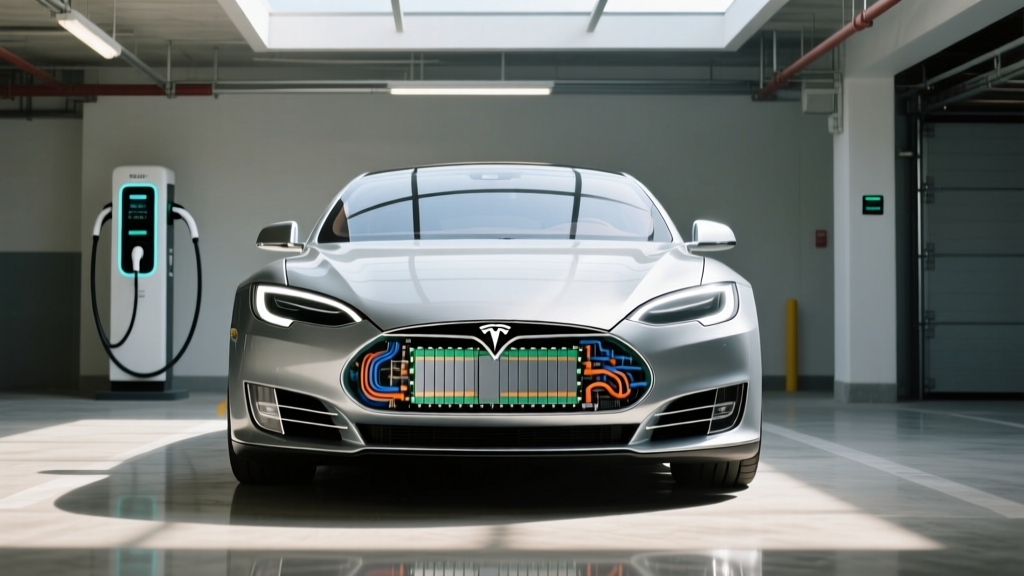
Tesla's battery management system (BMS) is among the most sophisticated in the industry — active liquid cooling and heating keep cells in their optimal temperature window. But owner habits still meaningfully affect long-term health.
Charging Habits: The Biggest Lever You Control
- NMC/NCA packs: Charge to 80% for daily use. Reserve 100% charges for road trips, and try to depart shortly after reaching full charge rather than letting the car sit at 100% SoC for hours or days. Sustained high SoC accelerates electrolyte decomposition.
- LFP packs: Charge to 100% at least once per week. LFP cells need full-charge calibration for the BMS to accurately estimate range, and the chemistry tolerates high SoC far better than NMC.
- DC fast charging (Supercharging): Occasional Supercharging (a few times per month) has minimal impact on modern Tesla packs, thanks to aggressive thermal preconditioning. Daily Supercharging — especially at 250 kW V3/V4 stalls — does slightly accelerate degradation over hundreds of cycles. If you can charge at home on Level 2 (7–11.5 kW), do so for the majority of your charging.
Temperature Extremes
- Cold weather: Tesla's BMS actively warms the pack when you navigate to a Supercharger (preconditioning). Always use navigation to charge stops in winter. Cold itself doesn't cause permanent degradation — but attempting to fast-charge a cold pack without preconditioning can cause lithium plating, which is irreversible.
- Hot climates: Prolonged exposure to ambient temperatures above 100°F, especially at high SoC, accelerates calendar aging. If you live in Phoenix or Las Vegas, avoid leaving the car at 90–100% SoC parked outdoors for days. A shaded garage or a charge limit of 70–80% for storage helps significantly.
Depth of Discharge
Shallow cycles (e.g., charging from 40% to 80%) are gentler on NMC/NCA cells than deep cycles (10% to 100%). You do not need to obsess over this — Tesla's BMS manages buffer zones at the top and bottom of the pack — but habitually running the battery to near-zero before charging does add stress over thousands of cycles.
- NMC/NCA: Set daily charge limit to 80%. Use 100% only before trips.
- LFP: Charge to 100% at least weekly. No need to baby it.
- Use Level 2 home charging for the majority of charging sessions.
- Always navigate to Superchargers (enables preconditioning).
- In extreme heat, avoid parking at high SoC for extended periods.
- Don't routinely run the pack below 10%.
How to Check Your Tesla's Battery Health (SoH)
Tesla does not display a single "battery health percentage" in the vehicle UI the way some competitors do, but you can assess SoH through several methods:
Method 1: Compare Projected Range at 100% to Original EPA
Charge the car to 100% (for LFP) or temporarily set the charge limit to 100% (for NMC — do this once, then return to 80%). Note the displayed range. Compare it to the original EPA-rated range for your model year and trim. A 2024 Model 3 Long Range that originally displayed 341 miles at 100% but now shows 310 miles has experienced roughly 9% degradation. Note that Tesla's displayed range uses a fixed calculation and does not account for temperature, driving style, or terrain — so this is an approximation, not a lab measurement.
Method 2: Third-Party Apps and OBD-II Tools
Apps like TeslaFi, Tessie, and Stats pull detailed battery telemetry via Tesla's API and can estimate SoH more accurately by tracking energy consumed vs. SoC change over multiple charge cycles. For a more granular view, an OBD-II Bluetooth adapter paired with apps like Scan My Tesla can read individual cell voltages and pack health metrics directly from the CAN bus.
Method 3: Tesla Service Diagnostic
If you suspect a warranty claim (capacity below 70%), a Tesla Service Center can run a full battery health diagnostic. This is the only measurement Tesla will accept for warranty purposes. You can request this during a routine service visit.
According to data aggregated by Recurrent Auto, which tracks over 15,000 Tesla vehicles in real-world conditions, the median Model 3 battery retains approximately 90% of its original range at 100,000 miles — consistent with Tesla's own fleet reporting.
What About the 12V / 16V Auxiliary Battery?
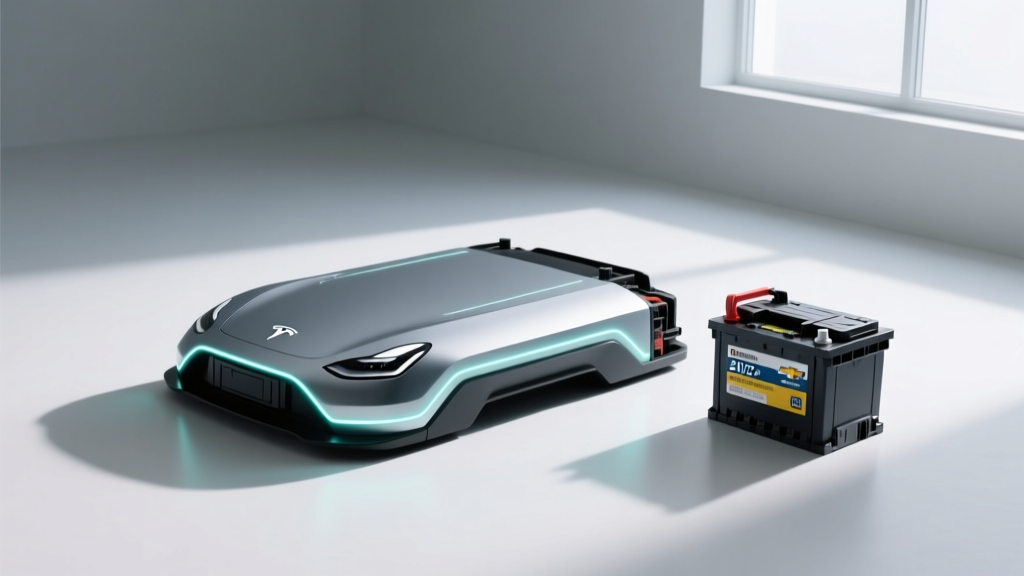
This is a common point of confusion. Your Tesla has two batteries: the high-voltage traction battery (the big one discussed above) and a small 12V (older models) or 16V (2022+ models) lithium-ion auxiliary battery that powers the electronics, lights, infotainment, and door handles.
The auxiliary battery has a shorter lifespan — typically 3–6 years — and costs approximately $300–$500 to replace. Tesla's 2022+ switch to a 16V lithium auxiliary battery improved longevity significantly over the older lead-acid-style 12V units, which sometimes failed within 2–3 years. If your Tesla's screen warns "12V battery needs replacement," this is the auxiliary battery — not the traction pack. This is a routine maintenance item, not a catastrophic failure, and is not covered under the high-voltage battery warranty (it falls under the basic vehicle limited warranty of 4 years / 50,000 miles).
Emerging Battery Tech: Solid-State and Silicon Anodes
Looking forward, several next-generation battery technologies promise step-change improvements in energy density, charge speed, and longevity. It is important to understand their realistic timelines:
- Silicon-dominant anodes: Companies like Sila Nanotechnologies and Group14 are already shipping silicon-composite anode materials that boost energy density by 15–25% over graphite. Tesla's 4680 cells already use a silicon-carbon anode blend, and incremental improvements are expected through 2028. This is not speculative — it is happening now in production cells.
- Solid-state batteries: Promised to offer 2x energy density, faster charging, and near-zero degradation. Toyota, QuantumScape, and Samsung SDI have demonstrated prototype cells, but mass production at automotive scale remains 2029–2032 at the earliest for limited deployment, with broad availability likely post-2032. No Tesla model currently uses or has been announced with solid-state cells.
- Sodium-ion batteries: CATL and BYD are producing sodium-ion cells for lower-cost, shorter-range applications. Tesla has not announced sodium-ion adoption, but the technology could appear in future base-trim models or energy storage products by 2028–2030.
- Dry-electrode manufacturing: Tesla's 4680 cell production at Giga Texas uses a dry-electrode coating process that reduces manufacturing cost and energy. Yield improvements continue through 2026, and this process is expected to lower per-kWh pack cost by 10–20% over the next few years.
For today's buyers: current NMC and LFP chemistries are mature, well-understood, and proven to last the life of the vehicle. Waiting for solid-state is not a practical strategy for anyone buying in 2026.
Frequently Asked Questions
How long do Tesla's batteries last in years?
Under typical driving (12,000–15,000 miles/year), Tesla traction batteries last 15–20+ years before reaching 70–80% of original capacity. Tesla's fleet data shows packs retaining ~85% capacity at 200,000 miles, which equates to roughly 13–17 years for the average driver. Calendar aging (degradation from time, not use) does occur, but Tesla's thermal management system minimizes it relative to early-generation EVs.
Is it true that replacing a Tesla battery costs $20,000 or more?
For larger packs (Model S, Model X, Cybertruck), yes — $18,000–$25,000 is the current range. For Model 3 and Model Y, replacement runs $12,000–$18,000 depending on trim and battery size. However, the vast majority of Tesla owners never need a replacement. The pack is designed to outlast the vehicle's useful economic life. Out-of-warranty replacements are rare and typically occur only on vehicles with 250,000+ miles or physical damage.
Does frequent Supercharging damage the battery?
Modern Tesla packs handle Supercharging well, thanks to active thermal preconditioning (which kicks in when you navigate to a Supercharger). Tesla's own data shows that vehicles that Supercharge frequently exhibit only slightly more degradation than those that primarily use Level 2 — the difference is on the order of a few percentage points over 150,000 miles. The bigger degradation risk is sustained high SoC (sitting at 100% for days) and extreme heat, not fast charging itself.
Should I get an LFP or NMC Tesla?
If your priority is maximum battery longevity, lowest cost, and you primarily charge at home with daily drives under 250 miles, the LFP-equipped Model 3 RWD or Model Y RWD is the pragmatic choice. If you need maximum range, frequently road-trip, live in a cold climate, or want the Performance trim, NMC/NCA is the right call. Both chemistries are proven to last the life of the car with proper care.
How do I know if my Tesla battery qualifies for warranty replacement?
If your battery's usable capacity drops below 70% of its original value within the warranty period (8 years and 100,000–150,000 miles depending on model), you qualify. A Tesla Service Center must perform the diagnostic to confirm. You can estimate this yourself by charging to 100% and comparing the displayed range to the original EPA figure — if it has dropped by more than 30%, schedule a service visit.
What's the difference between the traction battery and the 12V/16V battery?
The traction battery (57.5–123 kWh depending on model) is the high-voltage pack that powers the motors and stores your driving energy. It is covered by an 8-year warranty and costs $12,000–$25,000 to replace. The 12V or 16V auxiliary battery is a small lithium-ion unit that powers electronics, screens, and accessories. It typically lasts 3–6 years, costs $300–$500 to replace, and is covered under the basic vehicle warranty (4 years / 50,000 miles), not the battery warranty.
Sources: Tesla Impact Report, fueleconomy.gov (EPA), Recurrent Auto battery research, Tesla Vehicle Warranty.