How Long Does a Tesla Battery Last in a Day? The Quick Answer
When buyers search "how long does tesla battery last in a day," they're usually asking two distinct questions: how many miles can you drive on a single charge, and how many years will the battery pack survive before needing replacement. Both answers depend heavily on which Tesla model you drive, which battery chemistry sits under the floor, and how you treat it.
Here's the day-one baseline across the 2026 Tesla lineup:
| Model / Trim | Battery (usable kWh) | Chemistry | EPA Range | Real-World Highway | Real-World Cold (30°F) |
|---|---|---|---|---|---|
| Model 3 RWD | 57.5 kWh | LFP | 272 mi | ~230–245 mi | ~195–215 mi |
| Model 3 Long Range AWD | 75 kWh | NMC | 341 mi | ~285–305 mi | ~240–265 mi |
| Model Y RWD | 57.5 kWh | LFP | 260 mi | ~220–235 mi | ~185–205 mi |
| Model Y Long Range AWD | 75 kWh | NMC | 320 mi | ~270–290 mi | ~230–250 mi |
| Model S Long Range | 95 kWh | NMC | 402 mi | ~340–365 mi | ~290–320 mi |
| Model X Long Range | 95 kWh | NMC | 348 mi | ~295–315 mi | ~250–275 mi |
Tesla Battery Chemistry: LFP vs NMC Explained
Tesla uses two distinct lithium-ion chemistries across its lineup, and the choice directly affects your daily range, charging habits, and long-term degradation.
| Attribute | LFP (Lithium Iron Phosphate) | NMC (Nickel Manganese Cobalt) |
|---|---|---|
| Models using it (2026) | Model 3 RWD, Model Y RWD | Model 3 LR, Model Y LR, Model S, Model X |
| Energy density | Lower (~160 Wh/kg cell-level) | Higher (~250 Wh/kg cell-level) |
| Typical cycle life | 3,000–5,000+ cycles | 1,500–2,500 cycles |
| Cold-weather performance | Weaker — more range loss below freezing, slower DC fast charging in cold | Better — retains more range, charges faster cold |
| Charging to 100% | Recommended weekly (BMS needs full charge for calibration) | Daily limit 80% recommended; 100% for trips only |
| Cost | Lower — no cobalt or nickel | Higher — commodity-sensitive |
| Degradation profile | Very gradual, linear | Steeper early drop, then plateaus |
Which is better? If you commute short distances, charge at home nightly, and live in a mild climate, LFP is arguably the smarter ownership choice — it's cheaper, lasts more cycles, and Tesla tells you to charge it to 100% without guilt. If you need maximum range per charge, drive long highway stretches, or live where winters are brutal, NMC gives you more usable miles per day and better cold-weather charging. Neither chemistry is universally superior; the right pick matches your driving pattern.
How Long Do Tesla Batteries Actually Last? Degradation Data
Tesla's 2025 Impact Report (the most recent published dataset) showed that Model 3 and Model Y battery packs retained approximately 88% of original capacity after 150,000 miles. Model S and Model X packs showed roughly 85% retention at the same mileage. These are fleet averages — individual results vary based on charging behavior, climate, and Supercharger frequency.
• Year 1 / 15,000 mi: ~3–5% loss (initial formation drop)
• Year 3 / 45,000 mi: ~7–9% total loss
• Year 5 / 75,000 mi: ~9–11% total loss
• Year 8 / 120,000 mi: ~11–14% total loss
• Year 10+ / 150,000+ mi: ~12–16% total loss
LFP packs degrade more slowly and linearly. Many LFP-equipped Model 3 owners report less than 5% loss over 60,000 miles, though the BMS can show inconsistent range estimates if not regularly charged to 100%.
The critical insight: degradation is not a cliff. A Tesla battery doesn't "die" at a certain mileage — it gradually holds fewer kWh, which means fewer daily miles. A 75 kWh NMC pack that has degraded 12% still holds 66 usable kWh, enough for roughly 280 miles of real-world driving in a Model 3 Long Range. Most Tesla battery packs will outlast the vehicle's body, suspension, and interior.
Tesla Battery Warranty: What's Covered and for How Long
| Model | Warranty Period | Mileage Cap | Minimum Capacity Retention |
|---|---|---|---|
| Model 3 RWD (LFP) | 8 years | 100,000 miles | 70% |
| Model 3 Long Range / Performance | 8 years | 120,000 miles | 70% |
| Model Y RWD (LFP) | 8 years | 100,000 miles | 70% |
| Model Y Long Range / Performance | 8 years | 120,000 miles | 70% |
| Model S / Model X | 8 years | 150,000 miles | 70% |
What the warranty covers: If your battery drops below 70% of original capacity within the warranty period, Tesla will repair or replace it to bring retention back above the threshold. The warranty also covers manufacturing defects and complete failures. It does not cover damage from accidents, flooding, or unauthorized modifications.
What owners should know: Based on fleet degradation data, the vast majority of Tesla packs never breach the 70% threshold within the warranty window. A pack would need to lose 30% of its capacity — roughly 22 kWh on a 75 kWh pack — to trigger a warranty claim. That level of degradation typically requires well over 200,000 miles or severe abuse (repeated 100% charges on NMC, constant Supercharging in extreme heat, etc.).
Tesla Battery Replacement Cost: What You'd Actually Pay
If your battery fails outside of warranty — or you buy a high-mileage used Tesla and eventually need a swap — here's the current replacement landscape:
| Model | Battery Size | Replacement Cost Range (parts + labor) | Typical When Needed |
|---|---|---|---|
| Model 3 RWD (LFP) | ~60 kWh | $10,000 – $14,000 | 200,000+ mi or rare defect |
| Model 3/Y Long Range (NMC) | ~75 kWh | $13,000 – $18,000 | 200,000+ mi or rare defect |
| Model S / Model X | ~95 kWh | $18,000 – $25,000 | 150,000–250,000 mi |
Context that matters: These costs sound steep, but consider that the average Tesla owner drives 12,000–15,000 miles per year. At that rate, reaching 200,000 miles takes 13–16 years. By then, the vehicle's residual value is minimal, and most owners will have sold or traded long before a pack swap is needed. For comparison, a gas vehicle's engine and transmission repairs over the same period often total $5,000–$10,000.
Tesla also uses remanufactured packs for out-of-warranty replacements, which reduces cost. Third-party EV repair shops are increasingly offering module-level repairs (replacing individual degraded modules rather than the entire pack) for $3,000–$7,000, though availability varies by region.
Factors That Affect Your Tesla's Battery Life Daily
Not all miles are created equal when it comes to battery wear. Here's what actually accelerates degradation — and what doesn't:
- Set daily charge limit to 80% (NMC) or 100% (LFP): Check your battery type in the Tesla app under Settings → Battery. NMC owners: use the charge limit slider. LFP owners: charge to 100% at least once per week for BMS calibration.
- Minimize Supercharger reliance: DC fast charging at 150–250 kW generates significant heat. Occasional use is fine; daily Supercharging accelerates degradation by an estimated 1–3% over the pack's life versus home Level 2 charging.
- Use preconditioning: Before a DC fast charge, the Tesla navigation system automatically preconditions the battery — warming it to optimal temperature for faster charging and reduced stress. Always navigate to the charger rather than just driving there.
- Avoid prolonged storage at extreme SoC: Don't leave an NMC pack at 100% for days. If storing for a vacation, set to 50%.
- Don't baby it too much: Modern Tesla BMS (Battery Management Systems) actively manage cell balancing, thermal limits, and buffer zones. The ~3% top and bottom buffer is hidden from the displayed SoC. Normal use won't destroy the pack.
What about fast charging? Data from Tesla's fleet shows that vehicles that Supercharge more than 90% of the time show approximately 2–3% more degradation at 100,000 miles compared to those that primarily charge at home on Level 2. That's meaningful but not catastrophic — the difference between 88% and 85% retention. For road trips, Supercharge without guilt. For daily driving, a home Level 2 charger at 7–11 kW is gentler and cheaper.
How to Check Your Tesla's Battery Health (State of Health)
Tesla doesn't display a simple "battery health percentage" on the touchscreen the way some competitors do. But you can estimate your State of Health (SoH) with a straightforward method:
- Charge to 100% (for NMC, do this only for testing purposes, not daily).
- Read the displayed range at 100% SoC.
- Compare to the original EPA range for your specific model and model year.
- Calculate: (Current 100% range ÷ Original EPA range) × 100 = approximate SoH.
Example: A 2023 Model 3 Long Range originally rated at 341 miles EPA now shows 305 miles at 100%. That's 305 ÷ 341 = 89.4% SoH. This is normal for a vehicle with ~40,000 miles.
Third-party tools: Apps like TeslaFi and Stats (iOS) log detailed battery data over time, including estimated kWh remaining at various SoC levels, which gives a more precise SoH reading than the range estimator alone. Some owners also use OBD-II dongles with apps like Scan My Tesla to read cell-level voltage data directly from the BMS.
If you suspect abnormal degradation (more than 3% loss per year or per 15,000 miles), contact Tesla Service. They can pull detailed pack diagnostics remotely and determine whether a warranty claim is warranted.
What's Next? Solid-State and Silicon Anode Batteries
The battery landscape is evolving, but timelines matter more than headlines:
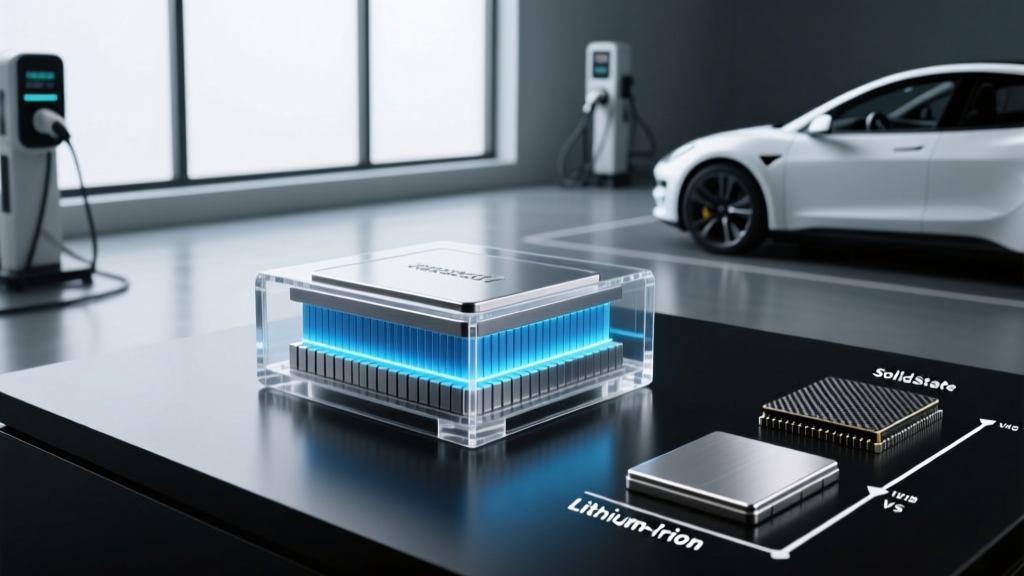
Solid-state batteries promise 30–50% higher energy density, faster charging, and improved safety by replacing the liquid electrolyte with a solid material. Toyota, Samsung SDI, and QuantumScape have all announced production targets, but no solid-state pack is currently available in any mass-production vehicle as of 2026. Realistic availability in a Tesla? 2029–2032 at the earliest, likely debuting in a premium model before trickling down.
Silicon anode technology (used in small amounts in current cells, with companies like Sila Nanotechnologies working on higher-silicon compositions) can boost energy density by 10–20%. Tesla's 4680 cells already incorporate incremental silicon content. Expect gradual improvements here rather than a sudden leap.
What this means for current buyers: Don't delay a purchase waiting for next-generation battery tech. Today's LFP and NMC packs are mature, well-understood, and backed by data showing they'll last the useful life of the vehicle. The improvements coming are real but years away from showroom floors.
Frequently Asked Questions
How long does a Tesla battery last in a day on a single charge?
Depending on the model and conditions, a fully charged Tesla delivers between 185 miles (Model Y RWD in freezing weather) and 402 miles (Model S Long Range, EPA ideal). Most owners see 230–310 miles of real-world range in moderate conditions. Daily driving of 30–50 miles means most owners charge every 4–7 days on home Level 2.
How much does it cost to replace a Tesla battery?
Out-of-warranty replacement costs range from $10,000 to $25,000 depending on the model and pack size. However, most Tesla battery packs last 200,000+ miles before reaching 70% capacity, meaning the majority of owners will never need a replacement during their ownership.
What does the Tesla battery warranty cover?
Tesla's battery warranty guarantees at least 70% capacity retention for 8 years and 100,000–150,000 miles (depending on model). If the pack drops below this threshold, Tesla repairs or replaces it at no cost. The warranty also covers manufacturing defects but not accident damage.
LFP vs NMC — which Tesla battery is better?
LFP (Model 3/Y RWD) offers longer cycle life, lower cost, and the ability to charge to 100% daily, but has lower range and worse cold-weather performance. NMC (Long Range, Model S/X) delivers more range per charge and better cold performance but should be limited to 80% for daily use. Choose LFP for commuting and value; choose NMC for long trips and cold climates.
Does frequent Supercharging hurt my Tesla battery?
Frequent DC fast charging causes slightly more degradation than Level 2 home charging — fleet data suggests 2–3% more loss over 100,000 miles for vehicles that Supercharge almost exclusively. Occasional Supercharging on road trips has negligible impact. For daily charging, home Level 2 at 7–11 kW is optimal.
How do I check my Tesla battery's State of Health?
Charge to 100%, note the displayed range, and divide by the original EPA range for your model. Third-party apps like TeslaFi provide more granular tracking over time. If you see more than 3% annual loss, contact Tesla Service for a diagnostic review.