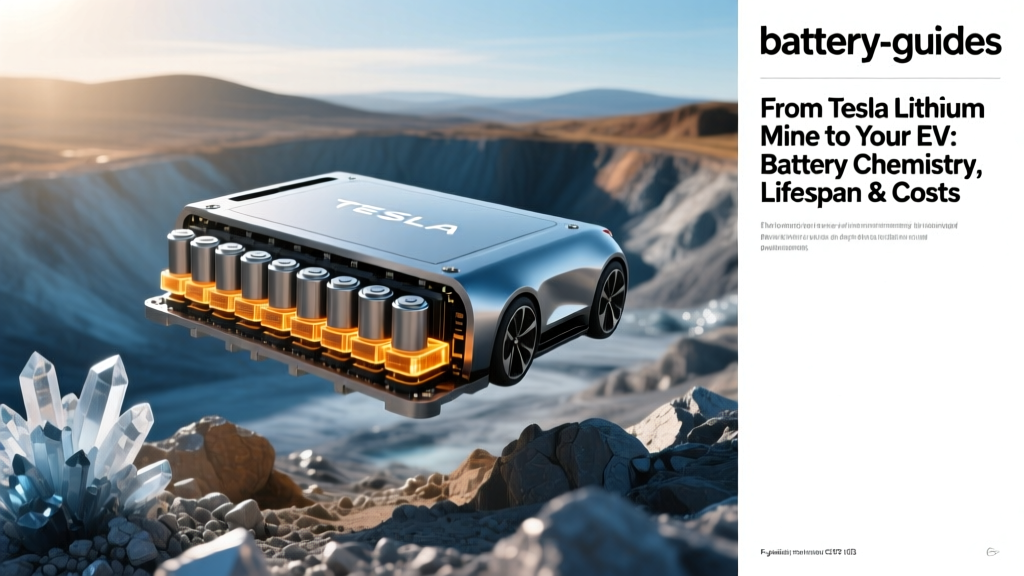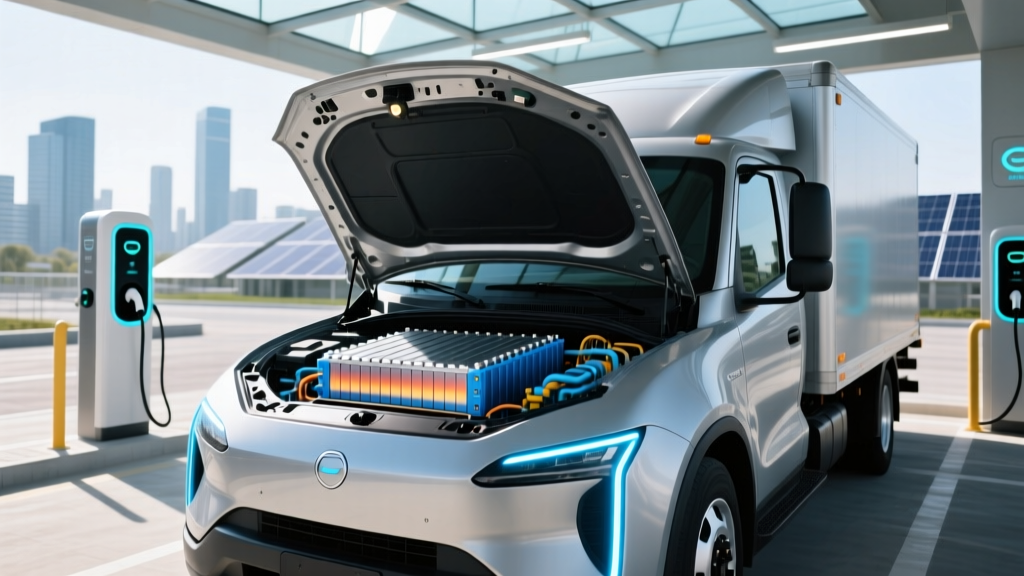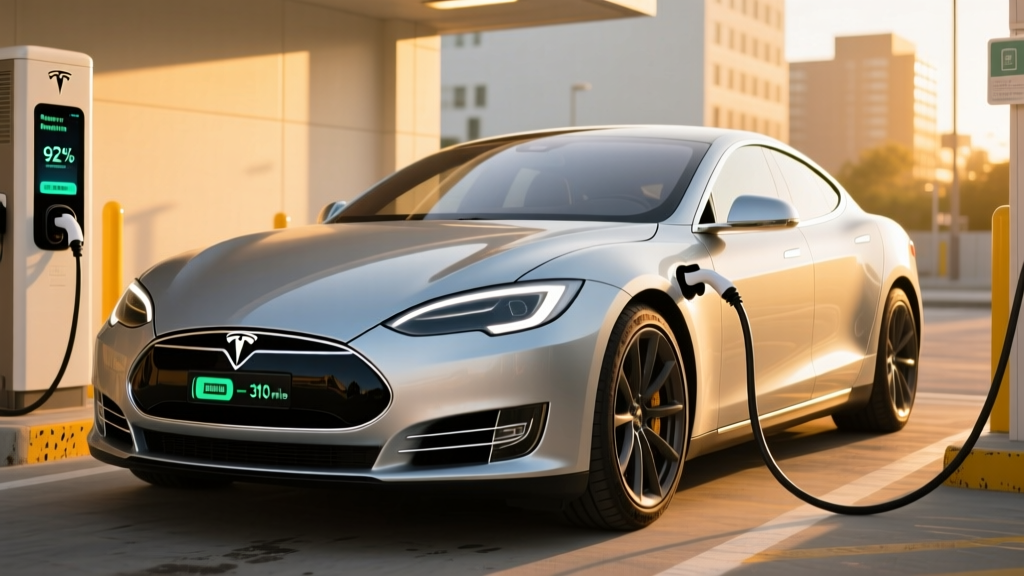
If you're researching battery life in a Tesla, you've likely seen forum posts claiming batteries need replacing at 100,000 miles and others insisting theirs are barely degraded after 200,000. The truth sits firmly in the middle — and it depends heavily on which chemistry your Tesla uses, how you charge it, and what climate you drive in.
This guide cuts through anecdote and marketing to give you the exact numbers: degradation curves, warranty thresholds, replacement costs, and the daily habits that meaningfully extend (or shorten) your high-voltage traction battery's lifespan.
How Long Do Tesla Batteries Actually Last?
Tesla's high-voltage traction battery is engineered to outlast the useful life of the vehicle itself. In Tesla's 2023 Impact Report, the company published fleet data showing an average degradation of approximately 12% after 200,000 miles across Model S and Model X vehicles — meaning those packs retain roughly 88% of their original capacity at that mileage. Model 3 and Model Y data, which includes higher volumes and newer chemistries, shows similar or better retention curves.
For the average American driver covering 13,500 miles per year (per FHWA data), that 200,000-mile mark represents roughly 15 years of driving. Most Tesla owners will trade or sell their vehicle before the battery reaches a degradation level that meaningfully impacts daily usability.
- Year 1 / ~13,500 mi: ~3–5% loss (initial formation drop — steepest part of the curve)
- Year 3 / ~40,500 mi: ~6–8% total loss
- Year 5 / ~67,500 mi: ~8–10% total loss
- Year 8 / ~108,000 mi: ~10–12% total loss
- Year 10+ / ~135,000–200,000 mi: ~12–15% total loss
Source: Tesla Impact Report fleet data, aggregated owner reports on TeslabFi and Recurrent Auto. Individual results vary based on chemistry, climate, and charging habits.
The critical insight: degradation is non-linear. The steepest capacity loss occurs in the first 10,000–20,000 miles as the battery undergoes initial formation cycles. After that, the curve flattens significantly, with slow, predictable loss over the remaining life. This is why a 3-year-old Tesla with 40,000 miles often has nearly the same usable range as a 5-year-old one with 65,000 miles.
LFP vs. NMC/NCA: Which Chemistry Does Your Tesla Use?
Not all Tesla batteries are the same. Since late 2021, Tesla has used two primary cell chemistries in its vehicles, and the chemistry in your car fundamentally shapes its longevity profile, charging behavior, and range characteristics.
| Attribute | LFP (Lithium Iron Phosphate) | NMC / NCA (Nickel-based) |
|---|---|---|
| Vehicles | Model 3 RWD, Model Y RWD (Standard Range) | Model 3/Y Long Range & Performance, Model S, Model X |
| Energy Density | Lower (~160 Wh/kg cell-level) | Higher (~250–300 Wh/kg cell-level) |
| Cycle Life | Superior — 3,000+ full cycles with minimal loss | Good — ~1,500–2,000 full cycles |
| Cold-Weather Performance | Weaker — more range loss in freezing temps, slower cold charging | Better — more resilient in sub-freezing conditions |
| Recommended Daily SoC | 100% (Tesla recommends charging to full regularly) | 80% daily; 100% only for trips |
| Cost | Lower — no cobalt or nickel | Higher — commodity-sensitive materials |
| Thermal Stability | Excellent — inherently more stable | Good — requires more active thermal management |
The practical takeaway: If you're a high-mileage driver, a rideshare operator, or someone who plans to keep a Tesla for 10+ years, the LFP chemistry in the Model 3 RWD and Model Y RWD offers measurably longer cycle life. If you need maximum range per charge and better cold-weather performance, the NMC/NCA packs in Long Range and Performance trims are the right call — but they require more careful state-of-charge management.
Tesla Battery Warranty: What's Covered and What Isn't
Tesla provides a separate battery and drive unit warranty that extends beyond the basic vehicle limited warranty. Here's the breakdown by model, current for 2025–2026 model-year vehicles:
| Model | Coverage Period | Mileage Cap | Minimum Capacity Retention |
|---|---|---|---|
| Model 3 RWD (LFP) | 8 years | 100,000 miles | 70% |
| Model 3 Long Range / Performance | 8 years | 120,000 miles | 70% |
| Model Y (all trims) | 8 years | 120,000 miles | 70% |
| Model S / Model X | 8 years | 150,000 miles | 70% |
What this means in practice: If your battery drops below 70% of its original usable capacity within the warranty window, Tesla will repair or replace it at no cost to restore capacity to at least 70%. Note that Tesla does not guarantee a return to 100% — the replacement or refurbished pack will meet or exceed the 70% threshold.
The warranty covers defects in materials and workmanship, as well as capacity loss beyond the stated threshold. It does not cover damage from collisions, flooding, improper modifications, or using the vehicle as a stationary power source outside of approved V2H/V2L configurations. Full terms are available on Tesla's warranty page.
How Much Does a Tesla Battery Replacement Cost?
This is the question that dominates EV forums, and it deserves a direct, data-grounded answer. Battery replacement is rare — the vast majority of Tesla vehicles will never need one — but here's what it costs if you're outside warranty coverage:
| Model / Pack Size | Battery Capacity | Estimated Replacement Cost (2025–2026) | Typical Replacement Trigger |
|---|---|---|---|
| Model 3 RWD (LFP) | ~57.5 kWh usable | $10,000 – $13,000 | Physical damage; extremely rare at end-of-life |
| Model 3/Y Long Range (NMC) | ~75–82 kWh usable | $13,000 – $16,000 | Physical damage; cell module failure |
| Model S (Plaid / LR) | ~95–100 kWh usable | $18,000 – $22,000 | High-mileage degradation; physical damage |
| Model X (Plaid / LR) | ~95–100 kWh usable | $18,000 – $23,000 | High-mileage degradation; physical damage |
Context that matters: These figures include the battery pack and labor at a Tesla Service Center. Independent EV shops may offer refurbished pack replacements for 20–30% less. More importantly, most Tesla batteries never reach the point of needing replacement. Data from Recurrent Auto, which tracks over 15,000 Tesla vehicles, shows that catastrophic battery failure is exceedingly rare, and gradual degradation typically keeps the pack well above the 70% threshold through 150,000+ miles.
If your battery does degrade noticeably after warranty expiration, you'll likely notice it as reduced range — not a sudden failure. A Model 3 Long Range that originally delivered 330 EPA miles might offer 280–290 miles at 150,000 miles. That's still highly functional for most drivers.
What Actually Degrades a Tesla Battery? Key Factors
Battery degradation isn't random. It's driven by specific, measurable factors — and most are within your control.
1. State of Charge Habits
For NMC/NCA batteries, consistently charging to 100% and leaving the car sitting at full charge accelerates degradation. The electrolyte breaks down faster at high voltage. Tesla's own recommendation — charge to 80% for daily use, 100% only when you need the full range for a trip — is grounded in electrochemistry, not conservatism. LFP batteries are the exception: Tesla recommends charging to 100% at least weekly because LFP's flatter voltage curve makes state-of-charge estimation harder at partial charge.
2. DC Fast Charging Frequency
Supercharging is not the battery killer that early EV forums claimed. Tesla's thermal management system actively cools the pack during DC fast charging. However, exclusive reliance on DC fast charging (250 kW peak at V3/V4 Superchargers) does correlate with slightly higher degradation — roughly 1–3% more loss over 100,000 miles compared to predominantly Level 2 home charging, per fleet data. The practical impact is small if you Supercharge on road trips and charge at home on Level 2 most days.
3. Extreme Temperatures
Heat is more damaging than cold for long-term battery health. Sustained exposure to ambient temperatures above 95°F (35°C) — especially combined with high state of charge — accelerates calendar degradation. Tesla's thermal management system actively cools the pack, but parking in shade or a garage in hot climates meaningfully helps. Cold weather causes temporary range loss (15–30% reduction in freezing temps is normal) but does not cause permanent damage. The battery simply has higher internal resistance when cold, which recovers as the pack warms.
4. Depth of Discharge
Regularly draining the battery to near 0% before recharging puts more stress on the cells than shallow cycles. You don't need to baby it — but avoiding situations where the car sits at very low SoC (below 10%) for extended periods is wise. If you're storing a Tesla for weeks, Tesla recommends leaving it plugged in with the charge limit set to 50%.
- ✅ NMC/NCA owners: Set daily charge limit to 80%; charge to 100% only before long trips
- ✅ LFP owners: Charge to 100% at least once per week for accurate SoC calibration
- ✅ Home charge on Level 2 (7–11.5 kW) for daily use; Supercharge freely on road trips
- ✅ Precondition the battery before Supercharging (the car does this automatically when navigating to a Supercharger)
- ✅ Avoid sitting at 100% or below 10% for more than a few hours
- ✅ In hot climates: Park in shade or a garage; leave the car plugged in so the thermal management system can run on grid power
- ✅ For long-term storage: Leave plugged in at 50% SoC
How to Check Your Tesla's Battery Health (State of Health)
Tesla does not display a simple "battery health percentage" on the in-car screen the way some competitors do. But there are reliable methods to assess your pack's State of Health (SoH):
Method 1: The Range Comparison Method
Charge your Tesla to 100% (or your known charge limit) and note the displayed estimated range. Compare this to the original EPA-rated range for your specific model and trim. For example, if your 2023 Model 3 Long Range originally displayed 341 miles at 100% and now shows 310 miles at 100% after 40,000 miles, your approximate SoH is 310 ÷ 341 = 91%. This isn't perfectly precise (displayed range factors in driving habits), but it's a solid estimate.
Method 2: Third-Party Apps
Apps like TeslabFi and Stats for Tesla pull data directly from your vehicle's API to track estimated range at various SoC levels over time, plotting a degradation curve. These tools provide more consistent tracking than the in-car display alone.
Method 3: Tesla Service Diagnostic
You can request a battery health check through the Tesla app. A service technician can pull detailed cell-level data — including individual module voltage variance and internal resistance measurements — that provides a precise SoH assessment. This is the most accurate method, though it's typically only necessary if you suspect abnormal degradation or are evaluating a used Tesla purchase.
Looking Ahead: Solid-State and Silicon-Anode Batteries
Next-generation battery technologies are advancing, but it's important to separate laboratory progress from production reality.
Solid-state batteries — which replace the liquid electrolyte with a solid conductor — promise higher energy density, faster charging, and improved safety. Toyota, Samsung SDI, and QuantumScape have all demonstrated prototype cells with impressive specs. However, manufacturing challenges (particularly achieving consistent solid-electrolyte interfaces at scale) mean that solid-state packs are not expected in production vehicles before 2028–2030 at the earliest, and likely at premium price points initially.
Silicon-anode technology — which replaces graphite anodes with silicon to increase lithium-ion storage capacity — is closer to production. Companies like Sila Nanotechnologies and Group14 are supplying silicon-dominant anode materials to battery manufacturers now, with incremental energy density gains of 10–20% expected in commercial cells by 2027–2028. Tesla's own 4680 cell development may incorporate silicon-anode advances in future iterations.
For buyers today: these technologies are promising but not a reason to delay a purchase. Current LFP and NMC chemistries already deliver 15+ years of practical battery life for most drivers, and costs continue to decline.
Frequently Asked Questions
How long do Tesla batteries last in years and miles?
Based on fleet data, Tesla batteries typically retain 85–88% of original capacity at 200,000 miles (roughly 15 years of average driving). LFP packs in Model 3 RWD and Model Y RWD are projected to last even longer due to superior cycle life. Most batteries will outlast the vehicle's useful economic life.
How much does it cost to replace a Tesla battery?
Out-of-warranty replacement costs range from approximately $10,000 (Model 3 RWD LFP) to $23,000 (Model X), including labor. However, actual battery replacements are rare — the vast majority of Tesla vehicles never need one. Under warranty, replacement is free if capacity drops below 70%.
Does frequent Supercharging damage the battery?
Not significantly. Tesla's thermal management system actively cools the pack during DC fast charging. Fleet data shows that exclusive Supercharging correlates with roughly 1–3% additional degradation over 100,000 miles versus predominantly Level 2 charging. The real-world impact is minimal. Preconditioning (automatic when navigating to a Supercharger) further reduces stress.
Is LFP better than NMC for battery longevity?
For cycle life, yes. LFP cells can endure 3,000+ full charge cycles with minimal degradation compared to ~1,500–2,000 for NMC/NCA. However, LFP has lower energy density (less range per kWh), worse cold-weather performance, and slower cold-temperature charging. The "better" chemistry depends on your priorities: maximum longevity and lower cost (LFP) or maximum range and cold-weather capability (NMC/NCA).
What does the Tesla battery warranty actually cover?
Tesla covers the battery and drive unit for 8 years and 100,000–150,000 miles (depending on model) against defects and capacity loss below 70% of original capacity. It does not cover damage from accidents, flooding, or unauthorized modifications. Full terms are on Tesla's warranty page.
Should I be worried about battery degradation on a used Tesla?
Generally, no. A 3–5 year old Tesla with 40,000–70,000 miles will typically show 6–10% degradation — meaning a Model 3 Long Range that originally delivered 330 EPA miles might now offer 300–310 miles. That's still excellent daily usability. Always check the displayed range at 100% SoC and compare it to the original EPA figure for your specific trim. Services like Recurrent Auto also provide battery health reports for used Tesla evaluations.
Does cold weather permanently damage Tesla batteries?
No. Cold temperatures cause temporary range loss (15–30% in freezing conditions) due to higher internal resistance and energy used for cabin/pack heating. This range recovers fully as temperatures rise. Permanent degradation comes from heat exposure and high-voltage stress, not cold.