Search for "how many kilowatts is a Tesla battery" and you'll hit a wall of confused answers — mostly because the question mixes up two different units. kW (kilowatts) measures power, like how fast a battery can charge or discharge. kWh (kilowatt-hours) measures energy capacity — how much electricity the battery stores, which directly determines driving range. When people ask about a Tesla battery's "kilowatts," they almost always mean its kWh capacity.
As of the 2026 model year, Tesla's traction batteries range from approximately 57.5 kWh (usable) in the base Model 3 Rear-Wheel Drive to roughly 100 kWh (usable) in the Model S and Model X Plaid variants. But raw capacity is only part of the story. Chemistry type, degradation behavior, warranty coverage, and eventual replacement cost all determine what you'll actually experience over a decade of ownership.
Tesla Battery Capacity by Model (kWh, Not kW)
Here's a breakdown of usable battery capacity across Tesla's current 2026 lineup. Note that manufacturers sometimes quote gross capacity (total energy in the cells) versus usable capacity (what the software allows you to access). Usable figures are what matter for range calculations, and Tesla typically buffers the top and bottom of the pack to protect longevity.
| Model / Trim | Usable Capacity (kWh) | Chemistry | EPA Range (mi) | Real-World Range Estimate |
|---|---|---|---|---|
| Model 3 RWD | ~57.5 | LFP | 272 | ~240–260 mi (highway/cold: ~210) |
| Model 3 Long Range AWD | ~75 | NMC/NCA | 363 | ~310–340 mi (highway/cold: ~270) |
| Model 3 Performance | ~75 | NMC/NCA | 315 | ~270–295 mi |
| Model Y Long Range AWD | ~75 | NMC/NCA | 320 | ~280–300 mi (highway/cold: ~245) |
| Model Y Performance | ~75 | NMC/NCA | 285 | ~250–270 mi |
| Model S Long Range | ~95–100 | NMC/NCA | 402 | ~340–370 mi |
| Model X Long Range | ~95–100 | NMC/NCA | 335 | ~285–310 mi |
| Cybertruck AWD | ~123 (est.) | NMC/NCA (4680 cells) | 340 | ~280–310 mi (heavy vehicle, aero penalty) |
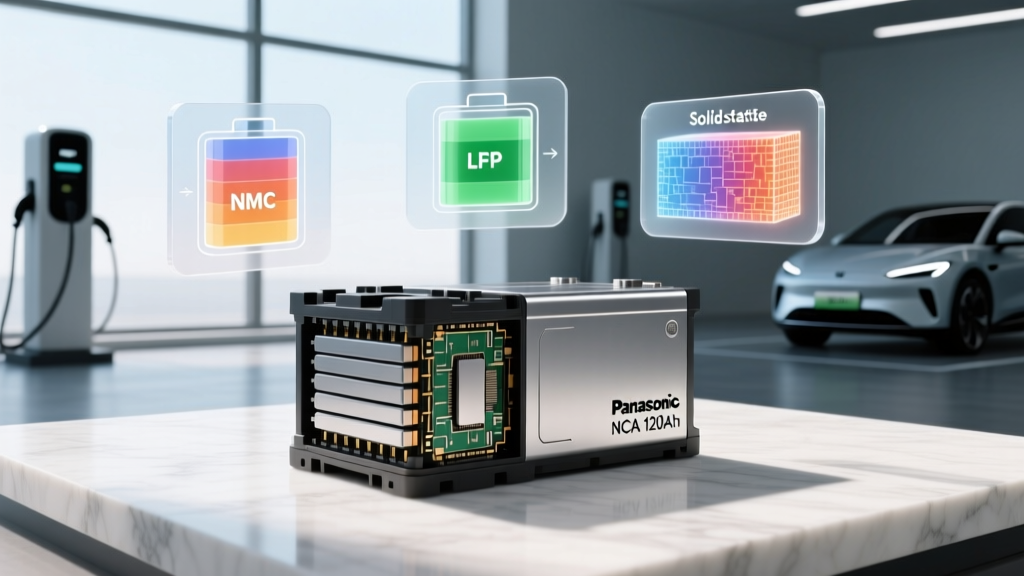
LFP vs. NMC/NCA: Which Tesla Battery Chemistry Is Right for You?
Tesla uses two primary battery chemistries across its lineup, and the choice affects everything from daily charging habits to cold-weather range and long-term degradation. Understanding which chemistry your Tesla has is essential for maximizing battery life.
| Factor | LFP (Lithium Iron Phosphate) | NMC/NCA (Nickel Manganese Cobalt / Nickel Cobalt Aluminum) |
|---|---|---|
| Energy Density | Lower — heavier pack for same kWh | Higher — more range per kg |
| Cycle Life | 3,000–5,000+ cycles to 80% SoH | 1,000–2,000 cycles to 80% SoH |
| Daily Charging | Tesla recommends 100% daily | 80% daily; 100% for trips only |
| Cold Performance | More range loss in freezing temps (~30–40%) | Better cold retention (~20–30% loss) |
| Cost | Lower — no cobalt or nickel | Higher — commodity-sensitive materials |
| Safety / Thermal Stability | Excellent — higher thermal runaway threshold | Good — requires robust thermal management |
| Tesla Models Using | Model 3 RWD, Model Y RWD | Model 3 LR/Perf, Model Y LR/Perf, Model S/X, Cybertruck |
The practical takeaway: If you buy a Model 3 RWD with an LFP pack, you should charge to 100% regularly — in fact, Tesla's BMS needs full charges to accurately calibrate the LFP state-of-charge estimate. If you buy a Long Range or Performance variant with NMC/NCA, set your daily charge limit to 80% and only charge to 100% when you're leaving for a road trip within a few hours. This single habit difference is the most impactful thing you can do for long-term battery health.
How Long Do Tesla Batteries Actually Last? Real Degradation Data
Tesla publishes fleet-wide degradation data, and third-party analyses from sources like Tesla's Impact Reports and independent EV data aggregators consistently show that Tesla batteries degrade far less than most buyers fear.
Here's what the data shows across a typical ownership timeline:
- Year 1 / ~15,000 mi: ~2–5% capacity loss (initial steeper drop as the SEI layer forms)
- Year 3 / ~45,000 mi: ~5–8% total loss
- Year 5 / ~75,000 mi: ~8–12% total loss
- Year 8 / ~120,000 mi: ~10–15% total loss
- 200,000 mi: ~12–18% total loss (based on Tesla's fleet data showing ~88% average retention at 200k miles)
LFP packs (Model 3 RWD) show even slower degradation — typically retaining 90%+ capacity at 100,000 miles, thanks to the chemistry's superior cycle life.
Several factors explain why Tesla batteries outperform early EV-era fears. Tesla's thermal management system actively heats and cools the pack, keeping cells in their optimal temperature window. The software also enforces top and bottom buffers — you never actually access 100% of the gross capacity, which reduces stress on the cells.
For context, a Model 3 Long Range starting at 363 miles EPA with 12% degradation after five years still delivers roughly 319 miles of original-range equivalent — and that's before accounting for the fact that most daily driving requires far less.
Tesla Battery Warranty: What's Covered and What Isn't
Tesla's battery and drive unit warranty is one of the strongest in the industry, but understanding the specifics matters — particularly the capacity retention threshold that triggers a claim.
| Model | Warranty Period | Mileage Limit | Minimum Capacity Retention |
|---|---|---|---|
| Model 3 RWD (LFP) | 8 years | 100,000 miles | 70% |
| Model 3 Long Range / Performance | 8 years | 120,000 miles | 70% |
| Model Y (all trims) | 8 years | 120,000 miles | 70% |
| Model S / Model X | 8 years | 150,000 miles | 70% |
| Cybertruck | 8 years | 120,000 miles | 70% |
What the warranty covers: If your battery drops below 70% of its original usable capacity within the warranty period (as measured by Tesla's diagnostic tools), Tesla will repair or replace the pack at no cost. The warranty also covers defects in materials and workmanship, and drive unit (motor) failures.
What it doesn't cover: Damage from accidents, flooding, fire (non-defect), rodent damage, unauthorized modifications, or using the vehicle as a stationary power source outside of approved V2H/V2L configurations. Normal degradation above the 70% threshold is not a warranty event — a 10-year-old Tesla with 72% capacity is functioning within spec.
The 70% threshold is conservative. Given that fleet data shows most Tesla packs retain 85–90% capacity at the 8-year mark, actually needing a warranty replacement is statistically rare. According to Tesla's published data, fewer than 1% of vehicles have required a battery replacement under warranty.
Tesla Battery Replacement Cost: What to Expect If You're Out of Warranty
If your Tesla's battery fails outside the warranty window — or sustains physical damage not covered by insurance — replacement costs are significant but have been trending downward as cell manufacturing scales.
| Model | Battery Size | Estimated Replacement Cost (Parts + Labor) | Typical Replacement Trigger |
|---|---|---|---|
| Model 3 RWD (LFP) | ~57.5 kWh | $8,000 – $12,000 | Rare before 200k+ mi; physical damage |
| Model 3 LR / Model Y LR | ~75 kWh | $12,000 – $16,000 | Rare before 200k+ mi; physical damage |
| Model S / Model X | ~95–100 kWh | $15,000 – $22,000 | Older packs (pre-2020) more susceptible |
| Cybertruck | ~123 kWh (4680) | $18,000 – $25,000 (est.) | Structural pack; collision damage |
These figures include the battery pack and labor at a Tesla Service Center. Independent EV repair shops may offer refurbished packs at 20–40% lower cost, though this can affect remaining warranty coverage.
When is replacement typically needed? The honest answer for most owners: never during their ownership. The median Tesla battery outlasts 200,000 miles with usable capacity above 80%. The most common reasons for out-of-warranty replacement are physical damage (bottoming out on debris, flooding) rather than age-related degradation. Early Model S vehicles (2012–2015) with older cell chemistry saw higher failure rates, but packs manufactured from 2018 onward show markedly improved durability.
What Actually Kills an EV Battery? 6 Factors That Accelerate Degradation
Battery degradation isn't just about time — it's about how you use and store the pack. Here are the factors with the largest measurable impact on State of Health (SoH):
- 1. Avoid sustained 100% SoC (NMC/NCA only): Store the car at 80% or below. Charging to 100% is fine when you're leaving for a trip — just don't let it sit at 100% for days. LFP owners: charge to 100% at least weekly for BMS calibration.
- 2. Minimize DC fast charging when possible: Occasional Supercharging is fine — Tesla's thermal management handles it well. But daily Supercharging adds measurable wear. Data from fleet studies suggests vehicles that primarily Level-2 charge show 2–4% less degradation at 100k miles vs. those that Supercharge daily.
- 3. Precondition before fast charging: Navigate to a Supercharger using the Tesla app or in-car nav. The car will automatically warm the battery to optimal charging temperature (~95°F), which improves charge speed and reduces lithium plating risk.
- 4. Avoid extreme SoC in extreme temperatures: Don't leave the car at 100% or below 10% in sustained heat (>95°F) or cold (<15°F). Store at 40–60% if the car will sit unused for weeks.
- 5. Use scheduled charging and departure: Set your Tesla to finish charging just before you leave. This avoids the battery sitting at high SoC overnight and ensures the pack is at optimal temperature for your commute.
- 6. Keep firmware updated: Tesla regularly refines BMS algorithms via OTA updates. These updates can improve charge curve management and thermal strategies that extend pack life.
How to Check Your Tesla's Battery Health (State of Health)
Tesla doesn't expose a direct State of Health (SoH) percentage in the vehicle UI the way some competitors do. But there are several reliable methods to monitor your pack's condition:
Method 1: The Range Calculation. Charge to 100% (or to your known LFP calibration point) and note the displayed range. Compare it to the original EPA-rated range for your model, adjusting for the known EPA test methodology. A Model 3 Long Range that displayed 363 miles at 100% when new and now shows 330 miles has roughly 91% SoH — well within normal parameters at any mileage under 100k.
Method 2: Tesla Service Diagnostic. Request a battery health check through the Tesla app. A service technician can run a diagnostic that provides a more precise SoH measurement, accounting for cell balancing and voltage variance across modules. This is free during warranty periods.
Method 3: Third-Party Telematics. Services like TeslaFi or Tessie log detailed charge data, including energy added per session and calculated capacity over time. By tracking kWh added from a known low SoC to a known high SoC, you can compute usable capacity with reasonable accuracy. For example, if charging from 10% to 90% (an 80% swing) adds 60 kWh, your total usable capacity is approximately 75 kWh — matching the original spec.
Method 4: OBD-II Dongles (Advanced). While Tesla's OBD-II port provides limited data compared to other brands, some third-party tools can read pack voltage, cell delta, and cumulative energy throughput for deeper analysis.
What's Next? Solid-State and Silicon-Anode Batteries
Several next-generation battery technologies are in development that could reshape EV range and longevity — but realistic timelines matter.
Solid-state batteries replace the liquid electrolyte with a solid conductor, promising higher energy density (potentially 400+ Wh/kg vs. ~260 Wh/kg for current NMC), faster charging, and improved safety. Companies like Toyota, QuantumScape, and Samsung SDI are advancing prototypes, but mass production for consumer vehicles is not expected before 2028–2030 at the earliest. Tesla has not announced a solid-state timeline and continues to refine its 4680 NMC cell design.
Silicon-anode batteries (used in limited form in some current cells as a silicon-carbon blend) offer higher capacity than graphite anodes. Tesla's 4680 cells already incorporate incremental silicon content. Pure silicon anodes remain in R&D due to expansion-related durability challenges. Expect gradual silicon content increases in NMC cells through 2027–2028 rather than a sudden generational leap.
Sodium-ion batteries are emerging as a low-cost, LFP-adjacent alternative for entry-level EVs. CATL and BYD have begun production for Chinese-market vehicles. Tesla has not confirmed sodium-ion adoption, but the chemistry's cost advantage and cobalt-free supply chain make it a plausible candidate for a future affordable Tesla model.
None of these technologies are currently available in any Tesla vehicle on sale today. Buyers should make purchasing decisions based on current LFP and NMC chemistry performance, which is already strong enough to outlast most ownership cycles.
Frequently Asked Questions
How many kilowatts (kWh) does a Tesla battery hold?
Depending on the model and trim, Tesla batteries hold between approximately 57.5 kWh (Model 3 RWD) and 123 kWh (Cybertruck) of usable energy. The most common Tesla on the road — the Model 3 Long Range or Model Y Long Range — stores about 75 kWh.
How long do Tesla batteries last in years and miles?
Fleet data shows Tesla batteries typically retain 85–90% of original capacity at 150,000–200,000 miles (roughly 10–13 years of average driving). Most packs will outlast the vehicle's useful life without needing replacement.
How much does it cost to replace a Tesla battery?
Out-of-warranty replacement costs range from approximately $8,000 (Model 3 RWD LFP) to $25,000 (Cybertruck), including parts and labor. However, the vast majority of Tesla owners never need a battery replacement — physical damage, not degradation, is the most common cause.
Is LFP or NMC better for a Tesla battery?
Neither is universally better — they serve different priorities. LFP offers superior cycle life (3,000–5,000 cycles), lower cost, and the ability to charge to 100% daily, but has lower energy density and worse cold-weather performance. NMC/NCA provides more range per kWh and better cold-weather retention but requires more careful charge management (80% daily limit). Choose LFP for daily commuting and budget; choose NMC for maximum range and road-trip flexibility.
Does frequent Supercharging damage a Tesla battery?
Occasional Supercharging has minimal impact thanks to Tesla's active thermal management. However, fleet data suggests that daily DC fast charging (without Level 2 supplementation) correlates with 2–4% additional capacity loss at 100,000 miles compared to primarily Level 2 charging. For daily use, a home Level 2 charger is gentler on the pack.
What does the Tesla battery warranty actually cover?
Tesla warrants the battery and drive unit for 8 years / 100,000–150,000 miles (varies by model), guaranteeing a minimum of 70% capacity retention. If the pack drops below 70% within that window, Tesla repairs or replaces it at no cost. The warranty does not cover physical damage, accidents, or unauthorized modifications.
Sources: fueleconomy.gov (EPA range and efficiency data), Tesla Vehicle Warranty, Tesla Impact Report (fleet degradation data).