If you own a Tesla or are shopping for one, the high-voltage traction battery is the single most expensive and most misunderstood component in the vehicle. Searches for "Tesla battery for car" spike every time a viral post claims a $20,000 replacement bill — but the reality of modern Tesla battery longevity, chemistry choices, and warranty coverage is far more nuanced than fear-driven headlines suggest.
This guide breaks down exactly what's inside a 2025–2026 Tesla battery pack, how the two chemistries Tesla uses (LFP and NMC/NCA) compare in real-world ownership, what degradation actually looks like at 100,000+ miles, and what you'd actually pay if a replacement were ever needed.
LFP vs NMC/NCA: Which Tesla Battery Chemistry Is in Your Car?
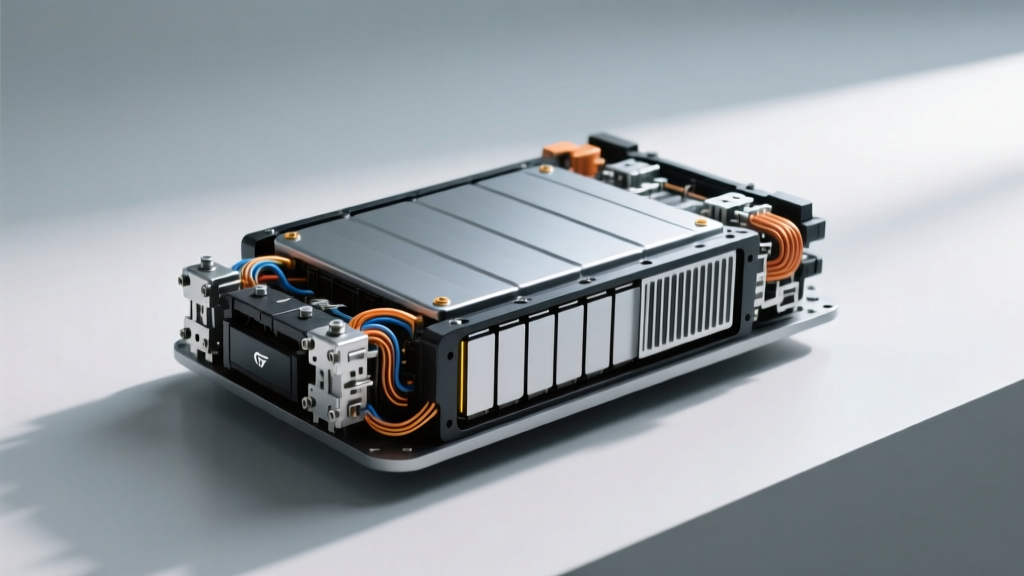
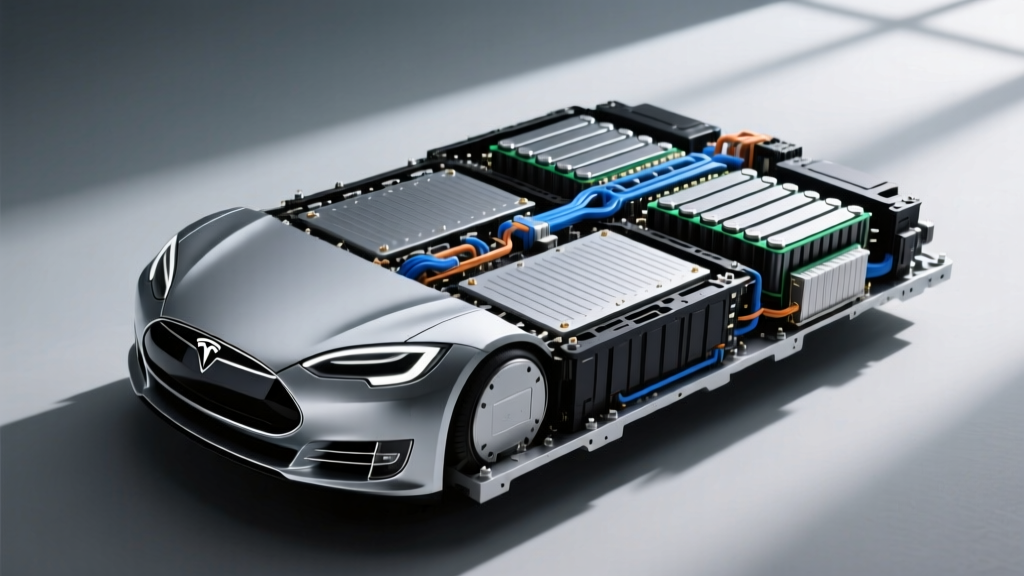
Tesla sources battery cells from multiple suppliers — primarily CATL, Panasonic, LG Energy Solution, and its own 4680 cell production line — and uses two fundamentally different lithium-ion chemistries depending on the model and trim. Understanding which chemistry is in your specific Tesla matters for daily charging habits, range expectations, and long-term degradation.
| Attribute | LFP (Lithium Iron Phosphate) | NMC / NCA (Nickel-based) |
|---|---|---|
| Models using it (2025–2026) | Model 3 RWD, Model Y RWD (Standard Range) | Model 3 Long Range/Performance, Model Y LR/Perf, Model S, Model X, Cybertruck |
| Energy density | Lower (~160 Wh/kg cell-level) | Higher (~250–300 Wh/kg cell-level) |
| Typical usable capacity | ~57–60 kWh (Model 3 RWD) | ~75–82 kWh (LR); ~123 kWh (Cybertruck) |
| Cycle life | 3,000–5,000+ cycles | 1,000–2,000 cycles |
| Recommended daily SoC | 100% (Tesla recommends charging to full regularly) | 80% daily; 100% only for trips |
| Cold-weather performance | Weaker — more range loss below 32°F | Better low-temp discharge and charge acceptance |
| Cost per kWh | Lower (no cobalt or nickel) | Higher (nickel/cobalt supply-chain cost) |
| Thermal stability | Excellent — lower thermal runaway risk | Good but requires more active thermal management |
The practical takeaway: If you bought a base Model 3 or Model Y RWD from 2023 onward, you almost certainly have an LFP pack. That means you can (and should) charge to 100% regularly — LFP cells need periodic full charges for the battery management system (BMS) to accurately calibrate state of charge. If you have a Long Range or Performance variant, you have NMC/NCA cells and should set your daily charge limit to 80%, reserving 100% for road trips.
How Long Do Tesla Batteries Actually Last?
The short answer: in most cases, the battery will outlast the rest of the car. Tesla's own 2024 Impact Report stated that Model 3 and Model Y batteries retain approximately 85% of their original capacity after 200,000 miles — which aligns with the average total vehicle lifespan before major non-battery components (suspension, HVAC, interior) make the car uneconomical to repair.
Real-world degradation data points from fleet and owner studies:
- 50,000 miles: ~3–5% capacity loss across both chemistries (Teslanomics/Recurrent Auto aggregated fleet data)
- 100,000 miles: ~7–10% loss for NMC; ~5–7% loss for LFP (LFP degrades more slowly in early cycles)
- 150,000 miles: ~10–13% loss for NMC; ~7–10% loss for LFP
- 200,000 miles: ~13–17% loss for NMC; ~10–13% loss for LFP
Note: These are aggregated fleet averages. Individual results vary significantly based on charging habits, climate, and Supercharging frequency.
The degradation curve is not linear. Most Tesla packs lose the bulk of their capacity in the first 20,000–30,000 miles (the "break-in" loss), after which degradation slows dramatically to roughly 0.5–1.0% per year under normal use. This is why a 2021 Model 3 LR with 80,000 miles might show 90% state of health (SoH) — and then hold 88% for another two years.
What Does the Tesla Battery Warranty Actually Cover?
Tesla's battery and drive unit warranty is one of the stronger offerings in the EV market, but the details matter. Coverage differs by model and chemistry.
| Model | Warranty Period | Mileage Limit | Minimum Capacity Retention |
|---|---|---|---|
| Model 3 RWD (LFP) | 8 years | 100,000 miles | 70% |
| Model 3 Long Range / Performance | 8 years | 120,000 miles | 70% |
| Model Y (all trims) | 8 years | 120,000 miles | 70% |
| Model S / Model X (2025+) | 8 years | 150,000 miles | 70% |
| Cybertruck | 8 years | 120,000 miles | 70% |
Key warranty details:
- The warranty covers the battery pack against defects and excessive capacity loss below the 70% threshold within the warranty window — whichever comes first.
- "Excessive loss" means the BMS-reported usable capacity drops below 70% of the original rated kWh, verified by Tesla diagnostics.
- The warranty does not cover damage from accidents, flooding, unauthorized modifications, or using the vehicle as a stationary power source outside of Tesla-approved V2H/V2G configurations.
- Warranty transfers to subsequent owners, which supports used-Tesla resale values.
In practice, warranty claims for capacity loss alone are rare. Most Tesla service-center battery replacements stem from manufacturing defects (bad cell groups, BMS faults, coolant leaks into the pack) rather than gradual wear — and those are caught early, well within the warranty window.
Tesla Battery Replacement Cost: What You'd Actually Pay
If your battery fails outside the warranty window — or if you buy a high-mileage used Tesla with a degraded pack — replacement is a real but uncommon expense. Here's what the market looks like as of early 2026:
| Model / Pack Size | Remanufactured Pack | New OEM Pack | Labor (est.) |
|---|---|---|---|
| Model 3 RWD (~57–60 kWh, LFP) | $5,000–$7,000 | $8,000–$10,000 | $1,500–$2,500 |
| Model 3/Y Long Range (~75–82 kWh, NMC) | $7,000–$10,000 | $12,000–$16,000 | $1,500–$2,500 |
| Model S / X (~100 kWh, NMC/NCA) | $10,000–$14,000 | $18,000–$22,000 | $2,000–$3,500 |
| Cybertruck (~123 kWh, 4680 NMC) | N/A (too new for reman market) | $20,000–$25,000 (est.) | $2,500–$4,000 |
Context that matters:
- Remanufactured packs use reconditioned cell modules from salvaged Teslas and are the most common route for out-of-warranty replacements. Third-party shops like Electrified Garage and Gruber Motors have built businesses around this.
- Cell-level repair is increasingly viable: instead of replacing the entire pack, specialist shops can identify and swap individual bad modules for $2,000–$5,000, depending on the fault.
- Most Tesla batteries never need replacement. According to data aggregated by Recurrent Auto, fewer than 2% of Tesla packs across all models have been replaced for capacity-related issues. Catastrophic failures (physical damage, coolant intrusion) account for most actual swaps.
Factors That Accelerate (or Preserve) Tesla Battery Health
Battery degradation is chemistry and physics — but your habits shift the curve meaningfully. Here's what the data shows:
Habits that preserve battery life
- NMC/NCA owners: Keep daily SoC at 80%. Charging to 100% and letting the car sit for days accelerates electrolyte oxidation. Set the charge limit in the Tesla app and only raise it to 100% when departing on a trip.
- LFP owners: Charge to 100% at least once a week. LFP cells have a very flat voltage curve, so the BMS needs full-charge calibration events to estimate range accurately.
- Use Level 2 (home AC) charging as your primary method. Slow, steady AC charging generates far less heat stress than repeated DC fast charging.
- Precondition before Supercharging. The Tesla navigation system does this automatically when a Supercharger is set as your destination — it warms the pack to ~35–40°C for optimal charge acceptance and reduced lithium plating risk.
- Avoid letting SoC sit below 10% for extended periods. Deep discharge stresses the anode; if you're storing the car, leave it at ~50%.
Habits that accelerate degradation
- Exclusive Supercharging. Fleet data from Teslanomics shows vehicles that DC-fast-charge more than 90% of the time degrade ~1–2% more over 100,000 miles compared to primarily AC-charged vehicles. It's not catastrophic, but it's measurable.
- Frequent 100% charges on NMC packs. High SoC + high temperature is the worst combination for nickel-based cells.
- Repeated exposure to extreme heat without preconditioning. Arizona and Texas summer ambient temperatures above 110°F push pack temps higher; Tesla's thermal management system handles this well, but it still adds stress over years.
- Track use / repeated hard acceleration. High C-rate discharges (launch control, repeated 0–60 runs) generate internal cell heat that marginally accelerates wear.
How to Check Your Tesla Battery's State of Health (SoH)
Tesla does not display a direct "battery health percentage" in the vehicle UI the way some competitors do. But there are reliable ways to assess SoH:
- The range-comparison method: Charge to 100% (or your known maximum SoC) and note the displayed rated range. Compare it to the EPA-rated range when the car was new. A 2023 Model 3 LR that originally showed 341 rated miles at 100% but now shows 310 has roughly 91% SoH. This isn't perfectly precise (the BMS estimate drifts), but it's directionally accurate.
- Tesla Service diagnostic: You can request a battery health report through the Tesla app. A service center can pull detailed cell-level data, including voltage delta across modules, which reveals imbalance issues before they cause noticeable range loss.
- Third-party OBD-II tools: Apps like TeslaFi, Tessie, or Scan My Tesla (using an OBDLink adapter) can read detailed BMS data including nominal full-pack energy (kWh), cell voltage spread, and cycle count. The "nominal full pack" value compared to the original design capacity is the most accurate SoH indicator available to owners.
- Charging energy method: Charge from a known low SoC (e.g., 10%) to 100% on a metered Level 2 charger. If you put in 72 kWh to fill a pack originally rated at 82 kWh usable, your SoH is approximately 88% (accounting for ~5% charging losses).
Emerging Battery Tech: Solid-State and Silicon Anodes on the Horizon
Tesla's current 4680 cell (used in Cybertruck and some Model Y builds from the Austin Gigafactory) represents incremental improvement — a dry-electrode manufacturing process that reduces cost and energy use, paired with a structural pack design that increases pack-level energy density. But the industry is pursuing step-change technologies:
- Silicon-dominant anodes: Companies like Sila Nanotechnologies and Group14 are supplying silicon-carbon anode materials that boost energy density by 15–25% over graphite. Tesla has tested silicon-anode prototypes, and limited production use in 4680 cells is expected by 2027–2028, though mass deployment at scale depends on cycle-life durability validation.
- Solid-state batteries: Toyota, Samsung SDI, and QuantumScape have announced solid-state prototypes with 500+ mile range potential and faster charging. However, manufacturing yield, cost, and scalability remain unsolved at production volumes. Realistic availability in a Tesla or any mass-market EV is no earlier than 2029–2031. Treat any "solid-state is coming next year" claim as speculative.
- Sodium-ion batteries: CATL has begun producing sodium-ion cells for lower-cost, lower-range applications. Tesla has not announced sodium-ion adoption, but it could appear in future entry-level models where cost matters more than range.
For buyers today, these timelines mean current LFP and NMC chemistries are mature, proven, and the right choice. Waiting for solid-state is not a practical purchase strategy.
How long do Tesla car batteries last in years and miles?
Based on fleet data, most Tesla battery packs retain 85–90% of original capacity at 150,000–200,000 miles. At average US driving rates (~13,500 miles/year), that translates to 11–15 years before capacity drops below 85%. Many packs will remain functional well beyond 250,000 miles with 75–80% capacity — still usable, just with reduced range.
How much does it cost to replace a Tesla battery?
Out-of-warranty replacement ranges from roughly $5,000 (remanufactured LFP pack for Model 3 RWD) to $25,000 (new 4680 pack for Cybertruck). Most Long Range Model 3/Y owners would pay $7,000–$16,000 depending on whether they choose a remanufactured or new pack. However, fewer than 2% of Tesla packs have ever required replacement.
What does the Tesla battery warranty cover?
Tesla covers the high-voltage battery pack for 8 years and 100,000–150,000 miles (depending on model) against defects and capacity loss below 70% of original capacity. The warranty is transferable to subsequent owners and includes both the cells and the battery management system.
How do I check my Tesla battery health?
Compare your 100%-charge rated range to the original EPA figure, use third-party apps like TeslaFi or Tessie to read BMS-reported "nominal full pack" energy in kWh, or request a diagnostic report from Tesla Service. The third-party OBD-II method provides the most precise SoH number.
LFP vs NMC — which Tesla battery is better?
Neither is universally better; they serve different priorities. LFP (in Model 3/Y RWD) offers longer cycle life, lower cost, better thermal safety, and the convenience of daily 100% charging — but sacrifices ~15–20% energy density and performs worse in cold weather. NMC/NCA (in Long Range, Performance, Model S/X, Cybertruck) delivers more range per kWh and better cold-weather operation, but requires 80% daily charge limits and has a shorter total cycle life. For most daily commuters, LFP is the pragmatic choice. For road-trippers and cold-climate drivers, NMC is preferable.