Are Tesla Battery Fires a Real Concern?
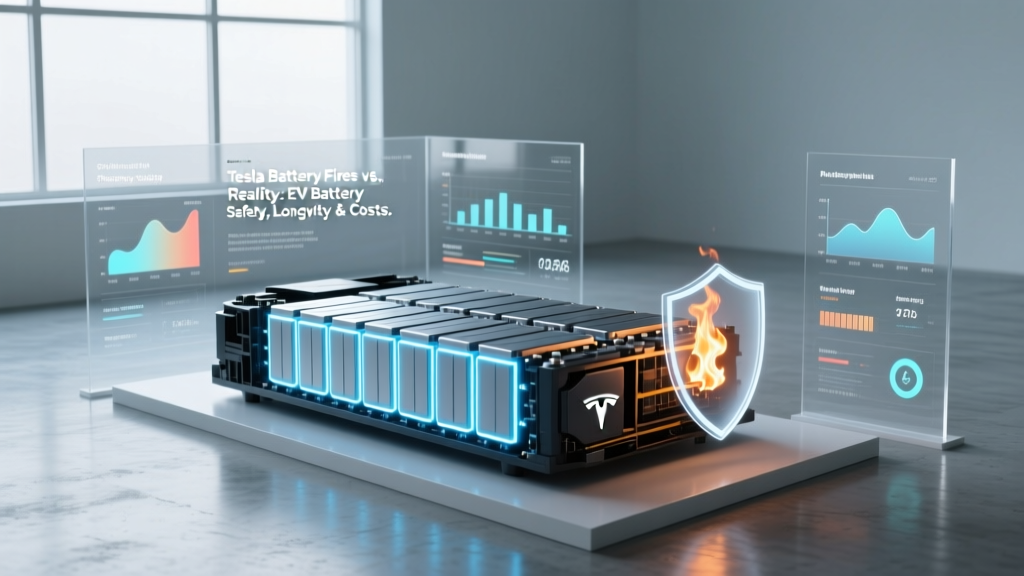
Search for "Tesla battery fires" and you'll find viral videos of engulfed Model S sedans and Model X SUVs. The imagery is dramatic, but it doesn't tell the full story. According to NHTSA data and independent analyses, electric vehicles catch fire at a significantly lower rate than internal combustion engine (ICE) vehicles — roughly 25 fires per 100,000 EVs compared to 1,530 per 100,000 gas cars. Tesla's own safety reports indicate approximately one vehicle fire for every 130 million miles driven, well below the U.S. national average of one fire per 19 million miles across all vehicle types.
The reason EV battery fires generate outsized attention is straightforward: lithium-ion thermal runaway events burn hotter, last longer, and are harder for first responders to extinguish than gasoline fires. A compromised battery pack can require thousands of gallons of water and hours of monitoring. That makes them newsworthy. But frequency and severity are two different metrics, and conflating them leads to poor purchase decisions.
This guide goes beyond the headlines to give you the data that actually matters for ownership: how Tesla and other EV batteries degrade, what the chemistry differences mean for your daily driving, what a replacement really costs, and how to maximize the lifespan of the most expensive component in your vehicle.
LFP vs NMC/NCA: The Chemistry Decision
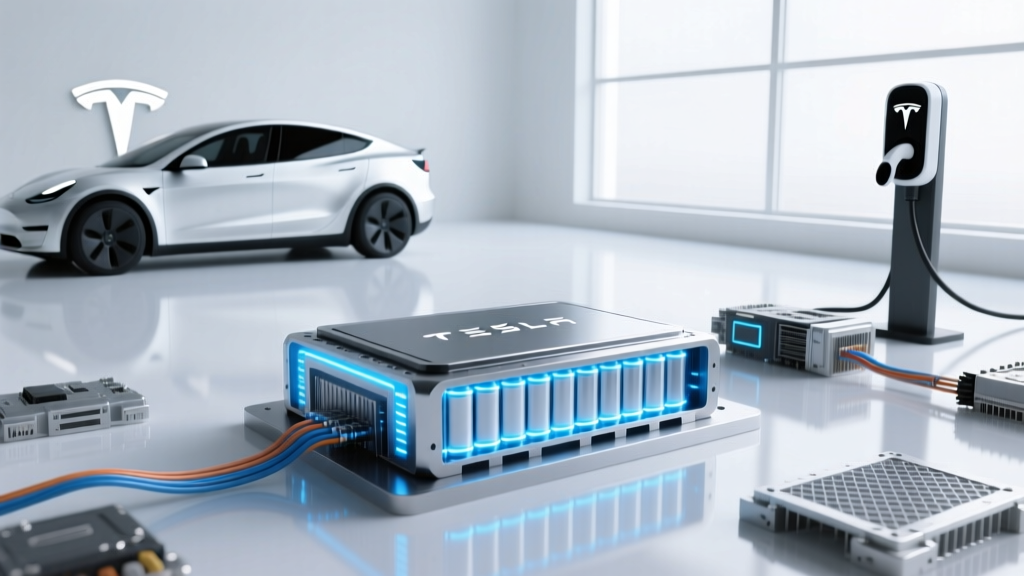
Tesla currently uses two primary battery chemistries across its 2026 lineup, and understanding the difference is critical for setting realistic expectations about range, longevity, and charging behavior.
| Attribute | LFP (Lithium Iron Phosphate) | NMC / NCA (Nickel-based) |
|---|---|---|
| Models using | Model 3 RWD, Model Y RWD | Model 3 LR/AWD, Model Y LR, Model S, Model X, Cybertruck |
| Energy density | Lower (~160 Wh/kg cell-level) | Higher (~250-270 Wh/kg cell-level) |
| Typical pack size | ~60 kWh usable | 75-100 kWh usable |
| Cycle life | 3,000+ full cycles to 80% SoH | 1,500-2,000 full cycles to 80% SoH |
| Cold-weather range loss | Greater (up to 35-40% at 20°F) | Moderate (25-30% at 20°F) |
| Recommended daily SoC | 100% (charge fully, regularly) | 80% daily, 100% only for trips |
| Cost per kWh | Lower | Higher |
| Thermal stability | Superior (higher runaway threshold) | Lower threshold, requires active management |
The practical takeaway: if you buy a base Model 3 RWD with LFP, you can — and should — charge to 100% daily. The chemistry tolerates it, and Tesla's software explicitly recommends it. For Long Range and Performance trims with NMC/NCA packs, daily charging to 80% preserves long-term capacity. This single habit difference has a measurable impact on 5-year degradation.
On the safety front, LFP's higher thermal runaway threshold (roughly 270°C vs. ~210°C for NMC) makes it inherently more resistant to the type of catastrophic failure that produces the fires you see in viral videos. This is one reason Tesla shifted its standard-range vehicles to LFP globally.
How Long Do EV Batteries Actually Last?
The short answer: almost certainly longer than you'll own the car. The long answer requires looking at real degradation data rather than worst-case anecdotes.
Tesla's 2025 Impact Report (the latest published data) shows that Model 3 and Model Y battery packs retain approximately 85% of their original capacity after 200,000 miles. Model S and Model X packs show slightly more variance but average around 88% retention at the same mileage — likely due to larger pack sizes operating at lower average C-rates (less stress per cell).
Typical Tesla Battery Degradation Curve (Aggregated Owner Data):
- Year 1 / 15,000 mi: ~3-5% loss (initial formation loss, steepest part of the curve)
- Year 3 / 45,000 mi: ~6-8% total loss
- Year 5 / 75,000 mi: ~8-11% total loss
- Year 8 / 120,000 mi: ~10-14% total loss
- Year 10 / 150,000 mi: ~12-17% total loss
- 200,000 mi: ~15% average loss (per Tesla data)
Sources: Tesla Impact Reports, Recurrent Auto battery data, fueleconomy.gov owner submissions.
The degradation curve is not linear. Most loss occurs in the first 20,000-30,000 miles as the solid electrolyte interphase (SEI) layer stabilizes on the anode. After that, degradation slows significantly. A Model 3 Long Range with an EPA-rated 341 miles that loses 12% over five years still delivers roughly 300 miles — more than sufficient for 95% of American driving patterns.
For context, the average American drives 14,500 miles per year. At that rate, reaching 200,000 miles takes nearly 14 years. Most vehicles are scrapped, sold, or traded long before the battery becomes functionally inadequate.
Tesla Battery Warranty: What's Actually Covered
Tesla's battery warranty is among the strongest in the industry, but the specifics matter when you're evaluating risk.
| Model | Warranty Period | Mileage Cap | Minimum Capacity Retention |
|---|---|---|---|
| Model 3 RWD (LFP) | 8 years | 100,000 miles | 70% |
| Model 3 Long Range / Performance | 8 years | 120,000 miles | 70% |
| Model Y (all trims) | 8 years | 120,000 miles | 70% |
| Model S / Model X | 8 years | 150,000 miles | 70% |
| Cybertruck | 8 years | 150,000 miles | 70% |
The warranty covers battery replacement if capacity drops below 70% within the warranty window, whichever comes first (time or mileage). It also covers defects in materials and workmanship, including drive unit failures. What it does not cover is damage from accidents, flooding, fire from external sources, or modifications to the battery system.
The 70% threshold is important: a Model 3 LR with a 75 kWh pack that degrades to 52.5 kWh (70%) still provides roughly 240 miles of real-world range. That's not a vehicle that's unusable — it's a vehicle with reduced capability. Most owners will never hit the warranty threshold under normal use.
Battery Replacement Cost: The Numbers Behind the Fear
This is where fear-mongering runs rampant. Headlines cite $20,000+ replacement costs without context. Let's break down what's real.
| Model | Pack Size | Remanufactured Pack | New Pack (Out of Warranty) |
|---|---|---|---|
| Model 3 RWD (LFP) | ~60 kWh | $8,000 - $10,000 | $12,000 - $14,000 |
| Model 3 LR / Model Y LR | ~75 kWh | $10,000 - $13,000 | $14,000 - $17,000 |
| Model S / Model X | ~100 kWh | $13,000 - $16,000 | $18,000 - $22,000 |
| Cybertruck | ~123 kWh | $15,000 - $18,000 | $20,000 - $25,000 |
These figures include the battery pack and labor but can vary by service center and whether Tesla uses a new or remanufactured pack (remanufactured packs are common for older vehicles and carry their own warranty). Prices have been declining steadily — a Model S pack replacement that cost $22,000 in 2020 is roughly $16,000 today for a remanufactured unit.
The critical context: out-of-warranty battery replacements are rare. According to data from Recurrent Auto, fewer than 1.5% of Tesla vehicles have required a battery replacement, and the vast majority of those were covered under warranty due to manufacturing defects, not degradation. Catastrophic battery failures from impacts or thermal events are covered by insurance, not the owner's pocket.
For comparison, a gas vehicle's transmission replacement averages $3,500-$7,000, and an engine rebuild can exceed $8,000. These are more common failures than EV battery replacements — they just don't generate viral videos.
What Causes EV Battery Fires (and How Tesla Mitigates Risk)
When Tesla battery fires do occur, they typically trace back to three causes:
- Severe underbody impact — A high-speed collision with a road hazard (curb, debris, guardrail) that physically penetrates the battery enclosure and damages cells, triggering thermal runaway. Tesla added titanium underbody shields to the Model S after early incidents in 2013-2014.
- Manufacturing defects — Internal cell shorts from contamination during production. These typically manifest early in a vehicle's life and are caught under warranty. Tesla's switch to the 4680 cell format introduced early yield challenges but has since stabilized.
- Charging equipment or electrical faults — Rare cases involving aftermarket chargers, damaged wiring, or grid surges that bypass the vehicle's protection circuits.
Tesla's battery management system (BMS) continuously monitors individual cell voltages, temperatures, and impedance across the pack. If anomalies are detected, the system can isolate cell groups, reduce charge/discharge rates, or alert the owner to service the vehicle before a failure cascades. The structural battery pack introduced with the 4680 cells in the Model Y also serves as a stressed member of the chassis, improving crash energy absorption around the cells.
It's also worth noting that NHTSA opened and closed several investigations into Tesla battery fires and found the overall fire rate remained well below ICE vehicles. The NHTSA complaint database is publicly searchable if you want to review specific incidents.
Maximizing Battery Health: A Practical Care Checklist
Your daily habits have a measurable impact on long-term State of Health (SoH). Here's what the data supports:
- Follow chemistry-specific SoC guidance: LFP owners should charge to 100% regularly (it helps with cell balancing). NMC/NCA owners should set daily charge limits to 80% and only charge to 100% when departing on a trip.
- Minimize DC fast charging when possible: Frequent Supercharging (250 kW) stresses cells more than Level 2 home charging (11.5 kW). Data from fueleconomy.gov and Recurrent Auto shows vehicles that primarily charge at home degrade 1-3% less over 100,000 miles than those relying heavily on DC fast charging. Use Superchargers for road trips; use Level 2 for daily needs.
- Avoid extreme SoC storage: Don't leave an NMC vehicle sitting at 100% or below 10% for days. If storing for extended periods, Tesla recommends leaving the vehicle plugged in with charge limit set to 50%.
- Use preconditioning: When navigating to a Supercharger, the car automatically warms or cools the battery to optimal charging temperature. Let it do its job — don't skip preconditioning by navigating manually to a charger without using the car's routing.
- Park in shade or a garage in extreme heat: Sustained battery temperatures above 104°F (40°C) accelerate degradation. Tesla's thermal management system runs even when parked, but it draws from the pack. A cool parking spot reduces this parasitic load.
- Don't obsess about regen braking settings: While aggressive regen generates more charge/discharge micro-cycles, the effect on degradation is negligible compared to SoC and temperature factors.
Checking Your Battery's State of Health
Tesla doesn't expose a direct SoH percentage in the vehicle UI the way some competitors (like Hyundai with its Ioniq 5) do. But you can estimate it:
Method 1: Range comparison. Note your vehicle's displayed range at 100% SoC (or extrapolate from 80% if you have an NMC pack). Compare this to the original EPA-rated range. A Model 3 LR rated at 341 miles EPA that displays 305 miles at 100% after three years has roughly 89% SoH. Note that the displayed range is affected by driving style and temperature — use the car's energy app (projected range based on recent consumption) for a more accurate picture.
Method 2: Third-party apps. Services like Tessie, Teslamate (self-hosted), or Stats (iOS) can log detailed charge data over time and calculate SoH trends by comparing energy added during charges against SoC change. These give a more granular view than the in-car display.
Method 3: Service center diagnostic. Tesla service can run a battery health test that reads individual module capacity and impedance. Request this if you suspect abnormal degradation or are evaluating a used Tesla purchase.
What's Next: Solid-State and Silicon Anode Batteries
Forward-looking battery technology is progressing, but realistic timelines matter more than press-release promises.
Silicon anode batteries are the nearer-term upgrade. Companies like Sila Nanotechnologies and Group14 are already shipping silicon-dominant anode materials that boost energy density by 20-40% over graphite anodes. Tesla's 4680 cells are expected to incorporate increasing silicon content in coming revisions. This translates to more range in the same physical pack, or the same range in a lighter, cheaper pack. Expect incremental integration through 2027-2028 model years.
Solid-state batteries — which replace the liquid electrolyte with a solid conductor, promising higher energy density, faster charging, and improved safety — remain in limited production. Toyota has announced a 2027-2028 timeline for initial deployment, and QuantumScape is shipping prototype cells to automotive partners. However, manufacturing yield, cost, and scalability challenges mean solid-state packs are unlikely to appear in mainstream, affordable EVs before 2030 at the earliest. When they do arrive, they will likely debut in premium segments before trickling down.
For buyers today, this is not a reason to wait. Current lithium-ion technology is mature, well-understood, and backed by extensive warranty coverage. The next 3-5 years of improvement will be incremental, not transformative.
Frequently Asked Questions
How common are Tesla battery fires compared to gas car fires?
NHTSA data and Tesla's own reporting show EVs catch fire at roughly 1/60th the rate of internal combustion vehicles. Tesla reports approximately one fire per 130 million miles driven. When they do occur, EV fires are harder to extinguish due to thermal runaway, which is why they receive disproportionate media coverage.
How long do Tesla batteries last in years and miles?
Tesla data shows Model 3/Y packs retain ~85% capacity at 200,000 miles. At the U.S. average of 14,500 miles per year, that's roughly 14 years of driving. Most owners sell or trade their vehicles well before the battery becomes functionally inadequate.
How much does it cost to replace a Tesla battery?
Out-of-warranty replacement costs range from approximately $8,000 (remanufactured Model 3 RWD pack) to $25,000 (new Cybertruck pack). However, fewer than 1.5% of Teslas have required battery replacement, and most failures are covered under the 8-year warranty.
What does the Tesla battery warranty cover?
Tesla covers the battery pack and drive unit for 8 years / 100,000-150,000 miles (varies by model), guaranteeing a minimum of 70% capacity retention. Defects in materials and workmanship are covered. Damage from accidents, floods, or unauthorized modifications is not.
Is LFP or NMC better for daily driving?
For most drivers, LFP is the better daily choice: it tolerates 100% daily charging, has a longer cycle life (3,000+ cycles), and offers superior thermal stability. NMC is better if you need maximum range (Long Range trims) or frequently drive in very cold climates, where LFP loses more range. Choose based on your range needs and climate, not just chemistry.
Does frequent Supercharging damage my Tesla battery?
Frequent DC fast charging causes slightly more degradation than Level 2 home charging — data suggests 1-3% additional loss over 100,000 miles. It's not catastrophic, but if you have home charging access, using Level 2 for daily needs and reserving Superchargers for road trips is the optimal strategy for long-term SoH.
Should I wait for solid-state batteries before buying a Tesla?
No. Solid-state batteries are not expected in mainstream affordable EVs before 2030 at the earliest. Current lithium-ion packs are mature, well-warrantied, and degrade far less than most buyers fear. Waiting 4-5+ years for a speculative technology means missing years of EV ownership benefits and potential tax incentives available today under IRS §30D.