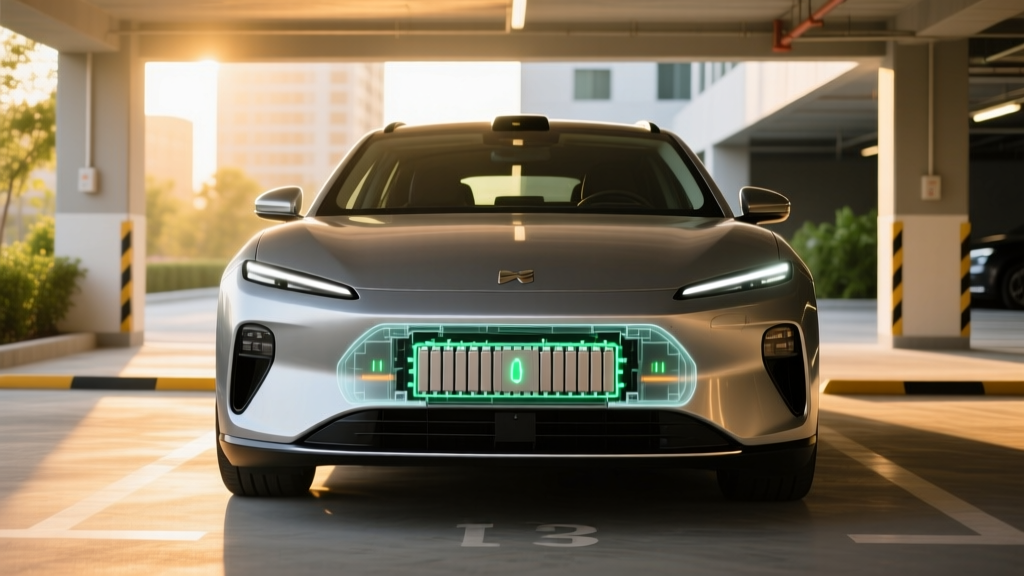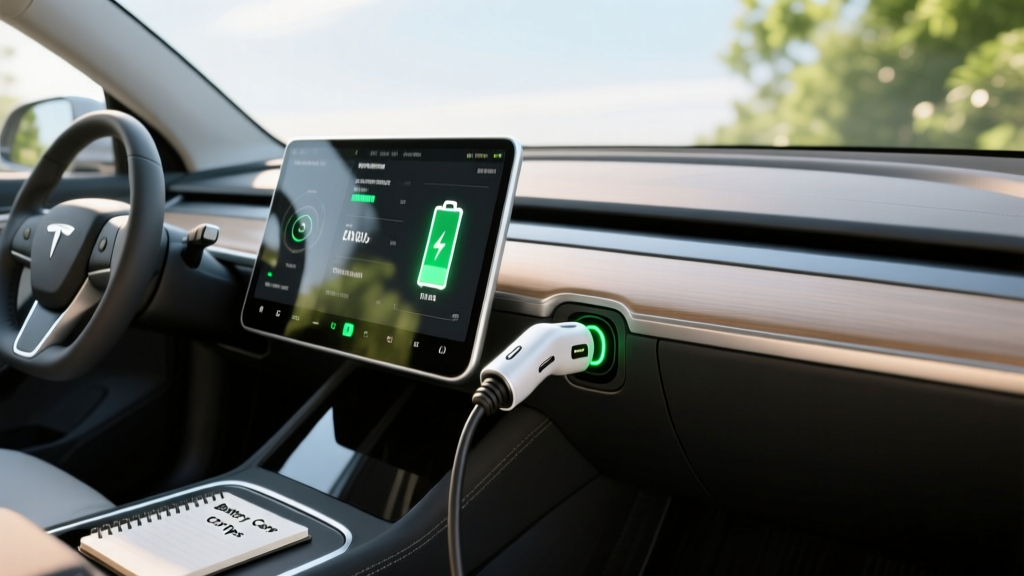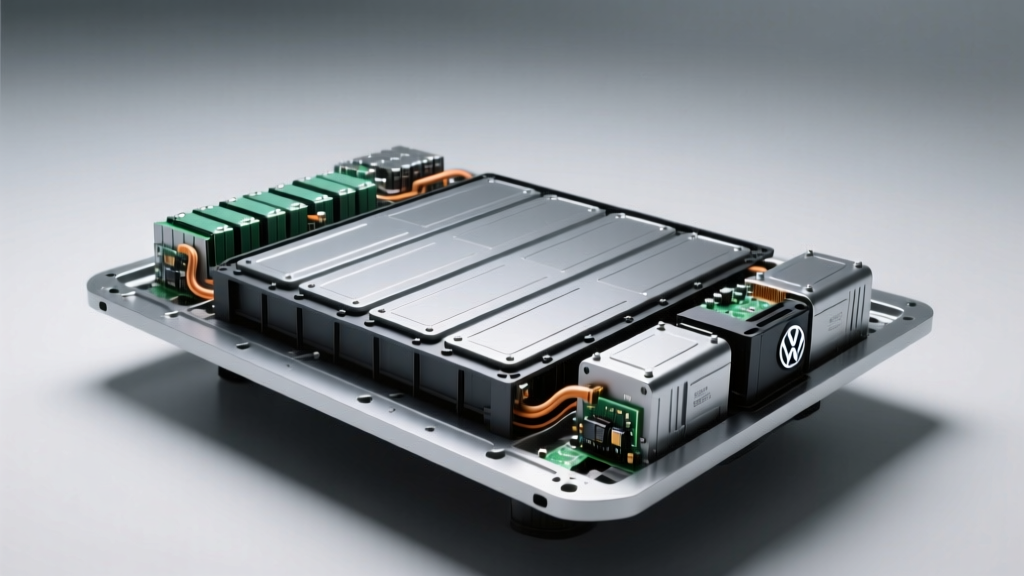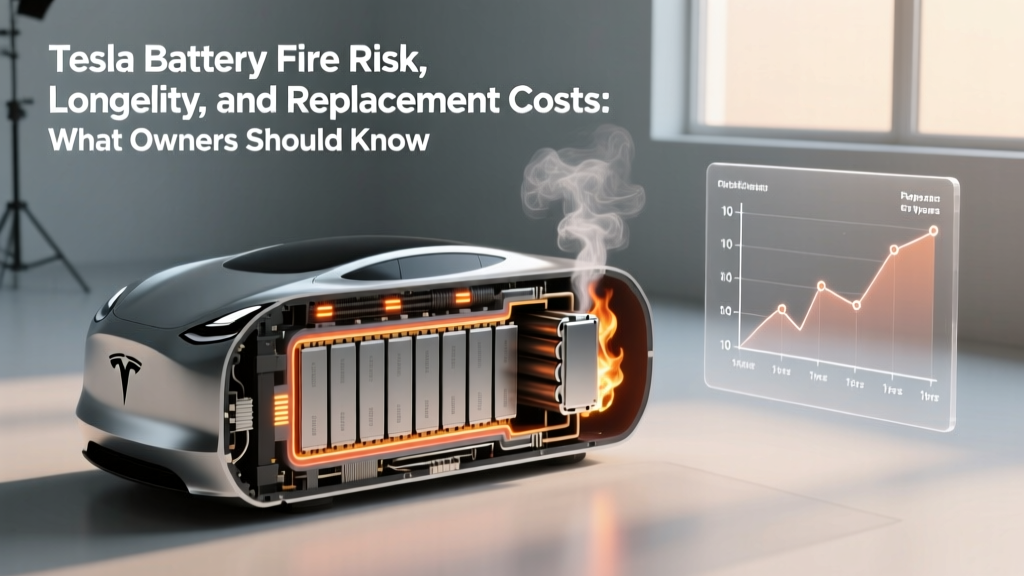
If you've searched for "Tesla exploding battery" online, you've likely encountered dramatic headlines and viral videos of electric vehicles engulfed in flames. The reality, backed by federal safety data, is considerably less alarming — but the questions behind those searches are legitimate. How safe are Tesla's high-voltage traction batteries? How long do they last? What does replacement actually cost? This guide addresses the fire-risk data head-on, then moves into the practical battery-ownership topics that matter more for daily driving: chemistry trade-offs, degradation curves, warranty coverage, and health-monitoring habits.
The Real Data on Tesla Battery Fires
Thermal runaway — the cascading cell failure that can produce intense, hard-to-extinguish fires — is a documented phenomenon in lithium-ion batteries of all chemistries. However, the frequency of these events in Tesla vehicles is dramatically lower than public perception suggests.
According to Tesla's 2024 Impact Report, the company recorded approximately one vehicle fire for every 130 million miles driven between 2012 and 2023. For comparison, the National Fire Protection Association (NFPA) and NHTSA data place the rate of gasoline vehicle fires at roughly one per 19 million miles driven. That means EVs, including Teslas, catch fire at approximately one-seventh the rate of internal combustion vehicles per mile traveled.
When Tesla battery fires do occur, they typically involve:
- High-speed impacts that breach the battery enclosure and damage cells
- Severe underbody strikes from road debris penetrating the skid plate
- Manufacturing defects in specific production batches (rare, and usually addressed via recall)
- Charging system faults or aftermarket modifications that bypass thermal management
Tesla's structural battery pack design (introduced with the 4680 cells in the Model Y) and the octovalve thermal management system are engineered to contain and vent cell-level failures before they propagate to the full pack. No mainstream EV battery is fire-proof, but the engineering trajectory is toward greater containment, not less.
Tesla Battery Chemistry: LFP vs. NMC/NCA Explained
Tesla currently uses two primary battery chemistries across its 2025–2026 lineup, and understanding the difference is essential for setting expectations on range, longevity, and daily charging habits.
| Attribute | LFP (Lithium Iron Phosphate) | NMC/NCA (Nickel Manganese Cobalt / Nickel Cobalt Aluminum) |
|---|---|---|
| Energy density | ~160 Wh/kg (lower) | ~250–270 Wh/kg (higher) |
| Cycle life | 3,000–5,000+ cycles | 1,500–2,500 cycles |
| Cold-weather performance | More range loss below 32°F; slower charge acceptance when cold | Better low-temp performance; preconditioning still recommended |
| Daily charging recommendation | Charge to 100% regularly (Tesla recommends weekly 100% top-offs) | Keep between 20–80% for daily use; 100% only before long trips |
| Cost | ~$100–110/kWh at pack level | ~$130–150/kWh at pack level |
| Used in (2026) | Model 3 RWD, Model Y RWD (Standard Range trims) | Model 3 Long Range, Model Y Long Range/Performance, Model S, Model X, Cybertruck |
| Thermal runaway risk | Significantly lower; higher ignition threshold | Higher energy density = more energy to release if compromised |
Which is better? It depends on your use case. If you commute daily, charge at home, and want maximum battery lifespan with minimal degradation anxiety, LFP is the stronger choice. If you need maximum range per charge, tow frequently, or live in a cold climate where every mile of range matters, NMC/NCA delivers the performance edge. Neither chemistry is inherently "safer" in a crash — pack-level engineering matters more than cell chemistry for crash-related fire risk.
How Long Do Tesla Batteries Actually Last?
Tesla publishes degradation data in its annual Impact Reports, and third-party fleet studies from Recurrent and other aggregators corroborate the trend. Here is what the numbers show for real-world Tesla battery degradation:
| Mileage | Average Capacity Retention (NMC/NCA) | Average Capacity Retention (LFP) | Source / Notes |
|---|---|---|---|
| 50,000 miles | ~95% | ~97% | Tesla 2024 Impact Report; Recurrent fleet data |
| 100,000 miles | ~90% | ~93% | Tesla 2024 Impact Report |
| 150,000 miles | ~85–88% | ~90–92% | Recurrent, high-mileage owner surveys |
| 200,000 miles | ~80–85% | ~87–90% | Projected from degradation curve; limited real-world sample |
The degradation curve is non-linear. Most capacity loss occurs in the first 10,000–20,000 miles (roughly 2–4%), after which the rate flattens significantly. A Model 3 Long Range with an EPA-rated 341 miles that shows 92% State of Health at 80,000 miles still delivers roughly 314 miles of rated range — a modest and livable reduction.
For context, Tesla's own data indicates that Model S/X batteries retain approximately 88% capacity at 150,000 miles, and the company has stated that the powertrain is designed for a million-mile lifespan in the Model 3/Y. The battery pack itself is typically not the component that totals the vehicle.
Tesla Battery Warranty: What's Covered and What Isn't
Tesla's battery and drive unit warranty is one of the more straightforward in the industry, but the details matter — especially the capacity retention threshold.
| Model | Warranty Period | Mileage Cap | Minimum Capacity Retention |
|---|---|---|---|
| Model 3 RWD (LFP) | 8 years | 100,000 miles | 70% |
| Model 3 Long Range / Performance | 8 years | 120,000 miles | 70% |
| Model Y (all trims) | 8 years | 120,000 miles | 70% |
| Model S | 8 years | 150,000 miles | 70% |
| Model X | 8 years | 150,000 miles | 70% |
| Cybertruck (AWD/Cyberbeast) | 8 years | 120,000 miles | 70% |
What the warranty covers: Battery capacity falling below 70% of original capacity within the warranty period, plus defects in materials and workmanship. Tesla will replace or repair the pack to bring it above the 70% threshold — they are not obligated to install a brand-new pack.
What it does not cover: Damage from accidents, flooding, fire (unless caused by a manufacturing defect), unauthorized modifications, or using the vehicle as a stationary power source outside of approved V2H/V2L configurations. Gradual degradation above 70% is considered normal wear.
The 70% threshold is industry-standard — fueleconomy.gov notes that most EV manufacturers use a similar retention floor. In practice, very few Tesla owners have needed a warranty replacement; fleet data suggests that hitting 70% capacity would require well over 200,000 miles under normal use.
Tesla Battery Replacement Cost: When and How Much
Out-of-warranty battery replacement is the single biggest fear among prospective EV buyers. Here are the current approximate costs as of 2026, based on Tesla service center quotes and third-party EV repair data:
| Model | Battery Size (kWh, usable) | Estimated Replacement Cost | Typical Replacement Trigger |
|---|---|---|---|
| Model 3 RWD (LFP) | ~60 kWh | $12,000–$15,000 | Severe cell damage (accident); rare degradation |
| Model 3 Long Range | ~75 kWh | $14,000–$18,000 | Physical damage; high-mileage degradation (200k+ mi) |
| Model Y Long Range | ~75 kWh | $14,000–$18,000 | Same as Model 3 LR |
| Model S (2021+ Plaid/LR) | ~95 kWh | $18,000–$24,000 | Older high-mileage units; accident damage |
| Model X (2021+) | ~95 kWh | $18,000–$25,000 | Same as Model S |
| Cybertruck | ~123 kWh | $22,000–$30,000 | Limited data; structural pack complicates replacement |
These figures include the pack and labor but can vary based on whether Tesla installs a new, remanufactured, or refurbished unit. Remanufactured packs (cells tested and re-binned) are common and typically carry their own warranty of 1–4 years.
When is replacement actually needed? The vast majority of Tesla owners will never need an out-of-warranty battery replacement. The packs are designed to outlast the vehicle's economic life. Replacement is typically triggered by physical damage (collision, flood), not gradual degradation. For context, a Model 3 driven 15,000 miles per year would reach 120,000 miles — the warranty mileage cap — in 8 years, at which point fleet data shows ~90% capacity retention, well above the 70% threshold.
Factors That Accelerate Battery Degradation
Not all miles are equal when it comes to battery wear. The following factors have measurable impacts on long-term capacity retention:
- Avoid sustained 100% SoC: For NMC/NCA packs, set your daily charge limit to 80%. Charge to 100% only when departing for a long trip within a few hours. LFP packs are the exception — Tesla recommends periodic 100% charges for cell balancing.
- Minimize DC fast charging when possible: Frequent Supercharging (250 kW peak) generates more heat than Level 2 charging. Occasional use is fine — Tesla's thermal management is robust — but daily DC fast charging can add ~1–2% extra degradation over 100,000 miles compared to Level 2-only charging.
- Don't let the pack sit at very low SoC: Storing a Tesla below 10% for days or weeks accelerates calendar degradation. If storing for extended periods, leave the car plugged in at ~50% SoC.
- Precondition before Supercharging: Navigate to a Supercharger in the Tesla app or nav system to activate battery preconditioning. A cold battery charged at high power suffers more stress and charges more slowly.
- Extreme heat is worse than extreme cold: Sustained ambient temperatures above 100°F (common in Arizona, Texas summers) cause more calendar degradation than cold climates. Garage parking helps.
- Use regenerative braking: This reduces mechanical brake wear and doesn't harm the battery — regen currents are well within the pack's charge-acceptance limits.
How to Check and Monitor Tesla Battery Health
Tesla does not expose a direct State of Health (SoH) percentage in the vehicle UI the way some competitors do, but there are reliable methods for tracking your pack's condition:
- Rated range comparison: Charge your NMC/NCA Tesla to 100% and note the displayed rated range. Compare this to the original EPA-rated range for your model year and trim. A Model 3 Long Range that originally displayed 341 miles at 100% but now shows 310 miles has roughly 91% SoH. (LFP range estimates are less precise due to the flat voltage curve.)
- Tesla Service diagnostic: Request a battery health check through the Tesla app. Service can run a diagnostic that reports capacity, internal resistance, and cell-balance data.
- Third-party apps: Tools like Tessie, TeslaFi, and Stats (iOS) log charging sessions and can estimate SoH over time by tracking energy added vs. range gained.
- OBD-II dongles: Devices like the OBDLink MX+ paired with apps such as Scan My Tesla can read pack voltage, current, and estimated capacity directly from the CAN bus. This is more technical but gives granular data.
For owners planning to sell, documenting battery health with consistent data adds value. A prospective buyer who can see three years of Tessie logs showing 93% SoH will pay more than one facing an unknown.
Looking Ahead: Solid-State and Silicon Anode Batteries
Next-generation battery technologies are frequently cited in EV news, but it is critical to separate announcements from production reality:
Solid-state batteries promise higher energy density (~400+ Wh/kg), faster charging, and reduced fire risk by replacing the liquid electrolyte with a solid material. Toyota has announced a target of 2027–2028 for limited production in a flagship model. Samsung SDI and QuantumScape are in pilot production phases. No solid-state pack is currently available in any production vehicle sold in the U.S. as of early 2026. Realistic mass-market availability is 2029–2031 at the earliest, and initial costs will be high.
Silicon anode technology (used in limited form in some cells today, including by Tesla's supplier Panasonic) increases energy density by replacing graphite anodes with silicon-dominant materials. This is an incremental improvement already in production, not a revolution. Expect continued 2–5% annual energy density gains in NMC cells through the late 2020s.
Sodium-ion batteries are emerging as a low-cost alternative for entry-level EVs. CATL has begun production, and these cells could appear in affordable compact EVs by 2027–2028. They offer lower energy density but excellent cycle life and cold-weather performance, with zero cobalt or lithium.
For current Tesla buyers, none of these technologies should delay a purchase. Today's LFP and NMC packs, combined with Tesla's thermal management, deliver 150,000–200,000+ miles of practical service life — enough to outlast most ownership cycles.
Frequently Asked Questions
Has a Tesla battery ever exploded?
There have been documented cases of Tesla battery packs undergoing thermal runaway following severe collisions or underbody impacts, producing intense fires. These events are sometimes described colloquially as "explosions," but they are not detonations — they are rapid chemical fires. NHTSA data and Tesla's own Impact Reports confirm that the per-mile fire rate for Teslas is roughly one-seventh that of gasoline vehicles. Spontaneous fires in parked, undamaged Teslas are exceedingly rare and typically traced to manufacturing defects addressed through recalls.
How long do Tesla batteries last in years?
Based on fleet degradation data, Tesla batteries retain approximately 85–90% capacity at 150,000 miles, which at average U.S. driving rates (13,500 miles/year) corresponds to roughly 11 years. The battery will continue functioning beyond that point with gradually reduced range. Many Tesla taxis and high-mileage fleet vehicles have exceeded 200,000 miles on the original pack with 80–85% retention.
Is it expensive to replace a Tesla battery?
Out-of-warranty replacement costs range from approximately $12,000 for a Model 3 RWD pack to $25,000–$30,000 for a Model X or Cybertruck. However, the overwhelming majority of Tesla owners never need an out-of-warranty replacement — the pack is designed to last the life of the vehicle. Within the 8-year warranty period, Tesla covers replacement if capacity drops below 70%.
Should I be worried about Supercharging degrading my battery?
Occasional Supercharging is not a significant concern. Tesla's battery management system actively manages temperature during DC fast charging. Data from fleet studies shows that owners who Supercharge frequently (multiple times per week) see roughly 1–3% additional degradation over 100,000 miles compared to Level 2-only charging. For most owners, this difference is negligible. The bigger degradation risk is repeatedly sitting at 100% SoC or leaving the car at very low SoC for extended periods.
LFP vs NMC — which Tesla battery is better for me?
Choose LFP (Model 3 RWD, Model Y RWD) if you want maximum cycle life, lower fire risk at the cell level, and don't mind slightly less range. You can charge LFP to 100% daily without degradation concerns. Choose NMC/NCA (Long Range, Performance, Model S/X) if you need maximum range, better cold-weather performance, or faster DC charging speeds — but follow the 20–80% daily charging guideline for longevity.