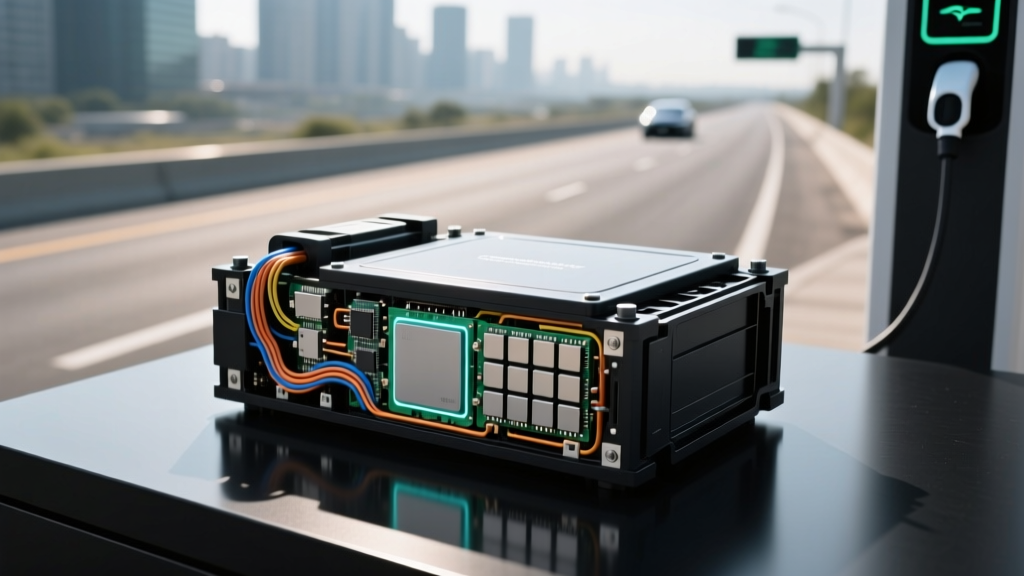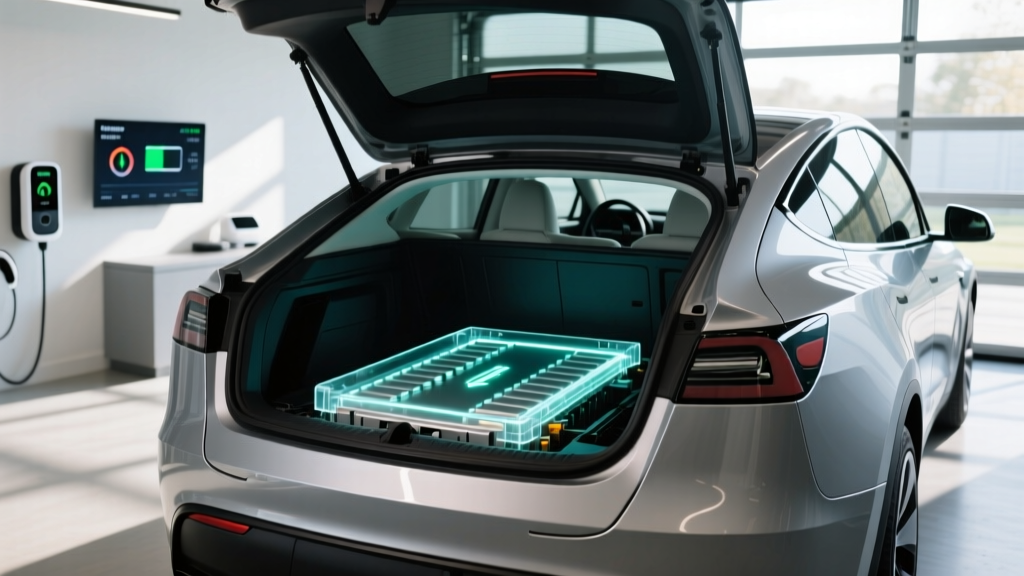
If you have searched for "tesla battery exploding" in recent headlines, you have likely encountered dramatic photos of scorched chassis and firefighter crews dousing a smoking Model S. Those images are real, but they represent a vanishingly small fraction of the millions of Tesla vehicles on the road. The much more relevant questions for owners and prospective buyers are less cinematic: How much range will the battery lose over 100,000 miles? What does the warranty actually cover? And if the pack does need replacing, what will it cost?
This guide answers those questions with hard data — from NHTSA fire statistics to Tesla's own impact report degradation curves — while explaining the battery chemistry choices (LFP vs. NMC/NCA) that determine how your pack ages, charges, and performs in cold weather.
The Real Fire Risk: NHTSA Data vs. Headlines
Thermal runaway — the chain reaction that causes a lithium-ion cell to vent hot gas and potentially ignite — is the phenomenon behind every "Tesla battery exploding" story. It can be triggered by severe mechanical damage (a high-speed crash or underbody puncture), manufacturing defects, or, rarely, internal short circuits that develop over time.
But context matters. According to Tesla's 2024 Impact Report, the company recorded approximately one vehicle fire for every 130 million miles driven across its fleet. For comparison, the National Highway Traffic Safety Administration (NHTSA) and National Fire Protection Association (NFPA) data show that internal-combustion vehicles experience roughly one fire per 19 million miles driven. EVs, as a class, catch fire at a significantly lower rate than gasoline vehicles.
When a Tesla battery fire does occur, it tends to draw outsized media attention because the event is novel and the firefighting response is different. Lithium-ion battery fires require large volumes of water and can reignite hours after being extinguished — a challenge firefighters are still training for. But the statistical risk to occupants and bystanders remains low, and Tesla's structural battery pack design (introduced with the 4680 cell in Model Y) adds further physical protection by embedding cells within a rigid honeycomb matrix.
LFP vs. NMC/NCA: Which Chemistry Is in Your Tesla?
Tesla uses two primary battery chemistries across its 2025–2026 lineup, and the choice affects everything from range and cold-weather performance to how aggressively you can charge.
| Attribute | LFP (Lithium Iron Phosphate) | NMC / NCA (Nickel Manganese Cobalt / Nickel Cobalt Aluminum) |
|---|---|---|
| Models using it | Model 3 RWD, Model Y RWD (Standard Range) | Model 3/Y Long Range & Performance, Model S, Model X, Cybertruck |
| Energy density | Lower (~160 Wh/kg cell-level) | Higher (~250–300 Wh/kg cell-level) |
| Typical usable capacity | 57–60 kWh | 75–100 kWh depending on model |
| Cycle life | 3,000+ cycles to 80% SoH | 1,000–2,000 cycles to 80% SoH |
| Cold-weather range loss | Greater (~35–40% at 20°F) | Moderate (~25–30% at 20°F) |
| Recommended daily charge | 100% (Tesla recommends regular full charges) | 80–90% daily; 100% only before trips |
| Thermal runaway risk | Lowest among Li-ion chemistries | Higher; requires more active thermal management |
| Cost | Lower (no cobalt or nickel) | Higher (commodity-sensitive metals) |
Which is better? If you prioritize longevity, lower cost, and fire safety margin, LFP is the stronger choice — and it is why Tesla shifted its Standard Range vehicles to LFP globally. If you need maximum range and faster acceleration, NMC/NCA delivers higher energy density, which is why every Long Range and Performance Tesla still uses it. Neither chemistry is inherently "safer" in normal operation; Tesla's battery management system (BMS) monitors cell voltages, temperatures, and coolant flow continuously regardless of chemistry.
How Long Do EV Batteries Last? Degradation Data
Tesla's own fleet data, published annually, provides one of the largest real-world degradation datasets in the industry. Here is what the numbers show:
- At 50,000 miles: average capacity retention of ~95% (5% loss)
- At 100,000 miles: average capacity retention of ~90% (10% loss)
- At 150,000 miles: average capacity retention of ~88% (12% loss)
- At 200,000 miles: average capacity retention of ~85% (15% loss)
The curve flattens significantly after the initial 20,000–30,000 miles. Most degradation occurs early as the solid electrolyte interphase (SEI) layer forms on the anode, then the rate slows to roughly 1% loss per 20,000–30,000 additional miles.
For a Model 3 Long Range with an EPA-estimated 341 miles of range, a 10% loss at 100,000 miles translates to roughly 307 miles — still more range than most competitors offer brand new. Real-world highway range will be lower than the EPA sticker regardless of degradation; expect about 85–90% of EPA in warm-weather highway driving and 65–75% in sub-freezing conditions, per fueleconomy.gov testing and independent EV testing bodies.
LFP packs tend to show even slower degradation in calendar aging, though they start with slightly less range to begin with. Several Tesla owners have reported LFP Model 3 vehicles exceeding 100,000 miles with less than 7% measured capacity loss, though individual results vary with climate and charging habits.
Battery Warranty: What Tesla Actually Covers
Tesla's battery and drive unit warranty is among the more straightforward in the industry, but the details matter — especially the capacity retention threshold.
| Model | Warranty Period | Mileage Limit | Minimum Capacity Retention |
|---|---|---|---|
| Model 3 RWD (LFP) | 8 years | 100,000 miles | 70% |
| Model 3 Long Range / Performance | 8 years | 120,000 miles | 70% |
| Model Y (all trims) | 8 years | 100,000–120,000 miles | 70% |
| Model S / Model X | 8 years | 150,000 miles | 70% |
| Cybertruck | 8 years | 120,000 miles | 70% |
The 70% threshold is the trigger: if your battery's usable capacity drops below 70% of its original kWh within the warranty period, Tesla will repair or replace it at no cost. In practice, based on the fleet degradation data above, very few Tesla vehicles approach this threshold within the warranty window. A vehicle would need to lose more than 30% of its capacity in 8 years — roughly four times the typical degradation rate — to qualify.
The warranty covers defects in materials and workmanship, as well as capacity loss beyond the threshold. It does not cover damage from collisions, flooding, fire caused by external sources, or modifications to the battery system. The drive unit (motor and inverter) is covered under the same warranty terms.
Replacement Cost: What If Your Battery Fails Out of Warranty?
This is the question that fuels the most anxiety among prospective EV buyers. Here are the realistic numbers based on current Tesla service center quotes and third-party EV battery specialists:
| Model | Battery Size (Usable) | Chemistry | Estimated Replacement Cost |
|---|---|---|---|
| Model 3 RWD | ~57 kWh | LFP | $5,000–$8,000 |
| Model 3/Y Long Range | ~75–82 kWh | NMC/NCA | $10,000–$15,000 |
| Model S / Model X | ~95–100 kWh | NMC/NCA | $13,000–$20,000 |
| Cybertruck | ~123 kWh | NMC (4680) | $15,000–$22,000 |
These figures include the battery pack and labor but can vary based on whether Tesla installs a new, remanufactured, or refurbished unit. Remanufactured packs — which use tested modules from returned batteries — are increasingly common and can reduce cost by 20–30% compared to a brand-new pack.
The critical context: most Tesla batteries do not need replacement during the vehicle's useful life. Based on current degradation trends, a Tesla battery pack is likely to retain 80–85% of its original capacity at 200,000 miles. Complete pack failure outside of collision damage is rare, and module-level repairs (replacing individual cell groups rather than the entire pack) are becoming more feasible as third-party EV service networks grow.
Factors That Accelerate (or Slow) Battery Degradation
Not all miles are equal when it comes to battery wear. The following factors have the most measurable impact on long-term State of Health (SoH):
- Avoid sustained 100% SoC (NMC/NCA only): For Long Range and Performance models, set your daily charge limit to 80–90%. Reserve 100% charges for road trips. LFP owners should charge to 100% regularly — Tesla recommends it for accurate BMS calibration.
- Minimize DC fast charging when possible: Frequent use of 150–250 kW Superchargers generates significant heat. The battery's thermal management system handles this, but repeated high-C-rate charging accelerates electrolyte breakdown over thousands of cycles. Home Level 2 charging at 7–11 kW is gentler.
- Precondition before fast charging: Tesla's navigation system automatically preconditions the battery when you route to a Supercharger. This warms the cells to optimal temperature (~95°F), reducing charge time and stress. Always navigate to the charger rather than driving there manually.
- Avoid prolonged storage at extreme SoC: If storing a Tesla for weeks, set the charge limit to ~50% and plug in. Storing at 100% or near 0% for extended periods accelerates calendar degradation.
- Use scheduled charging in cold climates: Set your Tesla to finish charging just before departure. A warm battery regenerates more energy and delivers better range in freezing temperatures.
- Don't obsess over daily fluctuations: BMS recalibration can make range estimates shift by 5–10 miles overnight. This is software estimation variance, not actual capacity loss.
How to Check Your Tesla's Battery Health (SoH)
Tesla does not expose a direct State of Health percentage in the vehicle's UI the way some competitors (like Hyundai with its Bluelink diagnostics) do. But there are reliable methods to assess your pack:
In-vehicle method: Charge to 100% (for NMC/NCA, do this only occasionally for testing). Note the displayed range. Compare it to the original EPA-rated range for your model. For example, a 2024 Model 3 Long Range that originally displayed 341 miles at 100% but now shows 310 miles has roughly 91% capacity retention. This method is approximate — the displayed range factors in recent driving efficiency — but it provides a reasonable estimate.
Third-party apps: Tools like TeslaFi, Tessie, or Stats (iOS) log detailed charge session data, including energy added versus SoC change, which yields a more accurate SoH calculation over time. A full charge from 5% to 100% that adds 72 kWh to a pack rated for 82 kWh usable suggests roughly 88% SoH.
Service center diagnostic: Tesla service centers can run a full battery health report that reads individual module voltages, internal resistance, and calculated capacity. This is the most authoritative method and is worth requesting if you are buying a used Tesla or approaching a warranty claim threshold.
What's Next: Solid-State and Silicon Anode Batteries
The battery industry is actively developing next-generation chemistries, but realistic timelines matter:
Silicon anode batteries — which replace graphite anodes with silicon to increase energy density by 20–40% — are the closest to commercialization. Companies like Sila Nanotechnologies and Group14 are already shipping early-production cells, and the U.S. Department of Energy has funded multiple pilot programs. Expect limited deployment in premium EVs by 2027–2028, with broader availability by 2030.
Solid-state batteries — which replace the liquid electrolyte with a solid ceramic or polymer separator — promise higher energy density, faster charging, and near-zero fire risk. Toyota has announced a 2027–2028 production target for solid-state EVs, and QuantumScape is working with Volkswagen on pilot cells. However, manufacturing scalability remains the primary bottleneck. Widespread solid-state EV availability is not expected before 2030 at the earliest, and initial costs will be substantial.
Frequently Asked Questions
Are Tesla batteries prone to exploding?
No. Tesla's fleet fire rate is approximately one fire per 130 million miles driven — significantly lower than the gasoline vehicle average of one fire per 19 million miles. Thermal runaway events are rare, and Tesla's pack design includes cell-level fuses, firewalls, and vent channels to contain failures. The dramatic nature of EV battery fires draws disproportionate media coverage relative to their frequency.
How long do Tesla batteries last in real-world use?
Tesla's fleet data shows an average of ~85% capacity retention at 200,000 miles. Most Tesla batteries will outlast the vehicle's economic life without requiring replacement. Individual results vary based on climate, charging habits, and chemistry — LFP packs tend to degrade slightly slower than NMC/NCA.
How much does it cost to replace a Tesla battery?
Replacement costs range from approximately $5,000 for a Model 3 RWD (LFP) to $20,000+ for a Model S/X (large NMC pack). Remanufactured packs can reduce costs by 20–30%. However, most Tesla batteries do not require replacement during the vehicle's useful life, and the 8-year/100,000–150,000-mile warranty covers premature capacity loss below 70%.
Should I charge my Tesla to 100% every day?
It depends on your battery chemistry. If you have an LFP battery (Model 3 RWD, Model Y RWD), Tesla recommends charging to 100% regularly for BMS calibration. If you have an NMC/NCA battery (Long Range, Performance), set your daily limit to 80–90% and save 100% for road trips.
Does frequent Supercharging damage the battery?
Exclusive reliance on DC fast charging does accelerate degradation modestly compared to Level 2 home charging, primarily due to sustained high temperatures during 150–250 kW sessions. However, Tesla's thermal management system actively cools the pack during Supercharging. For most owners who mix home and Supercharger use, the impact is measurable but small — likely a few percentage points of additional capacity loss over 100,000 miles.
Is LFP better than NMC for longevity?
LFP chemistry has a significantly higher cycle life (3,000+ cycles to 80% SoH vs. 1,000–2,000 for NMC) and greater thermal stability. If your priority is maximum battery lifespan and lowest fire risk, LFP is the stronger choice. The trade-off is lower energy density, meaning less range for the same pack size, and greater range loss in freezing temperatures.