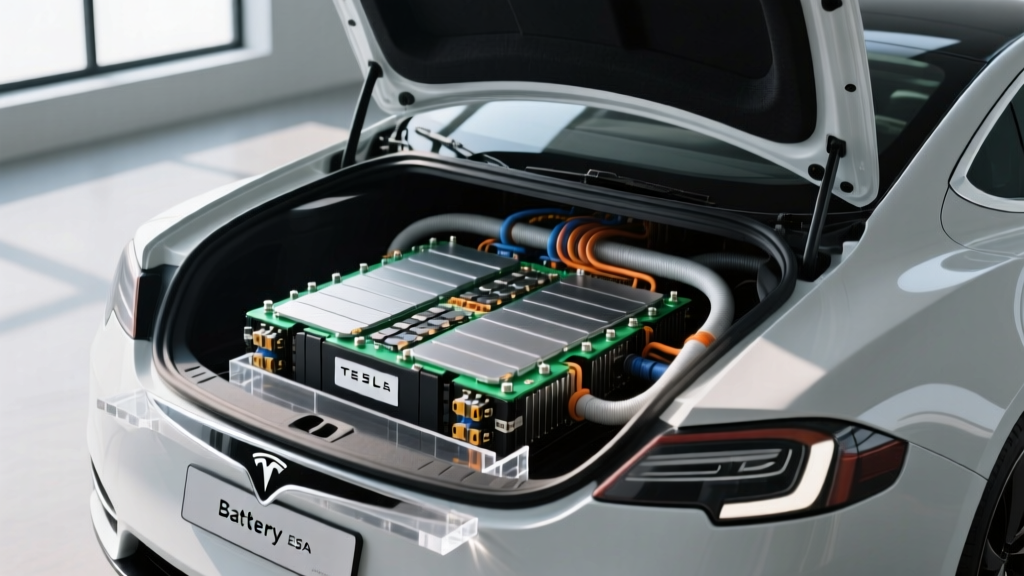
If you've spent time in Tesla owner forums or service documents, you've likely encountered the acronym ESA — Energy Storage Assembly. It's Tesla's internal engineering term for the high-voltage traction battery pack that powers the vehicle. Understanding what goes into the ESA, how it degrades, what the warranty actually covers, and what a replacement costs is essential for any current or prospective Tesla owner.
This guide dissects Tesla's battery architecture across the 2026 lineup — from the LFP-equipped Model 3 Rear-Wheel Drive to the NMC-packed Model S Plaid — with real degradation data, exact warranty thresholds, and actionable care strategies.
What Is the Tesla Battery ESA?
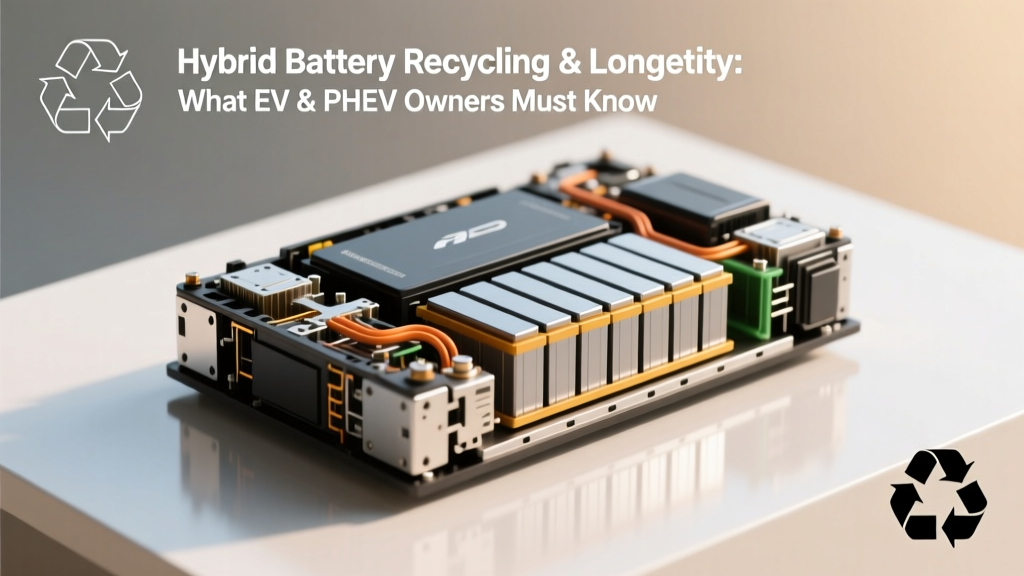
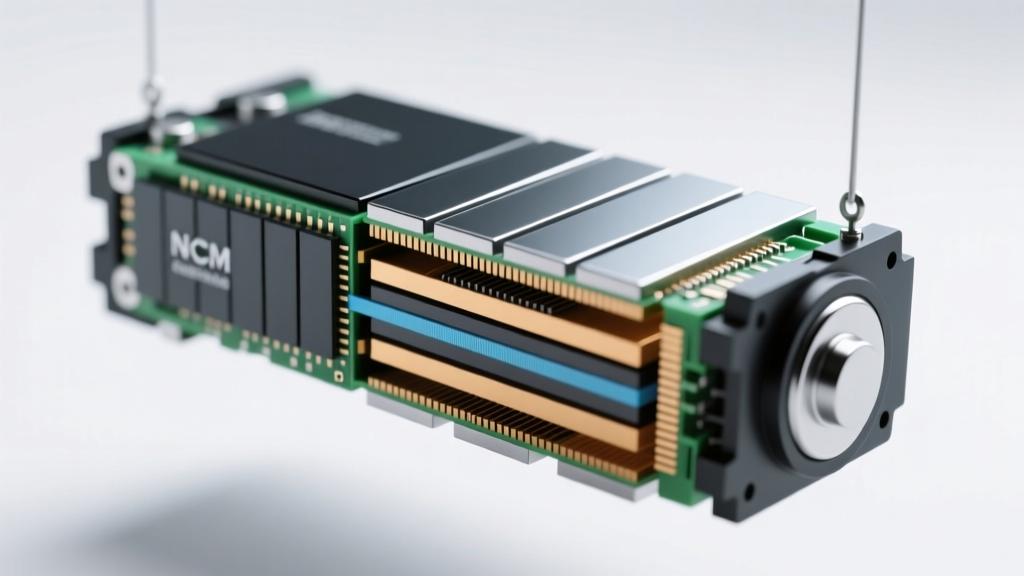
The ESA encompasses the entire high-voltage battery system: the individual cells (cylindrical 2170 or 4680 format, or prismatic LFP), the structural pack housing, the Battery Management System (BMS), thermal management loops, contactors, and safety disconnects. It is not the 12V or 16V auxiliary lithium battery that runs the vehicle's computers and accessories — that's a separate, much smaller component.
Tesla sources cells from multiple suppliers depending on model, trim, and production year:
- Panasonic — NCA/NMC 2170 and 4680 cells (Model 3/Y Long Range, Model S/X)
- CATL — Prismatic LFP cells (Model 3 RWD, some Model Y RWD)
- LG Energy Solution — NMC 2170 cells (certain Model 3/Y AWD variants)
- BYD — Blade LFP cells (select markets, emerging in 2025–2026 Model Y builds)
The chemistry inside your ESA dictates its energy density, cycle life, charging behavior, and cold-weather performance — which we break down next.
LFP vs NMC/NCA: Tesla's Battery Chemistry Trade-Offs
Tesla uses two primary cathode chemistries across its 2026 fleet. Neither is universally "better" — the right choice depends on your driving patterns, climate, and budget.
| Attribute | LFP (Lithium Iron Phosphate) | NMC/NCA (Nickel Manganese Cobalt / Nickel Cobalt Aluminum) |
|---|---|---|
| Energy Density | ~160 Wh/kg (cell-level) | ~250–270 Wh/kg (cell-level) |
| Typical Tesla Models | Model 3 RWD, Model Y RWD | Model 3 LR, Model Y LR/Perf, Model S/X |
| Usable Capacity (2026) | ~57.5 kWh (Model 3 RWD) | ~75–82 kWh (LR), ~95 kWh (Model S) |
| EPA Range | 272 mi (Model 3 RWD) | 363 mi (Model 3 LR AWD) |
| Cycle Life | 3,000–5,000+ cycles to 80% SoH | 1,500–2,500 cycles to 80% SoH |
| Recommended Charge Habit | Charge to 100% regularly (BMS calibration benefits) | Daily limit 80%; 100% for trips only |
| Cold Performance | Greater range loss (~30–40% below 32°F) | Moderate range loss (~20–30% below 32°F) |
| DC Fast Charge Peak | ~170 kW (slower curve) | ~250 kW (Model 3/Y), ~250 kW (Model S/X) |
| Cost (pack-level) | Lower — no cobalt/nickel | Higher — commodity-sensitive materials |
| Thermal Stability | Superior — less prone to thermal runaway | Good — managed via BMS and cooling |
The practical takeaway: If you commute daily, charge at home, and don't need maximum range, LFP offers longer calendar life and simpler charging habits (set it to 100% and forget it). If you road-trip frequently, live in a cold climate, or want maximum EPA miles, NMC/NCA's higher energy density justifies its more careful charge management.
Real Tesla Battery Degradation Data: What Owners Actually See
Tesla's 2025 Impact Report (the most recent published dataset) states that Model 3/Y battery packs retain approximately 85% of original capacity after 200,000 miles. Model S/X packs show similar retention, though older 85/90 kWh packs from 2013–2017 exhibited higher early-life degradation.
Independent data from TeslaFi and Recurrent Auto (a battery analytics firm tracking over 15,000 Tesla packs) paints a more granular picture:
- Year 1 / 15,000 mi: ~3–5% loss (initial "formation" drop)
- Year 3 / 45,000 mi: ~7–9% total loss
- Year 5 / 75,000 mi: ~9–12% total loss
- Year 8 / 120,000 mi: ~12–15% total loss
- Year 10 / 150,000 mi: ~14–18% total loss
LFP packs show a flatter curve: ~2–3% Year 1, reaching ~8–10% loss by Year 5, with projections of 80% SoH beyond 300,000 miles.
After the initial 3–5% drop in the first year, degradation slows significantly. This "knee" in the curve is why most Tesla owners never experience a pack that falls below the 70% warranty threshold under normal use. According to fueleconomy.gov, the 2026 Model 3 Long Range AWD carries a 363-mile EPA rating; at 85% retention after 200K miles, that translates to roughly 308 real-world-equivalent miles of original-EPA range — still highly usable.
Real-world caveat: EPA range figures assume moderate temperatures and mixed driving. In sustained 75+ mph highway driving or below-freezing conditions, expect 15–30% less than the sticker regardless of degradation state.
Tesla Battery Warranty Terms: What's Actually Covered
Tesla's battery warranty covers defects and capacity loss below a defined threshold. It does not cover damage from accidents, flooding, or unauthorized modifications. Here are the current 2026 warranty terms by model:
| Model / Trim | Warranty Duration | Mileage Limit | Capacity Retention Threshold |
|---|---|---|---|
| Model 3 RWD (LFP) | 8 years | 100,000 miles | 70% |
| Model 3 Long Range / Performance | 8 years | 120,000 miles | 70% |
| Model Y RWD / Long Range / Performance | 8 years | 120,000 miles | 70% |
| Model S (all trims) | 8 years | 150,000 miles | 70% |
| Model X (all trims) | 8 years | 150,000 miles | 70% |
| Cybertruck AWD / Cyberbeast | 8 years | 150,000 miles | 70% |
Key details:
- If your ESA drops below 70% usable capacity within the warranty period, Tesla will replace or refurbish the pack at no cost. The replacement pack will have at least 70% capacity — not necessarily a brand-new pack.
- The warranty is transferable to subsequent owners, which supports resale value.
- Warranty claims for degradation are rare. Data from Recurrent suggests fewer than 1% of Tesla packs have required warranty replacement for capacity loss alone.
- The drive unit(s) carry a separate but identical warranty (8 years / 100K–150K miles depending on model).
Tesla ESA Replacement Costs: When and How Much
For out-of-warranty replacements — typically on vehicles 8+ years old or beyond the mileage cap — costs vary significantly by pack size and chemistry. Based on service center invoices shared by owners and third-party EV repair shops in 2025–2026:
| Model / Pack | Chemistry | Approx. Pack Cost | Labor & Misc. | Total Estimated Range |
|---|---|---|---|---|
| Model 3 RWD (~57.5 kWh) | LFP | $8,000–$10,000 | $2,000–$3,000 | $10,000–$13,000 |
| Model 3/Y LR (~75–82 kWh) | NMC/NCA | $12,000–$15,000 | $2,500–$3,500 | $14,500–$18,500 |
| Model S/X (~95–100 kWh) | NMC/NCA | $15,000–$20,000 | $3,000–$4,000 | $18,000–$24,000 |
| Cybertruck (~123 kWh) | NMC (4680) | $18,000–$22,000 | $3,500–$5,000 | $21,500–$27,000 |
Context that matters: The vast majority of Tesla ESAs never need replacement. Packs are engineered to outlast 200,000+ miles with usable capacity remaining. A 2017 Model 3 Long Range with 180,000 miles today likely retains 82–86% of its original capacity — well above the point where replacement is necessary. The fear of a surprise $20,000 bill is largely a legacy concern from early Nissan Leaf and Chevy Bolt packs that lacked active thermal management.
Refurbished packs from Tesla's own remanufacturing program can reduce costs by 20–30%. Third-party shops like Electrified Garage and Gruber Motors also offer independent replacements at lower labor rates, though this may void remaining Tesla warranty coverage.
Factors That Accelerate (or Preserve) ESA Health
Tesla's BMS and liquid thermal management system do substantial work to protect the pack. But owner habits still influence long-term degradation:
- State of Charge (SoC) habits: For NMC/NCA packs, set daily charge limit to 80%. Charge to 100% only before long trips and avoid letting the car sit at 100% for extended periods. For LFP packs, Tesla recommends charging to 100% at least weekly for BMS calibration.
- DC fast charging: Frequent Supercharging (multiple times per week) adds ~1–2% additional degradation over 100K miles compared to primarily Level 2 home charging. Occasional Supercharging on road trips has negligible impact.
- Extreme temperatures: Avoid leaving the car at low SoC (below 20%) in sub-freezing weather for days. Use Scheduled Departure preconditioning to warm the battery before driving. In extreme heat, avoid repeated 100% charges paired with immediate fast driving.
- Preconditioning: Always enable battery preconditioning when navigating to a Supercharger. This warms the cells to optimal temperature, reducing charge time and stress on the pack.
- Storage: If storing for 2+ weeks, leave the car plugged in with charge limit set to 50%. The BMS will maintain optimal SoC and manage thermal conditions.
- Phantom drain awareness: Sentry Mode, third-party data apps, and frequent app-checking can drain 1–3% per day. In cold weather at low SoC, this can push the pack into a stress zone.
How to Check Your Tesla's Battery State of Health (SoH)
Tesla does not display a direct SoH percentage in the vehicle UI, unlike some competitors. Here are the reliable methods to assess your ESA's health:
Method 1: Range Comparison
Charge to 100% (or your known max) and note the displayed estimated range. Compare this to the original EPA rating for your specific model and trim. For example, a 2023 Model 3 LR that originally showed 358 miles at 100% and now shows 315 miles has roughly 88% retention (adjusting for the EPA-to-displayed-range offset Tesla applies).
Method 2: TeslaFi or Tessie App
Third-party tools like TeslaFi and Tessie log charge sessions and calculate estimated SoH by comparing energy added during known charge events against the pack's original capacity. These provide a more granular view than the range display alone.
Method 3: Service Mode (Advanced)
Tesla's hidden Service Mode (accessible via the Software screen's model-name tap) includes a "Battery Health" test that runs a controlled discharge cycle. This gives the most accurate SoH reading but takes several hours and is primarily used during service visits.
Method 4: Recurrent or Battery Health Reports
Services like Recurrent Auto provide free battery health reports by connecting to your Tesla's telematics data. These are increasingly accepted by used-car buyers and insurers as a reliable SoH benchmark.
Looking Ahead: Solid-State and Silicon Anode Batteries
Several next-generation battery technologies are in development, though none are currently available in any production Tesla:
- Solid-state batteries: Companies like QuantumScape and Toyota are targeting 2028–2030 production timelines. Solid-state cells promise 400+ Wh/kg energy density and faster charging, but manufacturing scalability and cost remain unsolved challenges. Tesla has not announced a solid-state program.
- Silicon anode enhancements: Tesla's 4680 cells already incorporate a silicon-containing anode (replacing some graphite). Incrementally increasing silicon content could boost energy density 10–20% over coming generations without a full chemistry overhaul. This is evolutionary, not revolutionary.
- Sodium-ion batteries: CATL and BYD are shipping sodium-ion packs in Chinese-market EVs. Lower energy density (~120 Wh/kg) limits these to budget/urban vehicles, but they offer extreme cycle life and cold performance. Tesla has not adopted sodium-ion as of 2026.
- Dry electrode manufacturing: Tesla's ongoing 4680 production refinement focuses on reducing cost per kWh through dry electrode coating. This doesn't change chemistry but could lower pack costs 15–20% over the next 2–3 years.
Realistic timeline: Expect incremental 4680 improvements through 2028. A fundamental chemistry shift (solid-state) is unlikely in any Tesla before 2030 at the earliest. Current LFP and NMC packs are mature, proven, and will serve owners well for the foreseeable future.
Tesla Battery ESA FAQ
How long do Tesla batteries last in years and miles?
Based on Tesla's published data and independent tracking, most Tesla ESAs retain 80–85% capacity at 200,000 miles. In years, that typically translates to 12–15+ years of usable service before capacity drops to a level where replacement might be considered. LFP packs project even longer service life, potentially exceeding 300,000 miles before hitting 80% SoH.
How much does it cost to replace a Tesla battery?
Out-of-warranty ESA replacement ranges from approximately $10,000–$13,000 for a Model 3 RWD (LFP) to $18,000–$27,000 for Model S/X and Cybertruck packs. Refurbished packs and third-party installers can reduce costs by 20–30%. However, the vast majority of packs never require replacement during the vehicle's useful life.
What does the Tesla battery warranty actually cover?
Tesla covers the ESA against defects and capacity loss below 70% for 8 years and 100,000–150,000 miles (depending on model). If your pack drops below the threshold, Tesla replaces or refurbishes it at no charge. The warranty does not cover accident damage, flooding, or modifications. It is fully transferable to subsequent owners.
How do I maximize my Tesla battery's lifespan?
For NMC/NCA packs: keep daily charge at 80%, avoid frequent Supercharging, precondition before fast charging, don't leave the car at 100% SoC for extended periods, and avoid deep discharge in freezing temperatures. For LFP packs: charge to 100% weekly for BMS calibration, and follow the same temperature and preconditioning best practices.
LFP vs NMC — which Tesla battery chemistry is better?
Neither is universally superior. LFP offers longer cycle life (3,000–5,000+ cycles), simpler charging habits (100% daily is fine), lower cost, and superior thermal stability — but sacrifices energy density and cold-weather range. NMC/NCA delivers higher range per kWh, better cold performance, and faster peak DC charging — but requires more careful SoC management and has a shorter total cycle life. Choose LFP for daily commuting and home charging; choose NMC for maximum range and road-trip flexibility.
Does frequent Supercharging damage my Tesla's battery?
"Damage" is too strong — Tesla's thermal management system protects the pack during DC fast charging. However, data shows that packs charged primarily via Supercharger (3+ times weekly) degrade approximately 1–2% more over 100,000 miles compared to packs charged primarily on Level 2. For most owners, this difference is negligible and well within warranty thresholds.
Can I check my Tesla battery health without visiting a service center?
Yes. Compare your 100% displayed range to the original EPA rating, use third-party tools like TeslaFi or Tessie for SoH estimates, or connect to Recurrent Auto for a free battery health report. For the most precise reading, Tesla's Service Mode includes a Battery Health test, though it requires several hours to complete.