From Tesla Battery Day Hype to Real-World Battery Ownership
When Tesla hosted Battery Day in September 2020, the event promised a seismic shift: a $25,000 car, cell-level structural packs, dry-electrode manufacturing, and a path to batteries that last a million miles. More than five years later, the EV market has evolved — but the core questions buyers still ask are stubbornly practical. How long will my EV battery actually last? What does it cost to replace? And does the chemistry under my floor matter?
This guide translates the engineering promises from Tesla Battery Day — and the broader battery R&D landscape — into the numbers that matter at the dealership and in your driveway in 2026. We'll compare the two dominant chemistries (LFP and NMC/NCA), cite real degradation data, break down warranty fine print, and outline what next-generation tech like solid-state cells realistically means for your next purchase.
LFP vs NMC/NCA: The Chemistry Under Your Floor
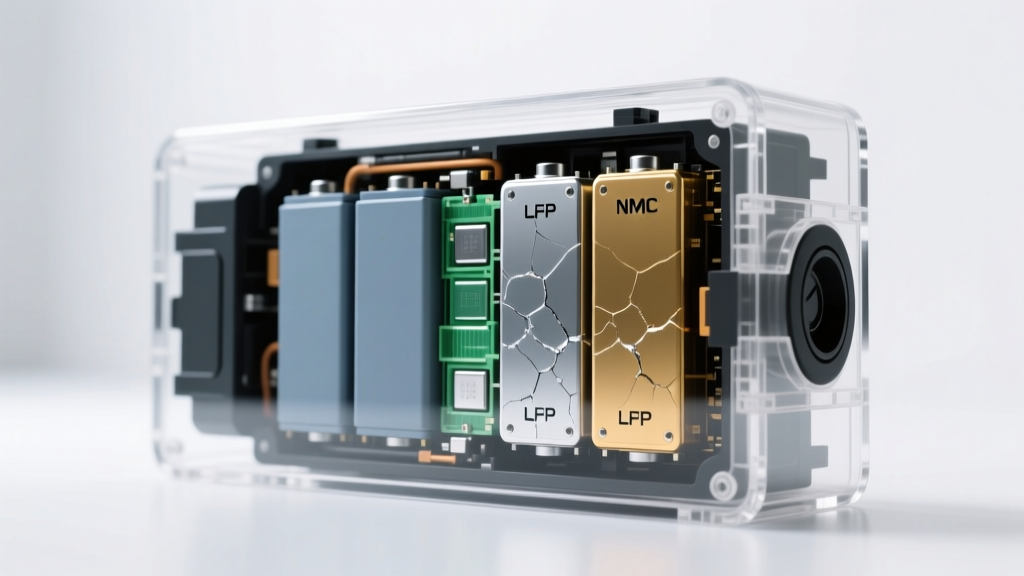
Almost every modern EV uses a lithium-ion traction battery, but not all lithium-ion cells are equal. The cathode chemistry — the material that stores and releases lithium ions — determines the pack's energy density, longevity, cost, cold-weather behavior, and safety profile. In 2026, two families dominate the US market:
- NMC (Nickel Manganese Cobalt) and NCA (Nickel Cobalt Aluminum): Used in most long-range and performance EVs, including Tesla Model 3/Y Long Range and Performance, Hyundai Ioniq 5/6, Ford Mustang Mach-E Extended Range, and Rivian R1T/R1S. High nickel content maximizes energy density.
- LFP (Lithium Iron Phosphate): Used in standard-range and cost-optimized models, including Tesla Model 3/Y RWD, base Ford Mustang Mach-E, and several Chinese-market imports. Tesla began shipping LFP Model 3s to US buyers in late 2021, and the chemistry has since expanded across the industry.
| Attribute | LFP (LiFePO₄) | NMC / NCA |
|---|---|---|
| Energy Density (cell-level) | ~160–180 Wh/kg | ~220–260 Wh/kg |
| Typical Cycle Life | 3,000–5,000+ cycles | 1,000–2,000 cycles |
| Calendar Life | Excellent (low degradation at rest) | Good (faster fade at high SoC) |
| Cold-Weather Performance | Weaker — more range loss below 32°F | Better low-temp discharge |
| Cost (per kWh, pack-level) | ~$95–$115 | ~$125–$150 |
| Recommended Daily SoC | 100% OK (Tesla recommends weekly 100%) | 80% daily; 100% for trips only |
| Safety / Thermal Runaway | More stable, higher onset temp | Good with active thermal mgmt |
| Cobalt Content | None | Varies (low-cobalt NMC trending) |
Which is better? Neither is universally superior — it depends on your use case. If you want maximum range per charge, tow frequently, or live in a cold climate, NMC/NCA's higher energy density and better cold performance justify the higher cost and tighter SoC discipline. If you commute daily, charge at home, want a lower purchase price, and plan to keep the car 10+ years, LFP's superior cycle life and 100%-charge tolerance are compelling. Tesla's own owner manuals now explicitly instruct LFP owners to charge to 100% at least weekly to maintain BMS calibration — a complete inversion of the old "never charge to 100%" advice.
How Long Do EV Batteries Actually Last?
The fear that EV batteries need replacing every few years is not supported by fleet data. Most modern traction batteries are engineered to outlast the vehicle's economic life. The right metric is capacity retention: how much of the original kWh the pack holds after X years and miles.
Real-World Degradation Data Points:
- Tesla 2024 Impact Report (covering Model S/X through ~150,000 miles): average capacity retention ~88% at 150k miles, with the curve flattening after the initial ~5% drop in the first 25k miles. Model 3/Y data shows a similar profile.
- Geotab fleet study (2024, 10,000+ EVs across multiple brands): average annual degradation of ~1.8% per year, implying ~82% retention at 10 years. LFP-equipped vehicles trended toward lower annual loss.
- Recurrent Auto (2025 dataset, ~15k vehicles): Model 3 Standard Range (LFP) showed ~3% loss at 60k miles; Long Range (NMC) showed ~6% loss at the same mileage. Chevrolet Bolt EV (NMC, liquid-cooled) averaged ~7% loss at 80k miles.
A useful rule of thumb for 2026 buyers: plan for roughly 10–15% total capacity loss over 10 years or 150,000 miles for a liquid-cooled NMC pack, and 5–10% for LFP under similar use. The degradation curve is non-linear — steepest in the first year, then nearly flat for years — so a 5-year-old EV with 88% State of Health (SoH) is not headed for imminent failure.
When is replacement actually needed? Almost never within the warranty period, and rarely within the first ownership cycle. A pack is generally considered "end of life" for automotive use when it falls below ~70% SoH, at which point range has shortened enough to be inconvenient but the battery still functions. Many packs are then repurposed for stationary storage before recycling.
What Does the Battery Warranty Cover?
Federal law effectively mandates an 8-year/100,000-mile minimum for EV battery warranties (10 years/150,000 miles in CARB states including California, New York, Massachusetts, and others). Manufacturers typically guarantee that the pack will retain a minimum percentage of original capacity — usually 70% — over that term.
| Vehicle | Warranty Term | Capacity Retention Threshold |
|---|---|---|
| Tesla Model 3 RWD (LFP) | 8 yr / 100,000 mi | 70% |
| Tesla Model 3/Y Long Range | 8 yr / 120,000 mi | 70% |
| Tesla Model S/X | 8 yr / 150,000 mi | 70% |
| Hyundai Ioniq 5 / Ioniq 6 | 10 yr / 100,000 mi | 70% |
| Ford Mustang Mach-E | 8 yr / 100,000 mi | 70% |
| Chevrolet Equinox EV / Blazer EV | 8 yr / 100,000 mi | 70% |
| Rivian R1T / R1S | 8 yr / 120,000 mi | 70% |
| BMW i4 / iX | 8 yr / 100,000 mi | 70% |
Fine print to know: Warranties cover defects and excessive degradation below the threshold — not damage from accidents, flooding, or unauthorized modifications. Most require the owner to allow the manufacturer to attempt repair or module replacement before authorizing a full pack swap. Keep records of charging habits and service visits; some manufacturers have denied claims where owners ignored thermal warnings or used uncertified DC fast chargers that damaged the pack.
EV Battery Replacement Cost: The Real Numbers
Out-of-warranty battery replacement is the single biggest fear among prospective EV buyers. Context matters: the vast majority of EVs are scrapped or traded in before needing a new pack, and module-level repair (replacing only the failed cells) is increasingly common. But if a full pack replacement is required, here's what 2026 pricing looks like:
| Vehicle / Pack Size | Battery kWh | Parts Cost | Labor + Total Installed |
|---|---|---|---|
| Tesla Model 3 RWD (LFP) | ~60 kWh | $7,000–$9,000 | $9,000–$12,000 |
| Tesla Model 3/Y Long Range | ~75–82 kWh | $10,000–$14,000 | $13,000–$17,000 |
| Tesla Model S/X | ~100 kWh | $14,000–$18,000 | $17,000–$22,000 |
| Ford Mustang Mach-E Ext. Range | ~91 kWh | $12,000–$16,000 | $15,000–$20,000 |
| Hyundai Ioniq 5 (77.4 kWh) | ~77.4 kWh | $10,000–$14,000 | $13,000–$18,000 |
| Chevrolet Bolt EV (discontinued) | ~65 kWh | $9,000–$13,000 | $12,000–$16,000 |
| Rivian R1T (Large Pack) | ~128 kWh | $18,000–$24,000 | $22,000–$28,000 |
Two trends are working in buyers' favor. First, pack-level pricing per kWh has fallen from ~$200/kWh in 2020 to roughly $120–$140/kWh in 2026 for NMC, and lower for LFP, according to BloombergNEF. Second, independent EV repair shops are increasingly able to perform module-level replacements for $3,000–$6,000, addressing a single failed module rather than the whole pack. Always get a second opinion before authorizing a full pack swap.
Factors That Accelerate (or Slow) Battery Degradation
Battery wear is driven by electrochemical stress. Four factors dominate:
- State of Charge (SoC) habits: For NMC/NCA packs, daily charging to 100% accelerates degradation — set a daily limit of 80% and reserve 100% for road trips. LFP packs are the exception: Tesla recommends 100% at least weekly for calibration.
- DC fast-charging frequency: Occasional 150–250 kW DC fast charging is fine. Daily fast-charging, especially without preconditioning, adds thermal stress. When possible, use Level 2 (7–11 kW) at home for routine charging.
- Extreme temperatures: Sustained exposure to heat above 95°F is more damaging than cold. Park in shade or a garage in summer. Precondition the battery (via scheduled departure or the app) before fast-charging in cold weather — this warms the cells and reduces lithium plating risk.
- Deep discharges: Letting the pack sit at or near 0% SoC for extended periods stresses cells. If storing the vehicle, leave it at ~50% SoC.
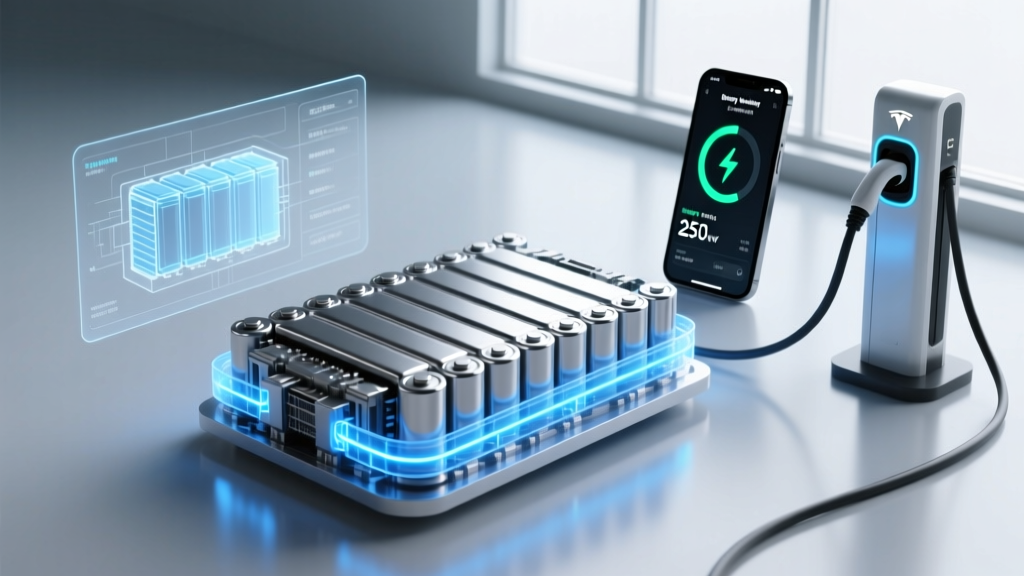
Thermal management matters enormously. Liquid-cooled packs (standard on virtually every 2026 EV except some low-cost models) hold SoH far better than the passively-cooled packs of early EVs like the first-gen Nissan Leaf. Tesla's structural battery pack, introduced post-Battery Day, integrates cooling channels directly into the pack structure for tighter thermal control.
How to Check Your Battery's State of Health (SoH)
State of Health — the percentage of original capacity remaining — is not always surfaced clearly to owners. Here's how to monitor it:
- Tesla: The in-car display does not show SoH directly. Use the Service Mode (accessible via a hidden tap sequence on the software screen) to view "Battery Health" percentage, or use third-party apps like Tessie or Stats for Tesla that read the vehicle's CAN bus via the Tesla API.
- Hyundai/Kia: The infotainment system's EV menu includes a "Battery Condition" readout. Dealers can pull a more precise SoH via the KDS diagnostic tool.
- Ford: The FordPass app and in-car diagnostics provide a battery health indicator. A dealer OBD-II scan gives granular cell-level data.
- Universal OBD-II tools: Devices like the OBDLink MX+ paired with apps such as ABRP or Car Scanner can read pack SoH, cell voltage variance, and degradation estimates on most EVs.
Check SoH every 6–12 months, and always before buying a used EV. A vehicle showing 92% SoH at 50,000 miles is tracking well; one at 82% at the same mileage may have been repeatedly fast-charged or stored at high SoC in a hot climate.
Beyond Tesla Battery Day: Solid-State, Silicon Anodes, and What's Next
Tesla Battery Day teased a roadmap that extended beyond chemistry tweaks to entirely new cell designs. Where does that roadmap stand in 2026?
- 4680 cells (Tesla's dry-electrode, tabless design): Now in production in Model Y vehicles built at Giga Texas. The cells deliver modest energy-density gains and improved thermal performance, but dry-electrode manufacturing yield remains a challenge. Tesla has not yet achieved the dramatic cost-per-kWh reduction promised in 2020.
- Silicon anode cells: Startups like Sila Nanotechnologies and Group14 are shipping silicon-dominant anode materials to OEMs, with Mercedes-Benz and Panasonic among early adopters. Expect 5–10% energy-density gains in production EVs by 2027–2028, not a step-change revolution.
- Solid-state batteries: Toyota, Nissan, and Samsung SDI have announced prototype solid-state cells with 2x energy density and faster charging. Toyota targets limited production in 2027–2028, but mass-market availability at competitive pricing remains 2030 or later, per industry analysts. Solid-state is real, but it is not a reason to delay a 2026 purchase.
- Sodium-ion batteries: CATL and BYD are shipping sodium-ion packs in low-cost Chinese-market EVs. Lower energy density (~120–140 Wh/kg) limits them to city cars, but they eliminate lithium and cobalt entirely. US availability is uncertain and likely years away.
The honest takeaway: incremental improvements in NMC and LFP chemistry, manufacturing scale, and pack integration continue to push prices down and longevity up. No announced technology makes today's EVs obsolete.
Frequently Asked Questions
How long do EV batteries last in years and miles?
Most modern liquid-cooled EV batteries retain 80–90% of original capacity at 150,000 miles and 10+ years. Fleet data from Tesla, Geotab, and Recurrent Auto shows degradation curves flattening after the first 1–2 years. Full pack failure within the first 15 years is rare.
How much does an EV battery cost to replace?
Out-of-warranty replacement ranges from ~$9,000 for a 60 kWh LFP pack (Tesla Model 3 RWD) to ~$22,000–$28,000 for a large pack (Rivian R1T). Module-level repair can reduce this to $3,000–$6,000. Most owners never pay this — the pack outlasts the car, or a warranty claim covers it.
What does the EV battery warranty actually cover?
Typically 8 years / 100,000 miles (longer in CARB states) against defects and capacity loss below 70% of original. It does not cover accident damage, abuse, or unauthorized modifications. See the warranty table above for model-specific terms.
How do I check and maximize my EV battery health?
Monitor SoH via in-car diagnostics, OEM apps, or OBD-II tools like OBDLink MX+. Maximize longevity by charging NMC/NCA to 80% daily (100% for LFP), minimizing daily DC fast charging, preconditioning before fast charges in cold weather, avoiding prolonged storage at 0% or 100% SoC, and parking in shade or a garage during hot months.
LFP vs NMC — which battery chemistry is better for me?
Choose LFP if you prioritize longevity, lower cost, and daily home charging to 100%. Choose NMC/NCA if you need maximum range per charge, tow heavy loads, or regularly drive in sub-freezing temperatures. Both chemistries are mature, safe with active thermal management, and backed by comparable warranties.
Did Tesla Battery Day's promises actually deliver?
Partially. The 4680 cell is in production, the structural pack is shipping, and Tesla's cost-per-kWh has fallen — but the promised $25,000 car and million-mile battery have not materialized as of 2026. The broader industry, however, has delivered on the underlying trend: cheaper, longer-lasting, more energy-dense cells across every major OEM.
Sources: Tesla Impact Report, fueleconomy.gov, Geotab EV Battery Degradation Study, Recurrent Auto Battery Research, BloombergNEF Electric Vehicle Outlook.