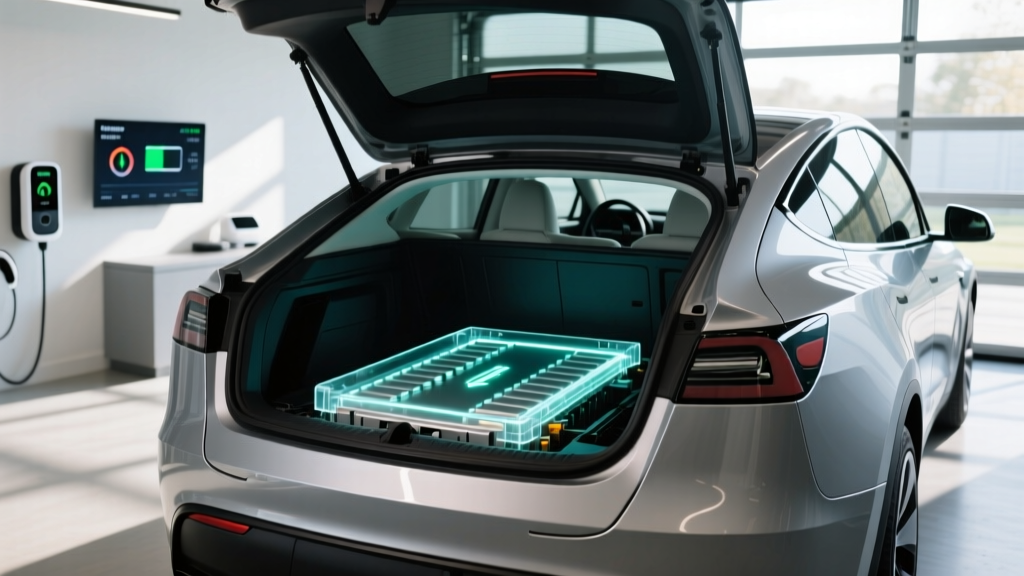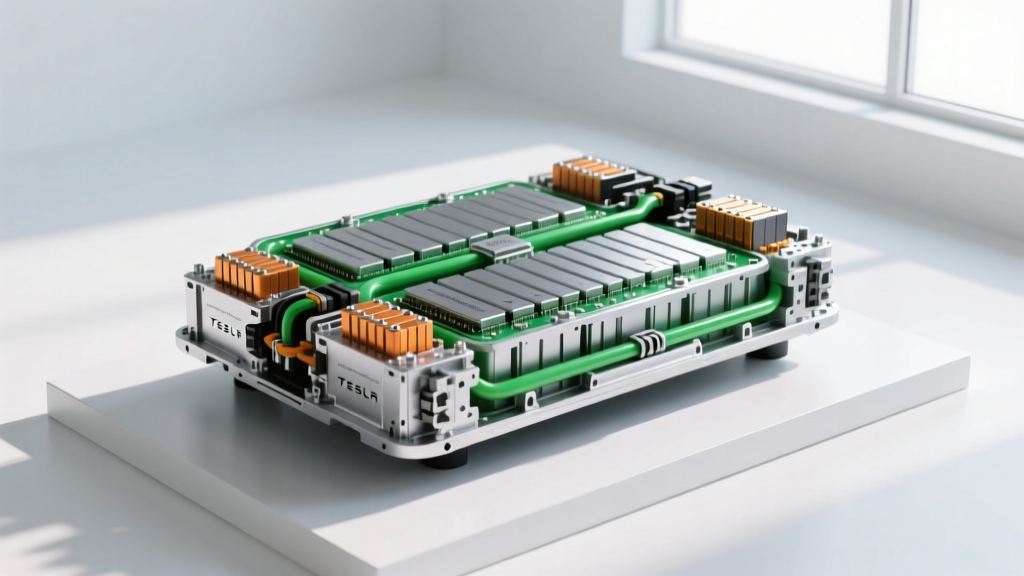
If you're researching the battery used in Tesla vehicles, you're not just looking at a single answer. Tesla sources cells from multiple suppliers, uses two fundamentally different chemistries across its lineup, and has iterated through several cell form factors over the past decade. The result is a battery landscape that varies meaningfully by model, trim, and model year — and those differences affect range, charging behavior, longevity, and eventual replacement cost.
This guide breaks down exactly what's inside a Tesla battery pack in 2026, how long those packs actually last based on fleet data, what the warranty covers, and what you can do to maximize the life of the most expensive component in your EV.
What Battery Chemistry Does Tesla Use?
Tesla currently uses two primary lithium-ion chemistries across its vehicle lineup: lithium iron phosphate (LFP) and nickel manganese cobalt (NMC), with nickel cobalt aluminum (NCA) appearing in older Model S and Model X packs. The chemistry you get depends on which model and trim you buy — and the trade-offs are significant.
LFP cells are used in the standard-range (Rear-Wheel Drive) versions of the Model 3 and Model Y. These cells are manufactured primarily by CATL and are prismatic in form factor. LFP chemistry contains no nickel or cobalt, which makes it cheaper to produce, more ethically straightforward to source, and inherently more stable at the molecular level.
NMC/NCA cells power the Long Range and Performance variants of the Model 3, Model Y, Model S, and Model X. Tesla uses a mix of cylindrical cells (the 2170 form factor from Panasonic at Gigafactory Nevada, and the newer 4680 cells produced in-house) depending on the model and production batch. These chemistries offer higher energy density — meaning more range in the same physical space — but at higher material cost and with different degradation characteristics.
| Attribute | LFP (Standard Range) | NMC / NCA (Long Range / Performance) |
|---|---|---|
| Energy Density | Lower (~160 Wh/kg cell-level) | Higher (~250-270 Wh/kg cell-level) |
| Typical EPA Range | Model 3 RWD: 272 mi; Model Y RWD: 260 mi | Model 3 LR: 363 mi; Model Y LR: 320 mi |
| Cycle Life | Higher — 3,000-5,000+ cycles to 80% SoH | Lower — 1,000-2,000 cycles to 80% SoH |
| Cold-Weather Performance | More range loss in freezing temps (~30-40%) | Better low-temp performance (~20-30% loss) |
| Recommended Charge Limit | 100% daily (Tesla recommends periodic full charges) | 80% daily; 100% only for trips |
| Cost | Lower per kWh | Higher per kWh |
| Thermal Stability | Excellent — less prone to thermal runaway | Good — requires more active thermal management |
Which Tesla Models Use LFP vs NMC Batteries?
As of the 2026 model year, here's how Tesla distributes battery chemistries across its lineup:
- Model 3 Rear-Wheel Drive: LFP (CATL prismatic cells), ~57 kWh usable pack, 272 miles EPA
- Model 3 Long Range AWD: NMC (Panasonic 2170 or Tesla 4680), ~75 kWh usable, 363 miles EPA
- Model 3 Performance: NMC, ~75 kWh usable, 315 miles EPA
- Model Y Rear-Wheel Drive: LFP (CATL), ~57 kWh usable, 260 miles EPA
- Model Y Long Range AWD: NMC (mix of 2170/4680), ~75 kWh usable, 320 miles EPA
- Model Y Performance: NMC, ~75 kWh usable, 285 miles EPA
- Model S / Model X: NCA/NMC (Panasonic 18650 or 2170), ~95-100 kWh usable, 402/348 miles EPA
- Cybertruck (all trims): NMC (Tesla 4680 structural pack), ~123 kWh usable, 340 miles EPA
Note that Tesla has shifted suppliers and cell formats across production runs. A 2024 Model Y Long Range built in Austin may contain 4680 cells, while one built in Fremont may use Panasonic 2170s. The window sticker and EPA filing reflect the final pack specification, but the underlying cell format can vary. According to fueleconomy.gov, range and efficiency figures are certified per configuration regardless of cell source.
How Long Do Tesla Batteries Actually Last?
This is where real fleet data is far more useful than speculation. Tesla's 2025 Impact Report (the most recent published data) states that Model 3 and Model Y battery packs retain approximately 85% of their original capacity after 200,000 miles. For context, the average US driver covers about 14,000 miles per year, meaning 200,000 miles represents roughly 14 years of driving.
Earlier-model data from Tesloop and other high-mileage fleet operators has shown Model S packs losing 10-15% capacity in the first 50,000 miles, then degrading much more slowly — a pattern consistent with lithium-ion chemistry where the steepest degradation occurs early.
Typical Tesla Battery Degradation Curve (Fleet-Average Data):
| Mileage | Approx. Capacity Retained (NMC) | Approx. Capacity Retained (LFP) |
|---|---|---|
| New | 100% | 100% |
| 30,000 mi | ~94% | ~96% |
| 60,000 mi | ~91% | ~94% |
| 100,000 mi | ~89% | ~92% |
| 150,000 mi | ~87% | ~90% |
| 200,000 mi | ~85% | ~89% |
Sources: Tesla Impact Report data, Tesloop fleet records, and independent testing by Recurrent Auto. Individual results vary based on charging habits, climate, and usage patterns.
LFP packs generally show slower degradation due to the inherent stability of iron phosphate chemistry, but they also start with less total capacity — so the real-world range difference narrows but doesn't disappear over time.
Tesla Battery Warranty: What's Covered?
Tesla's battery warranty is one of the strongest in the industry, but the specific terms vary by model and trim. The warranty covers defects and excessive capacity loss — defined as dropping below 70% of original capacity during the warranty period.
| Model | Battery Warranty | Capacity Threshold | Drive Unit Warranty |
|---|---|---|---|
| Model 3 RWD (LFP) | 8 years / 100,000 miles | 70% retention | 8 yr / 100,000 mi |
| Model 3 Long Range / Performance | 8 years / 120,000 miles | 70% retention | 8 yr / 120,000 mi |
| Model Y (all trims) | 8 years / 120,000 miles | 70% retention | 8 yr / 120,000 mi |
| Model S / Model X | 8 years / 150,000 miles | 70% retention | 8 yr / 150,000 mi |
| Cybertruck | 8 years / 120,000 miles | 70% retention | 8 yr / 120,000 mi |
A few important nuances: the warranty covers battery capacity, not just total failure. If your Long Range Model Y originally had 320 miles of EPA range and drops below 224 miles (70%) within 120,000 miles, Tesla will repair or replace the pack. However, normal gradual degradation from 100% to, say, 85% is considered expected wear and is not a warranty claim. You can review full terms at Tesla's official warranty page.
How Much Does a Tesla Battery Replacement Cost?
Out-of-warranty battery replacement is the concern that looms largest for prospective EV buyers — and it's important to contextualize the cost. The vast majority of Tesla battery packs outlast the vehicle itself. Complete pack failures outside of collisions are rare, and most degradation-related replacements occur under warranty.
That said, if you do face an out-of-warranty replacement, here are the approximate costs as of 2026:
| Model / Pack | Battery Size | Estimated Part Cost | Estimated Labor | Total Range |
|---|---|---|---|---|
| Model 3 RWD (LFP) | ~57 kWh | $7,000 - $9,000 | $1,500 - $2,500 | $8,500 - $11,500 |
| Model 3/Y Long Range | ~75 kWh | $10,000 - $14,000 | $1,500 - $2,500 | $11,500 - $16,500 |
| Model S / Model X | ~95-100 kWh | $13,000 - $18,000 | $2,000 - $3,000 | $15,000 - $21,000 |
| Cybertruck | ~123 kWh | $15,000 - $22,000 | $2,500 - $3,500 | $17,500 - $25,500 |
Costs based on service center estimates and third-party repair shops. Prices fluctuate with cell commodity costs and may decrease as cell manufacturing scales further.
For perspective: a typical gas vehicle's engine or transmission replacement runs $4,000-$8,000, and most cars see at least one major powertrain repair over 150,000+ miles. EV drivetrains have far fewer moving parts, so while the battery is expensive, the overall maintenance burden is lower. Data from Consumer Reports indicates that EV lifetime maintenance costs are roughly half those of comparable gas vehicles.
Factors That Affect Tesla Battery Life
Not all miles are created equal when it comes to battery wear. The following factors have the most measurable impact on long-term State of Health (SoH):
What Accelerates Degradation
- Frequent DC fast charging at high power (250 kW+): Occasional Supercharging is fine, but daily use of 250 kW chargers generates sustained heat that stresses cells. Tesla's battery management system (BMS) actively manages thermals, but physics still applies.
- Regularly charging to 100% on NMC packs: High state of charge increases internal cell stress. Tesla's default 80% daily limit for NMC is intentional — respect it.
- Prolonged storage at extreme SoC: Leaving an NMC car at 100% or below 10% for weeks accelerates calendar degradation. Store at 50% if possible.
- Extreme ambient temperatures: Sustained exposure to 100°F+ heat (Arizona, Texas summers) or frequent operation in -20°F cold without preconditioning stresses the pack.
- Aggressive acceleration habits: Sustained high-current draws (repeated Performance-mode launches) generate internal heat and micro-stress on cell electrodes.
What Maximizes Longevity
- Home Level 2 charging at 7-11 kW: Slow, cool charging is the single best thing for battery health. Most Tesla owners who charge at home overnight see the slowest degradation curves.
- Keep SoC between 20-80% for NMC: Use Tesla's charge limit slider. For LFP packs, Tesla recommends charging to 100% at least weekly to maintain cell balancing and accurate range estimation.
- Use Scheduled Departure with preconditioning: Warming the battery before driving in cold weather reduces stress and improves regen effectiveness.
- Supercharge in moderation: On road trips, Supercharging is expected and fine. For daily use, Level 2 is preferable.
- Keep the car plugged in when possible: Tesla's BMS uses grid power for thermal management when plugged in, protecting the pack from temperature extremes without draining the battery.
How to Check Your Tesla's Battery Health (SoH)
Tesla doesn't expose a direct "State of Health" percentage in the vehicle's touchscreen, which frustrates many owners. Here are the practical methods to assess your pack's condition:
Method 1: The Range Calculation. Charge your Tesla to 100% (or use the displayed percentage and do the math). Compare the projected range at full charge to the original EPA sticker. If your Model 3 Long Range originally showed 363 miles at 100% and now shows 320 miles at 100%, that's roughly 88% SoH. Note that Tesla's displayed range is a calculation based on rated consumption, not a direct energy measurement, so this is an approximation.
Method 2: Third-Party Apps. Tools like TeslaFi, Tessie, or Stats log detailed telemetry from Tesla's API, including energy added during charges, which can be used to calculate a more precise SoH by comparing actual kWh added from 0-100% against the pack's original usable capacity.
Method 3: Service Center Diagnostic. A Tesla service center can run a battery health diagnostic that provides a more authoritative capacity assessment. This is typically done during warranty-related inquiries but can be requested. There may be a diagnostic fee if the vehicle is out of warranty.
Method 4: The OBD-II Approach. Third-party OBD-II readers paired with apps like Scan My Tesla can pull real-time battery data including cell voltage variance, pack voltage, and current — useful for technically inclined owners who want granular visibility.
Emerging Battery Technology: What's Next for Tesla?
Tesla's battery roadmap involves several technologies at various stages of development. It's important to separate what's shipping now from what remains forward-looking:
4680 Cells (Currently in Production): Tesla's larger cylindrical cell format, produced at the Austin Gigafactory, is already in Cybertruck and some Model Y vehicles. The 4680 offers a tabless electrode design that improves thermal management and enables a structural battery pack (where the pack itself is a load-bearing vehicle component). Energy density gains are incremental so far — roughly 10-15% over 2170 cells in pack-level integration — but manufacturing cost per kWh is the primary target.
Dry Electrode Manufacturing: Tesla acquired Maxwell Technologies specifically for this process, which eliminates the solvent-drying step in electrode production. It promises lower manufacturing energy costs and higher energy density. As of early 2026, Tesla has begun limited dry-electrode 4680 production at its pilot lines, but full-scale deployment across the lineup remains in progress.
Silicon Anode Cells (Forward-Looking): Replacing graphite anodes with silicon can theoretically increase energy density by 20-40%. Multiple startups (Sila Nanotechnologies, Group14) are working with automakers, and Tesla has referenced silicon anode research. Expect initial commercial deployment in limited applications by 2028-2030, not sooner.
Solid-State Batteries (Forward-Looking): Fully solid-state cells replace the liquid electrolyte with a solid conductor, offering potential advantages in energy density, charge speed, and safety. Toyota, Samsung SDI, and QuantumScape are the most vocal developers. Tesla has not announced a solid-state timeline. Industry-wide, realistic commercialization for mass-market vehicles is expected no earlier than 2029-2032, with initial deployment likely in premium models at significant cost premiums.
Frequently Asked Questions
Do Tesla batteries need to be replaced regularly?
No. Based on fleet data, the vast majority of Tesla battery packs retain over 80% of their original capacity after 200,000 miles. Most packs will outlast the vehicle's useful life. Complete battery replacement is rare and usually occurs only due to manufacturing defects (covered under warranty) or collision damage.
Is LFP better than NMC for daily driving?
For most daily-driving scenarios, LFP is arguably the better choice: it tolerates 100% daily charging, degrades more slowly, and costs less. The trade-off is lower energy density (less range per pound) and worse cold-weather performance. If you need maximum range or frequently drive in freezing temperatures, NMC Long Range is preferable. If you commute 30-60 miles daily and can charge at home, the Model 3 or Model Y RWD with LFP is the more durable and economical pick.
Does frequent Supercharging damage the battery?
Occasional Supercharging on road trips has minimal impact. However, daily DC fast charging at 250 kW does accelerate degradation compared to Level 2 home charging. Tesla's BMS manages charge rates and temperatures actively, but sustained high-power charging generates heat that stresses cells over time. If Supercharging is your only option, it's still far better than not driving an EV — just expect slightly faster capacity loss over 5-10 years.
What happens if my Tesla battery degrades to 70%?
If your battery drops below 70% of original capacity within the warranty period (8 years and the applicable mileage limit), Tesla will repair or replace it at no cost. At 70% SoH, a Model 3 Long Range would still have roughly 254 miles of range — perfectly usable for most drivers. Battery degradation doesn't mean the car becomes undrivable; it simply means reduced range.
Can I upgrade my Tesla's battery to a newer chemistry?
Tesla does not offer official battery upgrades to different chemistries or capacities. The battery pack is engineered as a structural and electrical component specific to each model and production run. Aftermarket battery swaps or upgrades are not supported and would void remaining warranty coverage. If you want more range, selling and purchasing a different trim is the practical path.
How does cold weather affect Tesla batteries?
Cold temperatures temporarily reduce battery efficiency and available range. In freezing conditions (below 32°F), expect 20-30% range loss for NMC packs and 30-40% for LFP packs. This is not degradation — it's reversible. Range recovers as temperatures rise. Using Tesla's preconditioning feature (via Scheduled Departure or the app) warms the battery before driving and significantly reduces cold-weather range loss. The heat pump included in all current Tesla models also improves cabin heating efficiency, reducing the energy draw from the pack.
What is Tesla's 4680 battery and which cars use it?
The 4680 is Tesla's in-house cylindrical cell measuring 46mm in diameter and 80mm in height — significantly larger than the 2170 cells used previously. It features a tabless electrode design for better thermal management and is integrated as a structural pack component in the Cybertruck. As of 2026, the 4680 is used in the Cybertruck and select Model Y vehicles built at Gigafactory Texas. Tesla is gradually scaling 4680 production but continues to use Panasonic 2170 and CATL LFP cells for the majority of its lineup.