Why Tesla Battery Chemistry Matters More Than You Think
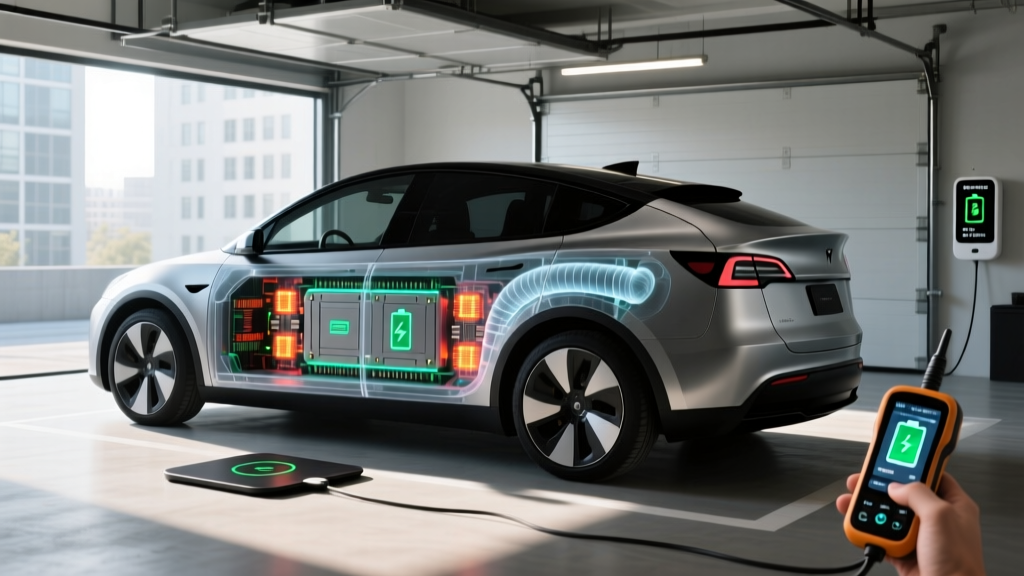
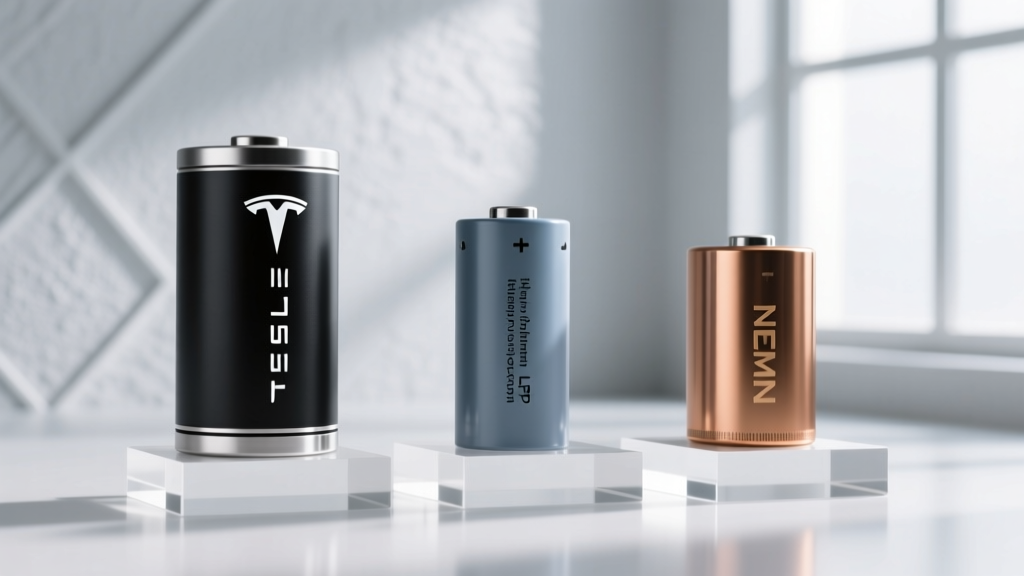
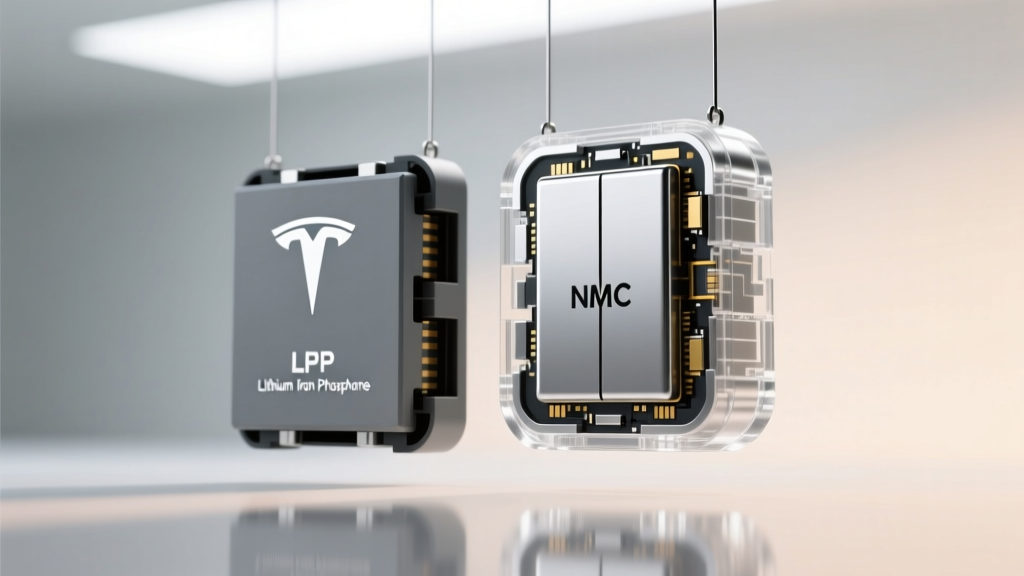
If you're shopping for a Tesla in 2026, one of the most consequential decisions you'll make isn't about paint color or wheel size — it's the battery chemistry sitting under the floor. Tesla currently uses two distinct lithium-ion chemistries across its lineup: lithium iron phosphate (LFP) in Standard Range / Rear-Wheel-Drive models, and nickel-based chemistries (NMC and NCA) in Long Range and Performance variants. The choice affects real-world range, charging habits, longevity, cold-weather behavior, and even how you should set your daily charge limit.
This guide breaks down exactly what Tesla is putting in its 2026 vehicles, how each chemistry degrades over time, what the warranty actually covers, and what replacement costs look like if you ever need one — backed by real data, not marketing copy.
LFP vs NMC/NCA: The Chemistry Breakdown
Tesla sources cells from multiple suppliers — primarily CATL (LFP prismatic cells), Panasonic (NCA/NCA cylindrical 4680 and 2170 cells), and LG Energy Solution (NMC pouch and cylindrical cells). Here's how the two chemistry families compare across the metrics that matter to owners:
| Attribute | LFP (LiFePO₄) | NMC / NCA (Nickel-Based) |
|---|---|---|
| Models using it (2026) | Model 3 RWD, Model Y RWD | Model 3 LR / Perf, Model Y LR / Perf, Model S, Model X, Cybertruck |
| Energy density (cell-level) | ~160–180 Wh/kg | ~250–300 Wh/kg (NCA 4680 higher end) |
| Typical usable pack size | ~57–60 kWh (Model 3 RWD) | ~75–82 kWh (LR); ~123 kWh (Cybertruck) |
| Cycle life (to 80% capacity) | ~3,000–5,000+ cycles | ~1,000–2,000 cycles |
| Recommended daily charge | 100% (Tesla recommends weekly 100%) | 80% daily; 100% only for trips |
| Cold-weather range loss | Higher — expect 25–35% loss below freezing | Moderate — expect 15–25% loss below freezing |
| DC fast-charge peak rate | ~170 kW (Model 3 RWD) | ~250 kW (LR/Perf V3 Supercharger) |
| Cost per kWh (cell) | Lower (~$80–100/kWh) | Higher (~$120–150/kWh) |
| Cobalt content | None | Low (NCA) to moderate (NMC) |
| Thermal stability / safety | Excellent — less prone to thermal runaway | Good — requires more active thermal management |
The practical takeaway: LFP gives you longer cycle life, lower cost, and no cobalt — but you sacrifice energy density (meaning less range in the same physical pack) and cold-weather performance. NMC/NCA gives you maximum range and better winter usability, but with a shorter cycle-life ceiling and a need to baby the state of charge for longevity.
Real-World Degradation: What the Data Actually Shows
Tesla's own Impact Reports have historically shown that their fleet averages roughly 10–12% degradation at 200,000 miles. Independent data from sources like Recurrent Auto and Tesloop fleet records paint a more granular picture:
Typical Tesla Battery Degradation Curve
- Year 1 / 15,000 mi: 2–5% loss (initial "break-in" degradation, steepest part of the curve)
- Year 3 / 45,000 mi: 5–8% total loss from new
- Year 5 / 75,000 mi: 7–10% total loss
- Year 8 / 120,000 mi: 10–14% total loss (NMC/NCA); 6–10% (LFP)
- Year 10+ / 150,000+ mi: 12–18% (NMC/NCA); 8–12% (LFP) — degradation curve flattens significantly after year 5
Sources: Tesla 2024 Impact Report fleet data; Recurrent Auto battery health studies; aggregated owner-reported data from TeslaFi and Teslamate communities.
LFP packs degrade more slowly in terms of cycle aging, thanks to the inherent stability of the iron-phosphate cathode. However, LFP cells can show larger apparent capacity swings at extreme states of charge due to their flatter voltage curve — this is a measurement challenge, not actual degradation, and Tesla's BMS accounts for it by recommending periodic 100% charges for calibration.
NMC and NCA cells lose capacity faster per cycle, but their higher starting energy density means even with 12–15% loss at 150,000 miles, a Long Range Model Y that started at 310 miles EPA may still deliver ~265–275 miles — perfectly usable for most drivers.
Tesla's Battery Warranty: What's Covered and What Isn't
Tesla's battery and drive unit warranty is one of the stronger guarantees in the EV market, but the fine print matters. Here's the current structure for 2026 models:
| Model | Warranty Period | Mileage Limit | Minimum Capacity Retention |
|---|---|---|---|
| Model 3 RWD (LFP) | 8 years | 100,000 miles | 70% |
| Model 3 Long Range / Performance | 8 years | 120,000 miles | 70% |
| Model Y RWD (LFP) | 8 years | 100,000 miles | 70% |
| Model Y Long Range / Performance | 8 years | 120,000 miles | 70% |
| Model S / Model X | 8 years | 150,000 miles | 70% |
| Cybertruck | 8 years | 120,000 miles | 70% |
Key details: The warranty covers the battery pack if it falls below 70% of its original usable capacity within the stated period or mileage (whichever comes first). It also covers manufacturing defects and drive unit failures. It does not cover damage from accidents, flooding, improper charging equipment, or modifications. Normal degradation above the 70% threshold is considered expected wear and is not warrantable.
If your pack does qualify for a warranty replacement, Tesla may install a refurbished or remanufactured pack with equivalent capacity — not necessarily a brand-new unit. For most owners, the 70% threshold is generous enough that very few packs actually trigger a claim.
Battery Replacement Cost: When and How Much
Let's address the elephant in the room. Out-of-warranty battery replacement is expensive — but it's also rare. The vast majority of Tesla battery packs outlive the vehicle's useful economic life. That said, here's what replacement looks like if you're buying a high-mileage used Tesla or plan to keep yours past 200,000 miles:
| Model | Pack Size | Chemistry | Estimated Parts + Labor |
|---|---|---|---|
| Model 3 RWD | ~57–60 kWh | LFP | $10,000–$14,000 |
| Model 3 Long Range | ~75–82 kWh | NMC/NCA | $14,000–$18,000 |
| Model Y Long Range | ~75–82 kWh | NMC/NCA | $14,000–$18,000 |
| Model S / Model X | ~95–100 kWh | NCA | $18,000–$24,000 |
| Cybertruck | ~123 kWh | NCA (4680) | $22,000–$30,000 |
These figures include the pack and labor at a Tesla Service Center. Independent EV shops sometimes offer refurbished packs at 30–50% lower cost. The important context: battery cell prices have continued to decline, and by the time most 2026 Teslas need a replacement (if ever — likely 2035+), costs will be substantially lower. Third-party rebuild services that replace individual degraded modules rather than the entire pack are also becoming more common, typically running $3,000–$7,000.
Factors That Accelerate (or Protect) Battery Life
Not all miles are created equal when it comes to battery wear. Here's what actually moves the needle on degradation:
Battery Longevity Checklist for Tesla Owners
- Daily charge limit: Set to 80% for NMC/NCA vehicles; 100% is fine (and recommended weekly) for LFP. Avoid leaving NMC/NCA packs at 100% for extended periods.
- Avoid deep discharges: Try not to regularly drop below 10–15% SoC. Occasional low-SoC use is fine; habitual deep cycling accelerates wear.
- DC fast charging: Frequent Supercharging (multiple times per week) adds measurable degradation — studies suggest ~2–4% extra loss over 100,000 miles vs. primarily Level 2 home charging. Occasional Supercharging for road trips has negligible impact.
- Thermal management: Tesla's active liquid cooling handles most scenarios well. In extreme heat (>100°F ambient), avoid leaving the car at high SoC for days without climate conditioning. In extreme cold, use Scheduled Departure to precondition the battery.
- Storage: If storing for weeks, set charge to ~50% and keep the car plugged in so the thermal management system can maintain battery temperature.
- Sentry Mode and vampire drain: Heavy Sentry Mode use in hot climates keeps the battery thermally cycled more than necessary — consider disabling it in safe parking environments.
The single most impactful habit? For NMC/NCA owners, it's the daily charge limit. Keeping your Long Range Model Y at 80% daily instead of 100% can meaningfully extend the pack's useful life by hundreds of equivalent full cycles. LFP owners have it easier — Tesla explicitly recommends charging to 100% at least once per week to keep the battery management system calibrated.
How to Check and Monitor Your Tesla's Battery Health
Tesla doesn't expose a direct State of Health (SoH) percentage in the car's UI the way some other EVs do, but there are reliable methods to assess your pack's condition:
- In-car range estimate method: Charge to 100% (or your known max) and note the displayed rated range. Compare it to the EPA-rated range when new. A Model 3 LR that displayed 358 miles at 100% when new and now shows 320 miles has roughly 89% SoH. (Note: Tesla's displayed range is based on fixed energy-per-mile calculations, not driving style, making it a reasonable proxy.)
- TeslaFi or Teslamate: These third-party logging tools (TeslaFi is a paid web service; Teslamate is open-source and self-hosted) pull detailed battery telemetry via Tesla's API, including estimated degradation curves, charge session data, and cell imbalance metrics.
- Service Mode (limited): Tesla's Service Mode (accessible via the software menu) shows nominal full-pack energy and some BMS data, though it's less granular than third-party tools.
- Pre-purchase inspection: If buying a used Tesla, request a battery health report from a Tesla Service Center or use a service like Recurrent's battery health certificate, which provides an independent SoH assessment.
For 2026 models, Tesla has improved the BMS accuracy on LFP packs specifically, addressing earlier complaints about range-display inconsistencies when the pack wasn't regularly charged to 100%.
What's Next: Solid-State, Silicon Anodes, and Future Chemistries
The battery landscape is evolving, and Tesla is investing heavily in next-generation cell technology. Here's what's on the horizon — with realistic timelines:
- 4680 cells (current, expanding): Tesla's in-house dry-electrode 4680 NCA cells are already in production for Cybertruck and select Model Y builds. They offer higher energy density, lower manufacturing cost, and a structural pack design that reduces weight. Expect broader rollout across the lineup through 2027.
- Silicon-dominant anodes: Replacing graphite anodes with silicon can boost energy density by 20–40%. Tesla and suppliers like Sila Nanotechnologies are working on this, but volume production with acceptable cycle life remains a challenge. Realistic timeline: limited production use by 2028–2030.
- Solid-state batteries: Often hyped as the "holy grail," solid-state cells replace the liquid electrolyte with a solid material, promising higher energy density and faster charging. Companies like QuantumScape and Toyota are targeting production, but cost and manufacturing scalability remain unsolved at automotive volumes. Realistic timeline for Tesla adoption: 2030+ at the earliest, likely not in mainstream models until mid-2030s.
- Sodium-ion cells: CATL and others are developing sodium-ion batteries that eliminate lithium entirely — cheaper and more abundant, but with significantly lower energy density. These are more likely to appear in budget EVs and stationary storage before premium Tesla models.
Bottom line for today's buyers: Don't wait for solid-state. Current LFP and NMC/NCA chemistries in 2026 Teslas are mature, well-understood, and backed by warranty. The next major leap is incremental, not revolutionary, in the near term.
Frequently Asked Questions
How long do Tesla batteries actually last?
Based on fleet data, most Tesla battery packs retain 80–88% of original capacity at 150,000 miles and 8–10 years of use. LFP packs tend to degrade more slowly, often retaining 88–92% at the same mileage. Catastrophic failure is rare — the vast majority of packs outlive the vehicle's economic life. Many Model S packs from 2013–2015 are still functional at 200,000+ miles, albeit with 15–20% range loss.
How much does it cost to replace a Tesla battery?
Out-of-warranty replacement ranges from approximately $10,000 for a Model 3 RWD (LFP) to $22,000–$30,000 for a Cybertruck. Under warranty (8 years / 100,000–150,000 miles depending on model), replacement is free if capacity drops below 70%. Third-party refurbished packs and module-level repairs can reduce costs by 30–50%.
What does the Tesla battery warranty cover?
Tesla covers the high-voltage traction battery and drive unit for 8 years and 100,000–150,000 miles (varies by model), guaranteeing a minimum of 70% capacity retention. It covers manufacturing defects and premature degradation below the threshold, but not damage from accidents, misuse, or unauthorized modifications. The 12V auxiliary (lithium-ion low-voltage) battery is covered under a separate, shorter warranty.
LFP vs NMC — which Tesla battery chemistry is better?
Neither is universally "better" — it depends on your use case. Choose LFP (Model 3 RWD, Model Y RWD) if you prioritize longevity, lower cost, and don't need maximum range. You can charge to 100% daily without worry. Choose NMC/NCA (Long Range, Performance) if you need 310+ miles of EPA range, better cold-weather performance, or faster DC charging speeds. Just keep the daily limit at 80% and save 100% for road trips.
Does frequent Supercharging damage the battery?
Exclusive reliance on DC fast charging adds measurable but modest degradation — roughly 2–4% more capacity loss over 100,000 miles compared to primarily Level 2 (home) charging. Tesla's thermal management system actively cools the pack during Supercharging to mitigate heat stress. For most owners who mix home and Supercharger use, the impact is minimal. If you Supercharge daily, expect to be at the higher end of the degradation range by year 5.
Can I check my Tesla battery health myself?
Yes. The simplest method: charge to 100% and compare the displayed rated range to the EPA figure when new. For more detail, use TeslaFi or Teslamate to track degradation over time via Tesla's API. Tesla Service Centers can also run a full diagnostic if you suspect an issue or need documentation for a warranty claim or resale.