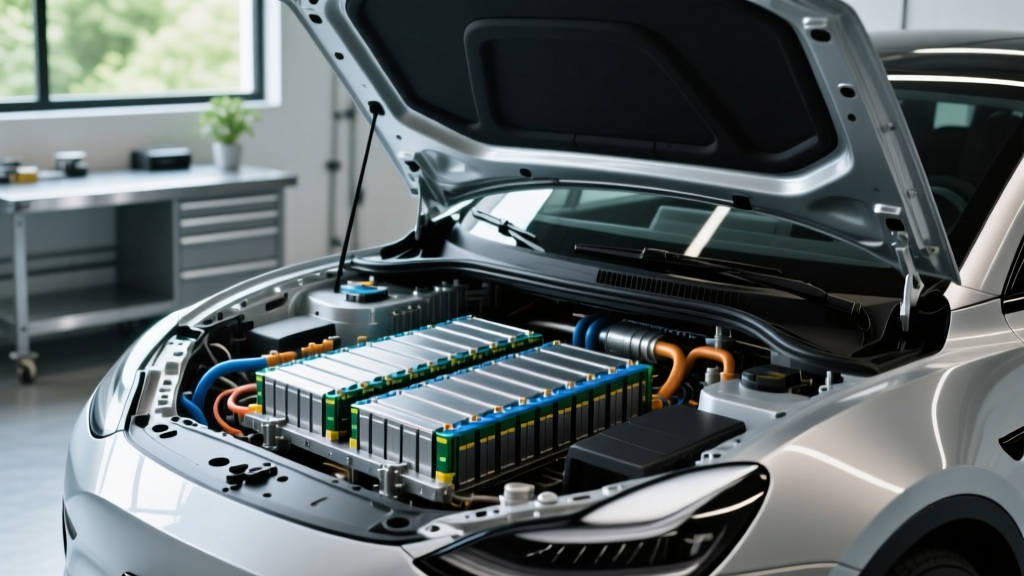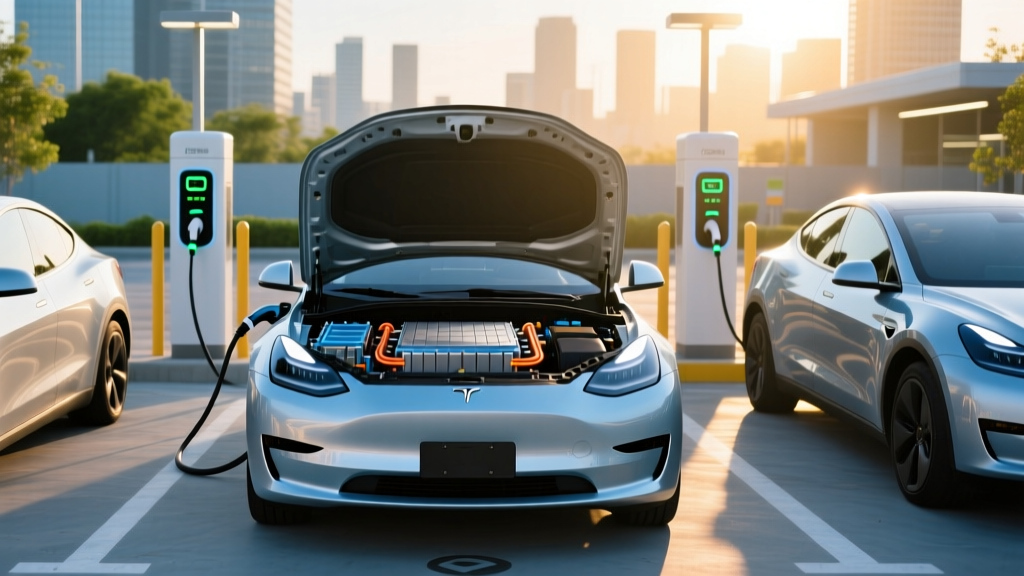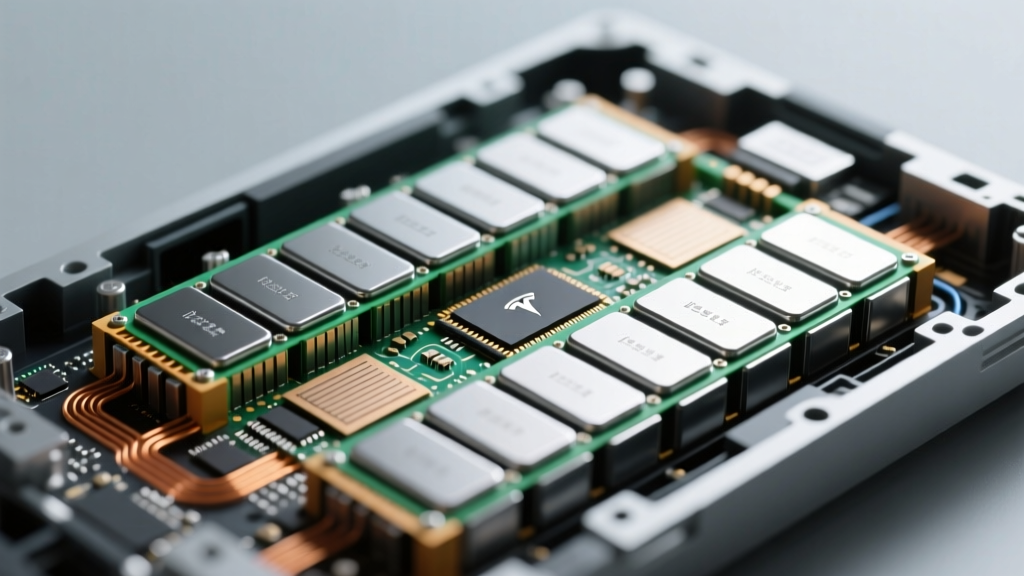
If you've ever wondered what do Tesla batteries look like beneath the floor of a Model 3 or Model Y, the answer is both simpler and more engineered than most people expect. A Tesla traction battery isn't a single monolithic block — it's a precisely arranged assembly of thousands of individual cylindrical or prismatic cells, bundled into modules, managed by sophisticated thermal and electrical control systems, and sealed inside a structural pack that also serves as part of the vehicle's chassis.
This guide tears open the pack (figuratively) to explain what's inside, how Tesla's two primary chemistries — LFP and NMC/NCA — compare, what real-world degradation data shows, and what ownership actually costs when it comes to long-term battery health.
Inside the Pack: Tesla's Battery Architecture
Tesla uses a skateboard-style battery pack mounted flat under the vehicle floor. This lowers the center of gravity and provides structural rigidity. The pack consists of several key layers:
- Cells: The fundamental energy storage units. Tesla has used three primary cylindrical formats — the 18650 (18mm × 65mm, used in older Model S/X), the 2170 (21mm × 70mm, used in Model 3/Y Long Range), and the 4680 (46mm × 80mm, introduced in select Model Y builds from the Austin Gigafactory). Tesla has also sourced LFP prismatic cells from CATL for Standard Range models.
- Modules: Groups of cells wired in series and parallel, with integrated cooling channels and voltage/temperature sensors. A Model 3 Long Range pack, for example, contains roughly 4,416 individual 2170 cells organized into four to five modules.
- Thermal management: A liquid glycol-based cooling/heating system snakes between cell groups to maintain optimal operating temperature (typically 25–40°C). This is what enables Tesla's preconditioning feature, which warms the battery before Supercharger sessions.
- BMS (Battery Management System): The electronic brain that monitors every cell group's voltage, temperature, and balance — managing charge/discharge rates, preventing overcharge or deep discharge, and calculating State of Health (SoH).
- Structural enclosure: An aluminum or steel shell that protects cells from impact and, in newer 4680-based packs, serves as a stressed member of the vehicle frame.
The total usable capacity varies by model and trim. A 2025 Model 3 Long Range carries approximately 75 kWh usable (NMC), while a Model 3 Rear-Wheel Drive uses a roughly 57.5 kWh LFP pack. The Model S Plaid houses around 95 kWh usable in NMC chemistry. These figures represent usable capacity — Tesla, like most automakers, maintains a buffer above and below the displayed 100% and 0% to protect the cells from damage.
LFP vs NMC/NCA: The Two Chemistries Tesla Uses
Tesla is one of the few automakers that offers two distinct battery chemistries across its lineup, and understanding the difference is essential for buyers.
| Attribute | LFP (Lithium Iron Phosphate) | NMC/NCA (Nickel Manganese Cobalt / Nickel Cobalt Aluminum) |
|---|---|---|
| Used in (2025–2026 Tesla lineup) | Model 3 RWD, Model Y RWD (Standard Range) | Model 3 LR, Model Y LR/Performance, Model S, Model X, Cybertruck |
| Energy density | Lower (~160–180 Wh/kg cell-level) | Higher (~250–280 Wh/kg cell-level) |
| Typical pack size | ~57–60 kWh usable | ~75–100 kWh usable |
| Cycle life | 3,000–5,000+ cycles to 80% capacity | 1,000–2,000 cycles to 80% capacity |
| Cold-weather performance | Weaker — more range loss below freezing, slower DC charging in cold | Better — less range loss, faster cold-weather charging |
| Charging recommendation | Tesla recommends charging to 100% at least weekly for BMS calibration | Tesla recommends daily charge limit of 80–90%; 100% only for trips |
| Cost | Lower — no cobalt or nickel; cheaper raw materials | Higher — dependent on nickel and cobalt markets |
| Safety / thermal runaway | More stable chemistry; higher thermal runaway threshold | Less inherently stable; requires more robust BMS and cooling |
| EPA range (example: 2025 Model 3) | 272 mi (RWD) | 363 mi (Long Range AWD) |
Which is better? It depends on your use case. If you commute 30–50 miles daily, charge at home, and want a lower purchase price with maximum cycle longevity, LFP is the pragmatic choice. If you road-trip frequently, live in a cold climate, or need maximum range per charge, NMC/NCA's higher energy density and better cold-weather behavior make it worth the premium.
How Long Do Tesla Batteries Actually Last?
This is the question that dominates EV forums, and the data is reassuring for most owners. Tesla batteries, in normal use, are designed to outlast the useful life of the vehicle itself.
Real-world degradation data points (aggregated from Tesla fleet reports and third-party tracking):
- Year 1 / ~15,000 miles: 2–4% capacity loss (initial formation loss is steepest in the first few dozen cycles).
- Year 3 / ~45,000 miles: 5–8% total loss; degradation curve flattens significantly after the first year.
- Year 5 / ~75,000 miles: 7–10% total loss for NMC packs; LFP packs often show 5–7% loss thanks to superior cycle life.
- Year 8 / ~120,000 miles: 10–15% total loss. Most packs still retain 85–90% of original capacity.
- 200,000+ miles: Tesla's own 2024 Impact Report stated that Model 3/Y packs retain approximately 85% capacity at 200,000 miles on average. Some high-mileage taxis and fleet vehicles have exceeded 300,000 miles on original packs.
The key insight: degradation is non-linear. You lose a few percent quickly in year one, then the curve flattens dramatically. A pack that shows 94% health at 20,000 miles is not on track to hit 70% at 100,000 miles — it will likely plateau in the mid-80s.
How long do EV batteries last in years? Based on current data, a Tesla battery pack should provide 15–20+ years of usable service before reaching 70% capacity retention — the threshold at which most owners would consider replacement. For the vast majority of drivers, the battery will never need replacing during their ownership.
What the Tesla Battery Warranty Covers
Tesla's battery warranty is one of the more straightforward in the industry, though the specifics vary by model and chemistry.
| Model / Trim | Warranty Period | Mileage Limit | Minimum Capacity Retention |
|---|---|---|---|
| Model 3 RWD (LFP) | 8 years | 100,000 miles | 70% |
| Model 3 Long Range / Performance (NMC) | 8 years | 120,000 miles | 70% |
| Model Y (all trims) | 8 years | 120,000 miles | 70% |
| Model S / Model X | 8 years | 150,000 miles | 70% |
| Cybertruck | 8 years | 120,000 miles | 70% |
If your pack drops below 70% capacity within the warranty window (verified via Tesla's onboard BMS diagnostics), Tesla will replace or refurbish the pack at no cost. In practice, warranty claims are rare — the degradation data above shows that most packs remain well above 70% even at the mileage limits.
The warranty covers defects and abnormal degradation. It does not cover damage from accidents, flooding, improper modifications, or deliberate abuse (such as repeatedly ignoring thermal warnings). According to Tesla's official warranty documentation, the warranty transfers to subsequent owners, which supports resale value.
EV Battery Replacement Cost: What You'd Actually Pay
For the small percentage of owners who do need a replacement — typically after 15+ years or 200,000+ miles, or due to physical damage — here's what the economics look like in 2025–2026:
| Model | Pack Size (Usable) | Chemistry | Estimated Replacement Cost (Parts + Labor) |
|---|---|---|---|
| Model 3 RWD | ~57.5 kWh | LFP | $10,000–$13,000 |
| Model 3 Long Range | ~75 kWh | NMC | $14,000–$18,000 |
| Model Y Long Range | ~75 kWh | NMC | $14,000–$18,000 |
| Model S (current gen) | ~95 kWh | NMC | $18,000–$24,000 |
| Cybertruck | ~123 kWh | NMC (4680) | $20,000–$28,000 |
Important context: These are out-of-warranty prices at 2025–2026 rates. Battery cell prices have declined roughly 80% since 2013 (per BloombergNEF data), and continued declines in LFP and 4680 manufacturing suggest replacement costs will keep falling. Tesla also uses refurbished packs for warranty replacements, which reduces waste and cost.
When is replacement typically needed? Almost never during the first 10 years or 150,000 miles. The vast majority of replacements occur due to:
- Physical damage from collisions or ground impacts (covered by insurance, not battery warranty)
- Manufacturing defects caught early under warranty
- Extreme high-mileage use beyond 200,000 miles where capacity has dropped to a level the owner finds impractical
Factors That Affect Tesla Battery Life (and What You Can Control)
Battery degradation isn't just about age — how you use and store the pack matters significantly. Here are the primary factors, ranked by impact:
Battery Care Best Practices:
- Avoid sustained high State of Charge (SoC): For NMC packs, set your daily charge limit to 80% and only charge to 100% when you need the full range for a trip. LFP packs are the exception — Tesla recommends periodic 100% charges for BMS calibration.
- Minimize DC fast charging when possible: Frequent Supercharging (150–250 kW) generates heat and stress. Data from fleet studies suggests that vehicles that primarily charge on Level 2 at home show 2–3% less degradation over 100,000 miles compared to those that exclusively DC fast charge. That said, occasional Supercharging is fine — Tesla's thermal management is excellent.
- Avoid extreme SoC storage: Don't leave your Tesla sitting at 100% or below 10% for days or weeks. For long-term storage, aim for 50% SoC.
- Use preconditioning: When navigating to a Supercharger, the car automatically warms the pack for optimal charge speed and reduced stress. In cold weather, plug in and precondition before driving to reduce range loss and improve regen braking.
- Extreme heat exposure: Parking in direct sun in 110°F+ climates for extended periods accelerates calendar degradation. Use shaded or covered parking when possible. Tesla's Sentry Mode and thermal management will activate cooling if needed, but this draws from the pack.
- Don't obsess over perfection: The BMS is sophisticated enough to protect the pack from most user errors. Follow the 80% daily guideline for NMC, charge LFP to 100% weekly, and drive normally.
How to Check Your Tesla's Battery Health (State of Health)
Tesla doesn't expose a dedicated "battery health percentage" screen the way some competitors do, but there are several reliable methods to assess SoH:
Method 1: Range Comparison
Charge your Tesla to 100% (or, for NMC, calculate from a known SoC). Compare the displayed projected range at full charge to the original EPA sticker. A 2025 Model 3 Long Range that showed 363 miles when new but now shows 330 miles at 100% has roughly 91% capacity retention. Note: displayed range is based on rated (EPA) figures, not real-world driving estimates.
Method 2: Service Mode (DIY)
Tesla's hidden Service Mode (accessible by tapping the Software tab and holding the model name for ~3 seconds) provides access to detailed battery metrics including nominal full pack capacity in kWh. Compare this to the pack's original rated capacity for a precise SoH percentage.
Method 3: Third-Party Apps
Apps like Teslalogger, Tessie, or Stats (iOS) track charging sessions and estimate SoH over time using energy-in vs. SoC-change calculations. These provide trending data that's more useful than a single snapshot.
Method 4: Tesla Service Center Diagnostic
If you suspect abnormal degradation or need a warranty evaluation, a Tesla Service Center can run a full pack diagnostic that provides an official capacity reading. This is the method used for warranty claims.
What's Next: Solid-State, Silicon Anodes, and Future Pack Tech
Tesla's current battery roadmap centers on scaling 4680-cell production with a dry-electrode manufacturing process that reduces energy and cost per cell. But the broader industry is pursuing several next-generation technologies:
- Silicon-dominant anodes: Replacing graphite anodes with silicon can boost energy density by 20–40%. Companies like Sila Nanotechnologies and Group14 are in early commercial production. Tesla's 4680 cells already use a silicon-graphite composite anode. Expect incremental silicon increases through 2027–2028.
- Solid-state batteries: These replace the liquid electrolyte with a solid conductor, promising higher energy density, faster charging, and improved safety. Toyota, Samsung SDI, and QuantumScape have announced pilot production timelines in the 2027–2030 window, but mass-market availability in a production vehicle at scale remains unproven. No Tesla model currently uses or has announced solid-state cells.
- Sodium-ion batteries: CATL and other suppliers are commercializing sodium-ion cells for lower-cost, lower-range applications. These use no lithium, cobalt, or nickel. While not suited for long-range vehicles, they could appear in future entry-level models. Tesla has not announced sodium-ion adoption.
- LMFP (Lithium Manganese Iron Phosphate): An evolution of LFP that adds manganese for ~15–20% higher energy density while retaining LFP's cost and safety advantages. Expected to enter broader production in 2026–2027.
Realistic timeline: Incremental improvements (more silicon, better manufacturing, LMFP) will arrive through 2027. True solid-state packs at scale in affordable consumer vehicles are a 2029–2032 prospect at the earliest. Current Tesla buyers should not delay purchases waiting for solid-state — today's LFP and NMC packs are mature, reliable, and cost-effective.
Frequently Asked Questions
How long do EV batteries last in years and miles?
Based on fleet data, Tesla's battery packs retain approximately 85–90% capacity at 200,000 miles and should provide 15–20+ years of service before reaching the 70% capacity threshold. Most owners will sell or trade the vehicle before the battery requires replacement.
How much does it cost to replace a Tesla battery?
Out-of-warranty replacement costs range from approximately $10,000 for a Model 3 RWD LFP pack to $28,000 for a Cybertruck pack, including parts and labor. Under warranty (8 years / 100,000–150,000 miles depending on model), replacement is free if capacity drops below 70%. Battery prices continue to decline year over year.
What does the Tesla battery warranty cover?
Tesla warrants the battery pack against defects and capacity loss below 70% for 8 years and 100,000–150,000 miles (varies by model). The warranty is transferable to subsequent owners. It does not cover physical damage from accidents, flooding, or unauthorized modifications. See Tesla's warranty page for full terms.
How do I maximize my Tesla battery's lifespan?
For NMC packs: set daily charge to 80%, avoid frequent DC fast charging, don't store at 100% or near 0% for extended periods, and use preconditioning in cold weather. For LFP packs: charge to 100% at least once per week for BMS calibration, and follow the same storage and temperature guidelines. For both: minimize exposure to extreme heat when parked.
LFP vs NMC — which Tesla battery is better?
LFP offers lower cost, longer cycle life (3,000–5,000 cycles), better thermal safety, and the convenience of 100% daily charging — but with lower energy density and weaker cold-weather performance. NMC/NCA delivers more range per charge, better cold-weather behavior, and faster DC charging in low temperatures — at a higher cost and with a recommended 80% daily limit. For commuters and warm-climate drivers, LFP is ideal. For road-trippers and cold-climate owners, NMC is the better fit.
Does frequent Supercharging damage my Tesla battery?
Occasional Supercharging causes negligible additional wear thanks to Tesla's active thermal management. However, fleet data shows that vehicles charged exclusively via DC fast charging may show 2–3% more degradation over 100,000 miles compared to predominantly Level 2-charged vehicles. If you have home charging, use Level 2 for daily needs and reserve Supercharging for road trips.
Can I check my Tesla's battery health myself?
Yes. The simplest method is to charge to a known SoC and compare displayed range to the original EPA figure. For more precision, access Service Mode to read nominal full pack capacity, or use a third-party app like Tessie or Teslalogger to track SoH trends over time. For warranty purposes, a Tesla Service Center diagnostic provides the official reading.