Inside the Pack: What Is a Tesla Battery Made Of?
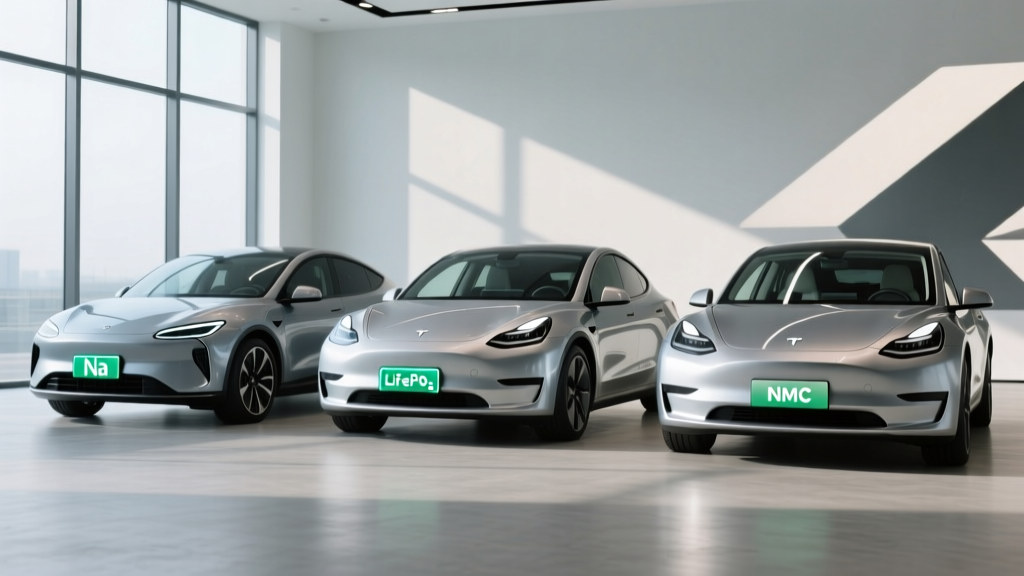
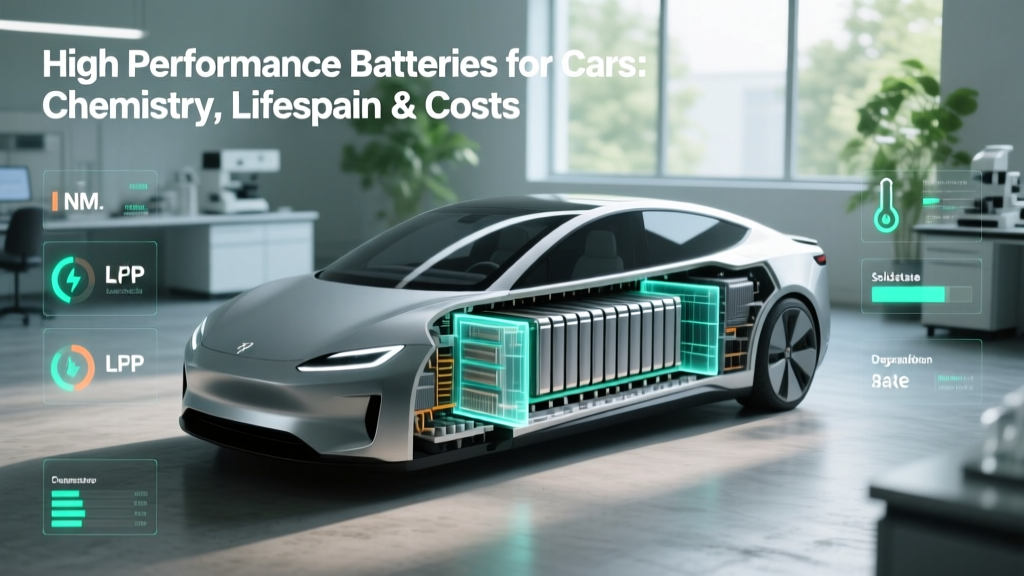
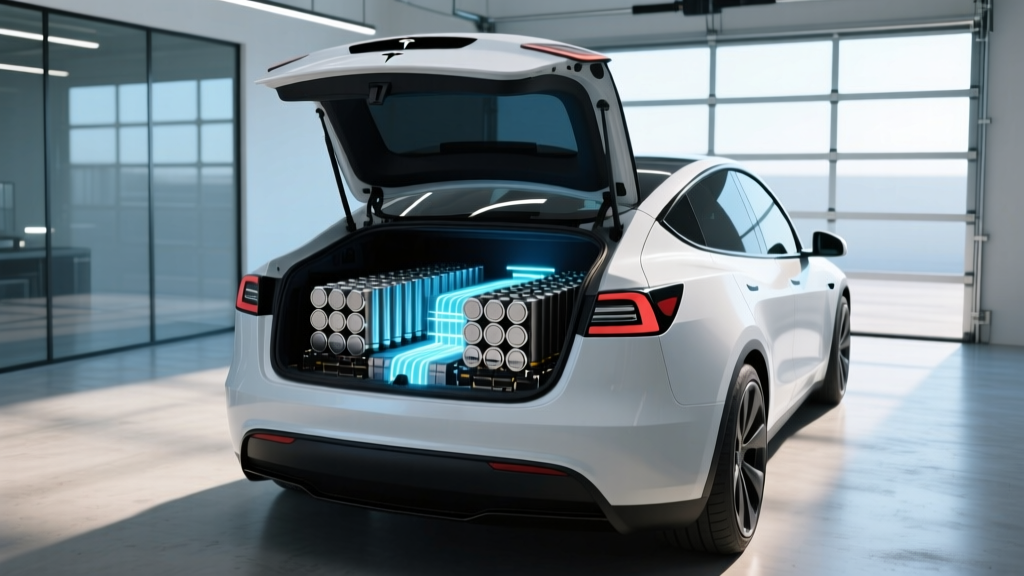
Every Tesla on the road in 2026 is powered by a high-voltage lithium-ion traction battery — but the chemistry inside that pack depends heavily on which model and trim you buy. Tesla currently uses two primary cathode chemistries across its lineup: lithium iron phosphate (LFP) and nickel-based chemistries (NMC/NCA). Both store energy using lithium ions shuttling between a graphite (or graphite-silicon) anode and a metal-oxide or phosphate cathode, but the materials, trade-offs, and ownership implications differ significantly.
Understanding what your Tesla battery is actually made of isn't academic — it dictates how you should charge it, how much range you'll retain after five years, and whether you can safely store the car at 100% state of charge (SoC) overnight. Here's the full breakdown.
LFP vs NMC/NCA: Tesla's Two Battery Chemistries Compared
Tesla sources cells from multiple suppliers — primarily CATL (LFP), Panasonic (NCA/NMC at Gigafactory Nevada), and LG Energy Solution (NMC) — and assigns chemistry based on model and trim. As of the 2026 model year:
- LFP (lithium iron phosphate): Used in the rear-wheel-drive (Standard Range) Model 3 and Model Y. CATL's prismatic cells are the primary supply.
- NCA (nickel cobalt aluminum) / NMC (nickel manganese cobalt): Used in Long Range and Performance variants of the Model 3, Model Y, Model S, and Model X. Panasonic's 4680 cylindrical cells (NCA with silicon anode) and LG's 2170 NMC cells are the main sources.
| Attribute | LFP (Catl Prismatic) | NMC / NCA (Panasonic / LG) |
|---|---|---|
| Energy Density | ~160–180 Wh/kg (lower) | ~250–300 Wh/kg (higher) |
| Typical Usable Capacity | 57–62 kWh (Model 3 RWD) | 75–100 kWh (LR/Performance) |
| Cycle Life | 3,000–5,000+ cycles | 1,500–2,500 cycles |
| Recommended Daily SoC | 100% (Tesla recommends weekly 100% calibration) | 80–90% daily; 100% only for trips |
| Cold-Weather Performance | Weaker — more range loss below 32°F | Better cold tolerance, less range drop |
| Cost per kWh | Lower (~$80–100/kWh at cell level) | Higher (~$120–150/kWh at cell level) |
| Cobalt Content | Zero cobalt | Contains cobalt (NMC) or minimal (NCA) |
| Thermal Stability | Superior — higher runaway threshold | Good, but requires more active thermal management |
Which Chemistry Is Better — and Why?
There is no universally "better" option. LFP wins on longevity, cost, safety, and daily convenience (charge to 100% freely). NMC/NCA wins on energy density — meaning more range in the same physical pack size — and cold-weather usability. If you commute 30 miles daily and charge at home, LFP is arguably the smarter long-term ownership choice. If you road-trip frequently or live in Minnesota, NMC/NCA's density and cold performance matter more.
How Long Do Tesla Batteries Actually Last?
Tesla's 2025 Impact Report (the most recent published dataset) showed that Model 3 and Model Y batteries retain approximately 85% of original capacity after 200,000 miles — roughly 15 years of average U.S. driving. Model S and Model X packs show similar retention at the same mileage threshold. This aligns with independent data from fleet operators and Tesla owner surveys.
Tesla Battery Degradation: Real-World Data Points
Based on Tesla's published fleet data and third-party analysis (e.g., Recurrent Auto, 2025):
- Year 1 / ~12,000 miles: 2–4% capacity loss (initial formation loss)
- Year 3 / ~36,000 miles: 5–8% total loss
- Year 5 / ~60,000 miles: 8–12% total loss
- Year 8 / ~100,000 miles: 10–15% total loss
- Year 12+ / ~150,000–200,000 miles: 12–18% total loss
Key insight: Degradation is non-linear. The steepest drop occurs in the first 12–18 months, then the curve flattens considerably. Most Tesla packs will outlast the vehicle's body, suspension, and interior before reaching end-of-life (defined as <70% capacity).
What Counts as "End of Life"?
An EV battery is considered at end-of-life when it drops below 70% of original capacity — the threshold at which range reduction becomes noticeably inconvenient for most drivers. At current degradation rates, reaching that point typically requires 250,000–350,000 miles for NMC/NCA packs and potentially 400,000+ miles for LFP packs. For context, the average American drives 13,500 miles per year, meaning most Tesla batteries will functionally outlive two decades of ownership.
Tesla Battery Warranty: What's Covered and What Isn't
Tesla's high-voltage battery warranty is among the most straightforward in the industry. Here are the current terms for 2026 model-year vehicles:
| Model / Trim | Warranty Period | Mileage Cap | Minimum Capacity Retention |
|---|---|---|---|
| Model 3 RWD (LFP) | 8 years | 100,000 miles | 70% |
| Model 3 Long Range / Performance | 8 years | 120,000 miles | 70% |
| Model Y (all trims) | 8 years | 120,000 miles | 70% |
| Model S / Model X | 8 years | 150,000 miles | 70% |
What's covered: Battery failure, defect, or capacity dropping below 70% of nominal kWh within the warranty period. Tesla will replace or refurbish the pack at no cost. The drive unit (motor and inverter) is covered under the same terms.
What's not covered: Gradual degradation above 70% (which is considered normal wear), damage from accidents, flooding, tampering, or using non-approved charging equipment. Tesla also excludes coverage if the vehicle's battery management system (BMS) has been modified or if the car was salvaged/rebuilt.
According to Tesla's official warranty documentation, refurbished replacement packs may be used — they'll meet the 70% threshold but won't necessarily be brand-new cells.
How Much Does a Tesla Battery Replacement Cost?
Out-of-warranty battery replacement is the single biggest fear for prospective EV buyers — but it's also the least likely expense to materialize. That said, here are realistic cost ranges based on service center invoices shared by owners and third-party repair data:
| Model | Battery Size (Usable kWh) | Chemistry | Estimated Replacement Cost |
|---|---|---|---|
| Model 3 RWD | ~57–62 kWh | LFP | $8,000–$12,000 |
| Model 3 Long Range | ~75–79 kWh | NMC/NCA | $12,000–$16,000 |
| Model Y Long Range / Perf. | ~75–82 kWh | NMC/NCA | $13,000–$17,000 |
| Model S (2021+) | ~95–100 kWh | NMC/NCA | $16,000–$22,000 |
| Model X (2021+) | ~95–100 kWh | NMC/NCA | $17,000–$23,000 |
These figures include parts and labor at a Tesla Service Center. Independent EV shops may offer refurbished packs for 20–30% less. Critically, full battery replacement outside of warranty is rare — most out-of-warranty failures involve individual modules or the BMS rather than the entire pack, which can be repaired for $2,000–$5,000.
What Affects Tesla Battery Life — and How to Maximize It
Battery degradation is driven by chemistry, temperature, and how electrons are pushed in and out. Here are the factors that matter most, ranked by impact:
Tesla Battery Health: Do's and Don'ts
- Do charge to 100% regularly if you have LFP. Tesla explicitly recommends charging LFP Model 3/Y to 100% at least once per week. LFP cells need full-charge calibration for accurate SoC estimation, and the chemistry tolerates high SoC far better than NMC.
- Don't store NMC/NCA at 100% for extended periods. If you have a Long Range or Performance model, set the daily charge limit to 80%. Only charge to 100% when you're leaving within a few hours for a road trip.
- Do minimize DC fast charging when possible. Occasional Supercharging is fine — Tesla's thermal management handles it well. But daily reliance on 150–250 kW DC fast charging accelerates degradation slightly. Recurrent Auto's 2024 study found that Teslas that fast-charged more than 90% of the time showed ~1–2% additional degradation over three years versus those that primarily used Level 2.
- Don't let the battery sit at very low SoC (<10%) for days. Deep discharge combined with time stresses the anode. If you're traveling and leaving the car, plug in and set the limit to 50%.
- Do precondition in cold weather. Use the Tesla app to precondition the battery before driving or charging in sub-40°F conditions. Cold lithium plating is a real degradation mechanism, and preconditioning warms the cells to optimal operating temperature.
- Don't obsess about avoiding Superchargers on road trips. The difference between a road-trip-heavy and a home-charging-only owner over 100,000 miles is typically 1–3% capacity — not enough to change your daily driving experience.
How to Check Your Tesla's Battery Health (State of Health)
Tesla doesn't display a State of Health (SoH) percentage directly in the car's interface. Here are the methods owners use:
- Tesla Service Mode: On the touchscreen, tap Software → press and hold the model name for 3 seconds → type "service" → enter Service Mode. Navigate to Battery Health to view estimated capacity in kWh versus the nominal pack size. This is the most accurate owner-accessible method.
- Third-party apps: Apps like Tessie and Stats for Tesla pull SoH data via Tesla's API and present it with historical trend graphs.
- Tesla Service Center: Request a battery health report during a service visit. Tesla technicians can run a full diagnostic that includes cell balancing data and internal resistance measurements.
Emerging Battery Tech: Solid-State and Silicon Anodes
Tesla's 4680 cell — currently used in the Cybertruck and some Model Y variants built at Giga Texas — already incorporates a silicon-dominant anode, replacing much of the graphite. Silicon can theoretically store roughly 10× more lithium ions per gram than graphite, boosting energy density. The challenge has been silicon's tendency to swell during charging (up to 300% volume expansion), which Tesla and Panasonic have addressed through proprietary binder materials and nano-structuring.
As for solid-state batteries — which replace the liquid electrolyte with a solid conductor for potentially higher energy density, faster charging, and improved safety — they remain in pre-production. Toyota has announced a limited 2027–2028 deployment, and companies like QuantumScape and Solid Power are in advanced testing with other automakers. Tesla has not announced a solid-state timeline. Realistically, solid-state packs are unlikely to appear in a Tesla production vehicle before 2029–2030, and initial costs will limit them to premium trims.
For buyers in 2026, today's LFP and NMC/NCA chemistries are mature, well-understood, and backed by extensive real-world data. Waiting for solid-state is not a practical purchase strategy.
Frequently Asked Questions
How long do Tesla batteries last in years and miles?
Based on Tesla's published fleet data, the average Model 3/Y battery retains ~85% capacity at 200,000 miles. At the U.S. average of 13,500 miles per year, that's roughly 15 years before reaching 85%. Reaching the 70% end-of-life threshold typically takes 250,000–350,000+ miles (18–26 years). Most Tesla batteries will outlast the car's body and interior.
How much does it cost to replace a Tesla battery?
Out-of-warranty replacement ranges from approximately $8,000 (Model 3 RWD, LFP) to $23,000 (Model X, large NMC/NCA pack) including labor at a Tesla Service Center. However, full pack replacement outside of warranty is rare — most issues involve individual modules or electronics, repairable for $2,000–$5,000. Under warranty (8 years / 100,000–150,000 miles depending on model), replacement is free if capacity drops below 70%.
What does the Tesla battery warranty actually cover?
Tesla covers battery defects, failures, and capacity loss below 70% of original capacity for 8 years and 100,000 miles (Model 3 RWD), 120,000 miles (Model 3 LR/Performance, Model Y), or 150,000 miles (Model S/X). Gradual degradation above 70% is considered normal wear and is not covered. Tesla may use refurbished packs for warranty replacements. See Tesla's warranty page for full terms.
How do I check my Tesla's battery health?
Access Tesla Service Mode on the touchscreen (Software → hold model name → type "service") and navigate to Battery Health for an estimated kWh reading versus nominal capacity. Third-party apps like Tessie can also pull this data via Tesla's API. For a comprehensive report, request a battery diagnostic at a Tesla Service Center.
LFP vs NMC — which Tesla battery is better for me?
Choose LFP (Model 3/Y RWD) if you want maximum cycle life, can charge to 100% freely, prioritize lower cost, and live in a moderate climate. Choose NMC/NCA (Long Range/Performance) if you need maximum EPA range, frequently drive in cold weather, or take regular road trips. LFP packs last longer in terms of charge cycles; NMC/NCA packs offer more range per pound and better cold-weather usability.
Does frequent Supercharging damage my Tesla battery?
Tesla's thermal management system actively cools the pack during DC fast charging, mitigating most heat-related degradation. Recurrent Auto's research found only a 1–2% difference in degradation over three years between frequent and infrequent fast-charging Tesla owners. Road-trip Supercharging is not a concern. Daily fast-charging as your primary charging method will slightly accelerate wear, but the real-world impact is modest.
What is Tesla's 4680 battery cell?
The 4680 is a cylindrical cell measuring 46mm in diameter and 80mm in height — significantly larger than the 2170 cells used in most Model 3/Y variants. It features a tabless electrode design for reduced internal resistance and a silicon-dominant anode for higher energy density. As of 2026, 4680 cells are used in the Cybertruck and some Model Y variants from Giga Texas. Production volume is still scaling.
The Practical Takeaway
A Tesla battery in 2026 is a mature, well-engineered component built from either LFP or NMC/NCA lithium-ion cells — each with clearly defined trade-offs. LFP gives you longer cycle life and simpler daily habits; NMC/NCA gives you more range and better cold performance. Both chemistries are backed by an 8-year warranty with a 70% retention floor, and real-world data shows most packs will retain 80–85% capacity at 200,000 miles.
The replacement-cost nightmare scenario — a $15,000+ bill — is real in dollar terms but statistically unlikely during typical ownership. If you charge sensibly (LFP to 100%, NMC to 80% daily, precondition in cold weather), your Tesla's battery will very likely outlast the rest of the car.