Tesla Battery Capacity kWh: What's Actually in the Pack?
When buyers search for Tesla battery capacity kWh, they're usually trying to answer one of three questions: How far will it go? How long will it last? And what will it cost if something goes wrong? The answers depend heavily on which Tesla model you drive, which chemistry sits inside the pack, and how you treat it over a decade of ownership.
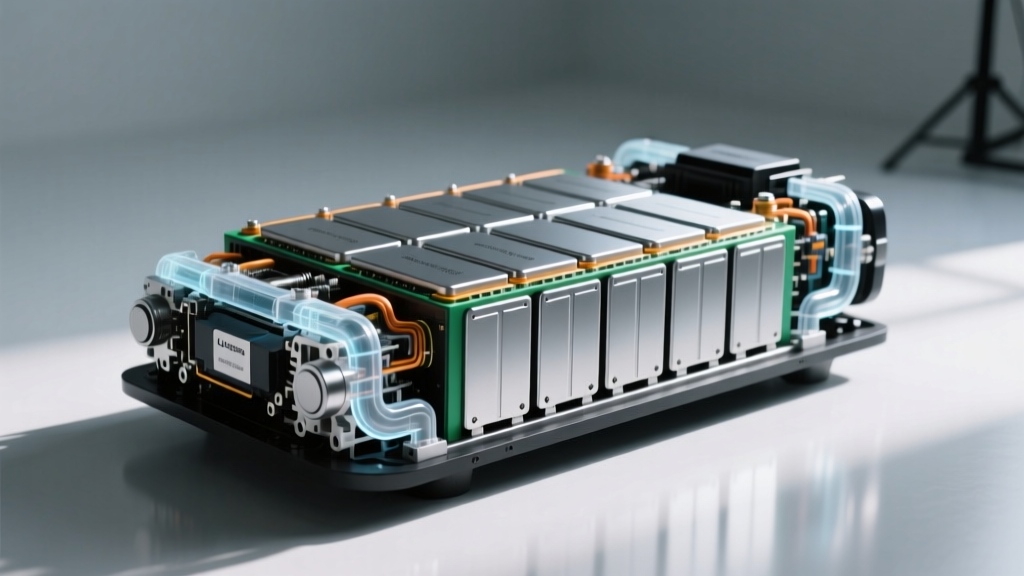
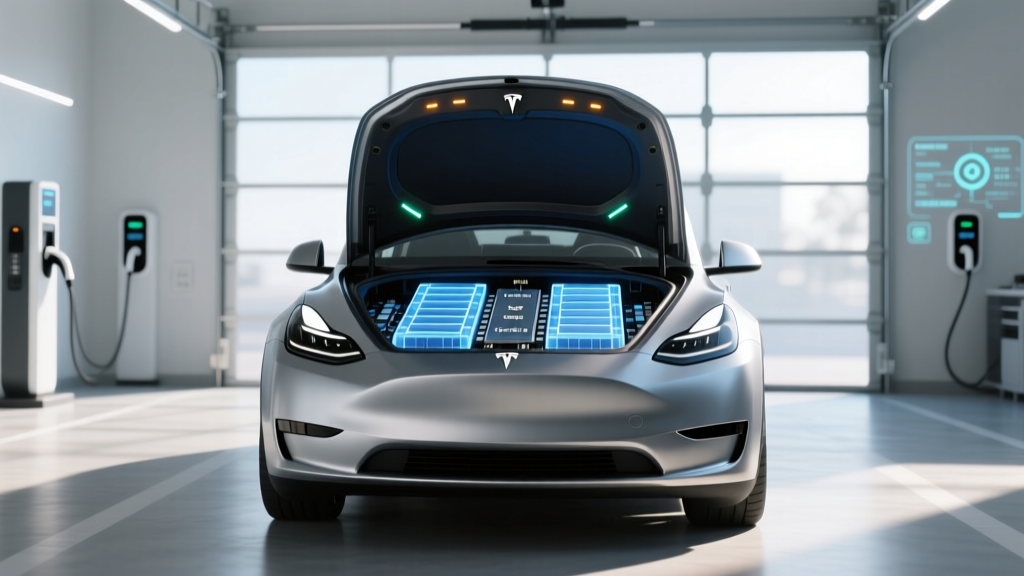
Tesla currently uses two distinct battery chemistries across its lineup: lithium iron phosphate (LFP) in the Model 3 and Model Y Rear-Wheel Drive variants, and nickel-based chemistries (NCA/NMC) in Long Range and Performance trims. The usable capacity ranges from roughly 57.5 kWh in the base Model 3 RWD to approximately 82 kWh in the Model S and Model X Long Range packs. But raw kWh only tells part of the story — chemistry determines how that capacity holds up over 100,000 miles, how it performs in freezing weather, and whether you can safely charge to 100% daily.
| Model / Trim | Usable kWh (approx.) | Chemistry | EPA Range | Supplier |
|---|---|---|---|---|
| Model 3 RWD | ~57.5 kWh | LFP | 272 mi | CATL |
| Model 3 Long Range AWD | ~75 kWh | NMC/NCA | 341 mi | Panasonic |
| Model 3 Performance | ~75 kWh | NMC/NCA | 315 mi | Panasonic |
| Model Y RWD | ~57.5 kWh | LFP | 260 mi | CATL |
| Model Y Long Range AWD | ~75 kWh | NMC/NCA | 320 mi | Panasonic |
| Model Y Performance | ~75 kWh | NMC/NCA | 295 mi | Panasonic |
| Model S Long Range | ~82 kWh | NMC/NCA | 402 mi | Panasonic |
| Model X Long Range | ~82 kWh | NMC/NCA | 335 mi | Panasonic |
| Cybertruck AWD | ~123 kWh | NMC (4680 cells) | 340 mi | Tesla/Panasonic |
Note: Usable capacity figures are approximate and derived from EPA test data and teardown analyses. Tesla does not publish official kWh figures on its spec sheets. EPA fuel economy data can be cross-referenced for efficiency figures.
LFP vs NMC/NCA: Which Tesla Battery Chemistry Is Right for You?
The single most consequential battery decision a Tesla buyer makes isn't the kWh number — it's the chemistry. Tesla's LFP packs (supplied primarily by CATL) and its nickel-based packs (NCA/NMC, supplied by Panasonic) behave fundamentally differently over their lifetimes.
| Attribute | LFP (Lithium Iron Phosphate) | NMC/NCA (Nickel-Based) |
|---|---|---|
| Energy Density | Lower (~160 Wh/kg cell-level) | Higher (~250–280 Wh/kg cell-level) |
| Range per kWh | Heavier pack reduces efficiency slightly | Lighter pack yields more miles per kWh |
| Cycle Life | 3,000–5,000+ full cycles | 1,000–2,000 full cycles |
| Daily Charging to 100% | Recommended — Tesla advises 100% at least weekly | 80% daily limit recommended; 100% for trips only |
| Cold-Weather Performance | Greater range loss in freezing temps (~30–40%) | Moderate range loss (~20–30%) |
| Cost | Lower — no cobalt or nickel | Higher — nickel and cobalt commodity exposure |
| State of Charge Estimation | Flat voltage curve makes SoC estimation harder | More linear voltage curve, easier BMS estimation |
| Thermal Stability | Excellent — less prone to thermal runaway | Good — requires robust thermal management |
The practical upshot: If you charge at home nightly and want a commuter car you can plug in and forget about, the LFP Model 3 or Model Y RWD is arguably the better long-term ownership experience. You charge to 100% every day, you never think about battery limits, and the cycle life is extraordinary. If you need maximum range for road trips or live in a cold climate where every mile counts in January, the NMC/NCA Long Range pack gives you more usable energy in a lighter package — but you'll need to manage your charge limit more carefully.
How Long Do Tesla Batteries Actually Last? Real Degradation Data
Tesla's 2023 Impact Report (the most recent comprehensive dataset published by the company) showed that Model 3 and Model Y batteries retain approximately 85% of their original capacity after 200,000 miles. That's a 15% loss over roughly 13–15 years of average driving. For the Model S and Model X, the same report indicated roughly 88% retention at 200,000 miles.
Typical Tesla Battery Degradation Curve (NMC/NCA packs, aggregated fleet data):
- Year 1 / 15,000 mi: ~3–5% loss (initial formation drop)
- Year 3 / 45,000 mi: ~7–9% total loss
- Year 5 / 75,000 mi: ~9–11% total loss
- Year 8 / 120,000 mi: ~12–14% total loss
- Year 10+ / 150,000+ mi: ~14–17% total loss (curve flattens significantly)
Sources: Tesla Impact Reports, Recurrent Auto fleet data, and independent owner tracking via Teslamate.
Several important nuances emerge from this data. First, degradation is not linear. The steepest drop occurs in the first year — often called "formation loss" — as the solid electrolyte interface (SEI) layer stabilizes. After that, the curve flattens considerably. A battery that has lost 10% in five years may only lose another 5% over the next five.
Second, LFP packs appear to degrade more slowly in terms of cycle life but can exhibit more variance in BMS-estimated range due to their flat voltage curve. Owners sometimes see the displayed range fluctuate more than the actual capacity warrants. Periodic 100% charges help the BMS recalibrate.
Third, the Cybertruck's 4680 cells represent a newer form factor with a structural battery pack design. Long-term degradation data for this cell is still limited (the truck launched in late 2023), but early indicators from high-mileage owners suggest comparable or slightly improved retention versus the 2170 cells used in Model 3/Y Long Range.
Tesla Battery Warranty: What's Covered and What Isn't
Tesla's battery and drive unit warranty is one of the stronger guarantees in the EV industry, but the specific terms vary by model and trim.
| Model | Warranty Period | Mileage Limit | Minimum Capacity Retention |
|---|---|---|---|
| Model 3 RWD (LFP) | 8 years | 100,000 miles | 70% |
| Model 3 Long Range / Performance | 8 years | 120,000 miles | 70% |
| Model Y RWD (LFP) | 8 years | 100,000 miles | 70% |
| Model Y Long Range / Performance | 8 years | 120,000 miles | 70% |
| Model S / Model X | 8 years | 150,000 miles | 70% |
| Cybertruck | 8 years | 120,000 miles | 70% |
What the warranty covers: If your battery falls below 70% of its original usable capacity within the warranty period (verified via Tesla's diagnostic tools), Tesla will repair or replace it to bring retention back to at least 70%. The warranty also covers manufacturing defects in the battery and drive unit.
What it doesn't cover: Normal degradation above the 70% threshold is not a warranty claim. Damage from accidents, flooding, or unauthorized modifications is excluded. Tesla also notes that the warranty does not guarantee a specific range — only capacity retention. Since range is affected by driving habits, temperature, and tire condition, a drop in displayed range alone is not sufficient for a claim.
The 70% threshold is important context. A Model 3 Long Range with a 75 kWh usable pack that degrades to 52.5 kWh still delivers roughly 230–240 miles of real-world range — adequate for most daily driving. In practice, very few Tesla owners have reported warranty replacements due to capacity loss alone; most replacements involve manufacturing defects like cell imbalance or BMS failures.
How Much Does a Tesla Battery Replacement Cost?
Out-of-warranty battery replacement is the scenario that generates the most anxiety among prospective EV buyers. The reality is that most Tesla batteries outlast the vehicle itself, but if you do need a replacement, here's what the numbers look like in 2025–2026:
| Model | Battery Pack Size | Estimated Parts Cost | Estimated Labor | Total Range |
|---|---|---|---|---|
| Model 3 RWD (LFP) | ~57.5 kWh | $8,000–$11,000 | $1,500–$2,500 | $9,500–$13,500 |
| Model 3/Y Long Range | ~75 kWh | $12,000–$16,000 | $1,500–$2,500 | $13,500–$18,500 |
| Model S / Model X | ~82 kWh | $14,000–$20,000 | $2,000–$3,000 | $16,000–$23,000 |
| Cybertruck | ~123 kWh | $18,000–$25,000 | $2,500–$4,000 | $20,500–$29,000 |
These figures are based on service center invoices shared by owners and independent repair shops. Tesla does not publish a standard replacement price list. Several factors influence cost:
- Remanufactured vs. new packs: Tesla frequently installs remanufactured packs for warranty and out-of-warranty replacements. These packs are tested to meet minimum capacity thresholds (typically 85–90% of original) and cost significantly less than new packs.
- Module-level repair: In some cases, Tesla or third-party shops can replace individual modules within the pack rather than the entire assembly, reducing cost to $3,000–$7,000 depending on the number of affected modules.
- Declining cell costs: Battery cell pricing has dropped from approximately $150/kWh in 2022 to roughly $100–115/kWh in 2025 for NMC cells, with LFP cells below $80/kWh. Replacement costs continue to trend downward.
When is replacement actually needed? Based on fleet data from Recurrent Auto and Tesla's own reports, complete battery failure before 150,000 miles is rare. The vast majority of Tesla vehicles are scrapped or sold due to body damage, technology upgrades, or lifestyle changes — not battery failure. The "$20,000 battery replacement" fear, while real in dollar terms, is statistically unlikely to affect most owners.
Factors That Accelerate (or Preserve) Tesla Battery Health
Battery degradation isn't purely a function of time or mileage. How you charge, drive, and store your Tesla has measurable impact on long-term State of Health (SoH).
Battery Care Best Practices for Tesla Owners
- LFP owners — charge to 100% regularly: Tesla explicitly recommends setting the charge limit to 100% for daily use on LFP packs and charging to full at least once per week. This helps the BMS maintain accurate SoC estimation.
- NMC/NCA owners — set daily limit to 80%: For Long Range and Performance models, keep the daily charge limit at 80%. Only charge to 100% when departing on a road trip, and try to time it so the car doesn't sit at 100% for extended periods.
- Minimize DC fast charging when possible: Occasional Supercharging is fine — Tesla's thermal management system is robust. But daily DC fast charging accelerates degradation. Studies show that vehicles that primarily use Level 2 home charging degrade 1–3% less over 100,000 miles than those relying exclusively on DCFC.
- Avoid prolonged storage at extreme SoC: Don't leave your Tesla sitting at 100% or below 10% for weeks. If storing for an extended period, Tesla recommends leaving the vehicle plugged in with the charge limit set to 50%.
- Precondition before Supercharging: Navigate to a Supercharger using the car's built-in navigation. This triggers battery preconditioning, warming the pack to optimal temperature for fast charging and reducing stress on the cells.
- Cold climate tip — plug in when parked: In sub-freezing temperatures, keeping the Tesla plugged in (even at Level 1) allows the thermal management system to maintain pack temperature without draining the battery. This reduces cold-induced degradation and preserves range.
One often-overlooked factor is calendar aging — degradation that occurs regardless of mileage. A Tesla that sits in a hot garage in Phoenix for five years at 90% SoC will degrade more than one driven 80,000 miles in moderate Seattle temperatures with 80% daily limits. Heat and high state of charge are the two biggest calendar-aging accelerants.
How to Check Your Tesla's Battery State of Health (SoH)
Tesla does not expose a direct "battery health percentage" in the vehicle's UI the way some competitors do. However, owners have several methods to assess SoH:
Method 1: The Range Math Approach. Charge your Tesla to 100% (for LFP) or note the projected range at your typical charge limit and calculate back to 100%. Compare the displayed range at 100% to the original EPA sticker. A Model 3 Long Range that originally displayed 341 miles at 100% and now shows 310 miles has approximately 91% SoH. This method isn't perfectly precise — displayed range is affected by driving style, temperature, and tire condition — but it provides a reasonable estimate.
Method 2: Tesla Service Mode. Some Tesla models allow access to Service Mode (activated via the Software screen), which includes a "Health Test" function. This runs a controlled discharge and provides a more accurate capacity measurement. Tesla has periodically restricted and re-enabled this feature through software updates.
Method 3: Third-party apps. Apps like Teslamate (self-hosted) and Tessie track charging sessions and can estimate SoH by comparing energy added during charges to the displayed SoC percentage change. Over dozens of charges, this averaging method converges on a reasonably accurate health estimate.
Method 4: Tesla Service diagnostic. If you suspect a battery issue, Tesla service centers can run a full diagnostic that reads individual cell voltages, module balance, and total pack capacity. This is the most authoritative measurement and is the basis for any warranty claim.
Looking Ahead: Solid-State, Silicon Anode, and Next-Gen Cells
Next-generation battery technology is advancing, but timelines matter. Here's a realistic assessment of what's on the horizon for Tesla and the broader EV industry:
Silicon-dominant anodes: Companies like Sila Nanotechnologies and Group14 are producing silicon-carbon composite anode materials that increase energy density by 15–25% compared to graphite anodes. These are already appearing in limited production vehicles (the Mercedes G 580 EQ uses a Sila anode). Tesla is expected to incorporate higher-silicon anodes into future 4680 cell revisions, potentially boosting Cybertruck and next-gen vehicle range without increasing pack size. Timeline: incremental adoption through 2026–2028.
Semi-solid-state cells: Manufacturers like NIO (150 kWh semi-solid pack) and QuantumScape (Volkswagen-backed) have demonstrated cells with solid or semi-solid electrolytes that offer improved energy density and safety. However, production volumes remain extremely limited, and costs are multiples of current lithium-ion cells. Tesla has not announced adoption of solid-state technology. Timeline: limited production vehicles 2027–2029; mainstream adoption unlikely before 2030+.
Sodium-ion batteries: CATL has begun shipping sodium-ion packs in Chinese-market vehicles. These offer lower cost and excellent cold-weather performance but significantly lower energy density (~120–140 Wh/kg). They are unlikely to appear in US-market Teslas for range-critical models but could serve future entry-level vehicles. Timeline: possible in budget EVs 2027+, not expected in current Tesla lineup.
For buyers making a decision today, current lithium-ion technology (both LFP and NMC/NCA) is mature, well-understood, and backed by extensive real-world data. Waiting for solid-state means waiting years with no guaranteed pricing advantage.
Tesla Battery Capacity kWh: Frequently Asked Questions
How long do Tesla batteries last in years and miles?
Based on Tesla's fleet data and independent tracking, most Tesla batteries retain 85–88% of original capacity at 200,000 miles. At an average of 13,500 miles per year, that's roughly 15 years of use before reaching 85% retention. Complete failure before 150,000 miles is statistically uncommon. Many Tesla batteries will outlast the vehicle's body, interior, and technology relevance.
How much does it cost to replace a Tesla battery?
Out-of-warranty replacement costs range from approximately $9,500 for a Model 3 RWD LFP pack to $23,000+ for a Model S/X pack, including labor. Remanufactured packs and module-level repairs can reduce this cost significantly. Battery cell prices continue to decline, and replacement costs in 2026 are lower than they were in 2022. Under warranty, replacement is free if capacity drops below 70%.
What does the Tesla battery warranty cover?
Tesla covers the battery and drive unit for 8 years with mileage limits ranging from 100,000 miles (RWD models) to 150,000 miles (Model S/X). If the battery falls below 70% of original capacity within the warranty period, Tesla will repair or replace it. The warranty covers manufacturing defects but excludes damage from accidents, misuse, or unauthorized modifications. Normal degradation above the 70% threshold is not covered.
How do I maximize my Tesla battery's lifespan?
For NMC/NCA packs: set the daily charge limit to 80%, minimize DC fast charging, avoid prolonged storage at 100% or below 10%, and precondition the battery before Supercharging. For LFP packs: charge to 100% regularly (at least weekly) for BMS calibration. For all packs: keep the vehicle plugged in during extreme cold, and avoid leaving it at high SoC in extreme heat for extended periods.
LFP vs NMC — which Tesla battery is better?
Neither is universally better; they optimize for different priorities. LFP wins on longevity (3,000–5,000+ cycles vs. 1,000–2,000), cost, and daily convenience (charge to 100% freely). NMC/NCA wins on energy density (more range in a lighter pack), cold-weather performance, and SoC estimation accuracy. If you're a home-charging commuter who values simplicity and maximum cycle life, choose LFP. If you need maximum range for road trips or live in a cold climate, choose NMC/NCA Long Range.
Does frequent Supercharging damage my Tesla battery?
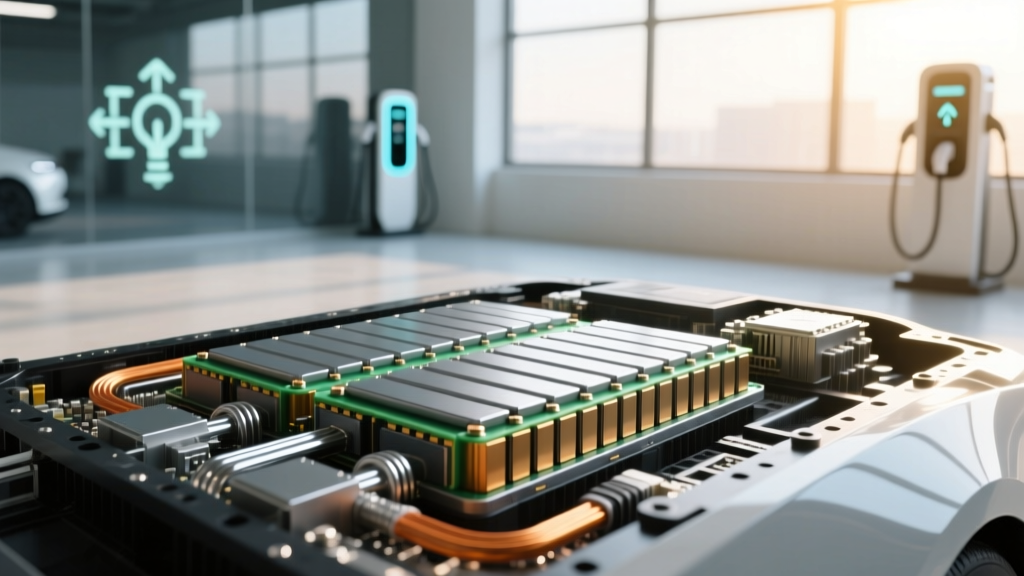
Occasional Supercharging has minimal impact thanks to Tesla's liquid thermal management system, which actively cools the pack during DC fast charging. However, exclusive reliance on DCFC over hundreds of thousands of miles does accelerate degradation compared to predominantly Level 2 home charging. Fleet data suggests a 1–3% additional capacity loss at 100,000 miles for vehicles that primarily use DCFC. For road trips, Supercharge freely. For daily needs, Level 2 is gentler.
Can I check my Tesla battery health myself?
Yes, though Tesla doesn't provide a direct health percentage in the UI. The most accessible method is charging to 100% and comparing displayed range to the original EPA figure. Third-party apps like Tessie and Teslamate estimate SoH by tracking energy added across charging sessions. For the most accurate measurement, a Tesla Service center diagnostic reads individual cell and module data.
Sources: EPA Fuel Economy Guide, IRS §30D Clean Vehicle Credit, Tesla Impact Reports, Recurrent Auto battery research. All specs reflect 2025–2026 model year vehicles. Tax credit eligibility is subject to income limits, MSRP caps, and battery sourcing requirements — consult a tax professional for personal eligibility.