Which Battery Chemistry Is in Your Tesla — and Why It Matters
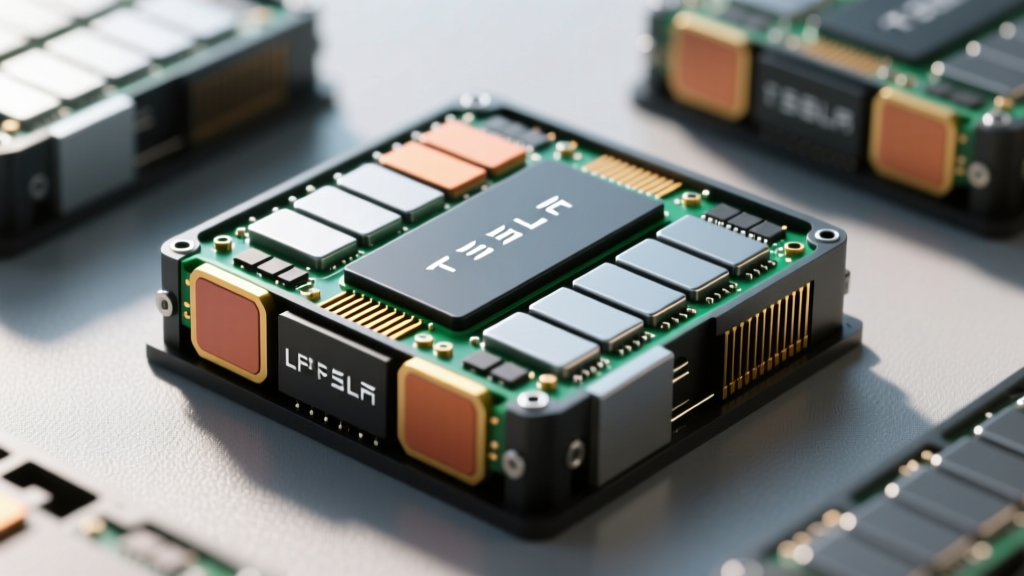
Not every Tesla rolling off the Fremont, Austin, or Shanghai line carries the same battery. Since 2021, Tesla has split its traction-battery strategy into two distinct chemistries: LFP (lithium iron phosphate) and NMC/NCA (nickel manganese cobalt / nickel cobalt aluminum). The chemistry inside your pack dictates everything from how far you can drive on a charge to how you should manage daily state of charge (SoC) for maximum longevity.
As of the 2026 model year, the breakdown is roughly:
- Model 3 RWD and Model Y RWD (Standard Range): LFP prismatic cells, primarily sourced from CATL.
- Model 3 Long Range / Performance, Model Y Long Range / Performance: NMC or NCA cylindrical cells (2170 or 4680 format), sourced from Panasonic, LG Energy Solution, and Tesla's own in-house 4680 production.
- Model S and Model X: NMC/NCA packs (100 kWh class), Panasonic-supplied.
- Cybertruck (AWD / Cyberbeast): 4680-format NMC/NCA cells manufactured at Tesla's Austin facility.
This isn't just a supply-chain footnote — it changes how you own the car day-to-day.
LFP vs NMC/NCA: Chemistry Trade-Offs Compared
LFP (LiFePO4) and NMC/NCA chemistries sit at opposite ends of the cost-versus-energy-density spectrum. Here's how they stack up across the metrics that matter to owners:
| Attribute | LFP (Lithium Iron Phosphate) | NMC / NCA (Nickel-Based) |
|---|---|---|
| Energy density (cell-level) | ~160–180 Wh/kg | ~250–300 Wh/kg |
| Typical Tesla pack size | ~57–60 kWh usable (Model 3 RWD) | ~75–100 kWh usable (LR / Performance / S / X) |
| Cycle life (to 80% capacity) | 3,000–5,000+ cycles | 1,000–2,000 cycles |
| Daily charge recommendation | 100% SoC (Tesla recommends weekly full charges) | 80% SoC daily; 100% for trips only |
| Cold-weather range loss | More pronounced (~30–40% at 20°F) | Moderate (~20–30% at 20°F) |
| DC fast-charge speed (peak) | ~170 kW (Model 3 RWD) | ~250 kW (V3 Supercharger capable) |
| Cobalt content | None | Contains cobalt (NMC) or none (NCA) |
| Cell cost (per kWh) | Lower (~$70–90/kWh at cell level) | Higher (~$100–130/kWh at cell level) |
| Thermal stability / safety | Excellent — higher thermal runaway threshold | Good — requires more active thermal management |
The practical takeaway: If you want the longest-lasting pack with the lowest cost and don't need maximum range, LFP wins. If you need 330+ miles of EPA range, faster DC charging, and better cold-weather performance, NMC/NCA is the better fit — but it demands more careful SoC management.
Tesla Battery Degradation: What the Real Data Shows
Tesla's own Impact Report has historically shown that Model 3 and Model Y packs retain approximately 88% of original capacity after 200,000 miles — meaning roughly 12% degradation over a distance that exceeds what most owners will drive in a decade. Model S and Model X data, which has a longer field history, shows similar retention curves, with some high-mileage examples exceeding 300,000 miles on original packs.
Typical Degradation Curve (NMC/NCA Packs — Model 3 LR, Model S/X):
- Year 1 / 15,000 miles: ~3–5% loss (initial "formation" drop)
- Year 3 / 45,000 miles: ~7–9% total loss
- Year 5 / 75,000 miles: ~9–11% total loss
- Year 8 / 120,000 miles: ~11–14% total loss
- 200,000 miles: ~12–15% total loss
Sources: Tesla Impact Reports, aggregated fleet data from Teslanomics and Recurrent Auto.
Typical Degradation Curve (LFP Packs — Model 3 RWD):
- Year 1 / 15,000 miles: ~1–3% loss
- Year 3 / 45,000 miles: ~4–6% total loss
- Year 5 / 75,000 miles: ~5–7% total loss
- Year 8 / 120,000 miles: ~7–10% total loss
LFP's flatter degradation curve is one of its key advantages — the trade-off is lower energy density.
These numbers represent fleet averages. Individual results depend heavily on charging habits, climate, and how often the pack is exposed to extreme SoC levels or temperatures. A Model 3 Long Range in Phoenix that's DC fast-charged daily to 100% will degrade faster than one in San Francisco charged to 80% on Level 2 overnight.
Tesla's Battery Warranty: What's Covered and What Isn't
Tesla's battery and drive unit warranty is among the most straightforward in the industry, but the details matter — especially the capacity-retention threshold.
| Model | Warranty Duration | Mileage Limit | Minimum Capacity Retention |
|---|---|---|---|
| Model 3 RWD (LFP) | 8 years | 100,000 miles | 70% |
| Model 3 Long Range / Performance | 8 years | 120,000 miles | 70% |
| Model Y RWD (LFP) | 8 years | 100,000 miles | 70% |
| Model Y Long Range / Performance | 8 years | 120,000 miles | 70% |
| Model S / Model X | 8 years | 150,000 miles | 70% |
| Cybertruck | 8 years | 120,000 miles | 70% |
What the warranty covers: Manufacturing defects and capacity loss below the 70% threshold within the warranty period. If your Model 3 Long Range's 75 kWh (usable) pack drops below 52.5 kWh of usable capacity within 8 years or 120,000 miles, Tesla will repair or replace the pack to bring it above that threshold.
What it doesn't cover: Damage from accidents, flooding, or improper use; cosmetic corrosion; range loss due to software updates that don't affect actual capacity; or degradation above the 70% threshold (even if you've lost 25% of range, if the pack still holds above 70%, no warranty claim).
For official warranty documentation, always refer to the Tesla New Vehicle Limited Warranty page, as terms can shift between model years.
Tesla Battery Replacement Cost: What Owners Actually Pay
Replacement cost is the single most cited fear among prospective EV buyers — and the concern most often exaggerated in headlines. Here's the reality based on service-center data, out-of-warranty owner reports, and Tesla's own service pricing as of 2025–2026:
| Model / Pack | Approximate Pack Size | Out-of-Warranty Replacement Cost | Typical Replacement Timeline |
|---|---|---|---|
| Model 3 RWD (LFP) | ~57–60 kWh | $10,000–$14,000 | Rarely needed before 250,000+ mi |
| Model 3 Long Range / Perf. | ~75–82 kWh | $14,000–$18,000 | Rarely needed before 200,000+ mi |
| Model Y LR / Perf. | ~75–82 kWh | $14,000–$18,000 | Rarely needed before 200,000+ mi |
| Model S / Model X | ~90–100 kWh | $18,000–$24,000 | Some replacements at 150,000–200,000 mi |
| Cybertruck | ~123 kWh (est.) | $20,000–$28,000 (est.) | Too new for field data |
Context that matters: The vast majority of Tesla packs never need replacement. Fleet data consistently shows that fewer than 1–2% of packs require full replacement, and most of those are early-life manufacturing-defect claims covered under warranty. A pack that survives its first 30,000 miles without issue will very likely outlast 200,000 miles with gradual, manageable degradation.
Tesla also increasingly offers remanufactured packs as a lower-cost replacement option — typically $8,000–$12,000 depending on the model — where individual degraded modules are replaced rather than the entire pack. This option is more common for Model S and Model X, which use a modular pack architecture.
Factors That Accelerate (or Preserve) Tesla Battery Life
Battery degradation isn't purely a function of time or miles — it's driven by electrochemical stress. The following factors have the most measurable impact on long-term State of Health (SoH):
Battery Care Best Practices for Tesla Owners
- Set daily SoC to 80% (NMC/NCA) or 100% (LFP): Tesla's in-car charge-limit slider should be your first adjustment. NMC/NCA cells degrade fastest when held at 100% for extended periods. LFP cells benefit from regular full charges for cell-balancing accuracy.
- Minimize DC fast charging to road trips: Occasional Supercharging (a few times per month) has negligible impact. Daily DC fast charging, especially at 250 kW V3 stalls, accelerates degradation by ~2–4% over the pack's lifetime compared to Level 2 home charging, according to Recurrent Auto fleet studies.
- Use Scheduled Departure + preconditioning: Tesla's Scheduled Departure feature warms or cools the battery while plugged in, using grid power rather than pack energy. This reduces thermal stress during your first miles and improves regen efficiency.
- Avoid prolonged storage at low or high SoC: If leaving the car for more than a week, set SoC to ~50% and leave it plugged in with a charge limit. Storage at 100% or below 10% for weeks accelerates calendar degradation.
- Don't baby the car in moderate weather: Tesla's thermal management system is sophisticated. In 40–90°F ambient conditions, the car handles battery temperature automatically. Your behavior matters most at temperature extremes.
- Keep Sentry Mode usage reasonable: Sentry Mode draws ~200–300W continuously. Running it 24/7 can add hundreds of partial charge cycles per year, contributing to incremental wear.
Cold-weather specifics: LFP packs lose more range in freezing temperatures than NMC/NCA packs — expect a 30–40% reduction at 20°F for an LFP Model 3 RWD versus 20–30% for an NMC Long Range. Preconditioning via the Tesla app before driving recovers some of this loss by warming the cells, but it's a physics limitation of LFP chemistry, not a defect.
How to Check and Monitor Your Tesla's Battery Health
Tesla doesn't expose a direct State of Health (SoH) percentage in the vehicle's UI the way some competitors do. Here are the methods available to owners:
Method 1: In-Car Range Comparison
Set the display to show rated (EPA) range at 100% charge. Compare the current 100% rated range to the original EPA figure for your model. A Model 3 Long Range that originally displayed 341 miles at 100% but now shows 310 miles has experienced approximately 9% degradation. Note: LFP packs can display inaccurate range estimates unless charged to 100% regularly — this is normal and doesn't indicate a problem.
Method 2: Third-Party Apps
Apps like TeslaFi, Tessie, and Stats (iOS) log charge session data via Tesla's API and can estimate SoH by comparing energy added during a known SoC swing (e.g., charging from 10% to 90%) against the pack's original usable capacity. This is more accurate than range-based estimates because it measures actual kWh, not projected miles.
Method 3: Tesla Service Diagnostic
If you suspect abnormal degradation, a Tesla Service Center can run a full battery health diagnostic remotely or in person. This reads individual module voltage deltas, internal resistance, and precise SoH. There is typically no charge for this if done during a service visit.
Method 4: Recurrent Auto or Similar Services
Recurrent Auto offers free battery health monitoring by connecting to your Tesla's API. They provide a range score that compares your vehicle's current range to similar vehicles in their fleet of over 15,000 EVs — a useful benchmark.
What's Next: Solid-State, Silicon Anodes, and Realistic Timelines
The next generation of battery technology is real — but timelines matter. Here's where things stand as of 2026:
Silicon-dominant anodes: Companies like Sila Nanotechnologies and Group14 are already shipping silicon-blend anode materials that increase energy density by 15–25% at the cell level. Tesla's 4680 cells are expected to incorporate higher silicon content in future iterations, potentially pushing cell-level energy density past 320 Wh/kg. This is an incremental improvement, not a revolution — expect it in refreshed models over the next 2–3 years.
Solid-state batteries: Toyota, Samsung SDI, and QuantumScape have all demonstrated solid-state prototype cells with energy densities exceeding 400 Wh/kg and faster charge acceptance. However, manufacturing yield, cost, and scale remain unsolved challenges. No automaker — including Tesla — has announced a production vehicle with a solid-state pack for delivery before 2028 at the earliest, and widespread availability is more realistically a 2030+ proposition. Solid-state should be viewed as forward-looking, not something to delay a purchase for.
Tesla's 4680 ramp: Tesla's in-house 4680 cells, produced at the Austin cathode/anode facility, are gradually increasing in energy density and production volume. The structural battery pack (where cells serve as a chassis component) is already in production Cybertrucks and is expected to expand to next-generation platforms. The 4680's dry-electrode coating process, once fully mature, promises lower manufacturing cost and higher throughput — but Tesla has been iterating on this for years and it remains a work in progress.
Frequently Asked Questions About Tesla Batteries
How long do Tesla batteries last in years and miles?
Based on fleet data, the average Tesla battery pack retains 85–90% of its original capacity after 200,000 miles or 10+ years. Complete pack failure is rare — fewer than 1–2% of packs require replacement. Most packs will outlast the vehicle's body, interior, and suspension components. LFP packs in Model 3 RWD and Model Y RWD are projected to last even longer due to the chemistry's superior cycle life (3,000–5,000+ cycles to 80% capacity).
How much does a Tesla battery cost to replace?
Out-of-warranty replacement costs range from approximately $10,000 for a Model 3 RWD LFP pack to $24,000+ for a Model S or Model X pack. Remanufactured packs are available for $8,000–$12,000 in many cases. However, most owners never need a replacement — the pack's usable life typically exceeds the car's economic life.
What does the Tesla battery warranty actually cover?
Tesla warrants the battery pack against manufacturing defects and capacity loss below 70% of original capacity for 8 years and 100,000–150,000 miles (depending on model). The warranty does not cover accident damage, flooding, or normal degradation above the 70% threshold. Tesla may replace the pack with a new or remanufactured unit at their discretion.
How do I check my Tesla's battery health?
Compare your 100% rated range to the original EPA figure, use a third-party app like TeslaFi or Tessie to measure actual kWh delivered during charge sessions, or request a diagnostic at a Tesla Service Center. For ongoing monitoring, Recurrent Auto offers free API-connected battery health tracking with fleet-comparison benchmarks.
LFP vs NMC — which Tesla battery is better?
Neither is universally better — they serve different use cases. Choose LFP (Model 3 RWD / Model Y RWD) if you want the longest cycle life, lowest cost, cobalt-free chemistry, and the simplicity of charging to 100% daily. Accept lower EPA range (~272 miles for Model 3 RWD), slower DC fast charging (~170 kW peak), and more cold-weather range loss. Choose NMC/NCA (Long Range / Performance trims) if you need maximum range (330–405 miles EPA), faster Supercharging (~250 kW peak), and better cold-weather performance. Accept higher cost, a daily 80% SoC limit for longevity, and a moderately shorter cycle life. For most daily-commute buyers, LFP is the rational choice; for frequent road-trippers and cold-climate drivers, NMC/NCA earns its premium.