The question "are Tesla batteries bad for the environment?" surfaces constantly in EV debates, often fueled by viral images of open-pit lithium mines and vague claims about toxic waste. The honest answer requires separating the manufacturing footprint from the full lifecycle impact — and understanding how Tesla's battery chemistry has shifted dramatically between 2023 and 2026.
Tesla now uses two distinct chemistries across its lineup: lithium iron phosphate (LFP) in Standard Range models and nickel-based NMC/NCA in Long Range and Performance trims. These chemistries have fundamentally different environmental profiles, degradation behaviors, and lifespans. This guide examines the real data — from mining to recycling — so you can evaluate the environmental claim with numbers, not narratives.
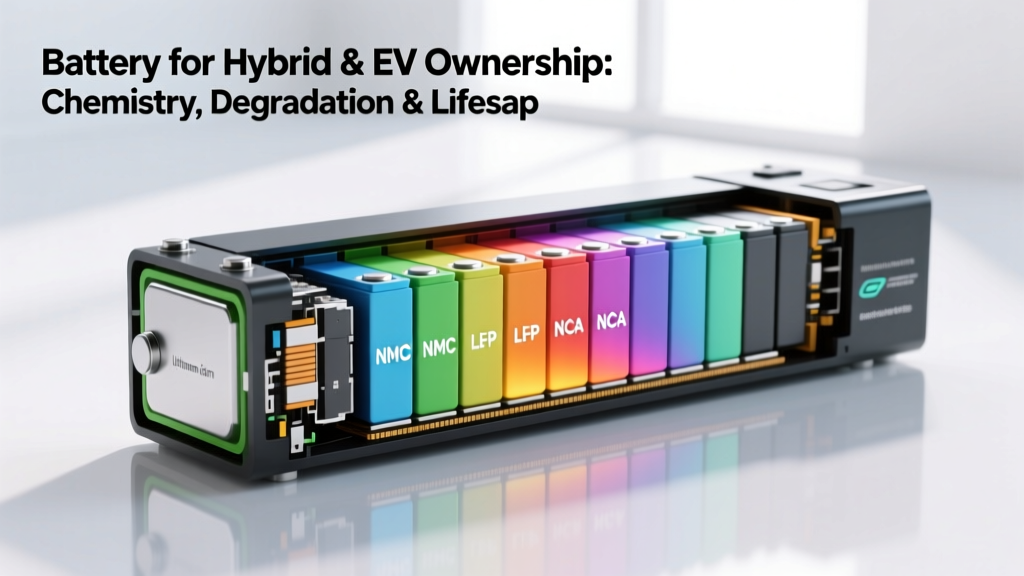
Tesla's Battery Chemistry: LFP vs NMC/NCA Explained
Tesla sources battery cells from multiple suppliers — primarily CATL (LFP cells), Panasonic (NCA/NMC), and LG Energy Solution (NMC). The chemistry inside your Tesla depends on the trim you buy, and that choice has direct environmental implications.
LFP (Lithium Iron Phosphate): Used in Model 3 Standard Range and Model Y Standard Range (RWD). LFP contains no nickel or cobalt — two materials with the most concerning mining footprints. Iron and phosphate are abundant and less environmentally destructive to extract. The trade-off is lower energy density, which means a heavier pack for the same kWh capacity, slightly reducing vehicle efficiency.
NMC/NCA (Nickel Manganese Cobalt / Nickel Cobalt Aluminum): Used in Model 3 Long Range, Model Y Long Range/AWD, Model S, and Model X. These chemistries deliver higher energy density — more range per kilogram — but rely on nickel and cobalt mining, which carries documented environmental and human-rights concerns in supply chains from the DRC and Indonesia.
| Factor | LFP (Standard Range) | NMC/NCA (Long Range / Performance) |
|---|---|---|
| Cobalt content | None | Low-cobalt (~5% in NCA, ~10% in NMC 811) |
| Nickel content | None | High (~80% in NCA/NMC 811) |
| Mining impact | Lower — iron/phosphate widely available | Higher — nickel laterite mining causes deforestation in Indonesia |
| Energy density | ~160 Wh/kg (cell-level) | ~260-300 Wh/kg (cell-level) |
| Cycle life | 3,000-5,000+ cycles to 80% SoH | 1,500-2,500 cycles to 80% SoH |
| Cold-weather performance | More range loss below 32°F (~15-25% reduction) | Better cold performance (~10-15% reduction) |
| Recyclability | Lower material recovery value | Higher recovery value (nickel/cobalt worth reclaiming) |
| Typical Tesla models (2026) | Model 3 RWD, Model Y RWD | Model 3 LR, Model Y LR/AWD, Model S, Model X |
The environmental takeaway: if minimizing mining impact is your priority, the LFP-equipped Standard Range Tesla is the clearly better choice. If you need the range and can accept the nickel supply-chain footprint, NMC/NCA still represents a massive improvement over the cobalt-heavy cells of 2018-2020.
The Manufacturing Carbon Debt: What It Actually Takes to Build a Tesla Battery
Every EV battery starts with a "carbon debt" — the CO₂ emitted during mining, refining, and cell manufacturing before the car drives its first mile. For Tesla's current battery packs, peer-reviewed lifecycle analyses put this figure in a specific range:
- Model 3 Standard Range (60 kWh LFP pack): approximately 3.6-4.8 metric tons of CO₂ equivalent for battery production alone, according to lifecycle data compiled by Our World in Data and the ICCT.
- Model Y Long Range (~82 kWh NMC pack): approximately 5.7-7.4 metric tons CO₂e for battery production.
- Full vehicle manufacturing (including battery): roughly 9-12 metric tons CO₂e for a Tesla, versus ~7 metric tons for a comparable ICE sedan.
That 2-5 ton manufacturing premium is the core of the "EVs are worse" argument. But it's only half the equation.
The Payback Period: When Does a Tesla Become Cleaner Than Gas?
The carbon debt pays back through zero tailpipe emissions during driving. The payback timeline depends on your electricity grid:
- US average grid (2026): ~18,000-22,000 miles of driving to break even with a 30 MPG gas car, per EPA analysis.
- California / renewable-heavy grid: ~12,000-15,000 miles.
- Coal-heavy grid (parts of Midwest/Appalachia): ~30,000-40,000 miles — still achievable within 3-4 years of average driving.
Over a typical 150,000-mile lifespan, a Tesla charged on the US average grid produces roughly 50-60% fewer lifecycle emissions than a comparable gasoline car. The battery isn't environmentally free — but the math overwhelmingly favors it over the vehicle's life.
How Long Do Tesla Batteries Actually Last? Degradation Data
Battery longevity is central to the environmental equation. A pack that lasts 300,000 miles generates far less waste per mile than one needing replacement at 100,000 miles. Tesla publishes fleet degradation data in its annual Impact Report, and third-party tracking from sources like fueleconomy.gov and owner databases confirm the trends.
Tesla Battery Degradation Curve (Fleet Average Data):
| Mileage | Average Capacity Retained (NMC/NCA) | Average Capacity Retained (LFP) |
|---|---|---|
| 0 miles (new) | 100% | 100% |
| 25,000 miles | ~95% | ~97% |
| 50,000 miles | ~92% | ~95% |
| 100,000 miles | ~88-90% | ~93-95% |
| 150,000 miles | ~85-88% | ~91-93% |
| 200,000 miles | ~82-86% | ~89-92% |
Source: Tesla Impact Report fleet data, corroborated by TeslaFi and Recurrent Auto owner datasets. Individual results vary based on charging habits and climate.
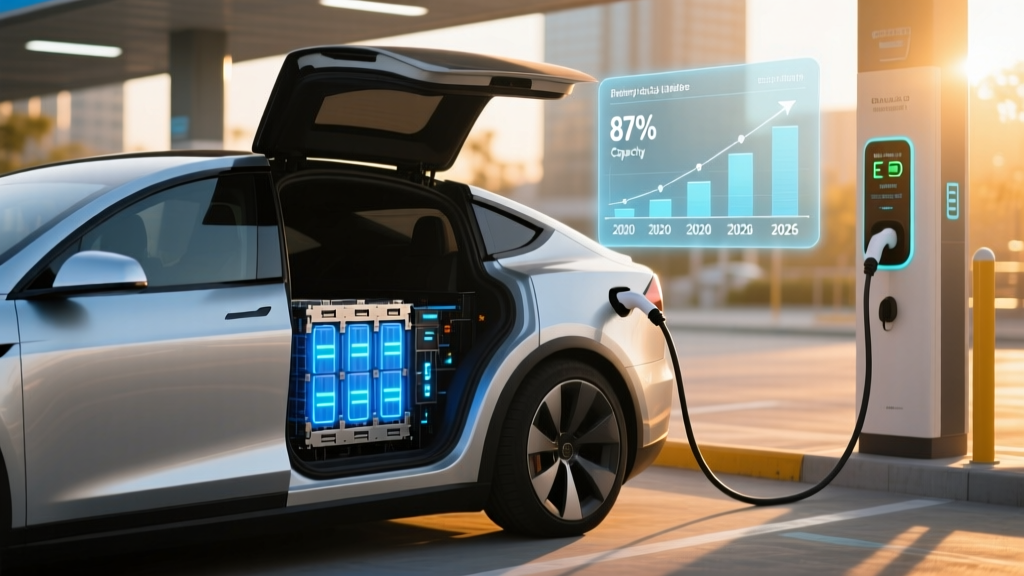
The critical insight: Tesla batteries degrade fastest in the first 20,000-30,000 miles, then the curve flattens significantly. Most packs will retain 85%+ capacity well past 150,000 miles. At 85% retention, a Model Y Long Range with an original EPA range of 330 miles still delivers ~280 miles — more than adequate for daily use.
Tesla Battery Warranty: What's Covered and for How Long
Tesla's battery warranty provides a safety net that also signals the company's own confidence in pack longevity. Here's the current coverage structure:
| Model / Trim | Warranty Period | Mileage Limit | Minimum Capacity Retention |
|---|---|---|---|
| Model 3 RWD (LFP) | 8 years | 100,000 miles | 70% |
| Model 3 Long Range / Performance | 8 years | 120,000 miles | 70% |
| Model Y RWD (LFP) | 8 years | 100,000 miles | 70% |
| Model Y Long Range / Performance | 8 years | 120,000 miles | 70% |
| Model S / Model X | 8 years | 150,000 miles | 70% |
The 70% threshold is the trigger: if your battery drops below 70% of original capacity within the warranty period, Tesla will replace or refurbish it at no cost. In practice, warranty claims for capacity loss are rare — most degradation-related claims involve manufacturing defects or cell imbalance rather than normal wear.
How Much Does It Cost to Replace a Tesla Battery?
This is where fear-mongering peaks. Let's ground it in actual 2026 replacement pricing.
| Model | Battery Size | Chemistry | Estimated Replacement Cost |
|---|---|---|---|
| Model 3 RWD | ~60 kWh | LFP | $8,000 - $12,000 |
| Model 3 Long Range | ~82 kWh | NMC | $12,000 - $16,000 |
| Model Y RWD | ~60 kWh | LFP | $9,000 - $13,000 |
| Model Y Long Range | ~82 kWh | NMC | $13,000 - $17,000 |
| Model S / Model X | ~100 kWh | NMC/NCA | $16,000 - $22,000 |
Costs include parts and labor at Tesla Service Centers. Third-party EV shops may offer refurbished packs at 30-50% lower cost. Prices have declined ~40% since 2020 as cell costs fall.
The context most articles omit: the vast majority of Tesla batteries never need full replacement. Tesla's own fleet data shows less than 1% of packs replaced for degradation — most replacements stem from physical damage (collision, flood) or rare manufacturing defects covered under warranty. A well-maintained Tesla battery will typically outlast the vehicle's body, suspension, and interior.
What Actually Kills EV Batteries? Factors That Accelerate Degradation
Not all Tesla batteries age equally. Your habits determine whether your pack hits 200,000 miles at 88% health or 82%. Here are the verified degradation accelerators:
Battery Longevity Checklist
- Charging to 100% daily (NMC/NCA): Keeping nickel-based cells at full charge stresses the cathode. Tesla recommends 80% daily for NMC/NCA. LFP cells tolerate 100% better — Tesla actually recommends periodic 100% charges for LFP to maintain BMS calibration.
- Frequent DC fast charging: Exclusive Supercharger use (250 kW peak) generates sustained heat. Occasional fast charging is fine; daily reliance accelerates degradation by ~1-3% over 100,000 miles compared to Level 2 home charging.
- Extreme heat exposure: Prolonged parking in 100°F+ ambient without thermal management active degrades cells. Tesla's liquid cooling mitigates this, but a hot-soaked pack still ages faster.
- Deep discharge (below 10% SoC): Letting the battery sit at very low charge for extended periods can cause copper dissolution in the anode. Charge to at least 20% if storing.
- Cold charging without preconditioning: Plugging into a Supercharger with a cold-soaked battery (below 40°F) without preconditioning can cause lithium plating. Always navigate to a Supercharger via the Tesla app to trigger automatic preconditioning.
How to Check Your Tesla's Battery Health (State of Health)
Tesla doesn't expose a direct State of Health (SoH) percentage in the car's UI, but you can assess battery condition through several methods:
- Range comparison method: Charge to 100% (or your normal limit) and note the displayed range. Compare it to the EPA-rated range when new. A Model Y Long Range showing 290 miles at 100% versus its original 330 EPA miles suggests ~88% SoH.
- TeslaFi or Tessie app: These third-party tools log charging sessions and can estimate SoH by comparing energy added (kWh) during a known charge session against the expected capacity.
- Service mode diagnostic: Tesla Service can run a full battery health report. Request this during any service visit, especially before a warranty expires.
- OBD-II dongle with Scan My Tesla: Reads real-time cell voltages, pack temperature, and nominal full-pack kWh (NFP) from the BMS — the most accurate consumer-accessible SoH metric.
For environmental assessment, a battery showing 90%+ SoH at 100,000 miles is performing as expected and will likely serve the vehicle's full life without replacement.
Mining, Recycling, and the Full Environmental Picture
The strongest environmental criticism of Tesla batteries targets upstream mining. Here's the nuanced reality:
Lithium extraction: Most lithium for Tesla cells comes from either hard-rock mining in Australia (spodumene ore, energy-intensive but well-regulated) or brine extraction in South America's lithium triangle (lower energy but high water use in arid regions). Neither is impact-free, but lithium is not a rare earth element — it's the 33rd most abundant element in Earth's crust. The scale concern is real but manageable with improved extraction methods like direct lithium extraction (DLE).
Nickel and cobalt: This is where NMC/NCA carries genuine environmental baggage. Indonesian nickel laterite mining has driven deforestation, and DRC cobalt mining involves documented labor abuses. Tesla has steadily reduced cobalt content — current NCA cells contain less than 5% cobalt — and is pursuing nickel sourcing from operations with verified environmental standards.
Recycling: Tesla partners with Redwood Materials (founded by former Tesla CTO JB Straubel) to recycle end-of-life battery packs. Current hydrometallurgical processes recover 90%+ of nickel, cobalt, and copper, and 80%+ of lithium. Recycled material already feeds back into new Panasonic cells for Tesla. A 2026 study by the National Renewable Energy Laboratory (NREL) projects that by 2035, 40-50% of new EV battery material could come from recycled sources, dramatically reducing the mining footprint.
Grid decarbonization: The environmental impact of charging a Tesla drops every year as the US grid adds renewables. A Tesla charged in 2026 on a grid that's 25% cleaner than 2020 produces proportionally fewer lifecycle emissions. This compounding benefit doesn't exist for gasoline cars.
Emerging Battery Tech: Solid-State and Beyond (Forward-Looking)
Next-generation battery technologies promise further environmental improvements, but realistic timelines matter:
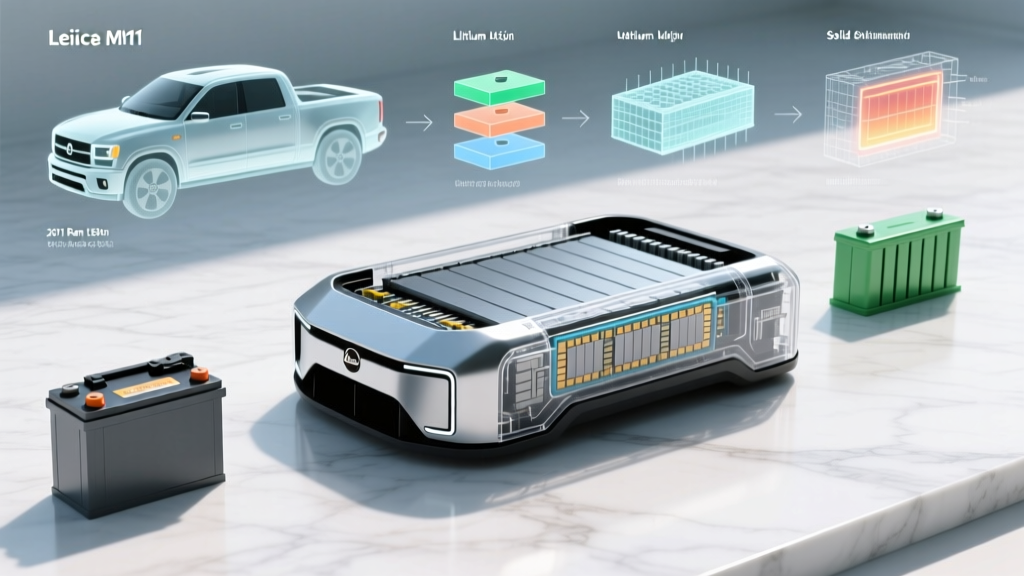
- Solid-state batteries: Replace the liquid electrolyte with a solid ceramic or polymer, enabling lithium-metal anodes and ~40% higher energy density. Toyota and Samsung SDI have announced pilot production, but automotive-grade mass production is expected no earlier than 2028-2030. Tesla has not announced a solid-state timeline.
- Silicon-dominant anodes: Companies like Sila Nanotechnologies and Group14 are replacing graphite anodes with silicon composites, boosting energy density 15-25%. Early production cells are reaching market in 2025-2026, with broader EV adoption expected by 2027-2028.
- Sodium-ion batteries: CATL has begun mass-producing sodium-ion cells that eliminate lithium entirely. Energy density is ~30% lower than LFP, making them suitable for urban/short-range vehicles. Tesla has not adopted sodium-ion as of 2026, but it's a credible future option for entry-level models.
These technologies are promising but not currently available in any Tesla vehicle. Any claim that solid-state Teslas are imminent should be treated skeptically.
Verdict: Are Tesla Batteries Bad for the Environment?
The data-driven answer is no — not compared to the alternative. Tesla batteries carry a real manufacturing footprint, primarily from mining and cell production. But over a 150,000-200,000+ mile lifespan, the lifecycle emissions advantage over gasoline is decisive on nearly every electricity grid in the US. LFP-equipped models further reduce mining impact by eliminating nickel and cobalt entirely. Battery recycling infrastructure is scaling rapidly, and grid decarbonization makes every Tesla cleaner each year it operates.
The environmental argument for EVs isn't that they're impact-free — it's that their impact is front-loaded, measurable, and shrinking, while gasoline car emissions are continuous, cumulative, and locked in for the vehicle's entire life.
How long do Tesla batteries last before needing replacement?
Most Tesla batteries retain 85-90%+ capacity at 150,000 miles and rarely require full replacement. Tesla fleet data shows less than 1% of packs replaced for degradation. The warranty covers 8 years / 100,000-150,000 miles depending on model, with a 70% minimum capacity threshold.
How much does a Tesla battery replacement cost in 2026?
Out-of-warranty replacement ranges from approximately $8,000-$13,000 for a Model 3/Y Standard Range (LFP) to $13,000-$22,000 for Long Range or Model S/X (NMC/NCA). Third-party refurbished packs cost 30-50% less. However, most Tesla batteries never need replacement during the vehicle's life.
What does Tesla's battery warranty cover?
Tesla covers battery capacity loss below 70% and manufacturing defects for 8 years, with mileage limits of 100,000 miles (Standard Range), 120,000 miles (Long Range/Performance Model 3/Y), or 150,000 miles (Model S/X). The warranty transfers to subsequent owners.
Is LFP or NMC better for the environment?
LFP has a lower mining impact because it contains no nickel or cobalt. It also offers longer cycle life (3,000-5,000+ cycles vs 1,500-2,500 for NMC). However, LFP has lower energy density and worse cold-weather performance. For environmental priority, LFP wins. For maximum range, NMC/NCA is still necessary.
How can I maximize my Tesla battery's lifespan?
Set daily charge limits to 80% for NMC/NCA models (100% is fine for LFP). Prefer Level 2 home charging over daily Supercharging. Avoid letting the battery sit below 10% SoC for extended periods. Use Tesla navigation to Superchargers to enable automatic battery preconditioning. Park in shade during extreme heat when possible.
Do Tesla batteries get recycled?
Yes. Tesla partners with Redwood Materials and other recyclers to recover 90%+ of nickel, cobalt, and copper, and 80%+ of lithium from end-of-life packs. Recycled materials are already being used in new battery cell production, creating a closed-loop supply chain that reduces future mining demand.