If you have followed Tesla's engineering roadmap, you already know the 4680 cell is the company's most significant battery bet of the decade. First introduced in limited production vehicles around 2022 and progressively scaled through 2025 and into 2026, the 4680 cell — named for its 46 mm diameter and 80 mm height — represents a fundamental rethinking of lithium-ion cell packaging, manufacturing cost, and energy density. But what does it actually mean for the person buying a Model Y or Cybertruck today?
This guide cuts through the hype. We will cover exactly what the 4680 cell changes, how it compares to the chemistry alternatives Tesla uses (including LFP in the Standard Range lineup), what real-world degradation looks like at 50,000 and 100,000 miles, what the warranty actually covers, and what a replacement would cost if you ever need one. Whether you are weighing a 2026 Model Y Long Range with 4680 structural pack or a Model 3 RWD with an LFP prismatic pack, the numbers below will help you decide.
What Is the Tesla 4680 Battery and Why Does It Matter?
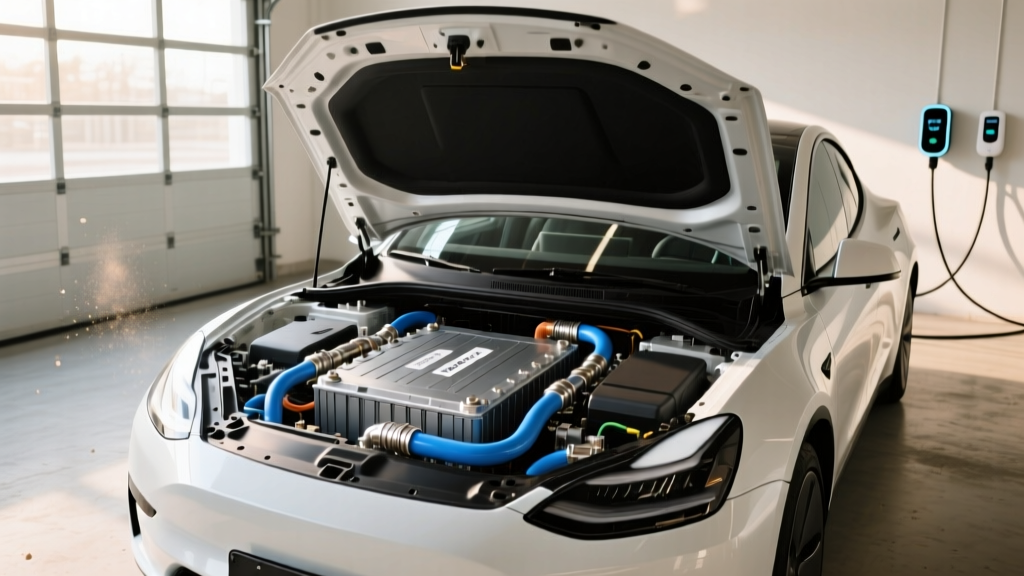
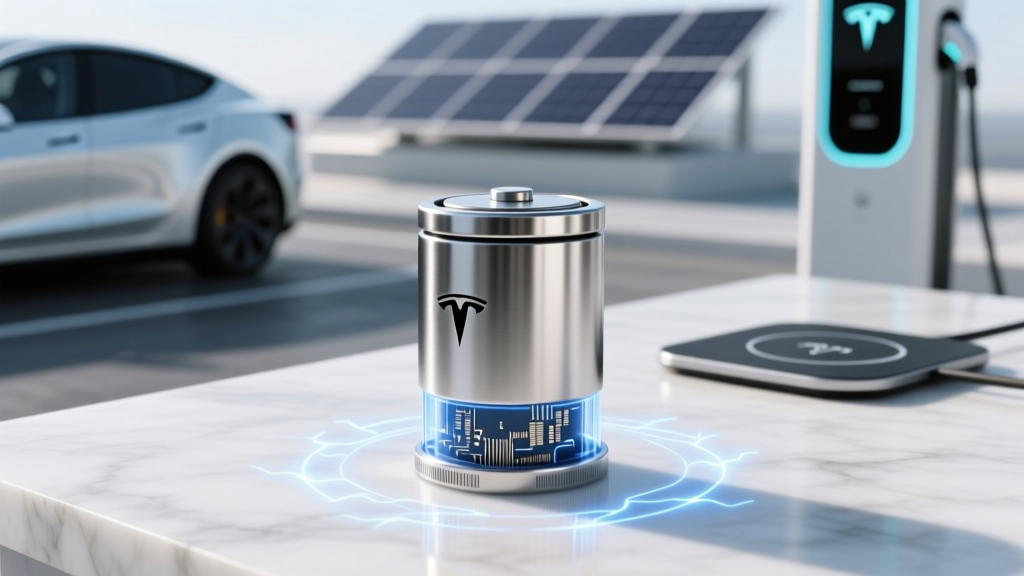
The 4680 is a cylindrical lithium-ion cell format that is roughly five times larger by volume than the 2170 cells used in most Model 3 and Model Y vehicles built before 2023. The larger form factor allows Tesla to reduce the number of individual cells per pack, simplify the structural pack architecture (where the battery itself serves as a stressed chassis member), and lower per-kWh manufacturing costs through a dry-electrode coating process that eliminates solvent-based drying ovens from the production line.
For the 2026 model year, 4680-based structural packs appear primarily in the Cybertruck (all trims) and select Model Y vehicles built at Giga Texas. Most Model 3 sedans and many Model Y units continue to use 2170 cells sourced from Panasonic (NCA/NMC chemistry) or CATL (LFP chemistry), depending on trim and factory of origin.
The headline engineering claims for the 4680 are:
- 5× energy capacity per cell compared to the 2170
- 6× power output per cell (relevant for acceleration and regen absorption)
- ~16% range improvement per kWh at the pack level, attributed to the structural pack eliminating redundant module housings
- Lower $/kWh cost at scale, though Tesla has acknowledged the dry-electrode process has been slower to scale than initially projected
In practical terms for a 2026 Cybertruck AWD with an estimated 123 kWh usable pack, that translates to an EPA-estimated range of approximately 340 miles. Real-world highway driving at 70 mph in moderate temperatures typically yields 280–310 miles — a 9–18% reduction from the sticker, consistent with the aerodynamic penalty of a pickup form factor rather than a cell-level deficiency.
LFP vs. NMC vs. NCA: Which Chemistry Does Tesla Actually Use?
The 4680 format is a physical cell design, not a chemistry. Tesla uses multiple chemistries across its lineup, and understanding which one is in your specific vehicle matters more for daily ownership than the cell form factor.
| Attribute | LFP (Lithium Iron Phosphate) | NMC (Nickel Manganese Cobalt) | NCA (Nickel Cobalt Aluminum) |
|---|---|---|---|
| Used In (2026) | Model 3 RWD, Model Y RWD (Standard Range) | Model Y LR, Model S/X (some packs), 4680 structural packs | Model 3 LR, Model S/X, older 2170 packs |
| Energy Density | ~160 Wh/kg (cell level) | ~250–280 Wh/kg | ~260–290 Wh/kg |
| Typical Usable Capacity | 57–60 kWh (Model 3 RWD) | 75–82 kWh (Model Y LR); ~123 kWh (Cybertruck 4680) | 75–82 kWh |
| Cycle Life | 3,000–5,000+ cycles to 80% SoH | 1,500–2,500 cycles to 80% SoH | 1,500–2,000 cycles to 80% SoH |
| Cold-Weather Performance | More range loss below 32°F; slower charge acceptance when cold | Better cold performance; preconditioning mitigates most loss | Similar to NMC; preconditioning essential |
| Recommended Daily SoC | 100% — Tesla recommends charging to full regularly | 80–90% daily; 100% only for trips | 80–90% daily; 100% only for trips |
| Cobalt Content | None | Low to moderate | Low (aluminum replaces some cobalt) |
| Relative Cost ($/kWh) | Lowest | Moderate | Moderate to high |
| EPA Range Example | Model 3 RWD: 272 mi | Model Y LR (4680): ~320 mi | Model 3 LR: 363 mi |
Which is better? It depends on your usage pattern. If you charge at home nightly and want a lower-cost vehicle with exceptional cycle life, LFP is arguably the superior daily-driver chemistry — the 100% charge recommendation eliminates the partial-state-of-charge management that NMC/NCA owners juggle. If you need maximum range per charge for road trips or live in a cold climate where every kWh matters, NMC or NCA delivers higher energy density and better cold-weather charge acceptance. The 4680 structural pack in NMC chemistry aims to close this gap by reducing pack-level mass, but the cell-level energy density advantage of NCA in 2170 format still yields the longest single-charge ranges in the Tesla lineup as of 2026.
How Long Do Tesla Batteries Actually Last? Degradation Data
Tesla publishes fleet-wide degradation data in its annual Impact Report, and independent tracking from sources like Teslanorth and Recurrent Auto consistently shows that modern Tesla packs degrade more slowly than early-adopter concerns suggested.
Tesla Fleet Degradation Profile (NMC/NCA 2170 and 4680 Packs)
- At 25,000 miles: ~2–4% capacity loss (96–98% State of Health)
- At 50,000 miles: ~4–6% capacity loss (94–96% SoH)
- At 100,000 miles: ~7–10% capacity loss (90–93% SoH)
- At 150,000 miles: ~10–14% capacity loss (86–90% SoH)
- At 200,000 miles: ~12–18% capacity loss (82–88% SoH)
Source: Tesla 2024 Impact Report fleet data, corroborated by Recurrent Auto battery health dataset (n>10,000 vehicles). LFP packs show comparable or slightly better retention at high cycle counts but may show larger variance in SoC estimation accuracy over time.
A few critical nuances the aggregate numbers hide:
- The degradation curve is non-linear. Most loss occurs in the first 15,000–25,000 miles (calendar and cycle aging of fresh cells), after which the curve flattens significantly. A Model Y owner at 60,000 miles with 94% SoH is likely to still be above 88% SoH at 150,000 miles.
- 4680-specific long-term data is still maturing. The oldest high-volume 4680 packs (Cybertruck, late 2023–2024 Model Y structural) have roughly 60,000–80,000 miles on them as of early 2026. Early indications from fleet telemetry suggest degradation rates comparable to 2170 NCA packs, but we lack 150,000+ mile data specific to the 4680 format.
- LFP packs degrade differently. LFP chemistry shows very low cycle-life degradation but can develop SoC estimation drift because the voltage curve is nearly flat across the 20–80% range. Tesla addresses this by recommending periodic 100% charges, which recalibrate the BMS (Battery Management System).
The practical takeaway: a 2026 Model Y Long Range with an EPA-rated 320 miles will likely deliver ~295–305 real-world miles at 50,000 miles of age and ~275–290 miles at 100,000 miles. That is still comfortably above the daily driving needs of 95% of American drivers (whose average commute is under 40 miles round-trip, per fueleconomy.gov data).
Tesla Battery Warranty: What Is Covered and What Is Not
Tesla's battery and drive unit warranty is one of the more straightforward in the EV industry, but the details matter — particularly the capacity retention threshold that triggers a replacement.
| Model / Trim | Warranty Period | Mileage Limit | Minimum Capacity Retention |
|---|---|---|---|
| Model 3 RWD (LFP) | 8 years | 100,000 miles | 70% |
| Model 3 Long Range / Performance | 8 years | 120,000 miles | 70% |
| Model Y RWD (LFP) | 8 years | 100,000 miles | 70% |
| Model Y Long Range / Performance | 8 years | 120,000 miles | 70% |
| Model S / Model X | 8 years | 150,000 miles | 70% |
| Cybertruck (4680 structural pack) | 8 years | 120,000 miles | 70% |
What the 70% threshold means in practice: If your Model Y Long Range started with an EPA-rated 320 miles and the BMS-reported usable capacity drops below 224 miles equivalent (70% of original) within 8 years or 120,000 miles — whichever comes first — Tesla will replace or refurbish the pack at no cost. The replacement pack will have at least 70% of original capacity; it may be a new or remanufactured unit.
What is NOT covered:
- Gradual range loss above the 70% threshold (a car at 72% SoH at 119,000 miles is not eligible)
- Damage from accidents, flooding, fire, or rodent damage to wiring
- Capacity loss from using non-Tesla-approved charging equipment that causes electrical damage
- Cosmetic issues unrelated to function
Based on the degradation data above, the vast majority of Tesla owners will never approach the 70% threshold within the warranty period. A Model 3 LR at 120,000 miles typically retains 86–90% SoH — well above the trigger point.
EV Battery Replacement Cost: What Tesla Owners Actually Pay
If your battery falls outside warranty coverage and needs replacement — a scenario that remains uncommon but is worth budgeting for in a high-mileage ownership plan — here is what the current landscape looks like.
| Model / Pack Type | Estimated Pack Cost | Labor & Diagnostics | Total Estimated Range |
|---|---|---|---|
| Model 3 RWD (LFP, ~60 kWh) | $8,000 – $11,000 | $2,000 – $3,500 | $10,000 – $14,500 |
| Model 3 LR / Model Y LR (2170 NCA/NMC, ~82 kWh) | $12,000 – $16,000 | $2,500 – $4,000 | $14,500 – $20,000 |
| Model Y (4680 structural, ~75–82 kWh) | $11,000 – $15,000 | $3,000 – $5,000 | $14,000 – $20,000 |
| Cybertruck (4680 structural, ~123 kWh) | $18,000 – $25,000 | $3,500 – $6,000 | $21,500 – $31,000 |
| Model S / Model X (~100 kWh) | $14,000 – $20,000 | $3,000 – $5,000 | $17,000 – $25,000 |
Context that matters: These figures represent out-of-warranty replacements at Tesla Service Centers. Third-party EV repair shops are beginning to offer module-level repairs (replacing individual degraded modules rather than the full pack) for 2170-based packs at roughly 40–60% of full-pack cost. However, 4680 structural packs are not yet serviceable at the module level outside of Tesla's own facilities because the cells are bonded directly into the structural casting. This is a trade-off of the structural pack design: lower manufacturing cost and higher rigidity, but reduced serviceability.
Most Tesla vehicles reach end-of-first-ownership or are traded in well before a battery replacement is needed. For a second-owner buying a high-mileage Tesla out of warranty, budgeting $15,000–$20,000 as a contingency for a Model Y pack is prudent financial planning — even if the probability of needing it in the first five years of second ownership is below 5%.
Factors That Accelerate (or Preserve) Battery Health
Battery degradation is driven by three primary mechanisms: calendar aging (time-dependent chemical changes regardless of use), cycle aging (wear from charge/discharge cycles), and thermal stress (exposure to extreme temperatures, especially while at high SoC). You cannot stop calendar aging, but you can significantly influence the other two.
Maximize Battery Longevity — Practical Checklist
- Set daily charge limit to 80% (NMC/NCA) or 100% (LFP). Keeping NMC/NCA cells below 90% SoC for daily use is the single most impactful habit. Tesla's built-in charge limit slider makes this trivial.
- Avoid leaving the car at 100% SoC for extended periods. If you charge to 100% for a road trip, try to depart within a few hours. Sitting at full charge accelerates electrolyte decomposition.
- Use DC fast charging strategically, not exclusively. Frequent Supercharging (250 kW peak on V3 stalls) generates significant heat. Tesla's thermal management system is excellent — liquid cooling keeps cells in the optimal 25–40°C window during charging — but daily DCFC sessions still add thermal cycles. Owners who charge at home on Level 2 (7–11.5 kW) and Supercharge only for road trips show measurably lower long-term degradation in fleet data.
- Precondition before fast charging. Navigating to a Supercharger in the Tesla automatically triggers battery preconditioning, warming the pack for optimal charge acceptance. If you arrive at a fast charger without preconditioning (e.g., a non-Tesla network), charging speeds will be slower and internal resistance heating will be higher.
- In extreme cold, plug in when parked. A plugged-in Tesla will use grid power (not battery energy) to maintain pack temperature. In sub-20°F weather, this prevents the pack from cold-soaking and reduces the energy cost of warming up before driving.
- In extreme heat, avoid parking at 100% SoC in direct sun. If you must park outside in 100°F+ heat, set the charge limit to 80% or below. High SoC + high temperature is the worst combination for calendar aging.
- Do not store the vehicle below 20% SoC for weeks. If leaving for vacation, set the charge limit to 50% and leave it plugged in. The BMS will maintain optimal storage SoC.
How to Check Your Tesla Battery's State of Health
Tesla does not expose a direct State of Health (SoH) percentage in the vehicle's touchscreen UI the way some competitors (like Hyundai/Kia with their BMS diagnostic screen) do. However, there are several reliable methods:
- Tesla Service Mode (built-in): On 2024+ software versions, you can access Service Mode by holding the "Model" text on the Software screen for 3 seconds, then entering "service" as the access code. Within Service Mode, the "Health Test" function runs a controlled discharge/recharge cycle and reports an estimated SoH percentage. This test takes several hours and requires the car to remain parked and plugged in.
- Third-party apps (Tessie, Stats for Tesla, TeslaFi): These apps connect to Tesla's Fleet API and estimate SoH by tracking the relationship between kWh added during charging sessions and the corresponding SoC percentage change. Over dozens of charge cycles, they build a statistically reliable SoH estimate — typically within ±2% of the Service Mode test.
- Manual calculation: Charge from a known low SoC (e.g., 10%) to a known high SoC (e.g., 90%) on a Level 2 charger that reports kWh delivered. If adding 80% of pack capacity required 62 kWh from the wall (accounting for ~90% charging efficiency = ~55.8 kWh into the pack), and the nominal pack capacity is 75 kWh, your estimated SoH is approximately 55.8 / (75 × 0.80) = ~93%.
- Tesla Service Center diagnostic: If you are considering purchasing a used Tesla out of warranty, you can request a pre-purchase battery health inspection at a Tesla Service Center. They will run a full BMS diagnostic and provide a written SoH report. This typically costs $0–$100 depending on location.
Beyond the 4680: Solid-State and Silicon Anode Timelines
The 4680 is not the end of Tesla's battery roadmap, and it is not the end of the industry's. Two technologies are frequently cited as the next generational leap:
Silicon-dominant anodes: Replacing graphite anodes with silicon can theoretically increase cell-level energy density by 20–40%. Tesla has been incrementally increasing the silicon content in its anode blends (using silicon oxide composites to manage the swelling problem that has historically limited pure silicon anodes). The 4680 cell already incorporates a higher silicon ratio than the 2170. Expect continued incremental gains here rather than a single breakthrough moment — each model year may see 2–5% energy density improvement as anode formulations mature.
Solid-state batteries: These replace the liquid electrolyte with a solid ceramic or polymer separator, promising higher energy density (~350–400 Wh/kg at cell level), faster charging, and reduced fire risk. As of 2026, solid-state cells remain in limited pilot production globally (Toyota, Samsung SDI, and QuantumScape have all demonstrated prototype cells), but no mass-market EV is currently shipping with a solid-state pack. Realistic volume-production timelines for a vehicle you can actually buy in the U.S. remain 2028–2032, based on current manufacturing yield challenges. Solid-state should be viewed as a forward-looking technology that will eventually complement — not immediately replace — the liquid-electrolyte cells in today's 4680 and 2170 packs.
For a buyer deciding today, the 4680 and current-generation 2170 packs represent mature, well-understood technology with proven degradation profiles. Waiting for solid-state means waiting at minimum 3–5 years for initial availability, likely at a premium price point, and in limited model availability.
Frequently Asked Questions
How long do Tesla 4680 batteries last in real-world use?
Based on fleet data from 2170 NCA/NMC packs (the closest analog with long-term mileage), expect 85–90% State of Health at 150,000 miles and 82–88% at 200,000 miles. The 4680 format itself does not fundamentally change the electrochemistry driving degradation — it changes packaging and cost. 4680-specific high-mileage data is still accumulating, as the oldest high-volume packs (late-2023 Cybertrucks) have roughly 70,000–80,000 miles as of early 2026. The 8-year / 120,000-mile warranty with a 70% retention floor provides a contractual safety net.
How much does it cost to replace a Tesla 4680 battery pack?
Out-of-warranty replacement for a 4680 structural pack runs approximately $14,000–$20,000 for a Model Y and $21,500–$31,000 for a Cybertruck (reflecting the larger ~123 kWh pack). These costs include the pack, labor, and BMS recalibration. However, the probability of needing a full pack replacement within the first 150,000 miles is very low based on current degradation trajectories. Most Tesla batteries outlast the vehicle's first ownership cycle.
Is the 4680 battery LFP or NMC?
The 4680 cells in current Tesla production (Cybertruck, select Model Y) use NMC (nickel manganese cobalt) chemistry. LFP cells in Tesla's lineup are prismatic-format cells supplied by CATL, used in the Model 3 RWD and Model Y RWD Standard Range trims. The 4680 form factor and the chemistry are independent variables — a 4680 LFP cell is technically possible but is not in Tesla's current production mix.
Does frequent Supercharging damage the 4680 battery?
"Damage" is too strong, but frequent DC fast charging does contribute incrementally to faster degradation through thermal cycling. Tesla's liquid-cooled thermal management system limits peak cell temperatures during Supercharging to roughly 45–50°C, which is within the safe operating window. Fleet data shows that owners who Supercharge 2–3 times per week versus those who primarily charge on Level 2 at home see approximately 1–3% additional capacity loss over 100,000 miles. Meaningful, but not catastrophic — and a reasonable trade-off if your lifestyle requires frequent fast charging.
Should I wait for solid-state batteries instead of buying a 4680 Tesla now?
Unless your purchase timeline is flexible by 4–6 years, no. Solid-state battery technology is still in the pilot-production phase globally, with volume manufacturing yield challenges that have not been solved at automotive scale. The first U.S.-market vehicles with solid-state packs are unlikely before 2029–2030 and will carry a significant price premium. The 4680 NMC pack is a proven, warrantied technology that will serve well for 150,000+ miles with proper care. The opportunity cost of waiting half a decade — in fuel savings foregone, in tax credits that may change, and in missing the current generation of mature EV infrastructure — typically outweighs the speculative benefit.