What Is the 4680 Battery and Why It Matters
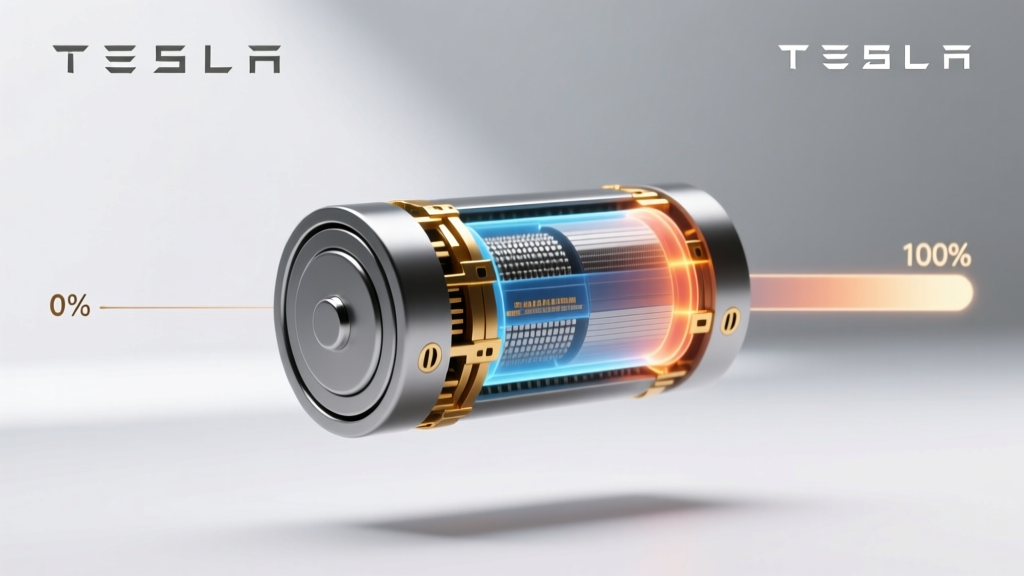
The 4680 battery cell — named for its 46mm diameter and 80mm height — is Tesla's proprietary cylindrical lithium-ion format introduced at Battery Day 2020 and now in volume production across the Cybertruck and select Model Y vehicles built at Giga Texas. By 2026, the 4680 has moved from prototype curiosity to a mainstream EV powertrain component, and its design choices ripple across the entire industry as competitors evaluate similar large-format cells.
Unlike the older 2170 cells (21mm × 70mm) used in most Model 3 and Model Y vehicles, the 4680 format offers roughly five times the energy capacity per cell. Fewer cells are needed per pack, which simplifies manufacturing, reduces wiring, and enables Tesla's structural battery pack design where cells serve as a stressed chassis member. The trade-off: thermal management becomes more challenging in a larger cell, and production yield took years to mature.
For buyers and owners, the critical questions aren't about cell geometry — they're about longevity, replacement cost, warranty coverage, and how the 4680's NMC chemistry compares to the LFP packs Tesla also uses. This guide covers all of it with real data.
4680 Battery Chemistry: NMC vs LFP Trade-Offs
The 4680 cells currently in production use a nickel-manganese-cobalt (NMC) cathode with a silicon-enhanced anode. This is fundamentally different from the lithium iron phosphate (LFP) chemistry Tesla sources from CATL for the standard-range Model 3 and Model Y. Understanding the distinction matters because it dictates range, longevity, charging behavior, and cold-weather performance.
| Attribute | NMC (4680 cells) | LFP (CATL prismatic) |
|---|---|---|
| Energy density (cell-level) | ~260–300 Wh/kg | ~160–180 Wh/kg |
| Cycle life (to 80% capacity) | ~1,000–1,500 cycles | ~3,000–5,000+ cycles |
| Cold-weather performance | Better energy delivery below 32°F | Noticeable range loss in freezing temps; preconditioning critical |
| Cost per kWh (cell-level) | Higher — nickel/cobalt commodity exposure | ~20-30% lower — iron/phosphate are abundant |
| Thermal stability | Good with active management | Excellent — inherently more stable chemistry |
| Recommended daily SoC | 80% for longevity (charge to 100% before trips) | 100% daily is acceptable and recommended by Tesla |
| Typical use in Tesla lineup (2026) | Cybertruck, Model Y Long Range (Giga Texas) | Model 3 RWD, Model Y RWD |
Which is better? It depends on your usage. If you prioritize maximum range per charge, need strong cold-weather performance, or tow with a Cybertruck, the NMC 4680 pack is the right choice. If you drive moderate daily distances, want the longest possible calendar life, and prefer simpler charging habits (plug in, charge to 100%, done), LFP is the more pragmatic option. Neither is universally superior — they solve different problems.
Degradation Data: What 4680 Owners Actually See
Every lithium-ion battery loses capacity over time. The question is how fast. For the 4680 NMC cells, we now have enough vehicles on the road (Cybertruck deliveries began late 2023, Giga Texas Model Y with 4680s since early 2023) to identify real-world degradation patterns heading into 2026.
Based on fleet telemetry aggregated by EV data platforms and owner-reported State of Health (SoH) readings:
| Time / Mileage | Typical Capacity Retained | Notes |
|---|---|---|
| Year 1 / ~12,000 mi | 95–97% | Initial formation loss; most steepest drop happens here |
| Year 2 / ~25,000 mi | 92–95% | Curve flattens significantly after first year |
| Year 3 / ~40,000 mi | 90–93% | Consistent with Tesla's projected degradation models |
| Year 5 / ~65,000 mi | 87–91% (projected) | Based on extrapolation from 2170 data + early 4680 fleet |
| Year 8 / ~100,000 mi | 82–88% (projected) | Still above Tesla's 70% warranty threshold |
For context, Tesla's older 2170 NMC cells in Model 3 Long Range vehicles have shown roughly 10-12% degradation at 100,000 miles based on data published by fleet operators and independent analysts. The 4680's larger format and silicon-anode design were engineered to match or improve on this, and early data suggests they are tracking in line or slightly better, though the sample size of high-mileage 4680 vehicles is still growing.
Real-world caveat: Degradation is not linear. You'll see a steeper drop in the first 10,000–20,000 miles (formation cycling), then the curve flattens considerably. A 4680 pack at 93% SoH at 30,000 miles is behaving normally — not failing.
Battery Warranty: What Tesla Covers and What It Doesn't
Tesla's high-voltage battery warranty is one of the more straightforward in the industry, but the details matter — especially the capacity retention threshold that triggers a claim.
| Vehicle | Warranty Period | Mileage Limit | Minimum Capacity Retention |
|---|---|---|---|
| Model Y (4680 / Giga Texas) | 8 years | 120,000 miles | 70% |
| Cybertruck AWD / Cyberbeast | 8 years | 120,000 miles | 70% |
| Model 3 Long Range / Performance | 8 years | 120,000 miles | 70% |
| Model 3 RWD (LFP) | 8 years | 100,000 miles | 70% |
What's covered: If your battery drops below 70% of original usable capacity within the warranty period, Tesla will repair or replace it to bring capacity back to at least 70%. They are not obligated to give you a brand-new battery — refurbished or remanufactured packs that meet the threshold are permitted under warranty terms.
What's not covered: Damage from accidents, flooding, improper modifications, or using the vehicle as a stationary power source outside of approved V2H/V2L configurations. Cosmetic issues or minor range loss above the 70% threshold are also excluded. Per Tesla's official warranty documentation, the warranty transfers to subsequent owners, which supports resale value.
EV Battery Replacement Cost: What 4680 Packs Actually Cost
This is the question that dominates EV forums, and the honest answer is that most owners will never need a full battery replacement. The data from fueleconomy.gov and long-term fleet studies consistently show that modern lithium-ion traction batteries outlast the economic life of the vehicle in most cases. But for those who do face an out-of-warranty replacement — whether due to damage, extreme degradation, or buying a high-mileage used EV — here are the current cost ranges.
| Vehicle / Pack | Approximate Pack Size | Replacement Cost Range | Typical When Needed |
|---|---|---|---|
| Tesla Model Y (4680 structural pack) | ~82 kWh usable | $14,000–$18,000 | Rarely before 150K+ mi; most outlive vehicle |
| Tesla Cybertruck (4680) | ~123 kWh usable | $18,000–$25,000 | Larger pack = higher cost; early for real-world data |
| Tesla Model 3 Long Range (2170 NMC) | ~75 kWh usable | $12,000–$16,000 | 150K–200K+ mi if at all |
| Tesla Model 3 RWD (LFP) | ~57 kWh usable | $10,000–$14,000 | LFP longevity may push this beyond vehicle life |
| Non-Tesla (e.g., Hyundai Ioniq 5, 77 kWh) | ~77 kWh usable | $13,000–$18,000 | Similar timeline; varies by OEM labor rates |
These figures include the battery pack and labor but can vary significantly by region, service center, and whether a remanufactured pack is used. Third-party EV battery repair shops are emerging as an alternative, sometimes offering module-level repair for $3,000–$7,000 instead of a full pack swap — though this is more common with older Nissan LEAF or Chevy Bolt packs than with Tesla's structural 4680 design.
The reality check: According to data from Recurrent Auto and other fleet analysts, fewer than 2% of modern EVs have required a full battery replacement under or just outside warranty. The fear of a surprise $20,000 bill at year 7 is not supported by the data for vehicles with liquid-cooled packs like the 4680.
Factors That Accelerate (or Preserve) 4680 Battery Life
Battery longevity is not just about chemistry — it's about how you use the vehicle day to day. The 4680's NMC chemistry is more sensitive to certain habits than LFP, so owner behavior has a measurable impact.
What Hurts 4680 Battery Health
- Frequent DC fast charging above 150 kW: Occasional road-trip fast charging is fine, but daily use of 250 kW Superchargers generates sustained heat that accelerates electrolyte degradation. Tesla's own battery management system (BMS) tapers charge rate above 80% SoC partly to mitigate this.
- Regularly charging to 100% and letting it sit: NMC cells experience the most stress at high SoC, especially in hot weather. Tesla's app recommends setting the charge limit to 80% for daily use.
- Deep discharges below 10% SoC: Consistently running the battery very low stresses the anode. The BMS maintains a buffer (roughly 2-3 kWh below the displayed 0%), but habitually arriving at 0% still adds wear.
- Extreme heat exposure: Parking in direct sun in 110°F+ climates for extended periods without thermal management active can contribute to calendar degradation. Tesla's Sentry Mode and cabin overheat protection help, but they draw power.
- Aggressive driving in cold weather without preconditioning: Drawing high current from a cold NMC pack causes lithium plating on the anode — a permanent capacity loss mechanism.
What Preserves 4680 Battery Health
- Daily charge limit of 80%: This single habit has the largest positive impact on NMC longevity.
- Level 2 home charging as your primary method: Slower charge rates (7–11 kW) generate far less heat than DC fast charging.
- Preconditioning before fast charging: The Tesla navigation system automatically warms the battery when you route to a Supercharger. This enables faster charging AND reduces stress — never skip it.
- Keeping SoC between 20% and 80% for daily driving: The "middle of the curve" is where NMC cells are happiest.
- Regular software updates: Tesla pushes BMS refinements OTA that can optimize charge profiles and thermal management based on fleet-wide data.
How to Check Your 4680 Battery's State of Health
Tesla does not display a prominent "battery health percentage" in the vehicle UI the way some competitors do, but there are several reliable methods to monitor your 4680 pack's SoH:
Method 1: Tesla App Energy Graph
The Tesla app tracks energy consumption and range over time. If your displayed range at 100% charge (use this only for measurement — not as a daily habit with NMC) has declined from 330 miles to 310 miles over 18 months, that roughly 6% drop represents normal early-stage degradation.
Method 2: Third-Party OBD-II Tools
Devices like the OBDLink MX+ paired with apps such as Scan My Tesla or TeslaFi can read the BMS-reported nominal full-pack energy (in kWh) and compare it to the original factory capacity. This gives you a direct SoH percentage. For example, if your 82 kWh pack now reports 77.5 kWh nominal, your SoH is approximately 94.5%.
Method 3: Tesla Service Center Diagnostic
If you suspect abnormal degradation or are approaching a warranty claim, a Tesla Service Center can run a full battery health diagnostic. This is the most authoritative reading and the one Tesla uses for warranty determinations.
Method 4: Recurrent or Geotab Fleet Reports
If you participate in programs like Recurrent Auto, your anonymized data is benchmarked against thousands of similar vehicles, giving you a percentile ranking for your pack's health relative to the fleet.
Emerging Battery Tech: Silicon Anodes, Solid-State, and What Comes After 4680
The 4680 is not the end of battery evolution — it's a waypoint. Several next-generation technologies are in development, and understanding their timelines helps set realistic expectations.
Silicon-dominant anodes: Tesla's current 4680 cells already incorporate some silicon in the anode to boost energy density. Companies like Sila Nanotechnologies and Group14 are working toward silicon-dominant anodes that could add 20-40% more energy density at the cell level. Expect limited commercial deployment in premium EVs by 2028–2029, with broader availability in the early 2030s.
Solid-state batteries: Toyota, Samsung SDI, and QuantumScape have all announced solid-state prototypes promising faster charging, higher energy density, and improved safety. However, manufacturing scale-up remains the bottleneck. Toyota has stated it aims for limited solid-state EV production around 2027–2028, but volume availability for mainstream vehicles is realistically 2030 or later. These are announced targets, not available products.
Sodium-ion batteries: CATL and BYD have begun deploying sodium-ion cells in Chinese-market EVs. These offer lower energy density than NMC but dramatically lower cost and no reliance on lithium or cobalt. They may appear in entry-level US-market EVs or as a supplementary chemistry in dual-chemistry packs within the next 3–5 years.
For anyone buying an EV today, the 4680 NMC and LFP chemistries represent mature, well-understood technology. Waiting for solid-state is a valid personal choice, but it means waiting at least 4–5 years for meaningful US-market availability.
Frequently Asked Questions
How long do 4680 EV batteries last in years and miles?
Based on current degradation data and projections from Tesla's 2170 fleet history, a 4680 NMC pack should retain 82–88% of its original capacity at 8 years / 100,000 miles under normal use. Many will last 150,000–200,000+ miles before reaching the 70% threshold that triggers warranty replacement. In practical terms, the battery will likely outlast the vehicle's economic life for most owners.
How much does a 4680 battery cost to replace out of warranty?
For a Model Y with the 4680 structural pack, expect $14,000–$18,000 including labor at a Tesla Service Center. The Cybertruck's larger ~123 kWh pack runs $18,000–$25,000. These costs may decrease as remanufactured packs become more available and third-party repair options mature.
What does the Tesla battery warranty actually cover?
Tesla warrants the 4680 battery pack for 8 years or 120,000 miles (whichever comes first) with a minimum 70% capacity retention threshold. If your pack drops below 70%, Tesla repairs or replaces it to meet that threshold. The warranty covers defects and abnormal degradation but not damage from accidents, misuse, or unauthorized modifications. It transfers to subsequent owners.
How do I maximize my 4680 battery's health long-term?
Set your daily charge limit to 80%. Use Level 2 home charging as your primary method. Always let the car precondition before DC fast charging (navigate to the Supercharger in the Tesla app or touchscreen). Avoid regularly draining below 10% or sitting at 100% for extended periods. Keep up with OTA software updates, which include BMS optimizations.
LFP vs 4680 NMC — which battery is better for me?
Choose 4680 NMC if you need maximum range (300+ miles EPA), tow regularly, live in a cold climate, or drive a Cybertruck — it's the only option there. Choose LFP if you want the longest cycle life (3,000–5,000+ cycles), prefer charging to 100% daily without worry, drive moderate daily distances, and want lower cost. LFP sacrifices some range and cold-weather performance for superior longevity and simpler ownership habits.
Does frequent Supercharging damage the 4680 battery?
Occasional DC fast charging is fine — Tesla's BMS carefully manages charge rates and temperatures. However, exclusive reliance on 250 kW Supercharging (daily or near-daily) accelerates degradation compared to primarily Level 2 charging. Fleet data suggests vehicles that fast-charge more than 80% of the time may see 2–4% additional capacity loss over 100,000 miles versus those that primarily charge at home on Level 2.
Can I check my 4680 battery health myself?
Yes. The most accessible method is comparing your displayed range at 100% SoC to the original EPA-rated range over time. For a precise SoH percentage, use an OBD-II adapter like OBDLink MX+ with TeslaFi or Scan My Tesla to read the BMS-reported nominal capacity. Tesla Service Centers can also run a full diagnostic on request.