If you have shopped for a Tesla in the last two years, you have probably encountered the term "4680 battery." Named for their 46mm diameter and 80mm height, these cylindrical cells represent Tesla's in-house battery architecture, now powering the Cybertruck, select Model Y variants from Giga Texas, and expanding into more of the fleet for 2026. But what do Tesla 4680 batteries actually deliver in real-world range, degradation behavior, and total cost of ownership compared to the 2170 cells and LFP packs Tesla also uses?
This guide breaks down the chemistry, the data, and the ownership math — no marketing gloss, just the numbers you need before you buy.
What Are Tesla 4680 Batteries and How Do They Differ?
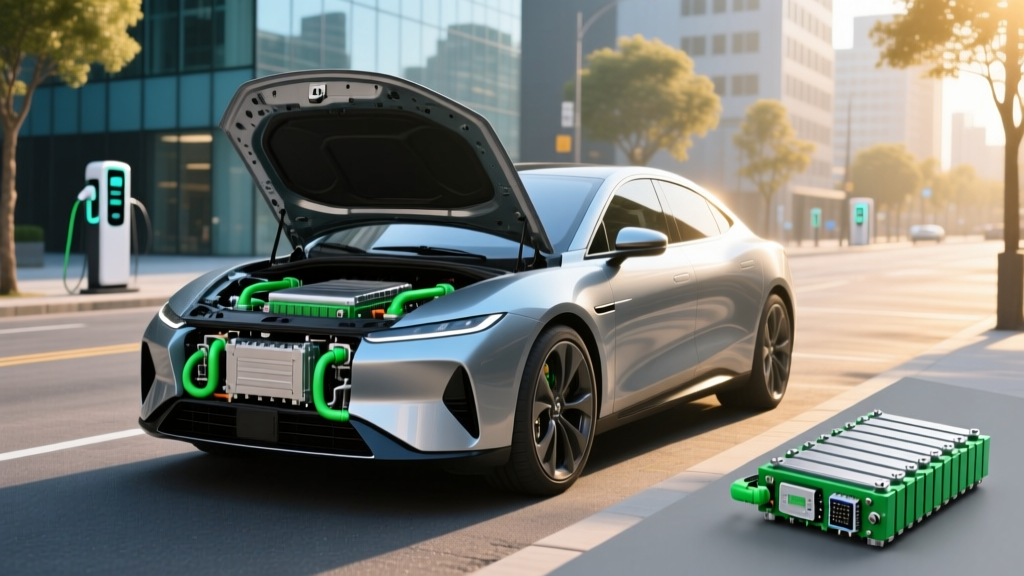
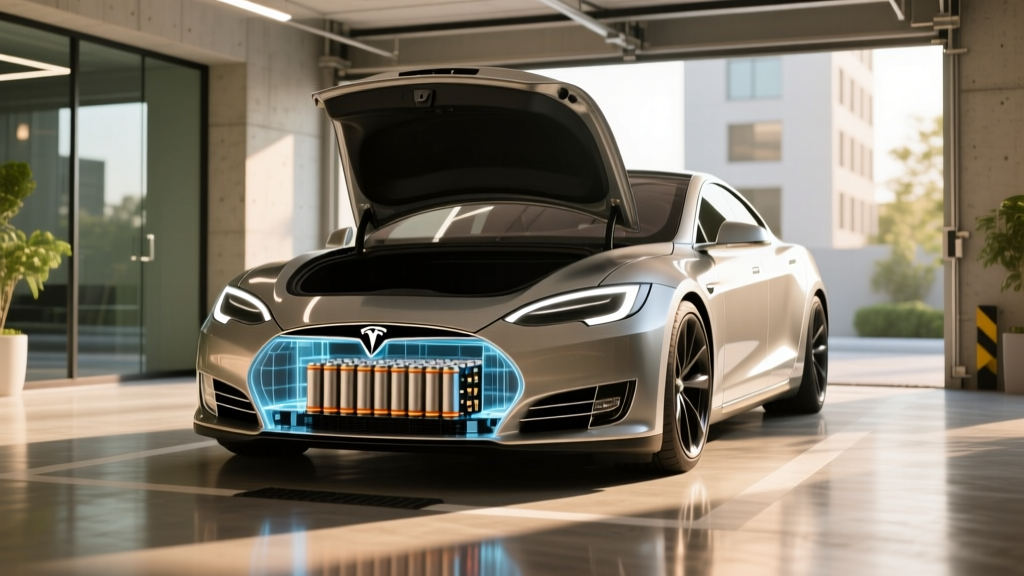
The 4680 cell is a large-format cylindrical lithium-ion cell manufactured by Tesla at its pilot facility in Fremont and at Giga Texas. The larger form factor (compared to the 2170 cells in most Model 3 and Model Y vehicles from Giga Shanghai and Giga Berlin) reduces the number of cells per pack, simplifies thermal management, and enables Tesla's "structural battery pack" design where the cells themselves bear vehicle loads.
As of early 2026, Tesla deploys three main cell chemistries across its lineup:
- 4680 NMC/NCA (nickel-based): Used in Cybertruck and some Model Y AWD Long Range builds from Giga Texas. Higher energy density, suited for maximum range and performance trims.
- 2170 NMC/NCA: Found in Model 3 Long Range/Performance and Model Y Long Range/Performance from Giga Shanghai and Giga Berlin.
- Prismatic LFP (lithium iron phosphate): Used in Model 3 RWD and Model Y RWD base trims. Lower energy density but longer cycle life and lower cost.
The 4680 form factor is a packaging and manufacturing choice — not a chemistry. A 4680 cell can be NMC, NCA, or eventually LFP. Tesla's current 4680 cells use a high-nickel NMC/NCA cathode with a silicon-enhanced anode for improved energy density.
| Attribute | 4680 NMC/NCA (Cybertruck, Model Y LR) | 2170 NMC/NCA (Model 3/Y LR & Perf) | LFP Prismatic (Model 3/Y RWD) |
|---|---|---|---|
| Energy Density (cell-level) | ~272–290 Wh/kg | ~260–275 Wh/kg | ~170–190 Wh/kg |
| Cycle Life (to 80% SoH) | ~1,500–2,000 cycles | ~1,200–1,800 cycles | ~3,000–5,000+ cycles |
| Cold-Weather Range Loss (~20°F) | ~25–35% | ~25–35% | ~30–40% |
| Recommended Daily SoC | 80% (charge to 100% before trips) | 80% (charge to 100% before trips) | 100% (regular full charges recommended) |
| Cost per kWh (pack-level, est.) | ~$110–$130 | ~$120–$140 | ~$80–$100 |
| Typical Vehicle Application | Cybertruck, Model Y LR (Giga Texas) | Model 3/Y LR & Performance | Model 3/Y RWD base trims |
Key takeaway: LFP wins on longevity and cost. NMC/NCA wins on energy density and cold performance. The 4680 form factor improves manufacturing efficiency and pack-level structural rigidity but does not fundamentally change the chemistry trade-offs.
Real-World Degradation: What the Data Shows
Tesla's 2025 Impact Report (published mid-2025) states that Model 3 and Model Y vehicles retain approximately 85% of their original battery capacity after 200,000 miles — a figure consistent with prior years. For 4680-equipped vehicles, the data pool is smaller (Cybertruck deliveries began late 2023, Giga Texas Model Y in 2024), but early telemetry from fleet operators and third-party trackers like Teslanomics by Recurrent suggests a comparable trajectory.
Typical Tesla Battery Degradation Curve (NMC/NCA, including 4680):
- Year 1 / 15,000 miles: ~3–5% capacity loss (initial formation period)
- Year 3 / 45,000 miles: ~6–9% cumulative loss
- Year 5 / 75,000 miles: ~8–12% cumulative loss
- Year 8 / 120,000 miles: ~10–15% cumulative loss
- 200,000 miles: ~12–18% cumulative loss (varies with charging habits and climate)
Sources: Tesla 2025 Impact Report; Recurrent Auto battery health data (2025); owner-reported telemetry via TeslaFi.
LFP-equipped Teslas (Model 3 RWD, Model Y RWD) show slower degradation — often 5–8% loss at 100,000 miles — because LFP chemistry is inherently more stable across charge cycles. However, LFP's lower energy density means those vehicles start with less total range, so the practical impact of a few percentage points of degradation is smaller on a 363-mile EPA-rated Model 3 LR (NMC) than on a 272-mile Model 3 RWD (LFP).
Cold-weather caveat: Degradation figures represent permanent capacity loss. Temporary range reduction in cold weather (25–40% at 20°F) is separate and recovers as temperatures rise. Tesla's heat pump (standard on all current models) mitigates but does not eliminate this effect.
Tesla Battery Warranty: What Is Actually Covered
Tesla's battery warranty is among the strongest in the industry, but the details matter — especially the capacity retention threshold.
| Model | Warranty Period | Mileage Limit | Minimum Capacity Retention |
|---|---|---|---|
| Model 3 RWD (LFP) | 8 years | 100,000 miles | 70% |
| Model 3 Long Range / Performance | 8 years | 120,000 miles | 70% |
| Model Y (all trims) | 8 years | 120,000 miles | 70% |
| Cybertruck (4680) | 8 years | 120,000 miles | 70% |
| Model S / Model X | 8 years | 150,000 miles | 70% |
The warranty covers defects and capacity loss below 70% (meaning 30% degradation) within the stated period. In practice, very few Tesla batteries hit this threshold. According to Tesla's 2025 Impact Report, fewer than 1% of Model 3/Y batteries have been replaced under warranty. The warranty does not cover damage from accidents, flooding, or unauthorized modifications.
Important distinction: The battery warranty covers the high-voltage traction battery only. The 12V auxiliary battery (which powers electronics, lights, and door handles) has a separate, shorter warranty — typically 4 years/50,000 miles — and is a more common replacement item, similar to a conventional car battery.
How Much Does a Tesla Battery Replacement Cost?
Out-of-warranty battery replacement is the number-one fear among prospective EV buyers. The good news: the vast majority of Tesla batteries outlive the vehicle's useful life. When replacement is needed (typically due to physical damage or rare manufacturing defects, not normal degradation), costs have declined significantly.
| Model / Pack Size | Battery Pack (parts) | Labor & Programming | Total Estimated Cost |
|---|---|---|---|
| Model 3 RWD (~60 kWh LFP) | $7,000–$9,000 | $2,000–$3,500 | $9,000–$12,500 |
| Model 3/Y LR (~75–82 kWh NMC) | $10,000–$14,000 | $2,500–$4,000 | $12,500–$18,000 |
| Cybertruck (~123 kWh 4680 NMC) | $15,000–$20,000 | $3,000–$5,000 | $18,000–$25,000 |
| Model S/X (~100 kWh) | $13,000–$18,000 | $3,000–$4,500 | $16,000–$22,500 |
These figures are based on Tesla Service Center quotes and third-party EV repair shop data as of early 2026. Costs continue to decline as cell manufacturing scales and refurbishment programs expand. Tesla also offers remanufactured battery packs at a 20–30% discount versus new, which is the most common replacement path for out-of-warranty vehicles.
When is replacement actually needed? Almost never for degradation alone. A Tesla battery that has degraded to 80% state of health (SoH) at 150,000 miles still provides usable daily range. Replacement typically occurs only when a cell or module fails catastrophically (rare), the pack sustains physical damage, or the vehicle is salvaged and rebuilt.
Factors That Affect Tesla 4680 Battery Life
Not all miles are equal when it comes to battery wear. These are the variables you can control:
Do:
- Charge to 80% daily (for NMC/NCA 4680 and 2170 packs). Set the charge limit in the Tesla app. Charge to 100% only when you need maximum range for a trip.
- Plug in regularly. Lithium-ion batteries prefer partial-state cycling. Sitting at 100% for days accelerates degradation; sitting at 10% is equally harmful.
- Use preconditioning. When navigating to a Supercharger, the car warms or cools the battery to optimal temperature, improving charge speed and reducing stress.
- Drive in Chill mode when you don't need maximum acceleration — it moderates discharge rates and reduces thermal load.
- Keep the battery between 20–80% SoC for daily driving whenever practical.
Avoid:
- Frequent DC fast charging to 100%. Occasional Supercharging is fine, but repeated 100% fast charges generate heat that accelerates cell wear. Tesla's charge curve tapers significantly above 80% to protect the pack — respect that taper.
- Leaving the car at 100% SoC in hot weather. If you charge to full, drive soon after. High SoC + high temperature is the worst combination for lithium-ion longevity.
- Deep discharges below 10%. Tesla's buffer protects against true 0% (there is typically a ~3–5 kWh hidden reserve), but routinely running the pack very low stresses the cells.
- Aftermarket battery modifications or unauthorized chargers that bypass Tesla's BMS protocols.
Fast-charging reality check: Tesla's 4680-equipped vehicles can accept peak DC charge rates of up to 250–350 kW (depending on the vehicle and Supercharger generation). A Cybertruck at a V4 Supercharger can add roughly 130 miles of range in 15 minutes. However, that peak rate is sustained only between roughly 10–50% SoC; above 80%, the charge curve tapers to 40–60 kW. This taper is a feature, not a bug — it protects the battery from excessive heat at high states of charge.
How to Check Your Tesla Battery Health (State of Health)
Tesla does not expose a direct State of Health (SoH) percentage in the vehicle UI, but you can estimate it with reasonable accuracy:
Method 1: Range-Based Estimation
Charge your Tesla to 100% and note the displayed range. Compare it to the original EPA-rated range for your specific model and trim. For example, if your 2025 Model Y Long Range (EPA 330 miles) shows 305 miles at 100% after 30,000 miles, your estimated SoH is approximately 92%. Note that the displayed range uses a fixed consumption figure and may not perfectly reflect actual usable capacity, but it is a reliable trend indicator.
Method 2: Third-Party Apps
Apps like TeslaFi, Tessie, and Stats (iOS) log detailed battery telemetry via the Tesla API, including estimated SoH, energy-in vs. energy-out calculations, and degradation trends over time. These tools provide a more granular picture than the in-car display.
Method 3: Service Center Diagnostic
If you suspect abnormal degradation (e.g., a sudden range drop or a cell imbalance warning), Tesla Service can run a full battery health diagnostic remotely or in-person. This is typically free if you report a potential warranty concern.
Method 4: Recurrent Auto
Recurrent Auto offers a free battery health report for Tesla owners who connect their vehicle data. The report benchmarks your pack against thousands of similar vehicles and provides an independent SoH estimate.
4680 vs. the Future: Solid-State and Silicon Anode Context
The 4680 cell is Tesla's current-generation platform, but battery technology continues to evolve. Here is where things stand for forward-looking chemistries:
- Silicon-enhanced anodes (current): Tesla's 4680 cells already incorporate silicon in the anode to boost energy density beyond what pure graphite allows. This is production technology today, not a future promise.
- Dry electrode coating (scaling): Tesla acquired Maxwell Technologies in 2019 for its dry electrode process, which reduces manufacturing energy and cost. As of 2026, Tesla is scaling this process at Giga Texas for 4680 production, but it is an incremental improvement, not a new chemistry.
- Solid-state batteries (2028–2032 estimated): Companies like QuantumScape, Toyota, and Samsung SDI are developing solid-state cells that promise higher energy density and faster charging. However, no solid-state battery is in mass production for consumer EVs as of early 2026. Realistic volume production timelines remain 2028–2032, and initial deployment will likely be in premium or limited-production vehicles.
- Sodium-ion batteries (emerging for budget models): CATL and BYD have begun producing sodium-ion cells for lower-cost, shorter-range EVs in China. These are unlikely to appear in Tesla's US lineup in the near term but could eventually serve as an ultra-low-cost option for base trims.
Bottom line: The 4680 NMC/NCA cells in today's Cybertruck and Model Y are mature, well-characterized technology. They will not be obsolete in 3 years. If you are buying a Tesla in 2026, the battery in the car is the battery to evaluate — not a hypothetical successor.
LFP vs NMC: Which Tesla Battery Is Right for You?
This is the most practical chemistry question for 2026 Tesla buyers:
Choose LFP (Model 3 RWD, Model Y RWD) if:
- You want maximum battery longevity and plan to keep the vehicle 8+ years or 150,000+ miles.
- You can charge at home daily and don't mind charging to 100% regularly (LFP actually benefits from periodic full charges for cell balancing).
- You live in a moderate climate — LFP's cold-weather range loss is slightly worse than NMC's.
- You want the lowest purchase price and don't need 330+ miles of EPA range.
Choose NMC/NCA (Model 3/Y Long Range, Performance, Cybertruck 4680) if:
- You need maximum range for road trips or long commutes.
- You regularly drive in cold climates where NMC's thermal performance is measurably better.
- You want Performance-trim acceleration (NMC's higher discharge capability enables 3.1-second 0–60 times in the Model 3 Performance).
- You are buying a Cybertruck (4680 NMC is the only option).
Neither chemistry is "better" in absolute terms. The right choice depends on your driving pattern, climate, and ownership horizon.
Frequently Asked Questions
How long do Tesla 4680 batteries last?
Based on current degradation data, Tesla 4680 NMC/NCA batteries should retain 80–85% of their original capacity at 200,000 miles, which typically corresponds to 13–15 years of average driving (15,000 miles/year). Most 4680 packs will outlast the vehicle's useful life. The 8-year/120,000-mile warranty guarantees at least 70% retention, but real-world data shows the vast majority of packs far exceed this threshold.
How much does it cost to replace a Tesla 4680 battery?
A full Cybertruck 4680 battery pack replacement (approximately 123 kWh) costs an estimated $18,000–$25,000 out of warranty, including parts and labor. A Model Y 4680 pack would be less, roughly $12,500–$18,000. However, out-of-warranty replacement is rare — most Tesla batteries never need replacement during the vehicle's life, and Tesla offers remanufactured packs at a discount.
Does fast charging damage Tesla 4680 batteries?
Occasional DC fast charging (Supercharging) has a negligible impact on battery life. Tesla's battery management system (BMS) and the 4680 cell's larger thermal mass actually handle fast charging well. The risk comes from repeated 100% fast charges in hot weather. For daily driving, Level 2 home charging at 7–11 kW is gentler and more cost-effective. Reserve Supercharging for road trips and when you need it.
Can I check my Tesla 4680 battery health myself?
Yes. Charge to 100% and compare displayed range to your model's original EPA rating. For more detailed tracking, use third-party apps like TeslaFi or Tessie, or connect to Recurrent Auto for a free benchmarked health report. Tesla Service can also run a diagnostic if you suspect abnormal degradation.
Is the 4680 battery better than the 2170?
"Better" depends on the metric. The 4680 offers improved manufacturing efficiency, structural pack integration, and slightly better thermal management due to the larger cell format. Energy density is comparable or slightly higher. However, the 2170 cell has a longer production track record, and its degradation profile is well-characterized across millions of vehicles. Both cell formats use similar NMC/NCA chemistry and deliver similar real-world longevity. The 4680 is an evolution, not a revolution.
What does the Tesla battery warranty actually cover?
Tesla's battery warranty covers defects in materials and workmanship, plus capacity loss below 70% of original capacity within 8 years or the applicable mileage limit (100,000–150,000 miles depending on model). It does not cover damage from accidents, flooding, unauthorized modifications, or the 12V auxiliary battery. Fewer than 1% of Tesla batteries have been replaced under warranty, according to Tesla's own data.
Data sources: Tesla 2025 Impact Report; Recurrent Auto battery longevity research; fueleconomy.gov for EPA range and efficiency data. All pricing and warranty figures reflect 2026 model-year information and are subject to change. Consult Tesla's official warranty documentation for your specific vehicle.