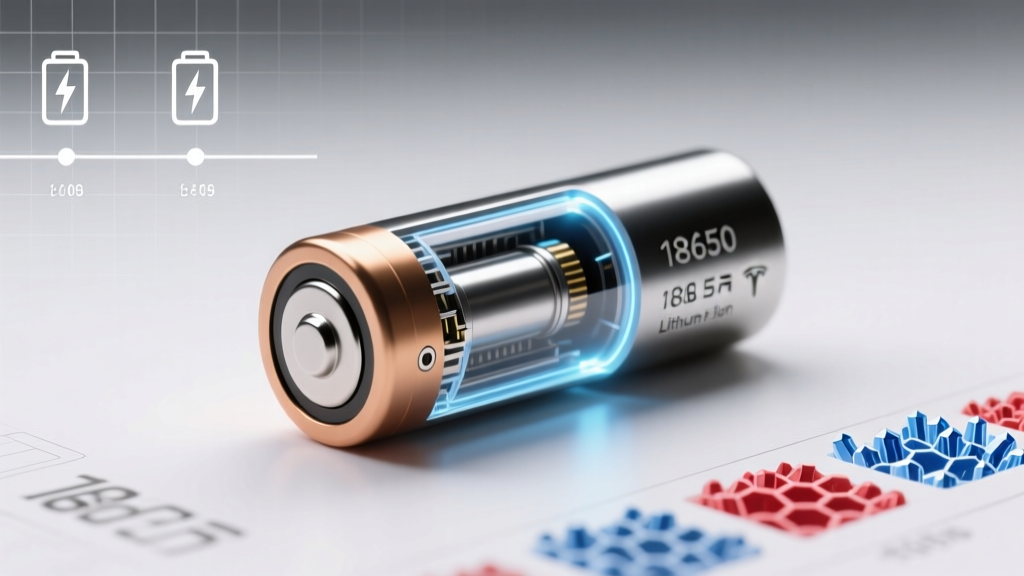
The Tesla 18650 battery cell is one of the most consequential components in electric vehicle history. Measuring just 18mm in diameter and 65mm in length — roughly the size of a standard AA battery, but slightly thicker — these cylindrical lithium-ion cells powered the original Tesla Roadster, every Model S built since 2012, and every Model X since 2015. Understanding what's inside these packs, how they age, and what replacement actually costs is essential for anyone buying, owning, or evaluating a Tesla built on this platform.
This guide covers the NCA chemistry inside the 18650 format, real-world degradation data from high-mileage Teslas, warranty protections, replacement economics, and what emerging battery tech means for the long-term future of these vehicles.
What Is the Tesla 18650 Battery Cell?
The 18650 is a cylindrical cell form factor that predates Tesla — it was widely used in laptops and power tools — but Tesla was the first automaker to assemble thousands of them into a vehicle traction battery. A Model S 85 kWh pack, for example, contains approximately 7,104 individual 18650 cells arranged into 16 modules. A 100 kWh pack uses roughly 8,256 cells.
These cells are manufactured primarily by Panasonic at the Gigafactory in Nevada (and earlier, in Japan). The chemistry is NCA — Nickel Cobalt Aluminum — a lithium-ion variant optimized for high energy density, which gave the Model S its class-leading range when it launched and remains competitive today.
Tesla has since moved to the larger 2170 cell (used in Model 3 and Model Y) and the 4680 cell (used in newer Model Y builds and the Cybertruck), but the 18650 platform remains on the road in hundreds of thousands of Model S and Model X vehicles, many now approaching or exceeding 150,000 miles.
NCA Chemistry: How It Compares to NMC and LFP
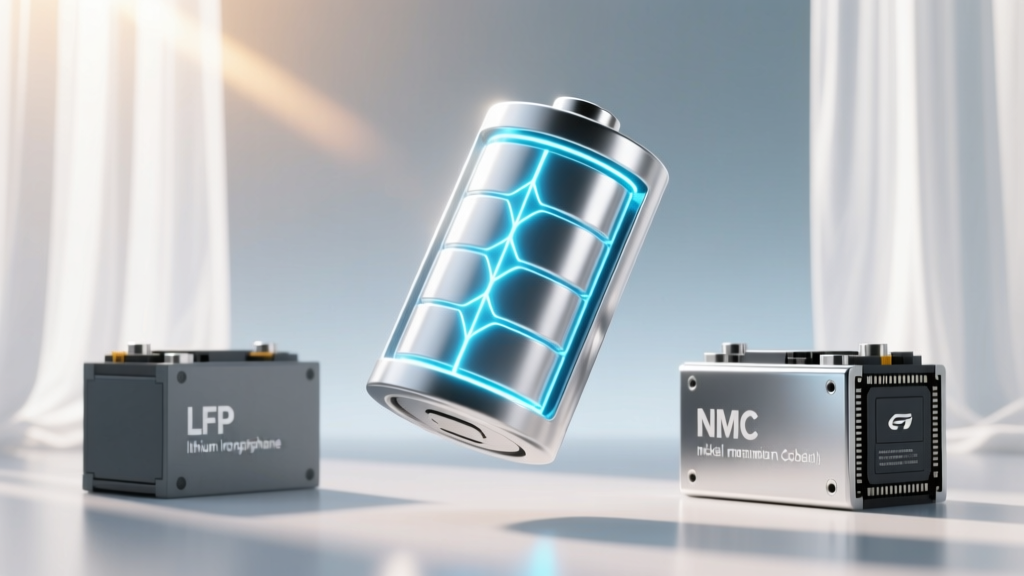
The 18650 cells in the Model S and Model X use NCA cathode chemistry. Here's how NCA stacks up against the two other dominant EV chemistries you'll encounter in 2026:
| Attribute | NCA (Tesla 18650) | NMC (Most Non-Tesla EVs) | LFP (Tesla Model 3 RWD, BYD) |
|---|---|---|---|
| Energy Density (Wh/kg, cell-level) | ~260 | ~230–250 | ~170–190 |
| Cycle Life (to 80% capacity) | ~1,000–1,500 cycles | ~1,500–2,000 cycles | ~3,000–5,000 cycles |
| Cold-Weather Performance | Good | Good | Moderate — greater range loss below 32°F |
| Thermal Stability | Lower — requires robust BMS | Moderate | High — most stable chemistry |
| Cost (per kWh, cell-level) | Higher (cobalt content) | Moderate | Lowest |
| Recommended Charge Limit (Daily) | 80–90% | 80–90% | 100% — LFP benefits from full charges |
| Typical Applications | Tesla Model S, Model X | Hyundai, Ford, VW, BMW EVs | Tesla Model 3/Y RWD, BYD, Rivian Standard |
The key trade-off: NCA delivers the highest energy density of the three, which is why Tesla chose it for the long-range Model S and Model X platforms where packing maximum kWh into a limited under-floor space was critical. The cost is lower thermal stability (necessitating Tesla's sophisticated battery management system and liquid cooling) and a shorter cycle life compared to LFP. For a daily-driven sedan or SUV, NCA remains a strong choice — but it demands more careful charging habits than LFP.
Real-World Degradation: What the Data Shows
Battery degradation is the top concern for used-EV buyers and long-term owners. For the Tesla 18650 packs, we now have over a decade of real-world data from Model S and Model X fleets.
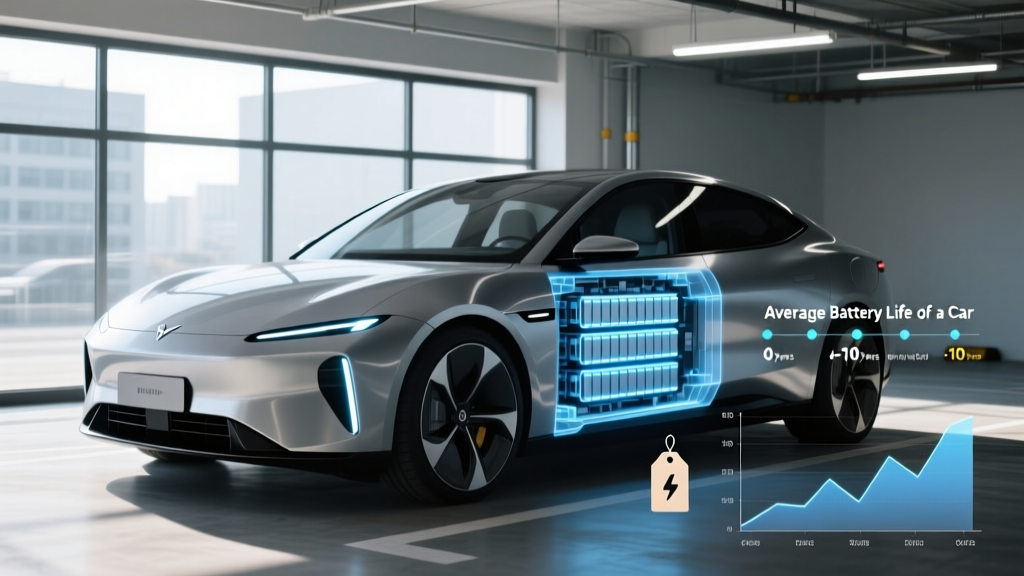
Typical 18650 NCA Pack Degradation Curve
Based on aggregated fleet data from TeslaFi, Recurrent Auto, and owner-reported measurements:
| Mileage / Age | Average Capacity Retained | Typical Range Loss (from EPA sticker) |
|---|---|---|
| Year 1 / ~15,000 mi | 95–97% | ~5–10 miles |
| Year 3 / ~45,000 mi | 90–94% | ~15–25 miles |
| Year 5 / ~75,000 mi | 87–92% | ~25–35 miles |
| Year 8 / ~120,000 mi | 82–88% | ~35–55 miles |
| Year 10+ / 150,000+ mi | 75–85% | ~55–80 miles |
Sources: Recurrent Auto battery degradation study, TeslaFi fleet data aggregations. Individual results vary significantly based on charging habits, climate, and Supercharging frequency.
Critical nuance: Degradation is not linear. The steepest capacity loss occurs in the first 20,000–30,000 miles (the so-called "break-in" degradation), after which the curve flattens considerably. A 2017 Model S 100D at 120,000 miles may have lost only 12–15% of its original capacity if it was primarily charged at home on Level 2 and not routinely Supercharged to 100%.
Also worth noting: Tesla's BMS includes a buffer — typically 4–6 kWh at the bottom of the pack — that is hidden from the driver. This means the displayed range doesn't reflect the absolute full-to-empty capacity, and the pack can degrade further before the driver notices meaningful range loss on the dashboard.
Tesla Battery Warranty: What's Covered
Tesla's battery warranty for Model S and Model X vehicles with 18650 packs is among the most straightforward in the industry, though the terms have shifted slightly across model years.
| Model / Configuration | Warranty Period | Mileage Limit | Minimum Capacity Retention |
|---|---|---|---|
| Model S (2012–2019, 60/70/85/90/100 kWh) | 8 years | 150,000 miles | 70% |
| Model X (2015–2020, 75/90/100 kWh) | 8 years | 150,000 miles | 70% |
| Model S (2020–present, Long Range / Plaid) | 8 years | 150,000 miles | 70% |
| Model X (2021–present, Long Range / Plaid) | 8 years | 150,000 miles | 70% |
What triggers a warranty claim: If your battery's usable capacity drops below 70% of its original rated capacity within the warranty window, Tesla will repair or replace the pack. In practice, Tesla typically replaces individual modules (a far less expensive repair than a full pack swap) unless the degradation is widespread or there's a manufacturing defect.
What's NOT covered: Cosmetic corrosion, damage from accidents or flooding, and capacity loss from consistently ignoring charge-limit recommendations (though this is difficult for Tesla to prove and rarely results in claim denial). The warranty is also voided if the vehicle has a salvaged title.
Replacement Costs: What to Actually Expect
This is where most EV fear-mongering concentrates — so let's ground this in real numbers. The vast majority of 18650 packs will never need a full replacement during normal ownership. But for out-of-warranty vehicles, here's what the market looks like in 2026:
| Scenario | Estimated Cost | Notes |
|---|---|---|
| Single module replacement (1 of 16) | $3,000–$5,500 | Most common repair for localized cell failure |
| Refurbished pack swap (85 kWh) | $12,000–$16,000 | From third-party EV shops; includes labor |
| Refurbished pack swap (100 kWh) | $14,000–$20,000 | Higher-capacity packs command a premium |
| New OEM pack from Tesla (100 kWh) | $20,000–$28,000 | Through Tesla Service; varies by model year |
| Battery upgrade (60/70 → 90/100 kWh) | $16,000–$22,000 | Some third-party shops offer capacity upgrades |
Context that matters: A 2015 Model S 85 with 130,000 miles and 85% battery health is still delivering roughly 225 miles of real-world range — entirely usable for daily driving and moderate road trips. The economic case for a $20,000 pack replacement on a vehicle worth $22,000–$30,000 is questionable. Most owners in this situation either continue driving with the degraded pack, trade the vehicle in, or sell it to a buyer who values the remaining range.
Full pack failures (catastrophic, not gradual degradation) are rare and typically occur within the warranty period. According to data aggregated by Recurrent Auto, fewer than 1.5% of Tesla packs have required full replacement due to failure (not degradation) across all model years.
Factors That Accelerate (or Slow) 18650 Pack Aging
NCA chemistry is more sensitive to charging habits and thermal stress than LFP. Here's what the data shows actually moves the needle on degradation:
Battery Care Checklist for 18650 NCA Packs
- Set daily charge limit to 80–90%: Sustained time at 100% SoC accelerates cathode degradation. Use 100% only when you need full range for a trip, and don't let the car sit at 100% for extended periods.
- Minimize DC fast charging frequency: Supercharging at 150–250 kW generates significant heat. Occasional Supercharging on road trips is fine, but daily Supercharging as a primary charging method measurably increases degradation. Level 2 home charging at 7–11.5 kW is ideal for daily use.
- Precondition before Supercharging: Tesla's navigation system automatically preconditions the battery when a Supercharger is set as your destination. This brings the cells to optimal temperature (~95°F), reducing stress and improving charge speed. Always navigate to the Supercharger rather than just driving there.
- Avoid prolonged storage at extreme SoC: If storing the vehicle for more than two weeks, leave it plugged in with the charge limit set to 50%. Storing at 100% or near 0% for weeks accelerates calendar aging.
- Cold-weather awareness: NCA packs lose 20–30% of range in sub-freezing temperatures (measured at 10°F–20°F). This is temporary and recovers when temperatures rise. However, charging a cold battery without preconditioning causes lithium plating, which is permanent damage. Always precondition in cold weather.
- Don't obsess over the bottom 10%: Tesla's BMS buffer protects the pack from truly deep discharge. Driving to 5% displayed SoC does not mean you're hitting 0% at the cell level. The risk comes from letting the car sit at very low SoC for days.
How to Check Your 18650 Pack's State of Health
Tesla doesn't display a battery health percentage on the in-car screen the way some competitors do (e.g., Nissan Leaf's health bars). But there are several reliable methods for monitoring SoH:
Method 1: The 100% charge test. Charge the vehicle to 100% and note the displayed rated range. Compare this to the EPA-rated range when new (e.g., 265 miles for a 2012 Model S 85, 335 miles for a 2017 Model S 100D). The percentage difference is a close approximation of capacity retention. A 100D showing 285 rated miles at 100% has roughly 85% SoH.
Method 2: Third-party apps. Tools like TeslaFi, Tessie, and Stats (for Tesla) log charge data over time and calculate SoH by comparing energy added during charges to the change in displayed SoC. These are more accurate than a single 100% charge snapshot because they average across multiple data points.
Method 3: Tesla Service diagnostic. You can request a battery health report through the Tesla app or at a Service Center. This provides a more granular view, including module-level voltage variance, which can identify a single weak module before it becomes a problem.
When to investigate further: If your rated range at 100% drops more than 15–20 miles over a 6-month period without a change in driving or charging habits, or if you notice sudden range drops of 10+ miles in a single charge cycle (suggesting a module imbalance), schedule a diagnostic.
Looking Ahead: Solid-State, Silicon Anode, and the 18650's Future
The 18650 format is effectively legacy technology within Tesla's lineup. The company has transitioned to 2170 cells (Model 3, Model Y) and 4680 cells (Cybertruck, newer Model Y builds), both of which offer improved energy density and manufacturing efficiency. Panasonic, Tesla's primary cell supplier, continues to produce 18650 cells for service replacements and existing Model S/X production, but no new Tesla platform will use this form factor.
Silicon-anode enhancements: Incrementally, Panasonic and other cell makers are introducing silicon into the anode (replacing or supplementing graphite), which can boost energy density by 10–20%. These improvements are appearing in newer 2170 and 4680 cells first. Retrofitting existing 18650 packs with next-generation cells is not practical due to the different form factor and module architecture.
Solid-state batteries: Multiple manufacturers (Toyota, Samsung SDI, QuantumScape) have announced solid-state battery timelines targeting 2027–2030 for initial production. These promise higher energy density, faster charging, and improved safety. However, solid-state packs will not be compatible with existing 18650-pack vehicles. For current Model S and Model X owners, the relevant technology is what's already in the car — and the data shows it holds up well for 200,000+ miles with proper care.
Aftermarket support: As the 18650 fleet ages, a growing ecosystem of independent EV repair shops (such as Electrified Garage, Gruber Motor Company, and others) now specialize in module-level diagnostics and repairs at costs well below Tesla Service pricing. This aftermarket support extends the practical life of these vehicles significantly.
Frequently Asked Questions
How long do Tesla 18650 batteries last in years and miles?
Based on fleet data, most 18650 NCA packs retain 80–88% of their original capacity at 120,000 miles (approximately 8 years). Many packs are still functional at 200,000+ miles with 70–80% capacity remaining. Full pack failure is rare — under 1.5% of packs according to Recurrent Auto data. The practical lifespan often exceeds the economic lifespan of the vehicle itself.
How much does it cost to replace a Tesla 18650 battery?
A full OEM pack replacement through Tesla costs $20,000–$28,000 for a 100 kWh pack. Refurbished pack swaps from independent shops run $12,000–$20,000. However, most repairs are module-level (replacing 1 of 16 modules) at $3,000–$5,500. Complete replacements are uncommon — most degradation is gradual and the pack remains usable well below 80% capacity.
What does Tesla's battery warranty cover?
Tesla warrants the 18650 packs in Model S and Model X for 8 years or 150,000 miles, whichever comes first, with a minimum capacity retention of 70%. If the pack drops below 70% within the warranty window, Tesla repairs or replaces it. The warranty covers manufacturing defects and excessive degradation but not accident damage, flood damage, or vehicles with salvaged titles.
How do I maximize the lifespan of my 18650 NCA battery?
Set the daily charge limit to 80–90% and only charge to 100% when needed for trips. Prioritize Level 2 home charging over frequent Supercharging. Always precondition the battery before DC fast charging (navigate to the Supercharger using the car's nav). Avoid storing the vehicle at 100% or near 0% for extended periods. In cold weather, always precondition before driving and charging.
Is NCA better than LFP or NMC for a Tesla battery?
It depends on your priorities. NCA offers the highest energy density, which is why Tesla used it for the long-range Model S and Model X. However, LFP delivers far superior cycle life (3,000–5,000 cycles vs. 1,000–1,500 for NCA), better thermal stability, and lower cost — at the expense of energy density and cold-weather performance. For a daily commuter who charges at home and doesn't need 350+ miles of range, LFP is arguably the more durable choice. For maximum range in a large sedan or SUV, NCA remains the right chemistry.
Can I upgrade my 85 kWh 18650 pack to a 100 kWh pack?
Some third-party EV shops offer pack upgrades from 85 kWh to 90 or 100 kWh using refurbished Tesla modules. Costs typically range from $16,000–$22,000 including labor. Tesla itself does not offer this as a standard service. Before pursuing an upgrade, consider whether the cost is justified versus trading in for a newer vehicle with a fresh warranty.