If you're searching for a Subaru Outback 2016 battery, you're most likely dealing with a dead 12-volt auxiliary battery — the standard lead-acell or AGM unit that cranks the flat-four engine and powers the electronics in Subaru's popular wagon. That's a straightforward $150–$280 swap. But if your search stems from a broader curiosity about what batteries cost, how long they last, and what degradation looks like in modern electrified vehicles, this guide covers the full picture — from your Outback's 12V system to the high-voltage traction batteries powering today's EVs and hybrids.
Understanding battery technology matters whether you're maintaining a 2016 Outback, considering a plug-in hybrid like the Subaru Crosstrek Hybrid, or evaluating a full battery-electric vehicle. Battery chemistry, degradation curves, warranty coverage, and replacement economics are the core factors that determine long-term ownership cost in any electrified vehicle.
Your Subaru Outback 2016 Battery: 12V Basics and Replacement
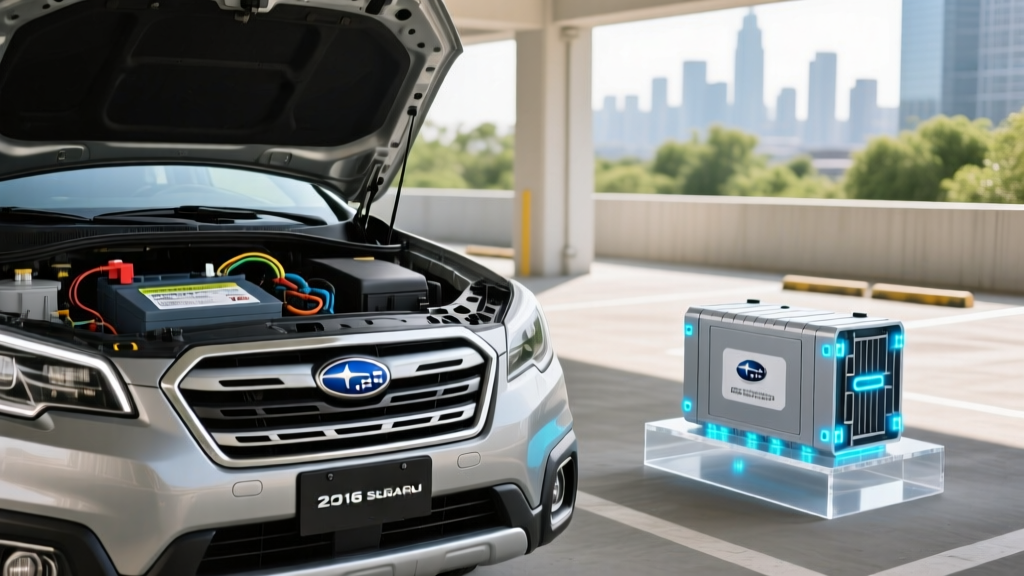
The 2016 Subaru Outback uses a Group 24F or Group 35 12V battery (typically 60–70 Ah), located under the hood. This is not a high-voltage traction battery — it's a conventional automotive battery that powers the starter, lights, infotainment, and ECU. The 2016 Outback is a purely internal-combustion vehicle (2.5L or 3.6L boxer engine) with no electrified drivetrain.
| Spec | 2016 Subaru Outback 12V Battery |
|---|---|
| Battery Type | Lead-acid (flooded) or AGM |
| Group Size | 24F or 35 (varies by trim/engine) |
| Cold Cranking Amps (CCA) | 550–700 CCA |
| Typical Lifespan | 3–5 years |
| Replacement Cost (parts) | $150–$280 |
| Installation | DIY or ~$20–$50 at auto parts store |
When to replace: Slow cranking, dim headlights, frequent jump-starts, or a battery older than 4 years. Auto parts stores like AutoZone, Advance Auto Parts, and Costco carry compatible units. AGM batteries cost more ($220–$280) but handle the Outback's EyeSight driver-assist electronics and start-stop demands better than flooded cells.
Important distinction: This 12V battery is fundamentally different from the high-voltage traction batteries (measured in kilowatt-hours, or kWh) found in EVs and hybrids. The rest of this guide focuses on those larger, more complex battery systems — relevant if you're considering an upgrade to an electrified vehicle.
EV and Hybrid Traction Batteries: Chemistry Explained
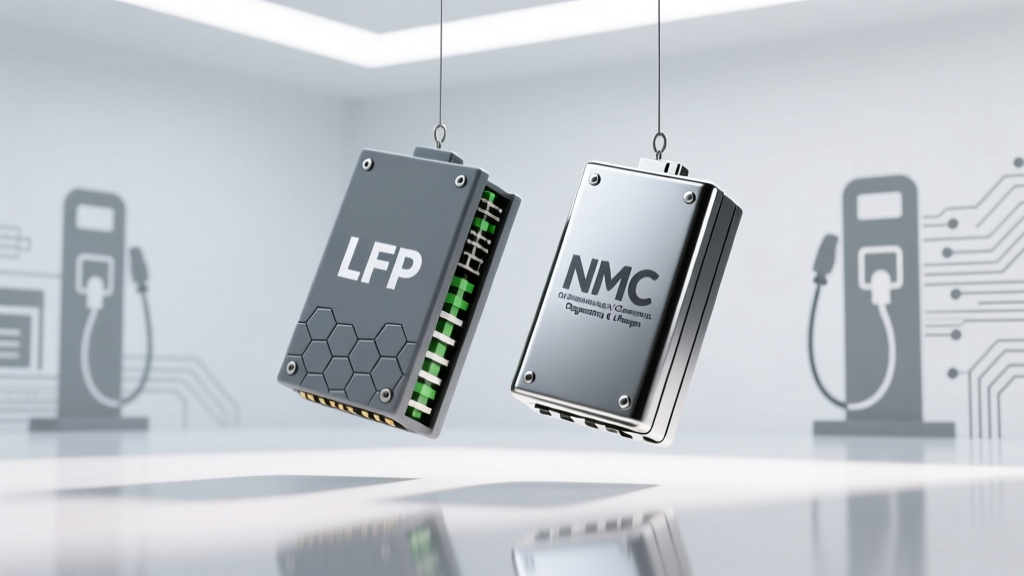
Modern electric and hybrid vehicles use high-voltage lithium-ion traction batteries ranging from ~1 kWh (mild hybrids) to over 100 kWh (long-range EVs). Two dominant chemistries define the market: NMC/NCA (nickel manganese cobalt / nickel cobalt aluminum) and LFP (lithium iron phosphate).
NMC/NCA batteries offer higher energy density — more kWh packed into less weight and volume — making them the default for long-range EVs like the Tesla Model Y Long Range, Hyundai Ioniq 5, and Ford Mustang Mach-E. The trade-off: cobalt and nickel are expensive, and these chemistries degrade faster if routinely charged to 100% or exposed to extreme heat.
LFP batteries sacrifice some energy density for dramatically longer cycle life, better thermal stability, and lower cost. Tesla's Model 3 Standard Range and Model Y Standard Range use LFP packs, and manufacturers like Ford and Rivian have adopted LFP for base trims. LFP cells tolerate daily 100% charging without accelerated degradation — a significant ownership advantage.
| Factor | NMC / NCA | LFP |
|---|---|---|
| Energy Density | Higher (250–300 Wh/kg cell-level) | Lower (160–200 Wh/kg) |
| Cycle Life | 1,000–2,000 cycles to 80% SoH | 3,000–6,000+ cycles to 80% SoH |
| Cold Performance | Better at low temperatures | Reduced range in freezing temps |
| Cost per kWh | Higher ($130–$160/kWh pack-level, 2025–2026) | Lower ($90–$115/kWh pack-level) |
| Daily Charging to 100% | Not recommended (accelerates degradation) | Recommended (no penalty) |
| Thermal Stability | Requires active cooling; higher runaway risk | Very stable; lower thermal runaway risk |
| Typical Use | Long-range EVs, performance trims | Standard-range EVs, fleet vehicles, PHEVs |
Which is better? For maximum range and cold-weather driving, NMC/NCA wins. For longevity, daily drivability, and lower replacement cost, LFP is the stronger choice. Many buyers are better served by an LFP pack they can charge to 100% every night than an NMC pack they must baby at 80%.
How Long Do EV Batteries Actually Last?
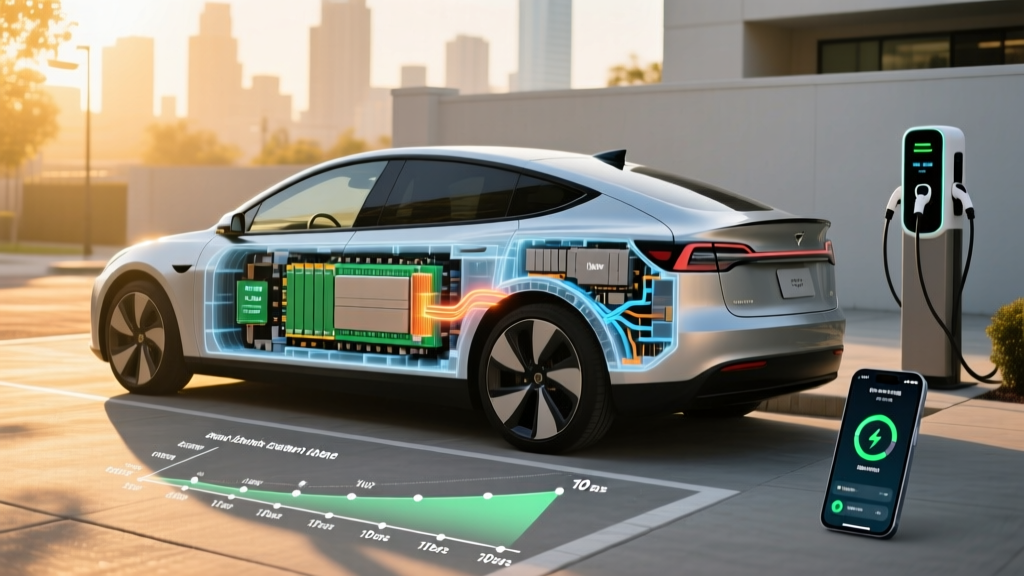
The short answer: most EV batteries outlast the vehicles they're installed in. Real-world data from fleet operators, manufacturer reports, and independent testing consistently shows modern lithium-ion traction batteries losing roughly 5–10% of their original capacity over the first 100,000 miles, with degradation slowing significantly after the initial break-in period.
Here's what the data shows across major platforms:
| Vehicle / Platform | Mileage | Avg. Capacity Retention | Source |
|---|---|---|---|
| Tesla Model S/X (NCA) | 150,000 mi | ~85–90% | Tesla Impact Report 2024 |
| Nissan Leaf (NMC, passive cooling) | 100,000 mi | ~78–85% | Owner surveys, Recurrent Auto |
| Chevrolet Bolt (NMC, active cooling) | 100,000 mi | ~90–94% | Recurrent Auto |
| Hyundai/Kia E-GMP (NMC, 800V) | 80,000 mi | ~92–95% | Manufacturer warranty claims data |
| Tesla Model 3/Y LFP | 100,000 mi | ~92–96% | Fleet data, Recurrent Auto |
Key insight: Batteries with active liquid thermal management (Tesla, Hyundai E-GMP, GM Ultium) consistently outperform passively cooled packs (early Nissan Leaf) in long-term capacity retention. Chemistry matters, but thermal management is equally critical.
Years vs. miles: Calendar aging also degrades batteries. A 10-year-old EV with 40,000 miles may show similar degradation to a 5-year-old EV with 100,000 miles. Most manufacturers design packs to retain 70–80% capacity at 8 years / 100,000 miles — and real-world data shows most exceed that threshold.
EV Battery Warranty Coverage: What's Protected
Federal law mandates that EV battery warranties cover a minimum of 8 years / 100,000 miles (10 years / 150,000 miles in CARB states like California, New York, and Massachusetts). Here's how major manufacturers structure their coverage:
| Manufacturer | Warranty Period | Capacity Threshold | Notes |
|---|---|---|---|
| Tesla (Model 3/Y LFP) | 8 yr / 100,000 mi | 70% retention | Standard Range; NMC Long Range: 8yr/120k mi |
| Hyundai / Kia | 10 yr / 100,000 mi | 70% retention | Among the longest coverage in the industry |
| Ford (Mustang Mach-E, F-150 Lightning) | 8 yr / 100,000 mi | 70% retention | Includes battery components and cooling system |
| GM (Ultium platform) | 8 yr / 100,000 mi | 70% retention | Covers module-level replacement |
| Volkswagen (MEB platform) | 8 yr / 100,000 mi | 70% retention | Covers ID.4, ID.Buzz |
| Subaru (Solterra, bZ4X platform) | 8 yr / 100,000 mi | 70% retention | Shared Toyota e-TNGA architecture |
What triggers a warranty claim? If your battery's State of Health (SoH) drops below the threshold (typically 70%) within the warranty period, the manufacturer must repair or replace it — usually by swapping failed modules rather than the entire pack. Normal degradation above the threshold is not covered.
What voids coverage? Modifications to the battery management system (BMS), use of non-approved chargers that cause damage, physical damage from collisions or flooding, and failure to follow manufacturer maintenance schedules (e.g., coolant service for liquid-cooled packs).
EV Battery Replacement Cost: What to Budget
Battery replacement is the single biggest fear among prospective EV buyers — and it's the most overstated. Here's the reality: the vast majority of EV owners will never need a full battery replacement. When replacement is necessary (typically due to manufacturing defect, physical damage, or extreme degradation well beyond 150,000+ miles), costs vary enormously by vehicle and pack size.
| Vehicle Class | Pack Size (kWh) | Full Replacement Cost (2025–2026) | Module Repair Cost |
|---|---|---|---|
| Compact EV (Chevy Bolt, Nissan Leaf) | 40–65 kWh | $6,000–$10,000 | $1,500–$3,500 per module |
| Mid-size EV (Tesla Model 3, Ioniq 5) | 60–80 kWh | $8,000–$14,000 | $2,000–$4,000 per module |
| Large EV / SUV (Model Y, F-150 Lightning) | 80–130 kWh | $12,000–$20,000 | $2,500–$5,000 per module |
| Luxury EV (Model S, Mercedes EQS) | 90–120 kWh | $15,000–$25,000 | $3,000–$6,000 per module |
| PHEV (Toyota RAV4 Prime, Subaru Crosstrek Hybrid) | 8–18 kWh | $3,000–$7,000 | $800–$2,000 per module |
When is replacement typically needed? Based on current degradation data, full pack replacement due to age/mileage degradation alone is rare before 200,000+ miles for liquid-cooled NMC packs and 300,000+ miles for LFP. Most out-of-warranty replacements result from physical damage (road debris, collision) or isolated manufacturing defects — not gradual wear-out.
Cost trend: Pack-level prices have fallen from over $1,000/kWh in 2010 to roughly $100–$140/kWh in 2025–2026, according to BloombergNEF. Replacement costs will continue declining as the supply of refurbished and second-life modules grows.
Factors That Affect Battery Life — and How to Maximize It
Not all miles are equal when it comes to battery wear. These factors have the greatest impact on long-term State of Health:
- State of Charge (SoC) habits: For NMC/NCA batteries, keeping daily charge between 20–80% significantly reduces degradation. LFP batteries should be charged to 100% regularly (weekly at minimum) for accurate BMS calibration.
- DC fast charging frequency: Occasional DC fast charging (road trips) has minimal impact. Daily DC fast charging at 150+ kW accelerates wear slightly — studies show ~2–4% additional degradation over 100,000 miles vs. Level 2 charging (Recurrent Auto).
- Extreme temperatures: Sustained exposure to ambient temperatures above 95°F (35°C) without active cooling accelerates calendar aging. Extreme cold temporarily reduces range but does not cause permanent damage if the pack is preconditioned before charging.
- Deep discharge: Letting the battery sit at or near 0% SoC for extended periods (weeks) causes copper dissolution in the anode. Store EVs at 40–60% SoC if not driving for extended periods.
- Thermal preconditioning: Using your EV's preconditioning feature before DC fast charging (or before departure in cold weather) brings the pack to optimal temperature, reducing stress and improving charge speed.
Monitoring Battery Health: How to Check State of Health
State of Health (SoH) is the percentage of original capacity your battery retains. A new EV has 100% SoH; a battery at 85% SoH holds 85% of its original kWh. Here's how to check it:
- In-vehicle displays: Many EVs (Hyundai/Kia, BMW, Mercedes) show SoH or a health bar in the infotainment or driver cluster. Tesla does not natively display SoH but provides range estimates that reflect degradation.
- OBD-II diagnostic tools: Devices like the OBDLink SX paired with apps such as LeafSpy (Nissan Leaf), Scan My Tesla, or Car Scanner can read BMS-reported SoH, cell voltage variance, and pack temperature.
- Third-party services: Companies like Recurrent Auto offer free battery health reports that compare your pack's degradation to a fleet of identical vehicles.
- Dealer diagnostics: Most manufacturers can pull a full BMS health report during service visits. Request this if you suspect abnormal degradation or are evaluating a used EV purchase.
For your 2016 Subaru Outback: Since this is a conventional ICE vehicle, there is no high-voltage traction battery to monitor. If your Outback has a 12V battery issue, most auto parts stores will test voltage and CCA for free. A healthy 12V battery reads 12.6V at rest and maintains above 9.6V during cranking.
Emerging Battery Technology: What's Next
Several next-generation battery technologies are in development, but none are available in production vehicles as of early 2026:
Solid-state batteries: These replace the liquid electrolyte with a solid ceramic or polymer layer, promising 30–50% higher energy density, faster charging, and improved safety. Toyota has announced limited production in select models for the 2027–2028 timeframe, with broader availability expected post-2030. Samsung SDI, QuantumScape, and Solid Power are also advancing prototypes. Real-world availability for mainstream vehicles remains 2028–2030 at the earliest.
Silicon-dominant anodes: Replacing graphite anodes with silicon can boost energy density by 20–40%. Companies like Sila Nanotechnologies and Group14 are supplying silicon anode materials to manufacturers including Mercedes-Benz (for the upcoming G-Class EV) and Panasonic. Limited production vehicles with silicon anodes are expected in 2026–2027.
Sodium-ion batteries: Using abundant sodium instead of lithium, these offer lower cost and excellent cold performance but significantly lower energy density. CATL has begun production for Chinese-market EVs. US-market availability is uncertain and likely limited to budget/fleet segments initially.
Bottom line: Current lithium-ion technology (both NMC and LFP) is mature, reliable, and cost-effective. Waiting for solid-state is not a practical strategy for buyers who need a vehicle now — today's batteries already outlast most ownership cycles.
Frequently Asked Questions
How long do EV batteries last in years and miles?
Most modern EV batteries with active thermal management retain 85–95% capacity at 100,000 miles and 80–90% at 150,000 miles. In terms of years, expect 15–20+ years of usable service before capacity drops below 70%. LFP chemistries typically outlast NMC in cycle life. The EPA's fueleconomy.gov lists manufacturer warranty data alongside efficiency ratings.
How much does an EV battery cost to replace?
Full pack replacement ranges from $6,000–$25,000 depending on vehicle class and pack size (40–130 kWh). Module-level repairs cost $1,500–$6,000. However, most owners never need replacement — degradation data shows the majority of packs outlast 200,000 miles before reaching the 70% capacity threshold.
What does the EV battery warranty cover?
Federal law requires 8 years / 100,000 miles minimum (10/150k in CARB states). Coverage applies when capacity drops below the stated threshold (usually 70%). It includes cells, modules, BMS, and thermal management components. Damage from accidents, modifications, or improper charging is excluded.
How do I check and maximize my EV battery health?
Check SoH via in-vehicle displays, OBD-II apps (LeafSpy, Scan My Tesla), or services like Recurrent Auto. Maximize longevity by keeping NMC packs between 20–80% daily, charging LFP to 100% weekly, minimizing daily DC fast charging, preconditioning before fast charges, and avoiding prolonged storage at 0% or 100% SoC.
LFP vs NMC — which battery chemistry is better?
NMC offers higher energy density and better cold-weather range — ideal for long-range driving and cold climates. LFP offers longer cycle life, better thermal safety, lower cost, and tolerance for daily 100% charging — ideal for daily commuters and warm-climate drivers. Neither is universally "better"; the right choice depends on your driving pattern.
Is the Subaru Outback 2016 battery the same as an EV battery?
No. The 2016 Subaru Outback uses a conventional 12V lead-acid or AGM battery (Group 24F/35, ~$150–$280) for starting and electronics. It has no high-voltage traction battery. EV batteries are lithium-ion packs (40–130 kWh) costing $6,000–$25,000 and powering the electric drivetrain. If you're considering Subaru's EV offerings, the Subaru Solterra (co-developed with Toyota) uses an NMC pack with an 8-year/100,000-mile warranty.