If you've ever plugged your electric vehicle into a Level 2 home charger or a DC fast-charging station and wondered whether you could sit inside and "start" the car, you're not alone. It's one of the most common questions new EV owners ask — and the answer reveals a lot about how EV battery systems actually work.
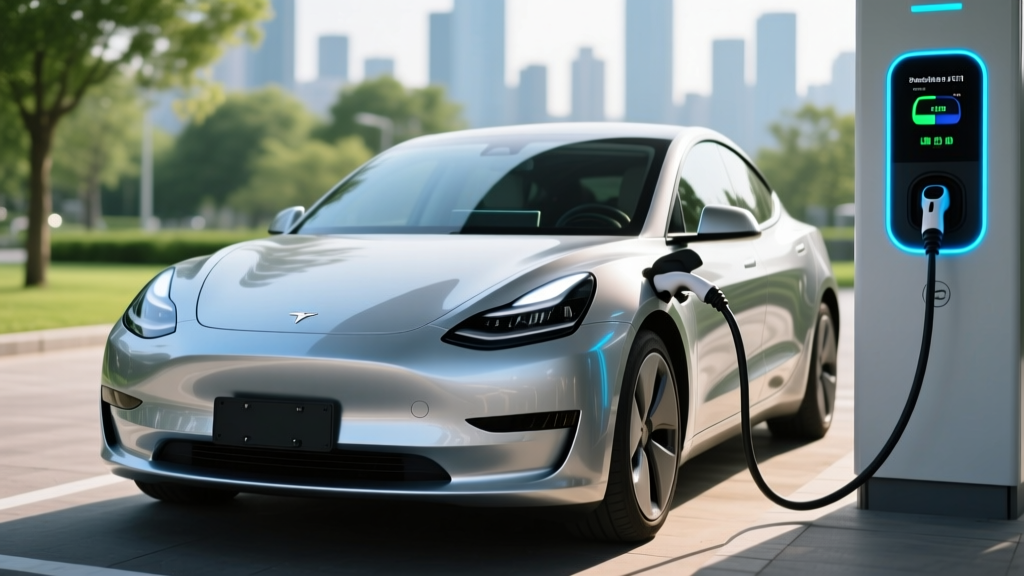
The short answer: you cannot "start" an EV in the traditional sense while it is charging, because there is no engine to start. However, you can power on the vehicle's electronics, run the climate control, use the infotainment system, and sit in the cabin while the high-voltage traction battery charges. In fact, preconditioning the cabin while plugged in is one of the best things you can do for range efficiency.
What you cannot do is shift into Drive and pull away while the charge cable is connected. Every EV on the market has a hard interlock that prevents the vehicle from being driven while plugged in — a safety requirement enforced at the vehicle-controller level. This article unpacks the engineering behind that interlock, then dives deep into the high-voltage traction battery: how long it lasts, what degrades it, what the warranty actually covers, and what replacement really costs.
Can You Turn On an EV While It's Plugged In?
Yes. When you plug in a modern EV — whether it's a Tesla Model 3, Hyundai Ioniq 5, Ford F-150 Lightning, or Chevrolet Equinox EV — the vehicle's onboard systems remain accessible. Here's what works and what doesn't while connected to a charger:
- Cabin climate control: Fully operational. Running HVAC while plugged in draws power from the grid (or the battery, depending on the vehicle's logic), preserving your battery's state of charge for driving.
- Infotainment and navigation: Fully operational. You can stream music, plan routes, or watch videos on vehicles equipped with cabin entertainment.
- Battery preconditioning: Many EVs will automatically warm or cool the high-voltage battery while plugged in, optimizing it for either the next drive or the active charging session.
- Shifting into Drive or Reverse: Blocked. The vehicle controller disables the drive inverter when the charge port is engaged. You'll see a dashboard message like "Unplug to drive."
- Accessory 12V battery charging: The DC-DC converter typically tops up the 12V auxiliary battery while the vehicle is plugged in, which is why EVs rarely need 12V jump-starts when regularly charged.
This interlock exists for two reasons: safety (preventing drive-offs that could rip the charge cable and damage the port or station) and electrical protection (the vehicle's battery management system, or BMS, needs a stable state during charge transfer).
Understanding Your EV's High-Voltage Traction Battery
Before discussing longevity, it's critical to distinguish between the two batteries in your EV:
- High-voltage traction battery (typically 400V–800V): The large lithium-ion pack (50–130+ kWh) that powers the drive motors and determines your vehicle's range.
- 12V auxiliary battery: A small lead-acid or lithium 12V battery that powers lights, door locks, the infotainment screen, and the contactors that close the circuit to the high-voltage pack.
Every question in this article about degradation, warranty, and replacement cost refers to the high-voltage traction battery. The 12V battery is a conventional maintenance item that typically lasts 3–5 years and costs $150–$400 to replace — entirely separate from the traction pack.
LFP vs NMC/NCA: Which Chemistry Is in Your EV?
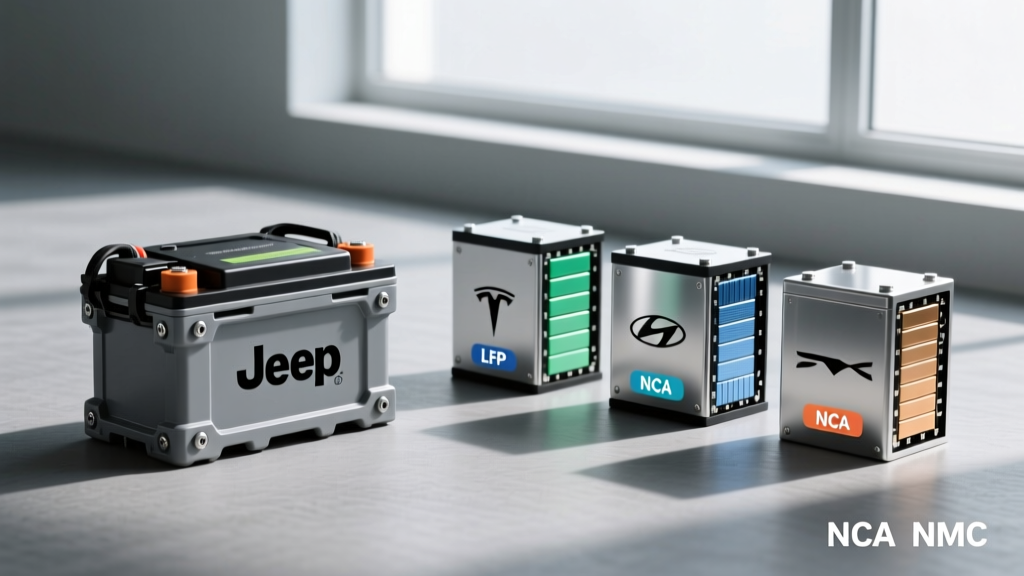
Not all EV batteries are the same. The two dominant lithium-ion chemistries in 2026 model-year vehicles are LFP (lithium iron phosphate) and NMC/NCA (nickel manganese cobalt / nickel cobalt aluminum). The chemistry affects range, longevity, cold-weather performance, and cost.
| Attribute | LFP (Lithium Iron Phosphate) | NMC / NCA (Nickel-based) |
|---|---|---|
| Energy Density | Lower (~160–180 Wh/kg cell-level) | Higher (~220–300 Wh/kg cell-level) |
| Cycle Life | 3,000–5,000+ cycles to 80% capacity | 1,000–2,000 cycles to 80% capacity |
| Cold-Weather Performance | Weaker — more range loss below 32°F | Better low-temp conductivity |
| Recommended SoC for Daily Use | Can charge to 100% regularly | Best kept at 80% daily; 100% for trips |
| Cost | Lower — no cobalt or nickel | Higher — commodity-sensitive metals |
| Thermal Stability | Superior — very low thermal runaway risk | Good, but requires more active cooling |
| Common in 2026 Models | Tesla Model 3/Y RWD, base Chevy Equinox EV, some BYD imports | Most long-range/AWD trims, Ford F-150 Lightning Extended, Rivian, Hyundai Ioniq 5 Long Range |
Which is better? It depends on your use case. If you have home charging and mostly commute under 60 miles round-trip, an LFP-equipped EV offers exceptional longevity and the simplicity of charging to 100% daily. If you need maximum range, tow frequently, or live in a cold climate, NMC/NCA packs deliver more usable energy per pound and better winter performance. Neither chemistry is universally superior — both are proven to outlast 200,000 miles with proper care.
How Long Do EV Batteries Last? Real Degradation Data
The most persistent EV myth is that batteries need replacing every few years, like a smartphone. Real-world fleet data tells a very different story.
Typical EV Battery Degradation Curve (Fleet Averages):
- Year 1: ~2–3% capacity loss (initial formation loss)
- Years 2–4: ~0.5–1% per year (linear slow-degradation phase)
- Years 5–8: ~0.5–1% per year (continues linearly for most packs)
- Year 8–10 average State of Health (SoH): ~88–93% for liquid-cooled packs
- 150,000-mile average SoH: ~88–92% (per Recurrent Auto fleet data)
A 2025 study by Geotab analyzing over 10,000 EVs found that the average battery retained 90.2% of its original capacity after 10 years — far exceeding most owners' expectations. Early-generation EVs (2011–2015 Nissan Leaf with passive air-cooled batteries) showed significantly worse degradation, which is why thermal management (liquid cooling) is now standard on virtually every 2026 EV sold in the U.S.
Key takeaway: Most modern EV batteries will retain 85–93% of their original capacity over 10 years or 150,000–200,000 miles. Complete failure is rare; gradual capacity loss is the norm — and it's slow enough that most owners sell or trade the vehicle before the battery becomes a concern.
Factors That Accelerate Battery Degradation
What hurts battery longevity:
- Frequent DC fast charging: Daily use of 150+ kW DCFC adds heat stress. Occasional road-trip fast charging is fine; daily reliance accelerates wear by an estimated 1–2% additional loss over 5 years.
- Sustained high State of Charge: Storing an NMC/NCA vehicle at 100% SoC for days or weeks (especially in heat) stresses the cathode. LFP chemistry is more tolerant of 100% SoC.
- Deep discharges to 0%: Letting the battery sit at or near 0% SoC for extended periods can cause copper dissolution in the anode. Try not to drop below 10% for storage.
- Extreme heat exposure: Prolonged parking in 100°F+ ambient temperatures without thermal management active (unplugged) is the single worst environmental factor.
- Consistently aggressive acceleration: High C-rate discharges generate internal heat. Normal driving is not a concern; repeated launch-control starts are.
What maximizes battery longevity:
- Charge to 80% daily (NMC/NCA); 100% is fine for LFP
- Use Level 2 home charging as your primary method
- Keep the vehicle plugged in during extreme heat or cold so the BMS can run thermal management
- Precondition the battery before DC fast charging (most EVs do this automatically when you navigate to a charger)
- Store at 50–60% SoC if the vehicle will sit unused for weeks
EV Battery Warranty Terms: What's Actually Covered
Federal law mandates a minimum EV battery warranty of 8 years / 100,000 miles (10 years / 150,000 miles in California and states that follow CARB standards). Most manufacturers meet or exceed this baseline. Here's how the major warranties compare for 2026 model-year vehicles:
| Manufacturer | Warranty Period | Mileage Limit | Capacity Retention Threshold |
|---|---|---|---|
| Tesla (Model 3/Y RWD — LFP) | 8 years | 100,000 miles | 70% |
| Tesla (Model 3/Y LR, Model S/X) | 8 years | 120,000–150,000 mi | 70% |
| Hyundai / Kia (Ioniq 5, EV6, EV9) | 10 years | 100,000 miles | 70% |
| Ford (F-150 Lightning, Mustang Mach-E) | 8 years | 100,000 miles | 70% |
| General Motors (Equinox EV, Blazer EV, Silverado EV) | 8 years | 100,000 miles | 70% (60% on some commercial) |
| Rivian (R1T, R1S) | 8 years | 175,000 miles | 70% |
| BMW (i4, iX, i7) | 8 years | 100,000 miles | 70% |
How the warranty works: If your battery's State of Health drops below the stated threshold (typically 70% of original capacity) within the warranty period, the manufacturer will repair or replace the pack — usually by swapping failed modules rather than the entire unit. The warranty covers defects and abnormal degradation; it does not cover damage from accidents, flooding, or unauthorized modifications.
According to data from the U.S. Department of Energy's fueleconomy.gov, battery warranty claims remain rare, with fewer than 1–2% of EVs requiring battery service under warranty across major manufacturers.
EV Battery Replacement Cost: What You'd Actually Pay
If your battery degrades beyond the warranty threshold — or fails outside the warranty window — replacement is expensive but rarely catastrophic. Here's the current cost landscape for 2026:
| Vehicle / Pack Size | Battery Capacity | Estimated Replacement Cost (Parts + Labor) | Typical Replacement Timeline |
|---|---|---|---|
| Tesla Model 3 RWD (LFP) | ~60 kWh | $8,000 – $12,000 | Rarely needed before 250,000+ mi |
| Hyundai Ioniq 5 Long Range | 77.4 kWh | $10,000 – $15,000 | Rarely needed before 200,000+ mi |
| Ford F-150 Lightning Extended | 131 kWh | $18,000 – $28,000 | Rarely needed before 200,000+ mi |
| Chevrolet Silverado EV | ~200 kWh | $25,000 – $38,000 | Too new for fleet data |
| Tesla Model S (current gen) | ~100 kWh | $13,000 – $20,000 | Rarely needed before 200,000+ mi |
| Nissan Ariya | 87 kWh | $11,000 – $16,000 | Rarely needed before 200,000+ mi |
Context that matters: Battery pack prices have fallen roughly 80% since 2013 (from ~$500/kWh to roughly $100–$140/kWh at the cell level in 2025–2026). Module-level repair — replacing only the degraded sections of a pack — is increasingly common and can cost $2,000–$6,000 instead of a full-pack swap. By the time most 2026 EVs need a battery replacement (if ever), costs will likely be significantly lower than today's figures.
The honest reality: most EV batteries outlast the useful life of the vehicle itself. According to Recurrent Auto, fewer than 1.5% of EVs in their 15,000-vehicle study fleet required a battery replacement — and the vast majority of those were covered under warranty.
How to Check and Monitor Your Battery's State of Health
State of Health (SoH) is a percentage representing your battery's current maximum capacity relative to its original capacity when new. A brand-new EV has 100% SoH; a vehicle with 5% degradation sits at 95% SoH.
Methods to Check SoH
- In-vehicle display: Some manufacturers (notably Tesla via the service menu, and Hyundai/Kia via the infotainment system) expose a battery health percentage directly. Availability varies by model and model year.
- OBD-II diagnostic apps: Tools like LeafSpy (for Nissan), Scan My Tesla, or Car Scanner ELM OBD2 can read the BMS-reported SoH via the OBD-II port. This is the most accurate owner-accessible method.
- Dealer diagnostic check: Any authorized service center can pull a full battery health report. Request this during routine service or before buying a used EV.
- Third-party battery health reports: Services like Recurrent offer battery health certificates for used-EV transactions, providing an independent SoH estimate based on connected-car telemetry.
- Manual range tracking: Charge to 100% (on an LFP vehicle) or a known SoC, note the displayed range, and compare it to the original EPA range. A 310-mile EPA vehicle now showing 280 miles at full charge has roughly 90% SoH — though this method is approximate and temperature-sensitive.
Emerging Battery Technology: What's on the Horizon
While today's lithium-ion batteries (both LFP and NMC) are mature and reliable, several next-generation technologies are in active development. It's important to understand their realistic timelines:
- Solid-state batteries: Promising 30–50% more energy density, faster charging, and improved safety by replacing the liquid electrolyte with a solid material. Toyota, Samsung SDI, and QuantumScape are leading development. Toyota has announced limited production in select 2027–2028 models, but widespread availability across the U.S. market is not expected before 2029–2031. These are not available in any 2026 production vehicle.
- Silicon-dominant anodes: Replacing graphite anodes with silicon can boost energy density by 20–40%. Companies like Sila Nanotechnologies and Group14 are supplying early-production cells to Mercedes-Benz and others. Expect limited availability in premium 2026–2027 models, scaling through the end of the decade.
- Sodium-ion batteries: Lower cost and no lithium dependency, but lower energy density (~120–150 Wh/kg). Best suited for budget city EVs and stationary storage. CATL and BYD are producing at scale in China; U.S. vehicle applications remain announced/preliminary as of 2026.
For buyers shopping today: current lithium-ion technology (LFP and NMC) is proven, well-warrantied, and sufficient for 200,000+ miles of service. There is no practical reason to delay an EV purchase waiting for solid-state batteries, given their multi-year timeline to mass-market availability.
Frequently Asked Questions
Can you start a car while battery is charging?
You cannot put the vehicle in Drive or move it while the charge cable is connected — every EV has a drive-disable interlock. However, you can power on the vehicle, run the climate control, use the infotainment system, and precondition the battery while charging. The 12V auxiliary battery is also maintained while plugged in.
How long do EV batteries last in years and miles?
Modern liquid-cooled EV batteries typically retain 85–93% of their original capacity after 10 years or 150,000–200,000 miles. Fleet data from Geotab and Recurrent Auto shows most packs outlast the vehicle's useful life. Complete battery failure is rare — gradual capacity loss of ~1% per year after the first year is the norm.
How much does an EV battery cost to replace?
Full-pack replacements range from ~$8,000 for a smaller LFP pack (Tesla Model 3 RWD) to $25,000–$38,000 for very large packs (Chevrolet Silverado EV 200 kWh). Module-level repairs are often possible for $2,000–$6,000. However, fewer than 1.5% of EVs ever need an out-of-warranty battery replacement, and pack prices continue to decline.
What does the EV battery warranty cover?
Federal law requires a minimum 8-year/100,000-mile warranty on EV batteries (10 years/150,000 miles in CARB states). The warranty covers capacity loss below a threshold — typically 70% of original capacity — as well as manufacturing defects. It does not cover accident damage, flooding, or unauthorized modifications.
LFP vs NMC — which battery chemistry is better?
LFP offers longer cycle life (3,000–5,000+ cycles), lower cost, better thermal stability, and the convenience of daily 100% charging — but with lower energy density and weaker cold-weather performance. NMC/NCA delivers more range per pound and better winter efficiency, but is best kept at 80% SoC for daily use. For commuters with home charging, LFP is often the better longevity play. For road-trippers and cold-climate drivers, NMC is typically the better fit.
How do I check my EV battery's State of Health?
The most accurate owner-accessible method is reading BMS data via an OBD-II diagnostic app (LeafSpy, Scan My Tesla, Car Scanner). Dealers can pull a full health report during service. You can also track your 100% charged range over time and compare it to the original EPA figure — though this is approximate and affected by temperature.
Does fast charging damage my EV battery?
Occasional DC fast charging (road trips, a few times per month) has minimal impact on modern liquid-cooled batteries. However, daily reliance on 150+ kW DCFC adds cumulative heat stress and can accelerate degradation by an estimated 1–2% over 5 years. Level 2 home charging (7–11.5 kW) remains the optimal daily charging method for battery longevity.
Should I wait for solid-state batteries before buying an EV?
No. Solid-state batteries are not available in any 2026 production vehicle sold in the U.S., and mass-market availability is not expected before 2029–2031. Current LFP and NMC batteries are proven to last 200,000+ miles, are covered by 8–10 year warranties, and offer excellent real-world performance. Waiting 3–5+ years for next-generation chemistry means missing years of fuel savings and available tax incentives.