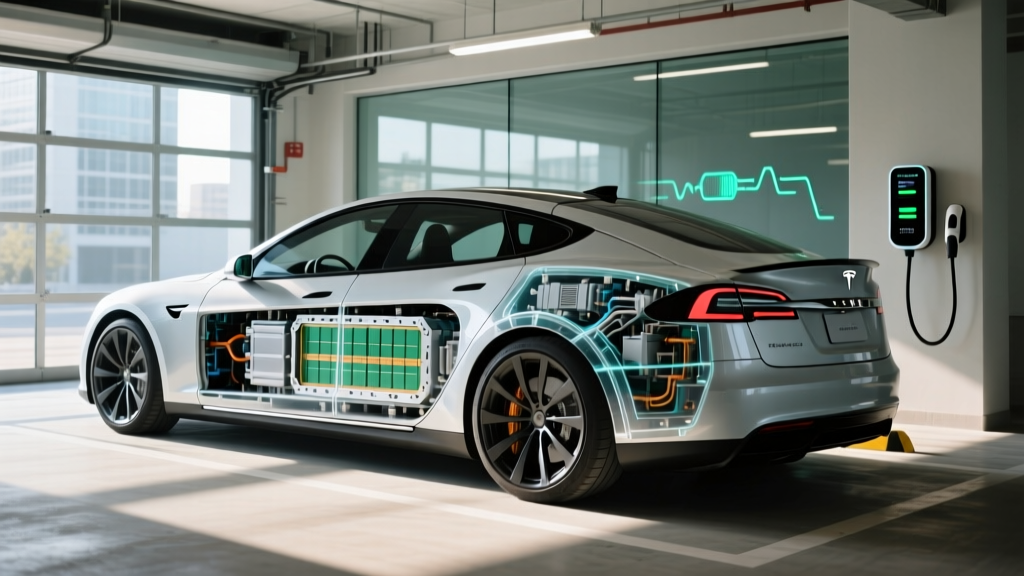
One of the most common questions new electric-vehicle owners ask is surprisingly practical: can you start a car while the battery is charging? The short answer is yes — you can sit inside, power up the cabin electronics, run the climate control, and even shift into drive on most modern EVs while a charging session is active. But understanding why requires a look at how high-voltage traction batteries, onboard chargers, and thermal management systems actually work together. This guide covers that answer in full, then goes deeper into the topics that matter for long-term ownership: battery chemistry, degradation data, warranty coverage, replacement costs, and the habits that maximize State of Health (SoH) over a decade or more of driving.
Can You Start an EV While It's Plugged In and Charging?
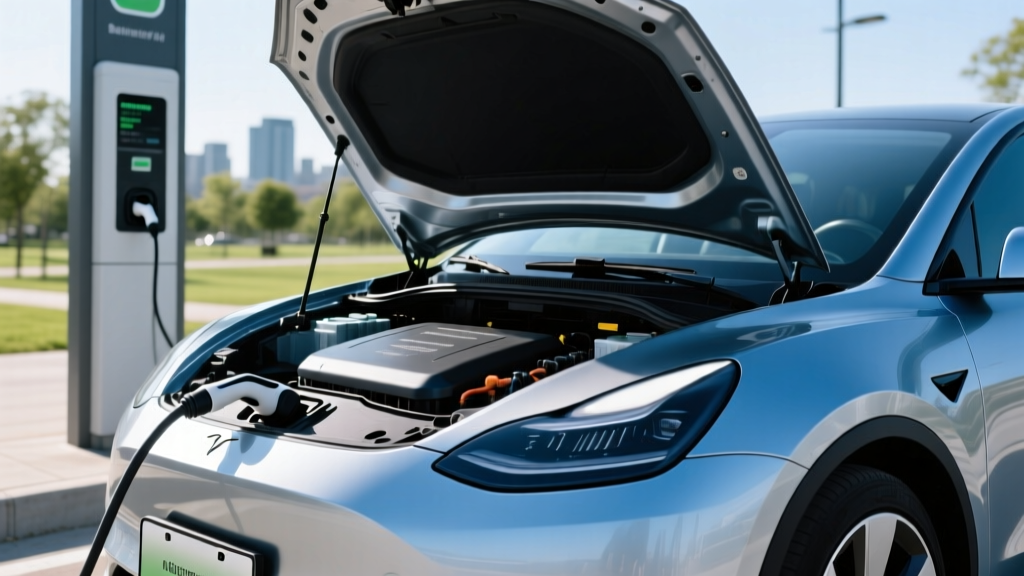
Yes. On virtually every modern battery-electric vehicle — from the Tesla Model 3 and Hyundai Ioniq 5 to the Ford F-150 Lightning and Chevrolet Equinox EV — you can power on the vehicle while it remains connected to a Level 2 or DC fast charger. Here is what happens behind the scenes:
- Cabin systems activate normally. The infotainment screen, climate control, seat heaters, and 12V accessories all draw power. In most EVs, this energy comes directly from the charging source rather than depleting the traction battery.
- The vehicle will not shift into drive on most models. Manufacturers typically lock out the drivetrain while the charge port is engaged. This is a safety interlock — not a technical limitation. If you unplug, drive becomes available instantly.
- Climate preconditioning works. Running HVAC while plugged in is one of the smartest things you can do. It uses grid power to heat or cool the cabin and condition the battery, preserving your range for the road.
- The 12V auxiliary battery stays topped up. The DC-DC converter continues to maintain the 12V system from the high-voltage pack or the charger itself.
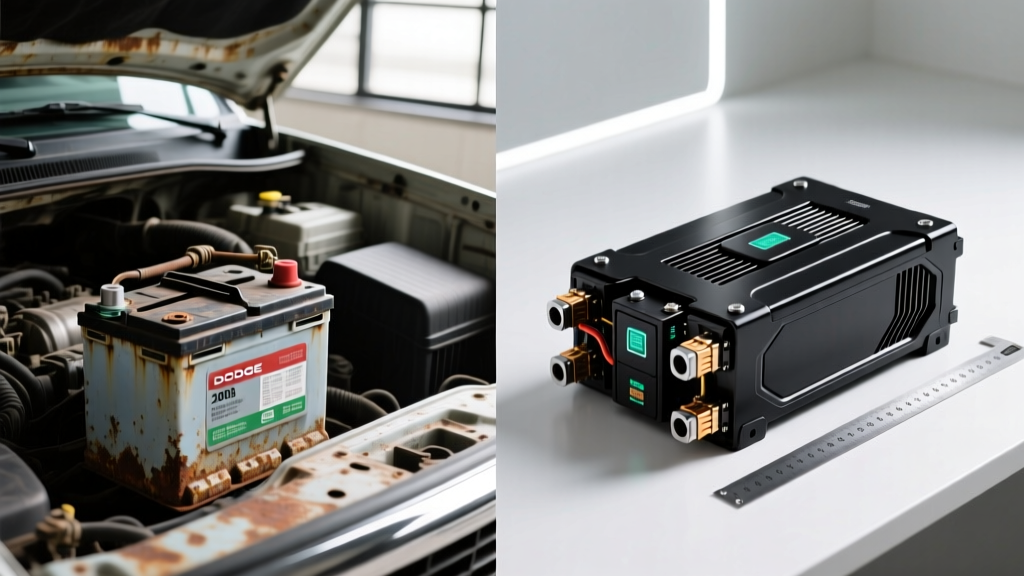
One important distinction: we are talking about the high-voltage traction battery (the large 60–100+ kWh pack that propels the car), not the small 12V auxiliary battery that powers lights and electronics. Confusing these two systems is a frequent source of misinformation in EV forums. The traction battery is what charges from the wall; the 12V battery is maintained by the DC-DC converter and rarely requires owner attention.
How Long Do EV Batteries Actually Last?
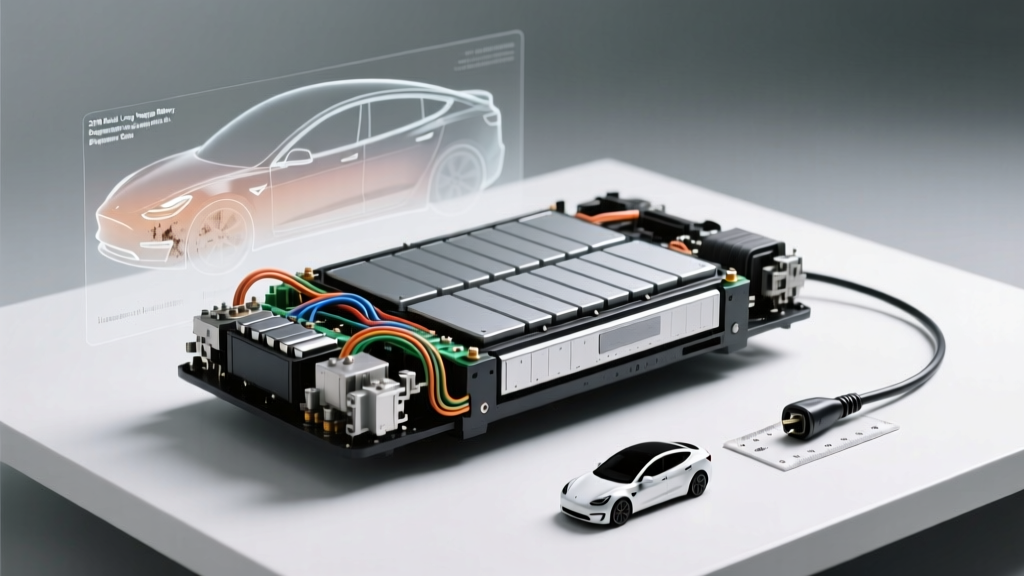
Based on aggregated fleet data from sources including fueleconomy.gov, manufacturer warranty filings, and third-party studies by Recurrent Auto and Geotab, the modern lithium-ion EV battery is lasting significantly longer than early skeptics predicted.
Typical Degradation Curve (2020–2025 Model-Year EVs, Liquid-Cooled Packs):
- Year 1: 1–3% capacity loss (initial formation settling)
- Years 2–4: Roughly 1–2% additional loss per year
- Years 5–8: Degradation rate slows; total loss typically 8–15%
- 100,000 miles: Most packs retain 88–93% of original capacity
- 150,000 miles: Average retention of 82–90%, depending on chemistry and climate
- 200,000+ miles: Many NMC and LFP packs still above 75–80% SoH
Source: Aggregated data from Recurrent Auto battery studies and manufacturer warranty thresholds.
Real-world context matters. A 2023 Tesla Model 3 Long Range with an 82 kWh NMC pack that has driven 75,000 miles in a temperate climate might show 92% SoH — meaning roughly 297 miles of range from an original EPA-rated 325 miles. That is a noticeable but entirely livable reduction. Early Nissan Leaf models (passively cooled, no liquid thermal management) degraded far faster, sometimes losing 20–30% within 60,000 miles. Every major EV sold in the US since roughly 2018 uses active liquid cooling, which has dramatically improved longevity.
LFP vs NMC vs NCA: Which Battery Chemistry Is Better?
Not all EV batteries are the same. The two dominant chemistries in 2026 are LFP (lithium iron phosphate) and NMC/NCA (nickel manganese cobalt / nickel cobalt aluminum). Each has distinct trade-offs, and the "better" choice depends on your driving pattern, climate, and budget.
| Attribute | LFP (Lithium Iron Phosphate) | NMC / NCA (Nickel-Based) |
|---|---|---|
| Energy Density | Lower (~160 Wh/kg cell-level) | Higher (~250–300 Wh/kg cell-level) |
| Typical Vehicles | Tesla Model 3 RWD, Ford Mustang Mach-E Select (base), BYD models | Tesla Model 3 LR, Hyundai Ioniq 5 LR, Rivian R1T, most AWD/Performance trims |
| Cycle Life | 3,000–5,000+ full cycles to 80% SoH | 1,000–2,000 full cycles to 80% SoH |
| Cold-Weather Performance | Moderate; greater range loss below 32°F | Better low-temp conductivity |
| Cost per kWh | ~$80–100/kWh (cell-level, 2025–2026) | ~$110–140/kWh (cell-level) |
| Recommended SoC for Daily Use | 100% is fine; no upper-limit penalty | 80% daily recommended; 100% for trips only |
| Thermal Stability | Excellent; very low thermal-runaway risk | Good with active management; higher runaway temp threshold |
| Cobalt Content | Zero cobalt | Contains cobalt (ethical sourcing varies) |
Bottom line: If you commute daily, charge at home, and want maximum cycle life with the simplicity of charging to 100% every night, LFP is the practical winner. If you need maximum range per charge, tow frequently, or live in a very cold climate where NMC's better cold-weather performance matters, nickel-based packs are the stronger choice. Neither is "bad" — they are optimized for different ownership patterns.
What Does the EV Battery Warranty Actually Cover?
Federal law mandates that all EVs sold in the US carry a minimum battery warranty of 8 years or 100,000 miles (whichever comes first). In California Air Resources Board (CARB) states, that extends to 10 years or 150,000 miles. Most manufacturers exceed the federal minimum voluntarily. The key metric is the capacity retention threshold — the point at which the manufacturer considers the battery "defective" and obligated to repair or replace.
| Manufacturer | Warranty Period | Capacity Retention Threshold |
|---|---|---|
| Tesla (Model 3/Y LFP) | 8 yr / 100,000 mi | 70% |
| Tesla (Model 3/Y LR, Model S/X) | 8 yr / 120,000 mi | 70% |
| Hyundai / Kia | 10 yr / 100,000 mi | 70% |
| Ford | 8 yr / 100,000 mi | 70% |
| General Motors (Ultium) | 8 yr / 100,000 mi | 70% (some models 60% for commercial) |
| Rivian | 8 yr / 175,000 mi | 70% |
| BMW | 8 yr / 100,000 mi | 70% |
| Volkswagen (ID.4) | 8 yr / 100,000 mi | 70% |
Notice the pattern: 70% capacity retention is the industry standard threshold. This means a battery must lose more than 30% of its original capacity before the warranty kicks in. Given that most modern liquid-cooled packs lose only 8–15% over the warranty period under normal use, warranty claims remain rare. The warranty covers defects and abnormal degradation — it does not cover damage from accidents, flooding, or aftermarket modifications.
For current federal incentive rules related to battery sourcing and critical minerals, see the IRS §30D clean vehicle credit page, as battery component origin affects tax credit eligibility.
How Much Does an EV Battery Replacement Cost?
This is the question that generates the most anxiety — and the most misinformation. Let's ground it in data. Battery replacement is rarely needed during a vehicle's useful life, but understanding the cost is important for total-cost-of-ownership planning.
| Vehicle / Pack Size | Battery Chemistry | Estimated Replacement Cost (Parts + Labor) |
|---|---|---|
| Tesla Model 3 RWD (~60 kWh) | LFP (CATL) | $8,000 – $12,000 |
| Tesla Model 3 Long Range (~82 kWh) | NMC (Panasonic) | $12,000 – $16,000 |
| Hyundai Ioniq 5 (~77.4 kWh) | NMC (SK On) | $11,000 – $15,000 |
| Ford F-150 Lightning Extended (~131 kWh) | NMC | $18,000 – $25,000 |
| Chevrolet Equinox EV (~85 kWh) | NMC (Ultium) | $12,000 – $16,000 |
| Rivian R1T Large Pack (~135 kWh) | NMC (Samsung SDI) | $18,000 – $24,000 |
Context that matters: Battery cell prices have fallen roughly 80% since 2013 and continue declining. By the time most 2026 EVs actually need a replacement (if ever — most packs outlive the vehicle), costs will likely be significantly lower. Additionally, many service centers now offer module-level repair — replacing only the degraded cell modules within the pack rather than the entire assembly — at a fraction of the full-pack cost, typically $3,000–$7,000.
For perspective, a conventional vehicle's transmission replacement averages $3,000–$7,000 and an engine rebuild can exceed $5,000–$8,000, both of which are far more common than EV battery failure. The fear of a $20,000 battery swap at 100,000 miles is not supported by current degradation data.
Factors That Affect EV Battery Life — and What You Can Control
Battery degradation is driven by electrochemical stress. The following factors accelerate wear, ranked roughly by impact based on Geotab and Recurrent fleet analyses:
Habits That Maximize Battery Longevity:
- Avoid sustained 100% SoC. For NMC/NCA packs, charge to 80% for daily use and reserve 100% for road trips. LFP packs tolerate 100% daily without penalty — this is a key ownership advantage.
- Minimize DC fast charging frequency. Occasional fast charging (1–2 times per week) has negligible impact. Daily DCFC sessions at 150+ kW do accelerate degradation measurably — roughly 1–2% additional loss per year compared to Level 2 home charging. Use Level 2 (7–11.5 kW) as your primary charge method.
- Avoid extreme SoC storage. Don't leave an EV sitting at 100% or below 10% for weeks. If storing for extended periods, target 50–60% SoC.
- Precondition in cold weather. Using your EV's preconditioning feature (via the app, while plugged in) warms the battery before driving and charging, reducing lithium plating risk and improving regen effectiveness.
- Park in shade or a garage when possible. Sustained high ambient temperatures (above 95°F) accelerate calendar degradation. Liquid-cooled packs manage this well, but thermal stress still accumulates.
- Don't obsess over shallow cycles. Modern BMS (battery management systems) are sophisticated. Charging from 30% to 70% vs. 20% to 80% makes a negligible difference. The big wins are avoiding 100% storage and daily DCFC.
One underappreciated factor: calendar aging occurs regardless of mileage. A 5-year-old EV with 20,000 miles will still show some capacity loss simply from time. This is why low-mileage used EVs aren't always the battery-health bargains they appear to be.
How to Monitor Your EV's Battery Health (State of Health)
State of Health (SoH) is expressed as a percentage — 100% means the battery holds its original rated capacity; 85% means it holds 85% of original. Here is how to check it on popular platforms:
- Tesla: The in-car service menu (hold the model name on the About screen for 3 seconds, type "battery" in the service code field) shows SoH. Third-party apps like Tessie or TeslaFi log this over time with greater granularity.
- Hyundai / Kia: The dealer diagnostic tool reports SoH. Some models display a bar-graph approximation in the EV settings menu. Third-party OBD-II readers (e.g., Car Scanner ELM) can pull SoH data from the BMS.
- Ford: The FordPass app and in-car diagnostics provide a battery health indicator. Dealers can run a full SoH report.
- General Motors (Ultium): The myChevrolet/myCadillac app includes a battery health section. OnStar diagnostics also report SoH.
- OBD-II universal method: An ELM327-compatible OBD-II adapter paired with apps like Car Scanner, ABRP, or LeafSpy (Nissan) can read SoH directly from the BMS on most EVs. This is the most reliable owner-accessible method.
Track SoH quarterly, not daily. Normal fluctuations of 1–2% occur with temperature and charge-cycle variance. A consistent downward trend over 6+ months is what signals a potential warranty claim.
What's Next: Solid-State and Silicon-Anode Batteries
Forward-looking battery technologies are generating significant attention, but realistic timelines matter for purchase decisions today:
- Solid-state batteries (Toyota, Samsung SDI, QuantumScape): These promise higher energy density (~400+ Wh/kg), faster charging, and improved safety. Toyota has announced limited production for 2027–2028, but at very high initial cost and low volume. Broad market availability at competitive pricing is not expected before 2030–2032. These are not currently available in any production vehicle.
- Silicon-anode batteries (Sila Nanotechnologies, Group14): Silicon anodes can boost energy density by 20–40% over current graphite anodes. Early deployments are appearing in premium applications (Mercedes G-Class electric, 2025). Expect wider adoption in 2027–2029 model years.
- Sodium-ion batteries (CATL, BYD): Lower cost and no lithium or cobalt required, but lower energy density (~120–150 Wh/kg). Likely headed for budget EVs and fleet vehicles first, potentially by 2027–2028.
Practical takeaway: If you need an EV now or in the next 2–3 years, current LFP and NMC chemistries are mature, well-understood, and lasting longer than projected. Waiting for solid-state means waiting 4+ years for limited availability at premium prices. The best battery is the one in the car that fits your life today.
Frequently Asked Questions
Can you start a car while the battery is charging?
Yes, on virtually all modern EVs. You can power on cabin electronics, run climate control, and precondition the battery while connected to a Level 2 or DC fast charger. However, most vehicles will not allow you to shift into drive while the charge cable is connected — this is a safety interlock, not a technical limitation.
How long do EV batteries last in years and miles?
Modern liquid-cooled EV batteries (2020 and newer) typically retain 85–93% of original capacity at 100,000 miles and 80–90% at 150,000 miles. In calendar years, most packs remain functional well beyond 10–15 years. Complete battery failure before 200,000 miles is uncommon with current chemistries and thermal management.
How much does an EV battery cost to replace?
Full pack replacement ranges from roughly $8,000 for smaller LFP packs (Tesla Model 3 RWD) to $18,000–$25,000 for large packs (F-150 Lightning Extended Range, Rivian R1T). Module-level repairs cost $3,000–$7,000. Cell prices continue to decline, and most packs outlast the vehicle, making replacement rare in practice.
What does the EV battery warranty cover?
Federal law requires a minimum 8-year/100,000-mile battery warranty. The standard threshold is 70% capacity retention — if your battery drops below 70% of original capacity within the warranty period, the manufacturer must repair or replace it. CARB states extend coverage to 10 years/150,000 miles. Warranties cover defects and abnormal degradation, not accident damage.
LFP vs NMC — which battery is better for daily driving?
For daily commuting with home charging, LFP is generally the better choice: it tolerates 100% daily charging, offers 3,000–5,000+ cycle life, costs less, and contains no cobalt. NMC is better when you need maximum range, tow frequently, or regularly drive in very cold conditions where its superior low-temperature performance matters.
Does fast charging damage my EV battery?
Occasional DC fast charging (1–2 sessions per week) has minimal measurable impact on modern liquid-cooled batteries. Daily fast charging at 150+ kW can add roughly 1–2% additional annual degradation compared to Level 2 charging. For daily use, a home Level 2 charger (7–11.5 kW) is the optimal method for long-term battery health.
How do I check my EV battery's State of Health?
Most EVs provide SoH data through the infotainment system, manufacturer app, or dealer diagnostic tools. For more granular tracking, an OBD-II adapter paired with apps like Car Scanner or TeslaFi can read SoH directly from the battery management system. Check quarterly, not daily, to avoid chasing normal temperature-related fluctuations.