If you follow EV news, you've seen the headlines: new solid-state batteries promise 600-mile ranges, 10-minute charging, and decades of lifespan. Toyota, Nissan, Samsung SDI, and QuantumScape have all announced breakthroughs. But as of 2026, no mass-market EV in the United States ships with a solid-state pack. Every EV you can buy today — from a Nissan Leaf to a Tesla Model S — still uses a lithium-ion cell with a liquid or gel electrolyte, typically in NMC (nickel manganese cobalt) or LFP (lithium iron phosphate) chemistry.
That's not a reason to delay a purchase. Today's lithium-ion packs are lasting longer than most buyers expect, with degradation curves that flatten out after year two and warranties that protect you well past the 100,000-mile mark. This guide walks through what you're actually buying in 2026, what the data says about longevity, and where solid-state technology realistically fits into your next-decade purchasing decisions.
What's Inside Today's EV Battery Packs
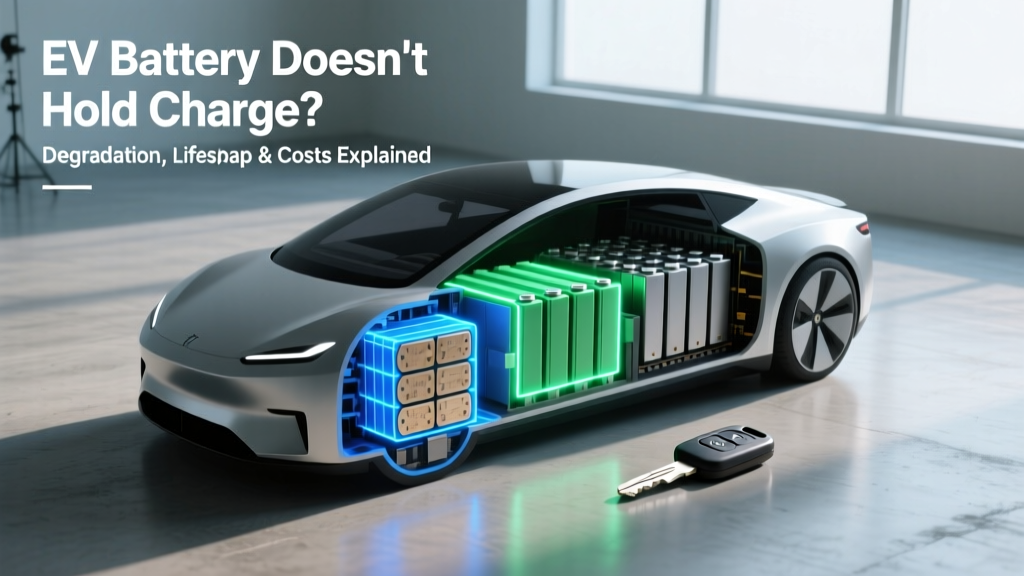
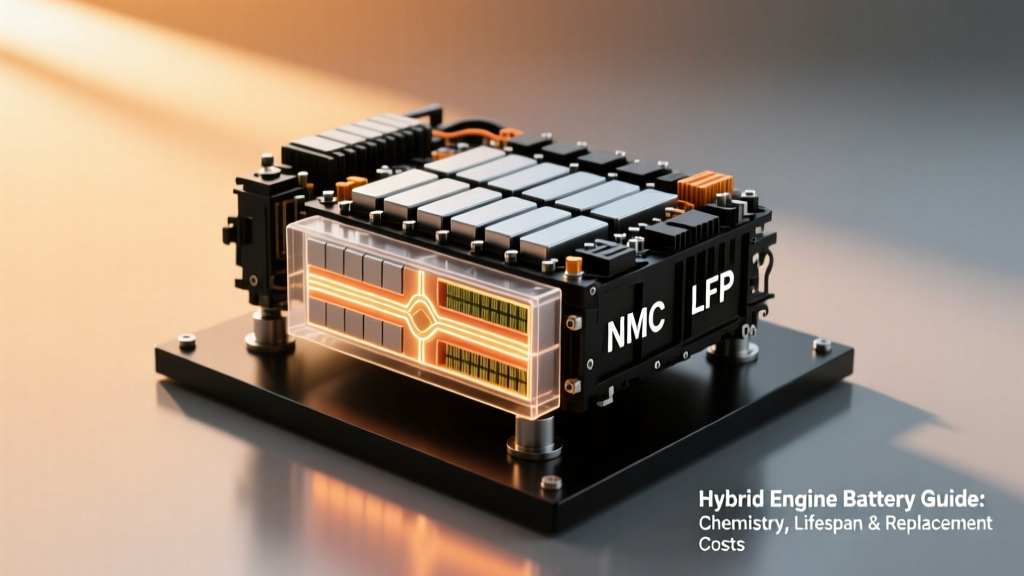
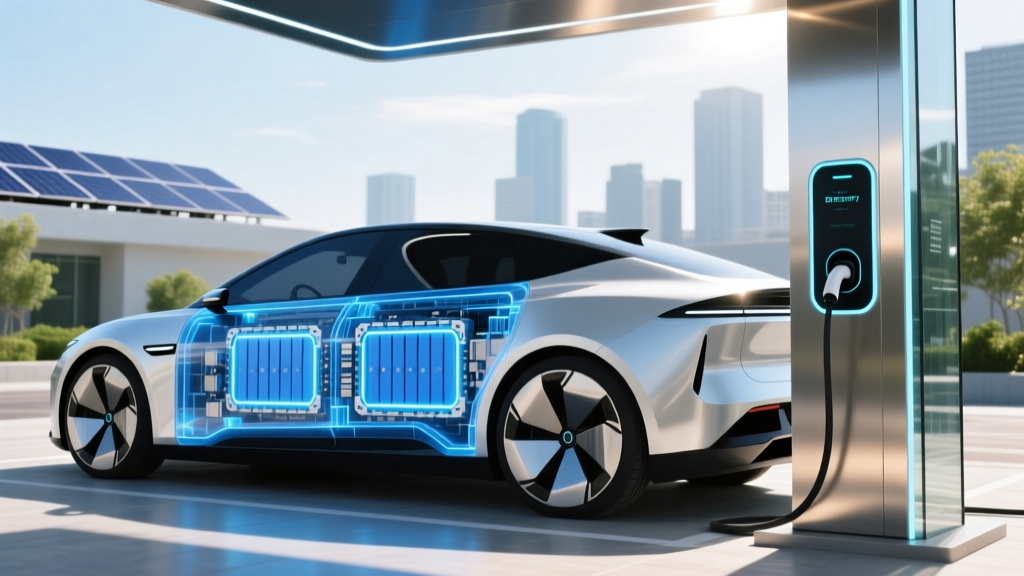
The high-voltage traction battery — the large pack under the floor that powers the motors — uses one of two dominant chemistries in 2026:
- NMC (Nickel Manganese Cobalt) / NCA (Nickel Cobalt Aluminum): Higher energy density, enabling longer range in a smaller, lighter pack. Used in most long-range and performance models (Tesla Model 3 Long Range, Hyundai Ioniq 5, Ford Mustang Mach-E Extended Range).
- LFP (Lithium Iron Phosphate): Lower energy density but significantly longer cycle life, better thermal stability, and lower raw-material cost. Used in standard-range models (Tesla Model 3 RWD, Ford F-150 Lightning Standard Range, many BYD vehicles sold internationally).
Neither chemistry is universally "better." The right choice depends on your driving patterns, climate, and budget.
| Attribute | LFP (Lithium Iron Phosphate) | NMC / NCA |
|---|---|---|
| Energy density (cell-level) | ~160–180 Wh/kg | ~220–300 Wh/kg |
| Typical cycle life | 3,000–5,000+ cycles to 80% SoH | 1,000–2,000 cycles to 80% SoH |
| Cold-weather performance | Moderate; more range loss below 32°F | Better low-temp discharge; preconditioning helps |
| Fast-charge tolerance | Excellent; handles frequent DC fast charging well | Good but accelerates degradation if frequently charged above 200 kW |
| SoC operating window | Can safely charge to 100% daily | Best kept 20–80% for daily use; 100% for trips only |
| Cost per kWh (pack-level, 2026) | ~$95–$115 | ~$120–$145 |
| Thermal runaway risk | Very low | Low with modern BMS, but higher than LFP |
| Common applications | Standard-range sedans, commercial fleets, home storage | Long-range, AWD, performance trims |
Bottom line: If you mostly drive under 200 miles a day and can charge at home, an LFP pack offers superior longevity and simpler daily habits (charge to 100%, don't worry about it). If you need maximum range for road trips or live in a cold climate where every mile counts, NMC/NCA remains the pragmatic choice.
How Long Do EV Batteries Actually Last?
The short answer: longer than most buyers fear. Data from fleet operators, Tesla's annual impact reports, and independent researchers like Recurrent Auto consistently show that modern EV batteries lose roughly 5–10% of capacity in the first two years, then degrade at a much slower rate of about 1–2% per year afterward.
Typical degradation curve (NMC, liquid-cooled pack, moderate use):
- Year 0–1: 98–96% State of Health (SoH) — initial formation loss
- Year 2–3: 95–93% SoH — curve flattens
- Year 5: ~90–92% SoH
- Year 8: ~85–88% SoH
- Year 10: ~82–86% SoH
- Year 15 (projected): ~75–82% SoH
LFP packs typically show even slower degradation, with many fleet vehicles reporting 90%+ SoH at 150,000 miles.
A 2023 study from Geotab analyzing 10,000+ EVs found an average annual degradation of 1.8% per year across all chemistries, with LFP vehicles trending lower. At that rate, a 300-mile EPA-rated EV would still deliver roughly 255 miles of range at year 10 — still more than most daily commutes require.
For context, a typical gasoline engine loses performance over time too (compression loss, carbon buildup, transmission wear), but we don't track it the same way. An EV with 85% SoH at 150,000 miles is functionally equivalent to a well-maintained gas car at the same mileage.
What the Battery Warranty Actually Covers
Federal law mandates a minimum 8-year / 100,000-mile warranty on EV battery packs (10 years / 150,000 miles in California Air Resources Board states). Most manufacturers exceed this floor. The warranty typically guarantees the pack will retain a minimum percentage of its original capacity — usually 70%, though some brands set it at 65% or 75%.
| Vehicle | Chemistry | Warranty Term | Min. Capacity Retention |
|---|---|---|---|
| Tesla Model 3 RWD | LFP | 8 yr / 100,000 mi | 70% |
| Tesla Model 3 Long Range | NMC | 8 yr / 120,000 mi | 70% |
| Hyundai Ioniq 5 | NMC | 10 yr / 100,000 mi | 70% |
| Ford F-150 Lightning | NMC (ER) / LFP (SR) | 8 yr / 100,000 mi | 70% |
| Chevrolet Equinox EV | NMC (Ultium) | 8 yr / 100,000 mi | 70% |
| BMW iX xDrive50 | NMC | 8 yr / 80,000 mi | 70% |
| Rivian R1T (Dual Motor) | NMC | 8 yr / 175,000 mi | 70% |
What triggers a warranty claim: The battery management system (BMS) reports SoH below the threshold. You don't need a total failure — gradual degradation past the warranty line qualifies. However, damage from accidents, flooding, unauthorized modifications, or aftermarket fast-charging abuse may void coverage.
What the warranty does NOT cover: Normal range loss from cold weather, tire/brake wear, 12V auxiliary battery replacement (that's a separate, inexpensive lead-acid or lithium unit), or cosmetic issues. The warranty is strictly about the high-voltage traction pack's ability to hold charge.
How Much Does a Replacement Cost — and When Would You Need One?
Here's the reality check most fear-mongering articles omit: the vast majority of EV batteries never need replacement during original ownership. A 2024 analysis by Consumer Reports estimated fewer than 5% of EVs require a battery swap before 200,000 miles. Most packs outlive the rest of the vehicle.
That said, if you do need an out-of-warranty replacement — say, at 250,000 miles on a used EV you plan to keep indefinitely — here's what you're looking at in 2026:
| Vehicle Class | Pack Size (usable kWh) | Part Cost | Labor | Total Range |
|---|---|---|---|---|
| Compact sedan (e.g., Chevy Bolt, Model 3 SR) | 55–65 kWh | $6,000–$9,000 | $1,500–$2,500 | $7,500–$11,500 |
| Midsize crossover (e.g., Ioniq 5, Mach-E) | 72–88 kWh | $8,500–$13,000 | $2,000–$3,000 | $10,500–$16,000 |
| Full-size truck/SUV (e.g., F-150 Lightning ER, Rivian R1T) | 100–135 kWh | $12,000–$20,000 | $2,500–$4,000 | $14,500–$24,000 |
| Luxury sedan (e.g., Mercedes EQS, BMW i7) | 100–110 kWh | $15,000–$22,000 | $3,000–$5,000 | $18,000–$27,000 |
Prices have been falling steadily. In 2015, a Nissan Leaf 24 kWh pack replacement ran over $8,000 for a fraction of today's capacity. By 2026, pack-level pricing has dropped to roughly $110–$140/kWh for NMC and under $100/kWh for LFP, according to BloombergNEF lithium-ion battery price surveys. Refurbished and remanufactured packs (using cells from decommissioned EVs) are also becoming available at 40–60% of new-pack cost, offering a viable path for older vehicles.
When replacement is typically needed: Almost always after 200,000+ miles, or 12–15+ years, and usually due to a specific cell-module failure rather than wholesale degradation. Module-level repair (replacing one bad section rather than the entire pack) is increasingly available at independent EV shops for $2,000–$5,000.
Five Factors That Accelerate (or Protect) Battery Life
Battery degradation isn't purely a function of time. How you use and store the pack matters significantly. Here are the five biggest variables, ranked by impact:
- State of Charge habits (biggest daily impact): For NMC packs, sustained time at 100% SoC or below 10% SoC accelerates calendar degradation. Daily charging to 80% and avoiding dropping below 20% can extend pack life by 30–50% versus always charging to full. LFP packs are an exception — manufacturers like Tesla and BYD recommend charging to 100% at least weekly to allow the BMS to recalibrate cell balancing.
- Temperature exposure: Prolonged exposure to ambient heat above 95°F (especially in parked, fully-charged vehicles) causes electrolyte decomposition. Similarly, charging at high power in sub-freezing temps without preconditioning can cause lithium plating on the anode. Garage parking and preconditioning before DC fast charging mitigate both risks.
- DC fast-charging frequency: Occasional road-trip fast charging is harmless. But daily use of 150+ kW DC fast chargers — especially on NMC packs without robust thermal management — can add 0.5–1.0% extra annual degradation versus exclusive Level 2 home charging. LFP packs tolerate frequent DC fast charging better.
- Depth of discharge cycles: Shallow cycles (e.g., 60% → 30% → 60%) are easier on cells than deep cycles (95% → 10% → 95%). If your daily commute uses only 30% of the battery, that's ideal for longevity.
- Mileage and time: Even a garage-kept EV with zero miles will lose ~1–2% capacity per year from calendar aging. High-mileage drivers (30,000+ mi/yr) will see more cycle-related wear, but this is typically offset by the pack spending less time sitting at high SoC.
How to Monitor Your Battery's State of Health
Most modern EVs don't expose a precise SoH percentage on the dashboard, but you have several ways to track it:
- In-vehicle range estimator: Charge to 100% and note the displayed range. Compare this to the original EPA-rated range (adjusted for temperature and tire condition). A consistent drop of more than 10–15% over two years warrants investigation.
- OBD-II diagnostic apps: Tools like Leaf Spy (Nissan), TeslaFi / Tessie (Tesla), Car Scanner (Hyundai/Kia/GM), and ABRP (A Better Route Planner, with OBD dongle) can read the BMS-reported SoH and individual cell voltages.
- Dealer service check: Most manufacturers can pull a full battery health report during scheduled service. Request this at your annual inspection.
- Third-party battery certificates: Services like Recurrent Auto provide an independent battery score based on telematics data — useful when buying or selling a used EV.
Watch for cell imbalance warnings: if one module degrades faster than the rest, the BMS may limit total usable capacity to protect the weak cell. This manifests as a sudden, disproportionate range drop (e.g., 15% in a few weeks) and is often repairable by replacing a single module rather than the full pack.
Where New Solid-State Batteries Fit — and When
Solid-state batteries replace the liquid electrolyte with a solid ceramic, glass, or polymer conductor. The theoretical advantages are significant:
- Energy density of 400–500 Wh/kg at the cell level (roughly double current NMC)
- 10–80% DC fast charging in under 10 minutes
- Cycle life exceeding 5,000+ cycles with minimal fade
- Near-zero thermal runaway risk (no flammable liquid electrolyte)
So where are they in 2026?
- Toyota has announced limited solid-state production for a "next-generation EV" targeted for 2027–2028, initially in small volumes for the Japanese market. U.S. availability remains unconfirmed.
- Nissan has a pilot production line in Yokohama and targets 2028 for a first commercial vehicle.
- Samsung SDI is sampling cells to European and Korean automakers, with volume production planned for 2027–2029.
- QuantumScape (backed by Volkswagen) continues pre-commercial validation with PowerCo, targeting 2027–2028 for first integration.
- Chinese OEMs (CATL, BYD, NIO) have introduced "semi-solid-state" packs (hybrid solid/liquid electrolyte) in limited models like the NIO ET7 150 kWh pack, but these remain expensive, low-volume, and not available in the U.S. market.
Realistic timeline for U.S. buyers: Expect solid-state EVs to appear in limited, premium models by 2028–2030, with broad mainstream availability not until 2032–2035 as manufacturing scales and costs drop below current NMC pricing. Initial packs will likely carry a $10,000–$20,000 price premium over equivalent NMC vehicles.
Should you wait? Unless you plan to buy a new vehicle in 2029 or later and specifically want a first-generation solid-state model, the answer is no. Today's NMC and LFP packs already deliver 250–350 miles of real-world range, 15-year usable lifespans, and robust warranties. The incremental benefit of waiting 3–5 years for solid-state does not offset the value of driving electric today.
Silicon Anodes and Other Near-Term Improvements
Before solid-state arrives, you'll see silicon-anode lithium-ion cells enter the market in 2026–2028. Companies like Sila Nanotechnologies (partnered with Mercedes-Benz and Panasonic) and Group14 (backed by Porsche) are replacing graphite anodes with silicon composites, boosting energy density by 20–40% without changing the electrolyte.
These cells are already shipping in limited applications (Mercedes G-Class 580e, select Porsche models) and will trickle down to mainstream EVs by 2028. They represent a meaningful but evolutionary step — more range in the same pack size, faster charging, but the same fundamental lithium-ion architecture you have today.
Frequently Asked Questions
How long do EV batteries last in years and miles?
Based on fleet data and degradation studies, most modern EV batteries retain 80–88% of their original capacity at 8–10 years and 150,000 miles. Many packs reach 200,000–300,000 miles before dropping below 70% SoH — the typical warranty threshold. LFP chemistries tend to outlast NMC in cycle life.
How much does it cost to replace an EV battery?
Out-of-warranty replacement costs range from roughly $7,500 for a compact sedan pack (55–65 kWh) to $18,000–$27,000 for a large luxury or truck pack (100+ kWh), including labor. However, fewer than 5% of EVs require replacement before 200,000 miles, and most packs outlive the vehicle. Module-level repairs are available for $2,000–$5,000 in many cases.
What does the EV battery warranty cover?
Federal law requires a minimum 8-year/100,000-mile warranty (10 years/150,000 miles in CARB states). The warranty guarantees the pack will retain at least 70% of its original capacity. If the BMS reports SoH below the threshold, the manufacturer will repair or replace the pack at no cost. Damage from accidents, floods, or unauthorized modifications may void coverage.
How do I check my EV battery health?
Charge to 100% and compare the displayed range to the original EPA rating. For precise data, use an OBD-II app (TeslaFi, Leaf Spy, Car Scanner) or request a battery health report at your dealer service visit. Third-party services like Recurrent Auto also provide independent battery scores.
LFP vs. NMC — which battery is better for me?
Choose LFP if you drive under 200 miles daily, charge at home, want maximum longevity, and prefer the simplicity of charging to 100%. Choose NMC/NCA if you need maximum range for road trips, live in a cold climate where energy density matters, or want the longest single-charge distance. Both chemistries are proven and well-warranted in 2026.
Are new solid-state batteries available in any 2026 EV?
No. As of 2026, no mass-market EV sold in the United States uses a solid-state battery. All current models use lithium-ion cells with liquid or gel electrolytes (NMC, NCA, or LFP). Solid-state EVs from Toyota, Nissan, and Samsung SDI are targeted for limited production in 2027–2029, with mainstream U.S. availability expected in the 2030–2035 timeframe.
Does frequent DC fast charging hurt my battery?
Occasional fast charging (road trips, a few times per month) has negligible impact on modern packs with active thermal management. Daily DC fast charging at 150+ kW can add roughly 0.5–1.0% extra annual degradation on NMC packs versus exclusive Level 2 charging. LFP packs tolerate frequent fast charging better. Preconditioning the battery before fast charging (most EVs do this automatically when you navigate to a charger) significantly reduces stress.
Should I wait for solid-state batteries before buying an EV?
For most buyers, no. Today's EVs offer 250–350 miles of real-world range, proven 15-year battery lifespans, and strong warranties. Solid-state technology won't reach mainstream U.S. models until approximately 2030–2035, and first-generation packs will carry a significant price premium. If you need a vehicle in the next 1–3 years, current lithium-ion technology is mature and cost-effective.
For official battery warranty terms, consult your vehicle's owner's manual or the manufacturer's warranty guide. For federal tax credit eligibility on EVs — which can offset up to $7,500 of purchase price under IRS §30D rules — verify current-year income caps, MSRP limits, and battery-sourcing requirements before purchasing.