The phrase solid-state lithium ion battery has circulated in EV marketing for nearly a decade, promising longer range, faster charging, and near-zero fire risk. But as of 2026, every mass-production EV on U.S. dealer lots still runs on a liquid-electrolyte lithium-ion cell — either NMC/NCA or LFP chemistry. Solid-state cells remain in limited pilot production and pre-production validation, with broad consumer availability still years away.
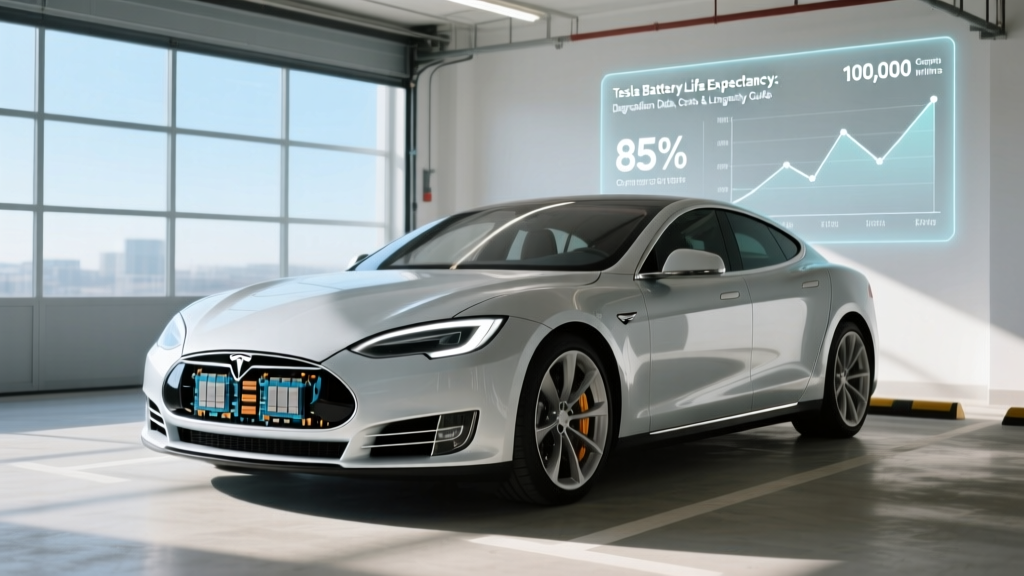
That gap between promise and reality doesn't mean today's batteries are inadequate. Real-world degradation data from fleets and high-mileage owners shows most modern EV packs retain 85–92% capacity after 100,000 miles. This guide breaks down what's actually in your EV right now, what solid-state technology might deliver when it arrives, and how to manage the battery you already own.
What's Inside Today's EV: LFP vs NMC/NCA Chemistry
Every battery-electric and plug-in hybrid vehicle sold in the U.S. in 2026 uses one of two dominant cathode chemistries. Understanding the trade-off is the single most important battery decision you make at purchase.
| Attribute | LFP (Lithium Iron Phosphate) | NMC / NCA (Nickel-based) |
|---|---|---|
| Energy Density (cell-level) | 160–200 Wh/kg | 230–300 Wh/kg |
| Typical Pack Size | 50–77 kWh (Standard Range trims) | 75–130 kWh (Long Range / Performance) |
| Cycle Life (to 80% SoH) | 3,000–6,000+ cycles | 1,000–2,500 cycles |
| Cold-Weather Range Loss | Greater (poorer low-temp conductivity) | Moderate (better low-temp performance) |
| Peak DC Fast Charge Rate | Typically 150–170 kW | Typically 200–350 kW |
| Thermal Runaway Risk | Very low (stable olivine structure) | Low, but higher than LFP |
| Critical Mineral Exposure | None (iron, phosphate — no nickel/cobalt) | Nickel, cobalt, manganese supply-chain risk |
| Relative Pack Cost (2026) | $85–$105 / kWh | $110–$140 / kWh |
| SoC Recommendation | Can charge to 100% daily | Best kept 20–80% for daily use |
| Notable 2026 Models | Tesla Model 3 RWD, Model Y RWD, Ford Mustang Mach-E Select (LFP option) | Hyundai Ioniq 5 Long Range, Rivian R1T, BMW iX, Tesla Model S/X |
The practical verdict: LFP wins on longevity, safety, and cost — making it ideal for daily commuters and high-mileage drivers who don't need maximum range. NMC/NCA wins on energy density and cold-weather performance — better for road-trippers, towing, and northern-climate owners. Neither chemistry is universally "better"; the right choice depends on your driving profile.
How Long Do EV Batteries Actually Last?
Based on aggregated fleet data from Geotab's 10,000+ vehicle study and owner reports tracked by Recurrent Auto, modern liquid-electrolyte lithium-ion packs degrade far more slowly than early-2010s cells (looking at you, 2011–2014 Nissan Leaf).
Typical Capacity Retention by Mileage (2020–2026 Model-Year Packs)
- 30,000 miles / ~3 years: 95–97% State of Health (SoH) — negligible real-world range loss
- 60,000 miles / ~5 years: 91–94% SoH — roughly 10–15 miles less on a 300-mile EPA pack
- 100,000 miles / ~8 years: 85–92% SoH — still well within warranty thresholds
- 150,000 miles / ~12 years: 78–88% SoH — noticeable range reduction, but functional
- 200,000+ miles: 70–82% SoH — approaching or crossing the 70% warranty threshold
Source: Geotab EV Battery Health Study (2024 update), Recurrent Auto fleet data, manufacturer warranty claims.
Two patterns stand out. First, degradation is non-linear: the steepest capacity drop occurs in the first 10,000–20,000 miles (calendar aging and initial SEI layer formation), then the curve flattens considerably. Second, LFP packs consistently outperform NMC in cycle-life tests, though NMC packs in vehicles with active liquid thermal management (Tesla, Hyundai E-GMP, BMW) show excellent real-world retention.
For context, the average U.S. driver covers about 13,500 miles per year (FHWA data). A 100,000-mile pack represents roughly 7–8 years of typical use — and at 85–92% SoH, that vehicle still delivers 85%+ of its original EPA-estimated range.
What the Battery Warranty Actually Covers
Federal law mandates a minimum 8-year / 100,000-mile warranty on EV battery packs (extended to 10 years / 150,000 miles in CARB states including California, New York, Massachusetts, and others adopting California emissions standards). Most manufacturers exceed the federal floor.
| Manufacturer | Duration | Mileage Cap | Capacity Retention Threshold |
|---|---|---|---|
| Tesla (Model 3/Y LFP) | 8 years | 100,000 mi | 70% SoH |
| Tesla (Model 3/Y Long Range, S/X) | 8 years | 120,000–150,000 mi | 70% SoH |
| Hyundai / Kia (E-GMP: Ioniq 5, EV6, EV9) | 10 years | 100,000 mi | 70% SoH |
| Ford (Mustang Mach-E, F-150 Lightning) | 8 years | 100,000 mi | 70% SoH |
| GM (Ultium: Equinox EV, Blazer EV, Silverado EV) | 8 years | 100,000 mi | 70% SoH |
| BMW (iX, i4, i7) | 8 years | 100,000 mi | 70% SoH |
| Rivian (R1T, R1S) | 8 years | 175,000 mi | 70% SoH |
| Volkswagen (ID.4) | 8 years | 100,000 mi | 70% SoH |
Key details buyers miss:
- The warranty covers capacity degradation below the threshold, not any range loss. A pack at 72% SoH is technically "within spec" even though you've lost 28% of original range.
- Warranty replacement may use a refurbished or remanufactured pack, not a brand-new one. The replacement pack must meet the retention threshold at time of installation.
- Physical damage, unauthorized modifications, and use outside manufacturer guidelines (e.g., persistent 100% SoC storage on NMC) can void coverage.
- Some manufacturers (notably Hyundai/Kia) offer longer coverage in CARB states — check your registration state's specific terms.
EV Battery Replacement Costs: The Real Numbers
Out-of-warranty battery replacement is the most-cited fear among prospective EV buyers. The cost is substantial — but the probability of needing one is lower than most assume.
| Vehicle | Pack Size / Chemistry | Parts Cost (est.) | Labor + Total (est.) |
|---|---|---|---|
| Tesla Model 3 RWD | ~57 kWh / LFP | $5,500–$7,500 | $7,500–$10,000 |
| Tesla Model Y Long Range | ~75 kWh / NMC | $8,000–$11,000 | $10,500–$14,000 |
| Hyundai Ioniq 5 Long Range | ~77.4 kWh / NMC | $9,000–$12,000 | $12,000–$16,000 |
| Ford F-150 Lightning Extended | ~131 kWh / NMC | $15,000–$22,000 | $20,000–$28,000 |
| Chevrolet Equinox EV | ~85 kWh / NMC (Ultium) | $9,000–$13,000 | $12,000–$17,000 |
| BMW iX xDrive50 | ~105 kWh / NMC | $14,000–$20,000 | $18,000–$25,000 |
When is replacement typically needed? Catastrophic failure (manufacturing defect, coolant intrusion, physical damage) usually surfaces within the warranty period. Gradual degradation below 70% SoH typically occurs at 150,000–250,000+ miles for modern packs — at which point many vehicles have been retired, traded, or sold. For a vehicle purchased new and kept 8–10 years at average mileage, the probability of an out-of-pocket battery replacement is well under 5% based on current warranty claim rates.
Cell-level pricing continues to decline. BloombergNEF's 2025 battery price survey reported average pack-level pricing around $115/kWh, down from $140/kWh in 2023. This trend means replacement costs in 2030 will likely be 20–30% lower than today's figures.
What Factors Actually Kill an EV Battery?
Not all degradation is equal. Calendar aging (time-based chemical changes) is unavoidable, but operational habits significantly influence the rate. Here's what the data shows:
Highest-Impact Degradation Factors (ranked by severity)
- Sustained high State of Charge (NMC/NCA): Storing an NMC pack at 100% SoC for days or weeks accelerates electrolyte decomposition and cathode surface degradation. LFP is more tolerant of 100% SoC due to its flatter voltage curve and stable chemistry.
- Extreme heat exposure: Ambient temperatures above 95°F (35°C) combined with high SoC create the worst-case degradation scenario. Vehicles in Arizona, Texas, and the Middle East show measurably faster capacity loss. Active thermal management (liquid cooling) mitigates this substantially.
- Frequent DC fast charging to high SoC: Daily use of 150+ kW DCFC, especially charging past 80%, generates heat and lithium plating risk. Occasional road-trip fast charging has negligible impact; daily reliance does accumulate.
- Deep discharge cycles: Regularly driving the pack below 10% SoC stresses the anode. The low-SoC buffer (typically 2–5 kWh reserved below the "0%" display) protects against true over-discharge, but habitual near-empty operation isn't ideal.
- Extreme cold charging without preconditioning: Charging a cold NMC pack below 32°F (0°C) at high power can cause lithium plating on the anode — permanent capacity loss. Most modern EVs precondition the battery when a charger is navigated to, but plugging in a cold-soaked pack without preconditioning remains a risk.
What does NOT significantly degrade a modern pack: Normal Level 2 home charging (even nightly), moderate regen braking use, occasional fast charging on road trips, and driving in rain or snow. The "baby the battery" anxiety is largely overblown for 2022+ model-year vehicles with active thermal management.
How to Check and Monitor Battery Health (SoH)
State of Health (SoH) is the percentage of original capacity your pack currently holds. Unlike a gas tank, you can't just look inside — but several methods exist:
- In-vehicle displays: Tesla's app and service menu show estimated degradation. Hyundai/Kia's infotainment includes a battery health screen on newer models. BMW provides SoH in the iDrive service menu.
- OBD-II diagnostic tools: Devices like the OBDLink MX+ paired with apps such as EV Battery Health or Car Scanner can read the BMS (Battery Management System) directly for SoH, cell voltage spread, and pack temperature.
- Third-party reports: Services like Recurrent and Geotab offer battery health reports based on telematics data — useful when buying a used EV.
- Manual calculation: Charge to a known SoC (e.g., 100% for LFP, 90% for NMC), note the displayed range, and compare to the EPA-rated range adjusted for that SoC. A consistent 15% gap suggests ~85% SoH, though temperature and driving style introduce noise.
Pro tip: Track SoH quarterly, not weekly. Short-term fluctuations from temperature, recent driving style, and BMS recalibration are normal. The trend over 6–12 months is what matters.
Solid-State Lithium Ion Battery: What It Promises and When It Arrives
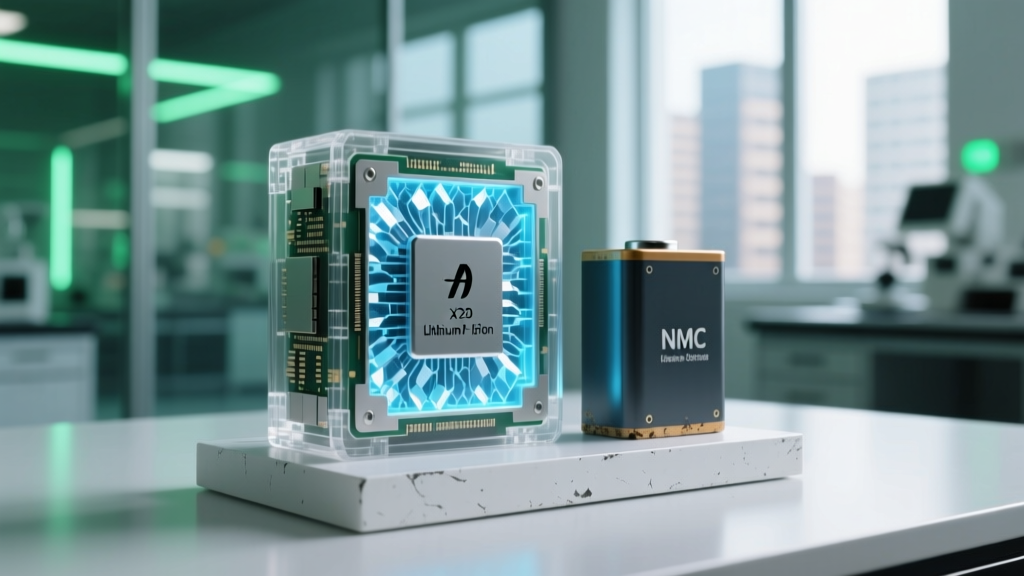
A solid-state lithium ion battery replaces the liquid or gel electrolyte in today's cells with a solid material — typically a ceramic, sulfide glass, or polymer. This fundamental change unlocks several theoretical advantages:
- Energy density: 350–500 Wh/kg at the cell level (vs. 230–300 for current NMC), enabling 400–600+ mile EPA range in mid-size vehicles without increasing pack weight.
- Charge speed: Solid electrolytes tolerate higher C-rates without lithium plating, potentially enabling 10–80% charges in under 10 minutes at 350+ kW.
- Safety: No flammable liquid electrolyte means dramatically reduced thermal runaway risk. Solid-state cells have passed nail-penetration tests without ignition.
- Longevity: Projected cycle life of 5,000–10,000+ cycles due to reduced side-reaction chemistry at the electrode-electrolyte interface.
- Temperature range: Better low-temperature ionic conductivity in some solid electrolyte formulations could reduce cold-weather range loss.
The reality check (2026 status):
Toyota has announced pilot production of solid-state cells and targets limited commercialization in a hybrid application by 2027–2028, with full BEV deployment projected for 2028–2030. Samsung SDI is producing prototype solid-state cells for automotive validation. QuantumScape's cells are undergoing fleet testing with Volkswagen's PowerCo division, with initial production targeted for 2027–2028. Nissan and Honda have published 2028–2029 timelines for solid-state EV prototypes.
However, manufacturing challenges remain substantial. Solid electrolyte materials are expensive to produce at scale, interfacial resistance between the solid electrolyte and electrodes is difficult to control in mass production, and dry-room manufacturing requirements add cost. Industry consensus, as reported by BloombergNEF, places high-volume, cost-competitive solid-state EV batteries in the 2030–2032 window — not 2026 or 2027.
Silicon anode technology is a nearer-term improvement. Companies like Sila Nanotechnologies and Group14 are supplying silicon-dominant anode materials that increase energy density by 15–25% within conventional liquid-electrolyte cells. These are entering production in 2025–2027 model-year vehicles and represent a meaningful incremental gain without the manufacturing complexity of full solid-state cells.
If you're buying an EV in 2026, waiting for solid-state is not a practical strategy. The technology is real and progressing, but it will debut in premium, low-volume applications at high prices before reaching mainstream vehicles. Today's LFP and NMC packs are mature, well-understood, and backed by extensive warranty coverage.
Frequently Asked Questions
How long do EV batteries last in real-world use?
Most 2022–2026 model-year EV packs retain 85–92% of original capacity at 100,000 miles and 78–88% at 150,000 miles. At average U.S. driving rates (~13,500 miles/year), that's 7–8 years before you see 10–15% range loss, and 11+ years before approaching the 70% warranty threshold. Many packs will outlast the vehicle's useful economic life.
How much does it cost to replace an EV battery out of warranty?
Between $7,500 and $28,000 depending on pack size and vehicle, including parts and labor. A Tesla Model 3 LFP pack replacement runs roughly $7,500–$10,000; a Ford F-150 Lightning extended-range pack can reach $20,000–$28,000. However, the statistical likelihood of needing an out-of-warranty replacement is low — under 5% based on current data — because most packs don't degrade below the 70% threshold until 150,000+ miles.
What does the EV battery warranty actually cover?
The federal minimum is 8 years / 100,000 miles, with many manufacturers offering 8–10 years and up to 150,000 miles. Coverage triggers when the pack degrades below 70% of original capacity (as measured by the BMS). The warranty covers replacement with a pack meeting the retention threshold — often refurbished, not brand-new. Physical damage, unauthorized modifications, and gross misuse can void coverage.
How do I check my EV battery's State of Health?
Use your vehicle's built-in battery health display (Tesla app, Hyundai/Kia infotainment, BMW iDrive), an OBD-II reader with EV-compatible software like Car Scanner, or a third-party battery health report from Recurrent or Geotab. Track SoH quarterly to filter out short-term noise from temperature and BMS recalibration.
LFP vs NMC — which battery chemistry should I choose?
Choose LFP if you commute daily, charge at home, want maximum cycle life (3,000–6,000+ cycles), don't need 300+ miles of range, and prefer the simplicity of charging to 100% without concern. Choose NMC/NCA if you need long range (300–400+ miles), regularly road-trip and need faster DC charging, live in a cold climate, or tow. Neither is universally superior — the right choice maps to your driving pattern.
Should I wait for solid-state batteries before buying an EV?
No, unless your purchase timeline extends to 2030+. Solid-state lithium ion battery technology is advancing through pilot production and validation as of 2026, with initial limited commercial availability projected for 2028–2030 in premium vehicles and mainstream availability not expected until 2030–2032. Today's liquid-electrolyte LFP and NMC packs are proven, well-warrantied, and supported by a mature charging infrastructure. Waiting 4–6 years means forgoing years of EV ownership savings and driving experience.
Does fast charging damage my EV battery?
Occasional DC fast charging (road trips, a few times per month) has minimal impact on modern packs with active thermal management. Daily reliance on 150+ kW DCFC, especially charging past 80% SoC, does accelerate degradation through heat accumulation and lithium plating risk. The practical recommendation: use Level 2 home charging as your primary method, and reserve DC fast charging for road trips and occasional needs. The difference in 100,000-mile SoH between exclusive Level 2 and frequent DCFC use is typically 3–6 percentage points.
Can extreme weather permanently damage my EV battery?
Extreme heat (sustained 95°F+ ambient) combined with high SoC storage accelerates calendar aging — this is the single most impactful environmental factor. Extreme cold reduces range temporarily (20–35% loss at 0°F) but does not cause permanent damage unless you charge a cold-soaked NMC pack at high power without preconditioning. Modern EVs with liquid thermal management handle temperature extremes far better than early-generation air-cooled packs.