What Solid-State EV Battery Range Actually Means for Buyers
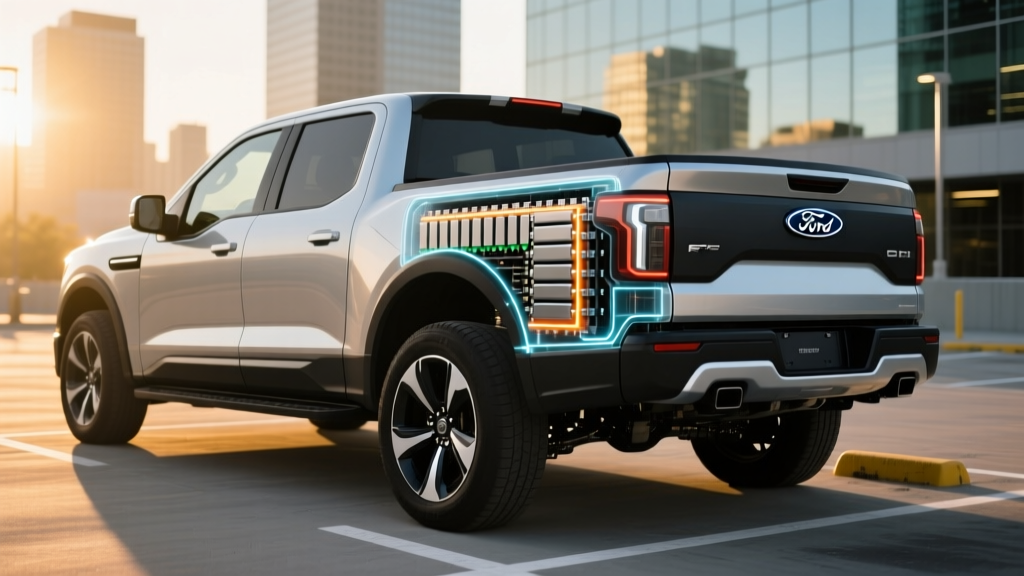
If you've followed EV news for more than a month, you've seen the promise: solid-state EV battery range figures of 500, 600, even 750 miles on a single charge, with faster charging and no fire risk. Toyota, Samsung SDI, QuantumScape, and Solid Power have all published eye-catching lab results. But as of 2026, no mass-production vehicle sold in the United States uses a solid-state traction battery. Every EV you can buy today — from the Tesla Model 3 to the Ford F-150 Lightning to the Hyundai Ioniq 5 — uses a liquid-electrolyte lithium-ion cell, either NMC (nickel-manganese-cobalt), NCA (nickel-cobalt-aluminum), or LFP (lithium iron phosphate).
That doesn't make solid-state irrelevant. It makes it important to understand what's real now versus what's coming, so you can make a purchase decision today without waiting for a technology that remains 3–7 years from high-volume production. This guide breaks down current battery chemistry trade-offs, real degradation data, warranty protections, replacement costs, and exactly where solid-state stands — so you can buy with confidence.
Today's EV Battery Chemistry: LFP vs NMC vs NCA
The two dominant chemistries in 2026 EVs are LFP and NMC/NCA. The choice between them affects your range, charging habits, cold-weather performance, and long-term degradation profile. Here's how they compare on the metrics that matter:
| Attribute | LFP (Lithium Iron Phosphate) | NMC / NCA (Nickel-based) |
|---|---|---|
| Energy density (cell-level) | ~160–200 Wh/kg | ~230–300 Wh/kg |
| Typical EPA range (midsize sedan/SUV) | 250–310 mi | 300–400+ mi |
| Cycle life (to 80% capacity) | 3,000–5,000+ cycles | 1,000–2,000 cycles |
| Cold-weather range loss (~20°F) | 30–40% reduction | 20–30% reduction |
| Fast-charge tolerance | Excellent (less degradation) | Good (thermal mgmt critical) |
| Recommended daily SoC | 100% (no penalty) | 80% for daily; 100% for trips |
| Cost per kWh (pack-level, 2026) | ~$80–$100 | ~$110–$140 |
| Common in (2026 US models) | Tesla Model 3 RWD, Model Y RWD, Ford Mustang Mach-E Select (base) | Hyundai Ioniq 5/6, Chevy Equinox EV, Rivian R1T, most AWD/LR trims |
| Cobalt/nickel content | None | Yes (sourcing/ethical considerations) |
The practical takeaway: LFP sacrifices some range and cold-weather performance but wins on longevity, cost, and daily-charge convenience. If you charge at home every night and don't regularly drive in sub-freezing temperatures, LFP is the more durable choice. If you need maximum range per charge for road trips or live in a cold climate, NMC/NCA delivers higher energy density — but you should follow the 80% daily charge guideline to maximize lifespan.
How Long Do EV Batteries Last? Real Degradation Data
The fear that EV batteries "wear out like phone batteries" is one of the most persistent myths in the EV space. The data tells a very different story. Modern EV battery management systems (BMS) use active liquid cooling, buffer zones (hidden capacity above and below the usable window), and sophisticated charge algorithms to slow degradation significantly.
Typical Degradation Curves (Real-World Fleet Data):
- Year 1 / ~15,000 mi: 2–5% capacity loss (initial "break-in" drop)
- Year 3 / ~45,000 mi: 6–9% total loss
- Year 5 / ~75,000 mi: 8–12% total loss
- Year 8 / ~120,000 mi: 10–15% total loss (most remain above 85% SoH)
- Year 10+ / ~150,000+ mi: 12–20% total loss depending on chemistry and use
Sources: Geotab fleet data (6,300+ EVs), Recurrent Auto battery health reports.
Notably, LFP packs tend to degrade more slowly than NMC packs under similar conditions. Tesla's 2025 Impact Report showed its LFP-equipped Model 3 vehicles retaining an average of ~92% capacity at 100,000 miles, while NMC Long Range variants retained ~88% at the same mileage. Neither figure approaches the "dead battery" scenario that critics predict.
The degradation curve is also non-linear: most loss occurs in the first 1–2 years, then the rate flattens considerably. A battery that has lost 8% after three years will not lose another 8% by year six — it may only lose 3–4% more over that period.
What Does the EV Battery Warranty Actually Cover?
Federal law mandates that EV batteries carry a minimum warranty of 8 years / 100,000 miles (10 years / 150,000 miles in CARB states including California, New York, Massachusetts, and others). But the details of what's covered — and at what threshold a replacement is triggered — vary by manufacturer.
| Manufacturer | Warranty Term | Capacity Retention Threshold | What Triggers a Claim |
|---|---|---|---|
| Tesla (Model 3/Y RWD — LFP) | 8 yr / 120,000 mi | 70% | SoH drops below 70% under normal use |
| Tesla (Model 3/Y LR — NMC) | 8 yr / 120,000 mi | 70% | SoH drops below 70% |
| Hyundai / Kia (Ioniq 5/6, EV6) | 10 yr / 100,000 mi | 70% | SoH below 70%; verified by dealer diagnostic |
| GM (Chevy Equinox EV, Blazer EV) | 8 yr / 100,000 mi | 70% | Capacity below 70% as measured by OnStar/BMS |
| Ford (Mach-E, F-150 Lightning) | 8 yr / 100,000 mi | 70% | Capacity below 70% confirmed by Ford diagnostic |
| Rivian (R1T, R1S) | 8 yr / 175,000 mi | 70% | SoH below 70% |
Critical fine print: The warranty covers defects and abnormal degradation — not damage from accidents, flooding, or aftermarket modifications. The 70% threshold means a battery at 71% capacity, even if you're unhappy with the range loss, does not qualify for a free replacement. In practice, very few EVs fall below 70% within the warranty window based on current fleet data.
EV Battery Replacement Cost: What It Actually Takes
If your battery does fall outside warranty coverage and needs replacement, the cost is significant — but context matters. According to IRS §30D guidelines and industry data, the vast majority of EV batteries outlive the vehicle's useful economic life. Replacement is rare before 150,000+ miles, and by that point the vehicle's residual value often doesn't justify the expense.
| Vehicle | Battery Size (usable kWh) | Chemistry | Estimated Pack Cost | Labor + Install | Total Estimate |
|---|---|---|---|---|---|
| Tesla Model 3 RWD | 57.5 kWh | LFP | $5,500–$7,500 | $1,500–$2,500 | $7,000–$10,000 |
| Hyundai Ioniq 5 (AWD) | 77.4 kWh | NMC | $9,000–$12,000 | $2,000–$3,000 | $11,000–$15,000 |
| Ford F-150 Lightning (Ext. Range) | 131 kWh | NMC | $15,000–$20,000 | $2,500–$4,000 | $17,500–$24,000 |
| Chevy Equinox EV (RS AWD) | 85 kWh | NMC (Ultium) | $8,500–$11,000 | $2,000–$3,000 | $10,500–$14,000 |
| Rivian R1T (Dual-Motor Max) | 141 kWh | NMC | $16,000–$22,000 | $3,000–$4,500 | $19,000–$26,500 |
For perspective, a 2018 Nissan Leaf with a degraded 40 kWh pack might be worth $10,000–$14,000 total — making a $14,000+ battery replacement economically irrational. Most owners in that situation sell or trade the vehicle. For newer, higher-value EVs, the calculus is different, but again: the data shows that the overwhelming majority of packs will never need replacement under normal ownership.
Factors That Accelerate (or Protect) Battery Life
Not all miles are equal when it comes to battery degradation. Here are the factors with the most measurable impact, ranked by significance:
High Impact
- Sustained high SoC in heat: Storing an NMC battery at 100% charge in 90°F+ temperatures accelerates calendar degradation. If you're not driving the next day, don't charge to 100% the night before.
- Frequent DC fast charging above 150 kW: Occasional fast charging is fine, but daily use of 250–350 kW chargers adds measurable wear. Tesla and Hyundai both recommend limiting DCFC to road trips when possible.
- Deep discharge (below 10% SoC): Regularly running the battery near empty stresses cells. The BMS reserves a buffer, but habitually arriving at 0% is unnecessary wear.
Moderate Impact
- Cold charging without preconditioning: Charging a cold NMC battery at high power causes lithium plating. Always use your car's preconditioning feature before a fast-charge stop in cold weather.
- Towing / high sustained loads: Heavy towing generates sustained high current draw and heat, accelerating wear. This is why Rivian's warranty mileage (175,000 mi) is notably generous for a truck.
Lower Impact (But Worth Noting)
- Level 2 home charging speed (7–11 kW): No meaningful degradation difference between 7 kW and 11 kW home charging. Charge at whatever your circuit supports.
- Partial charges vs full cycles: Modern BMS makes "partial cycling" a non-issue. Charge when convenient; don't obsess over cycle counting.
How to Check and Monitor Your Battery's State of Health
State of Health (SoH) is the percentage of your battery's original capacity that remains usable. A new EV starts at 100% SoH; if your 80 kWh pack now holds 72 kWh, your SoH is 90%. Here's how to check it:
In-car methods:
- Tesla: The Service menu (hold the car icon → Software → swipe right) shows a battery health test. You can also compare the displayed range at 100% charge to the original EPA rating.
- Hyundai/Kia: The EV "Battery" screen in the infotainment system shows current SoC and estimated range; some model years display SoH percentage directly.
- GM (Ultium): The myChevrolet/myCadillac app includes a battery health indicator; OnStar can pull a detailed diagnostic.
Third-party tools:
- OBD-II + app: Apps like Car Scanner ELM OBD2 or ABRP (A Better Route Planner) can read BMS data including SoH, cell voltage variance, and pack temperature on most EVs.
- Recurrent Auto: A free service that connects to your EV's telematics and provides ongoing SoH tracking, comparing your degradation to a fleet of identical vehicles.
- Dealer diagnostic: Any authorized service center can run a full battery health report. Request one before buying a used EV — it's the single most important pre-purchase check.
Solid-State Batteries: Realistic Timelines and Range Claims
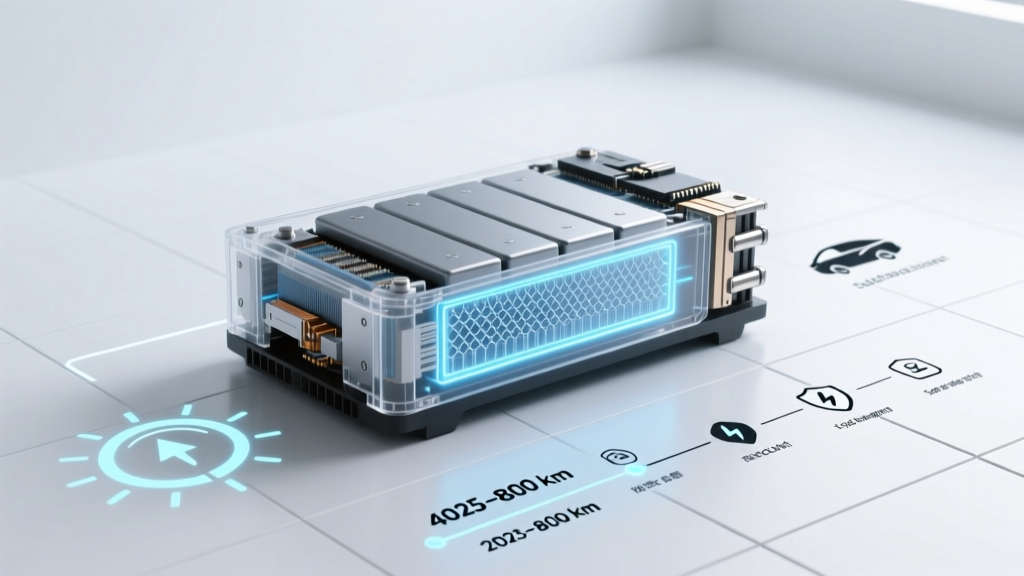
Now to the question that brought you here. Solid-state batteries replace the liquid electrolyte in today's lithium-ion cells with a solid material — typically a ceramic, sulfide, or polymer. This enables several theoretical advantages:
- Higher energy density: Solid electrolytes can pair with lithium-metal anodes, potentially reaching 400–500 Wh/kg at the cell level (vs. ~230–300 for today's NMC). That translates to solid-state EV battery range figures of 500–600+ miles in a midsize sedan without increasing pack weight.
- Faster charging: No liquid electrolyte means reduced risk of lithium plating at high charge rates. Lab prototypes have demonstrated 10–80% charges in under 10 minutes.
- Safety: No flammable liquid electrolyte reduces thermal runaway risk.
- Longer cycle life: Some prototypes show 10,000+ cycles, though this varies heavily by solid-electrolyte material.
Where things stand in 2026:
- Toyota: Has announced a solid-state battery for a limited-production EV targeted for 2027–2028, with a claimed 750 km (~465 mi) range. This is a low-volume, Japan-market launch — not a mass-production commitment for US buyers.
- Samsung SDI: Targeting 2027 for initial production, with a stated goal of 900 km (~560 mi) range. Manufacturing scale and cost remain unproven.
- QuantumScape: Continues to ship prototype cells to automotive partners (Volkswagen group). No vehicle with QuantumScape cells is available or on a confirmed production timeline for the US market.
- Solid Power: Partnered with BMW and Ford for testing. BMW's solid-state test vehicle (based on the i7) is in fleet trials as of 2026, with no retail launch date.
- Nissan: Plans a solid-state pilot production line by 2028, targeting a 2029 vehicle launch.
The honest assessment: Solid-state batteries are real technology with genuine advantages — but they remain in the prototype and pilot-production stage. Manufacturing yield, cost per kWh (currently estimated at 3–5x today's lithium-ion at scale), and supply-chain readiness are unsolved challenges. Expect limited, premium-priced vehicles with solid-state packs no earlier than 2028–2030, with mainstream affordability (sub-$100/kWh) unlikely before the early 2030s.
If you're buying an EV in 2026, you're buying liquid-electrolyte lithium-ion. The good news: today's batteries are already good enough for 200,000+ miles of service with proper care, backed by 8–10 year warranties, and available in vehicles from $28,000 to $100,000+.
Silicon Anode and Other Near-Term Improvements
While solid-state gets the headlines, a more immediate improvement is already shipping: silicon-dominant anodes. Companies like Sila Nanotechnologies and Group14 are supplying silicon-carbon anode materials that increase energy density by 15–25% over traditional graphite anodes — without requiring a full solid-state redesign.
The 2026 Mercedes-Benz G-Class EV (G 580 with EQ Technology) uses a silicon-anode battery from Sila, contributing to its ~390-mile EPA range in a heavy, boxy off-roader. Expect silicon anodes to appear in more 2027–2028 model-year vehicles as a bridge technology — delivering meaningful range gains before solid-state arrives at scale.
Frequently Asked Questions
How long do EV batteries last in years and miles?
Based on fleet data from Geotab and Recurrent Auto, most modern EV batteries retain 85–90% of their original capacity after 8 years / 100,000 miles. Many will outlast 200,000 miles before falling to the 70% warranty threshold. LFP chemistries tend to last longer than NMC under similar conditions.
How much does an EV battery cost to replace out of warranty?
Replacement costs range from approximately $7,000 for a smaller LFP pack (Tesla Model 3 RWD) to $26,500+ for a large NMC pack (Rivian R1T Max, Ford F-150 Lightning Extended Range). In most cases, the vehicle's residual value at the point of battery failure makes replacement uneconomical — owners typically sell or trade instead.
What does the battery warranty cover, and what's excluded?
All major manufacturers warrant their EV batteries for 8–10 years / 100,000–175,000 miles against defects and abnormal degradation below 70% capacity. Exclusions include accident damage, flooding, unauthorized modifications, and in some cases, damage from improper charging equipment. Check your specific owner's manual for exact terms.
LFP vs NMC — which battery chemistry is better for me?
Choose LFP if: you charge at home daily, want maximum cycle life, don't mind slightly lower range, and want to charge to 100% without worry. Choose NMC/NCA if: you need maximum range per charge for road trips, live in a very cold climate (better cold performance), or need the lightest possible pack for performance. Neither is universally "better" — it depends on your driving pattern.
Will solid-state batteries make today's EVs obsolete?
Not in the near term. Solid-state production vehicles are not expected at meaningful US-market volume before 2029–2030, and will carry premium pricing initially. Today's liquid-electrolyte EVs will remain the mainstream choice for years. When solid-state does arrive, it will first appear in high-end vehicles before trickling down to mainstream price points in the early-to-mid 2030s.
How do I check my EV battery's State of Health?
Methods vary by brand: Tesla has a built-in battery health test in the Service menu; Hyundai/Kia show health data in the EV infotainment screen; GM uses the OnStar/myChevrolet app. For any EV, an OBD-II reader with an app like Car Scanner can pull SoH data directly from the BMS. Always request a dealer battery diagnostic report when buying a used EV.