Solid-State Hype vs Today's Reality
The phrase solid-state EV battery range dominates headlines whenever Toyota, Nissan, or Samsung SDI announces a breakthrough. The promise is seductive: 600+ miles of EPA range, 10-minute fast charges, and batteries that barely degrade. But as of early 2026, no mass-market vehicle sold in the United States uses a solid-state traction battery. Every EV you can buy today — from the Tesla Model 3 to the Rivian R1T — relies on lithium-ion cells with liquid electrolyte, either NMC (nickel-manganese-cobalt), NCA (nickel-cobalt-aluminum), or LFP (lithium iron phosphate).
This guide explains the chemistries you can actually buy, how they degrade, what warranties cover, and when solid-state tech might genuinely reach your driveway.
Today's Chemistries: LFP vs NMC/NCA Trade-Offs
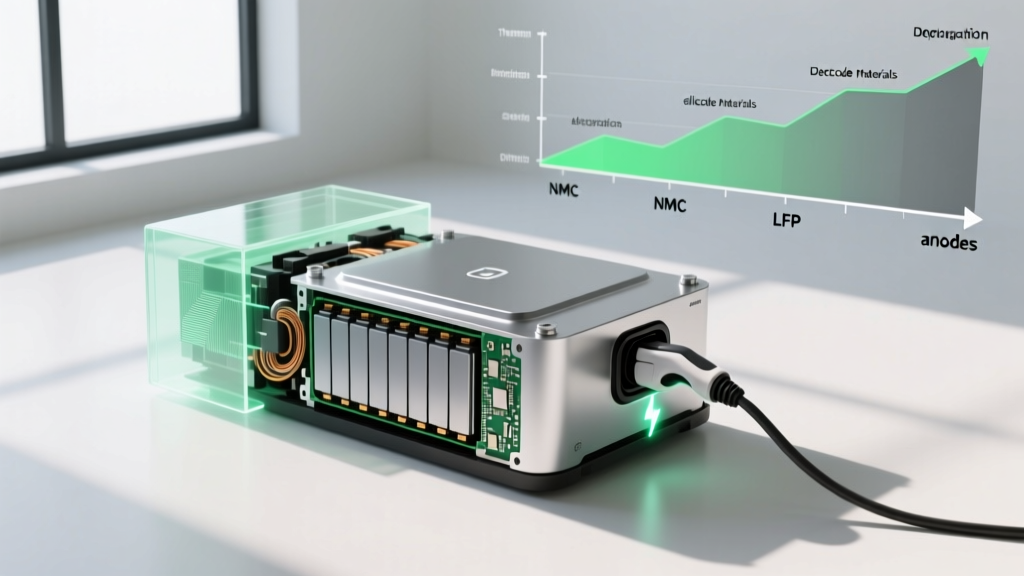
Energy density, cycle life, cold-weather behavior, and cost differ sharply between chemistries. Here is the side-by-side breakdown that matters for real buyers:
| Attribute | LFP (Lithium Iron Phosphate) | NMC / NCA |
|---|---|---|
| Energy Density | ~160–180 Wh/kg (cell level) | ~220–260 Wh/kg (cell level) |
| Typical EPA Range (mid-size sedan) | 250–310 mi | 300–400+ mi |
| Cycle Life | 3,000–5,000+ cycles | 1,000–2,000 cycles |
| Cold-Weather Range Loss (20°F) | ~30–35% loss | ~20–30% loss |
| Thermal Stability | Excellent (less prone to thermal runaway) | Good (requires robust BMS) |
| Cost per kWh (pack level, 2026) | ~$95–110 | ~$125–145 |
| Recommended Daily SoC | 100% OK | 80% for daily, 100% for trips |
| Common In 2026 Models | Tesla Model 3 RWD, Model Y RWD, BYD Seal, base Ford Mustang Mach-E Select | Tesla Long Range, Hyundai Ioniq 5/6, Rivian, Porsche Taycan, most AWD/Performance trims |
Which is better? LFP wins on longevity, cost, and daily convenience (charge to 100% without guilt). NMC wins on energy density and cold-weather range. If you drive <250 miles daily in moderate climates and want a lower upfront price, LFP is the pragmatic pick. If you need 320+ miles of real highway range or live where winters are brutal, NMC/NCA is still the better tool.
Solid-State EV Battery Range: The Forward-Looking Promise
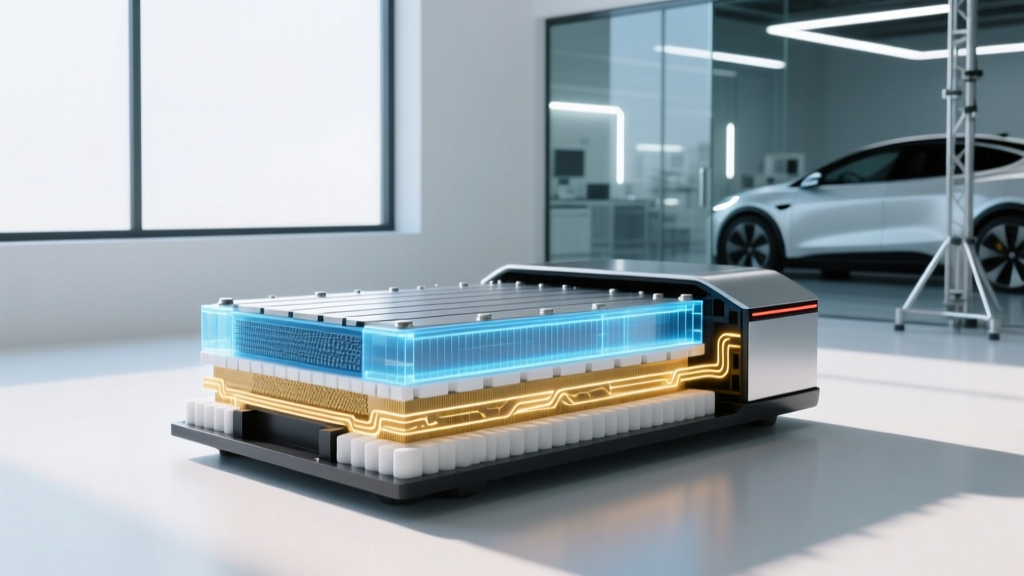
Solid-state cells replace the flammable liquid electrolyte with a solid ceramic, sulfide, or polymer conductor. This enables lithium-metal anodes, which theoretically double energy density to 400–500 Wh/kg at the cell level. Translated to a production vehicle, that could mean 500–600+ miles of EPA range in a sedan-sized pack.
As of 2026, the realistic timeline looks like this:
- Toyota: Announced pilot production for 2027–2028, initially in limited-run luxury models. Mass-market availability not before 2030.
- Nissan: Prototype line operational, targeting 2028 production vehicles.
- Samsung SDI: Sample shipments to OEMs underway; volume production projected 2027+.
- QuantumScape (VW-backed): A0 samples delivered; commercialization timeline remains 2027–2029 at earliest.
Bottom line: If you are buying in the next 3–5 years, you are buying a liquid-electrolyte lithium-ion battery. Plan accordingly.
How Long Do EV Batteries Actually Last?
Real-world degradation data from fleet operators, Recurrent Auto, and manufacturer telemetry tells a consistent story: modern EV batteries outlast most owners' plans to keep the car.
- Year 1: ~2–5% loss (initial SEI formation)
- Years 2–5: ~1–2% loss per year
- Years 6–10: ~0.5–1.5% loss per year
- 100,000 miles: typical 88–93% State of Health (SoH)
- 150,000 miles: typical 82–90% SoH
- 200,000 miles: typical 75–85% SoH
Source: Recurrent Auto fleet data, Tesla Impact Reports, fleet telematics aggregations.
LFP packs often show even slower degradation, with many taxis and ride-share vehicles exceeding 200,000 miles at 85%+ SoH. The fear of a sudden "brick" at 100,000 miles is not supported by data — most packs retain usable range well past the vehicle's economic life.
What the Battery Warranty Actually Covers
Federal law (EPA emissions-related warranty precedent and CARB-influenced rules) effectively mandates an 8-year/100,000-mile minimum on EV batteries in many states, and most manufacturers meet or exceed this nationwide.
| Brand | Years / Miles | Capacity Retention Threshold |
|---|---|---|
| Tesla (Model 3/Y LFP) | 8 yr / 100,000 mi | 70% |
| Tesla (Model 3/Y LR NMC) | 8 yr / 120,000 mi | 70% |
| Hyundai / Kia | 10 yr / 100,000 mi | 70% |
| Ford (Mustang Mach-E, F-150 Lightning) | 8 yr / 100,000 mi | 70% |
| GM (Ultium-based) | 8 yr / 100,000 mi | 70% |
| Rivian | 8 yr / 175,000 mi (Max pack) | 70% |
| Volkswagen (ID.4) | 8 yr / 100,000 mi | 70% |
| BMW | 8 yr / 100,000 mi | 70% |
What triggers a warranty claim: The battery must fall below the stated threshold (usually 70% of original capacity) within the term. Normal gradual degradation above 70% is not covered. Physical damage, flooding, unauthorized modifications, and extreme abuse (repeated 100% SoC storage in NMC, for instance) may void coverage.
EV Battery Replacement Cost: When and How Much
Most owners never need a traction battery replacement. The typical pack outlives the car's resale value. But if a cell module fails catastrophically or degradation crosses the warranty threshold out-of-warranty, here are realistic 2026 figures:
| Vehicle | Pack Size (kWh usable) | Replacement Cost (parts + labor) |
|---|---|---|
| Tesla Model 3 RWD (LFP) | ~57 kWh | $10,000–$13,000 |
| Tesla Model Y Long Range | ~75 kWh | $14,000–$18,000 |
| Hyundai Ioniq 5 | ~77.4 kWh | $13,000–$17,000 |
| Ford F-150 Lightning Extended | ~131 kWh | $22,000–$28,000 |
| Chevrolet Bolt EV/EUV | ~65 kWh | $14,000–$16,000 |
| Rivian R1T Max Pack | ~149 kWh | $25,000–$32,000 |
| Porsche Taycan (Performance Plus) | ~83.7 kWh | $20,000–$26,000 |
Costs are trending downward as pack-level prices fall (~$110–145/kWh in 2026). Refurbished packs and module-level repairs (replacing only failed modules, not the entire pack) are increasingly available through independent EV shops for 40–60% less than OEM new-pack pricing.
Factors That Accelerate (or Preserve) Battery Life
Not all miles are equal. These are the levers you control:
- Fast-charging frequency: Occasional DC fast charging (1–2x/week) is fine. Daily 150+ kW sessions accelerate degradation by ~1–3% over 100k miles versus Level 2 home charging.
- State of charge habits (NMC): Set daily charge limit to 80%. Reserve 100% for road trips. Avoid leaving at 100% for more than a few hours.
- State of charge habits (LFP): Charge to 100% at least weekly — LFP needs full-charge calibration for the BMS to estimate SoC accurately.
- Extreme heat: Prolonged exposure above 95°F at high SoC stresses NMC. Park in shade, precondition while plugged in.
- Extreme cold: Always precondition before driving and charging. Cold charging without preconditioning can cause lithium plating.
- Storage: If storing >2 weeks, leave NMC at ~50% SoC, LFP at ~60–70%.
- Regen braking settings: High regen is fine; it does not meaningfully harm battery life.
How to Check and Monitor Battery Health (SoH)
State of Health (SoH) is the percentage of original capacity your pack retains. Here is how to check it:
- Tesla: Third-party apps like Tessie or TeslaFi parse telemetry to estimate SoH. The car itself does not display SoH directly, but range-at-100% divided by original EPA range gives a rough proxy.
- Hyundai/Kia: The EV app and infotainment system in newer models (2023+) show battery condition percentages.
- OBD-II scanners: Tools like OBDeleven (VW/Skoda), LeafSpy (Nissan Leaf), or generic EV-capable scanners read BMS-reported SoH from the CAN bus.
- Dealer diagnostic: Most service centers can print a battery health report. Request this before buying any used EV.
- Manual calculation: Charge to 100%, note the displayed range, divide by original EPA range. This is imperfect (displayed range is an estimate) but directionally useful.
Frequently Asked Questions
Will solid-state batteries make today's EVs obsolete?
Not for at least 5–8 years. When solid-state arrives, it will debut in low-volume luxury vehicles at $80,000+. Your 2026 NMC or LFP EV will remain practical and supported for its full service life. Think of it like the transition from LCD to OLED TVs — older tech stayed useful for a decade after the new option appeared.
Is fast charging bad for my battery?
Modern BMS and thermal management have made DC fast charging far safer than early-2010s fears suggested. Data from Recurrent Auto shows vehicles that fast-charge frequently lose only marginally more capacity (~2–4% over 100,000 miles) than those that primarily use Level 2. The bigger degradation risks are sustained high SoC in heat and deep discharge storage.
Should I buy LFP or NMC?
Choose LFP if: you charge at home, drive <250 miles/day, live in a mild climate, and want maximum cycle life with 100% daily charging convenience. Choose NMC if: you need 300+ miles of real-world highway range, regularly drive in sub-freezing weather, or tow frequently. Both chemistries will outlast 150,000 miles with >80% SoH under normal use.
What happens if my battery degrades to 70%?
A pack at 70% SoH still functions. A 300-mile EPA vehicle becomes a ~210-mile vehicle. Many owners at this threshold continue driving without replacement, adjusting expectations. If still under warranty (8 yr/100k mi typical), the manufacturer must repair or replace the pack to restore it above the threshold.
Do I need an extended battery warranty?
For most buyers, no. The included 8-year/100,000-mile warranty already covers the period of highest failure risk. Extended warranties rarely pay out given real-world degradation curves and add $1,500–$3,000 to purchase cost. Exceptions: if you plan to keep the vehicle past 120,000 miles and drive in extreme heat climates.
How does the federal tax credit interact with battery sourcing?
Under current IRS §30D rules, the $7,500 credit requires battery components to be manufactured/assembled in North America and critical minerals to be sourced from the U.S. or FTA partners, with thresholds tightening annually through 2029. LFP batteries sourced from China-heavy supply chains often disqualify a vehicle from the credit, while NMC packs with U.S./Korean/Japanese minerals frequently qualify. Always verify current-year rules with a tax professional — eligibility varies by VIN, build date, and buyer income (AGI caps: $150k single / $300k joint).