Why Solid-State EV Battery Coating Matters Now
If you own an EV today, your high-voltage traction battery uses a liquid electrolyte — a flammable organic solvent that shuttles lithium ions between the cathode and anode. That liquid is the weakest link in modern lithium-ion cells: it degrades with heat, reacts at the electrode interface, and limits how fast you can charge without plating lithium metal on the anode.
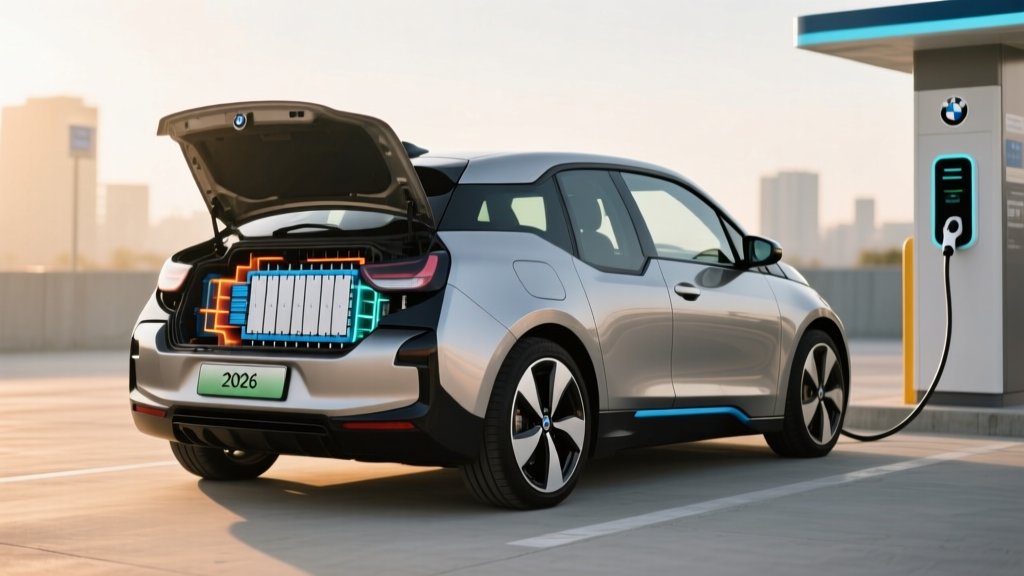
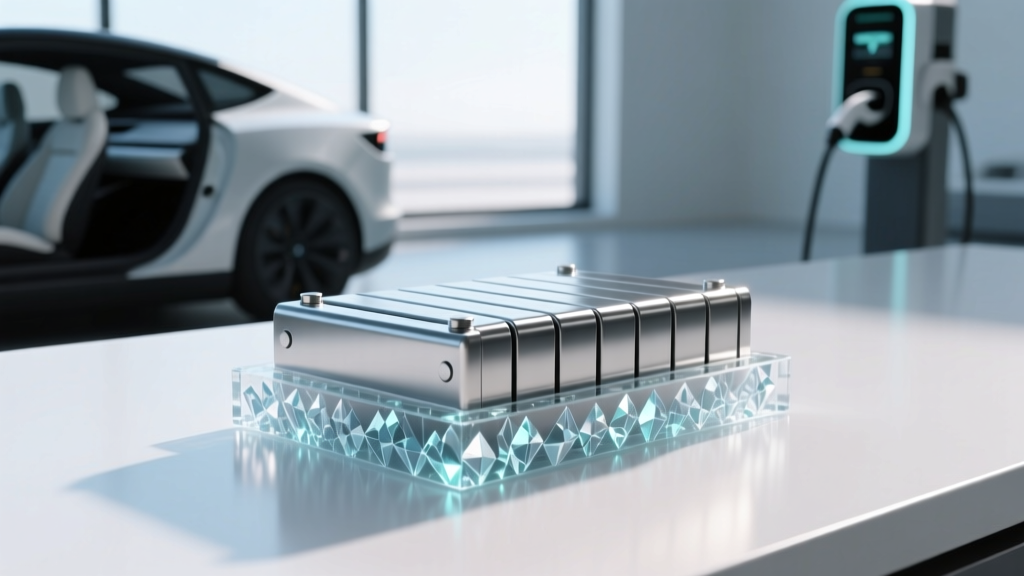
The phrase solid-state EV battery coating refers to a family of emerging techniques where manufacturers apply thin ceramic, sulfide, or polymer layers to electrode surfaces — or replace the liquid electrolyte entirely with a solid conductor. These coatings aim to solve the interface instability that causes capacity fade over hundreds of charge cycles. While full solid-state cells remain in limited production for 2026, the coating technologies derived from that research are already influencing how today's NMC and LFP cells are built.
This guide breaks down what battery chemistry you actually have in your 2025–2026 EV, how fast it degrades in real-world data, what your warranty covers, and how solid-state coating research could reshape replacement economics by the early 2030s.
LFP vs NMC/NCA: The Chemistry You're Driving Today
Every EV sold in the US for the 2025–2026 model year uses one of two dominant cathode chemistries. Your choice between them affects range, longevity, cold-weather behavior, and ultimately what you'll pay if the pack ever needs replacement.
| Attribute | LFP (Lithium Iron Phosphate) | NMC / NCA (Nickel-based) |
|---|---|---|
| Energy density (cell-level) | 160–180 Wh/kg | 230–290 Wh/kg |
| Typical cycle life | 3,000–5,000+ cycles to 80% SoH | 1,000–2,000 cycles to 80% SoH |
| Cold performance (−10°C range loss) | ~30–40% loss without heat pump | ~20–30% loss |
| Fast-charge tolerance | Accepts 100% SoC daily; better thermal stability | Best kept 20–80% for longevity |
| Cost per kWh (pack-level, 2026 est.) | $90–$110 | $120–$150 |
| Notable 2026 US models | Tesla Model 3 RWD, Model Y RWD, Ford Mustang Mach-E Select (base) | Hyundai Ioniq 5, Kia EV6, BMW iX, Rivian R1T, Chevy Silverado EV |
Which is better? There is no universal winner. LFP sacrifices energy density — meaning a heavier, larger pack for the same EPA range — but it lasts dramatically longer in cycle count and tolerates daily 100% charging without accelerated degradation. NMC/NCA gives you more range in a lighter, more compact pack, which is why it dominates long-range and performance trims, but it demands more careful state-of-charge management to hit its full lifespan.
If you're a high-mileage commuter or rideshare driver who charges daily, LFP's 3,000+ cycle life translates to well over 500,000 miles before hitting 80% capacity. For road-trippers who need maximum range per charge and live in cold climates, NMC's superior low-temperature conductivity still makes sense.
Real-World Degradation: What the Data Actually Shows
Manufacturer lab tests are optimistic. Real-world fleet data tells a more nuanced — but still reassuring — story. According to aggregated telematics from Geotab's fleet study covering over 10,000 EVs, the average lithium-ion pack loses roughly 2.3% of its original capacity per year under typical mixed-use conditions. That's a gradual curve, not a cliff.
- Year 1: 1–3% loss (initial formation settling)
- Years 2–4: ~1.5–2.5% per year (steady-state linear phase)
- Years 5–8: ~1–2% per year (slowing as SEI layer stabilizes)
- Year 8 median SoH: ~82–88% of original capacity
- Year 10 projected SoH: ~78–85% (extrapolated)
Source: Geotab EV Battery Health study; fueleconomy.gov for EPA baseline reference.
Key nuance: degradation is not linear forever. Most packs experience a steeper drop in the first year as the solid-electrolyte interphase (SEI) layer forms on the anode, then settle into a slow, predictable decline. This is precisely where solid-state EV battery coating research aims to intervene — by pre-forming or stabilizing that SEI layer with ceramic or sulfide coatings, manufacturers hope to eliminate the early-capacity drop and flatten the curve further.
Heat is the enemy. Vehicles in Phoenix or Dubai consistently show 0.5–1.0% more annual loss than those in temperate climates. Repeated DC fast charging above 150 kW without adequate thermal management also accelerates fade — which is why vehicles with active liquid-cooled packs (Tesla, Hyundai E-GMP, BMW) outperform passively cooled packs (older Nissan Leaf architecture) in longevity studies.
Battery Warranty Terms: What's Actually Covered
Federal law mandates a minimum 8-year / 100,000-mile warranty on EV battery packs for emissions-related compliance, and most manufacturers exceed this baseline. But the critical number isn't the time or mileage — it's the capacity retention threshold.
| Manufacturer / Model | Warranty Period | Capacity Threshold | Notes |
|---|---|---|---|
| Tesla Model 3/Y (LFP RWD) | 8 yr / 100,000 mi | 70% | Module-level replacement typical |
| Tesla Model 3/Y (Long Range, NMC) | 8 yr / 120,000 mi | 70% | Higher mileage cap for LR trims |
| Hyundai Ioniq 5 / Kia EV6 | 10 yr / 100,000 mi | 70% | Among the longest US coverage |
| Ford Mustang Mach-E | 8 yr / 100,000 mi | 70% | Covers battery + hybrid/EV components |
| Rivian R1T / R1S | 8 yr / 175,000 mi | 70% | Highest mileage threshold in class |
| BMW iX / i4 | 8 yr / 80,000 mi | 70% | Lower mileage cap; BMW offers extension options |
The 70% threshold means if your 82 kWh pack drops below 57.4 kWh of usable capacity within the warranty window, the manufacturer must repair or replace it — typically by swapping failed modules rather than the entire pack. Importantly, this covers defects and abnormal degradation, not damage from collisions, flooding, or improper charging equipment.
Most owners never approach this threshold. Given the 2.3% annual average degradation, you'd need to hit roughly 13% loss in 8 years to trigger a claim — which would require extreme use patterns (daily DC fast charging in desert heat, consistent 0% or 100% storage).
Replacement Cost: The Number Everyone Worries About
Let's address the elephant in the garage: yes, a full EV battery pack replacement is expensive. But context matters enormously. The vast majority of EV batteries outlive the vehicle's economic life. According to data from Consumer Reports and manufacturer service records, fewer than 5% of EV battery packs require full replacement within the first 10 years.
| Battery Size / Model Class | Pack Cost (parts) | Labor | Total Estimate |
|---|---|---|---|
| 50–60 kWh (compact: Chevy Bolt, base Model 3 RWD) | $6,000–$9,000 | $1,500–$2,500 | $7,500–$11,500 |
| 75–85 kWh (mid-size: Model Y LR, Ioniq 5, EV6) | $9,000–$14,000 | $2,000–$3,000 | $11,000–$17,000 |
| 100–135 kWh (truck/luxury: Rivian R1T, BMW iX, Silverado EV) | $14,000–$22,000 | $2,500–$4,000 | $16,500–$26,000 |
When replacement is needed, it's typically after year 10–12 and usually triggered by a specific cell or module failure rather than uniform degradation. Many shops now offer module-level repair — replacing only the degraded section of the pack for $2,000–$5,000 — rather than swapping the entire assembly. This option is increasingly available for Tesla, Nissan, and Hyundai platforms.
Looking ahead, pack-level costs continue to decline. BloombergNEF's 2025 battery price survey placed average pack prices at $115/kWh, down from $140/kWh in 2023. By the time today's EVs need out-of-warranty replacement in the early 2030s, replacement packs are projected to cost 30–40% less than current estimates — and refurbished packs from salvaged vehicles are becoming a viable lower-cost option.
Factors That Accelerate (or Preserve) Battery Life
Your battery's lifespan isn't predetermined — it's shaped by daily habits. Here's what the data shows actually moves the needle:
- Frequent DC fast charging above 150 kW without preconditioning — adds ~0.5–1.0% extra annual degradation vs. Level 2-only charging
- Sustained high temperatures — parking in direct sun in 100°F+ climates with a high state of charge accelerates electrolyte breakdown
- Storage at 100% or below 10% SoC for days or weeks — causes cathode structural stress (NMC) or copper dissolution (LFP)
- Deep cycling to 0% — repeatedly draining the pack fully strains cell-balancing systems
- Daily charging to 80% (NMC) or 100% (LFP) — keeps cells in their comfort zone
- Level 2 home charging as your primary method — slower charge rates generate less heat
- Preconditioning before DC fast charging — warming the pack to 25–35°C optimizes ion flow and reduces lithium plating risk
- Garage parking in extreme climates — even an unheated garage moderates temperature swings
- Driving regularly — batteries that sit unused for months degrade faster than those in active rotation
How to Check and Monitor Your Battery's State of Health
State of Health (SoH) is the percentage of your battery's original usable capacity that remains accessible. A new 82 kWh pack at 95% SoH gives you 77.9 kWh of usable energy. Here's how to track it:
Built-in vehicle displays: Tesla's service menu (accessible via the software screen in 2025+ models) shows a battery health percentage. Hyundai/Kia's infotainment system includes an EV battery diagnostics page under Settings → EV → Battery. BMW's iDrive provides a SoH readout in the vehicle status menu.
OBD-II diagnostic tools: Devices like the OBDLink MX+ paired with apps such as EVNotify or LeafSpy (for Nissan) read the battery management system's (BMS) internal SoH calculation directly. These typically cost $50–$130 for the hardware and provide more granular data than the dashboard, including individual cell voltage deviation — a key early indicator of module imbalance.
Dealer diagnostic reports: Request a battery health printout during routine service. Most manufacturers can pull a detailed SoH report showing per-module capacity variance. This is especially useful before purchasing a used EV — ask the seller for a recent dealer-certified battery report.
Manual calculation: If your vehicle displays energy consumption in kWh/100mi and you track your real-world range over a full charge cycle, you can estimate SoH by comparing your current usable kWh (range ÷ efficiency) against the original EPA-rated capacity. It's less precise than BMS data but catches major deviations.
Solid-State Coating and Beyond: What's Coming (and When)
The solid-state EV battery coating technologies being developed by Toyota, Samsung SDI, QuantumScape, and Solid Power are not yet in production vehicles you can buy in 2026. Here's a realistic timeline based on announced roadmaps:
2026–2027: Semi-solid-state cells with coated separators enter limited production in select Chinese-market EVs (NIO, BYD). These use a gel-polymer hybrid electrolyte rather than a true solid conductor. Expect incremental energy density gains (~10–15%) and improved thermal stability, but not the step-change in charging speed often promised.
2028–2030: Toyota and Samsung SDI target volume production of sulfide-based solid-state cells for Japanese and Korean-market vehicles. These promise 350+ Wh/kg energy density and 10-minute 10–80% charging. US-market availability depends on manufacturing partnerships and IRS §30D battery sourcing requirements that may restrict credit eligibility for cells manufactured outside North America.
2031+: If solid-state cells reach cost parity with current NMC (~$100/kWh at pack level), they could fundamentally change replacement economics. A solid-state pack with 5,000+ cycle life and minimal degradation would likely outlast any vehicle it's installed in, potentially eliminating the replacement-cost concern entirely.
The coating technologies specifically — ceramic ALD (atomic layer deposition) coatings on cathode particles, artificial SEI layers on silicon-dominant anodes — are closer to mainstream adoption than full solid-state cells. Several 2025–2026 model-year NMC cells from LG Energy Solution and SK On already incorporate nano-coated cathode surfaces to reduce side reactions. This means today's batteries are already benefiting from solid-state R&D, even if they aren't "solid-state" in the marketing sense.
Silicon anode coatings are the other near-term advancement. Companies like Sila Nanotechnologies and Group14 are supplying silicon-carbon composite anode materials that boost energy density by 15–20% without the expansion issues that plagued earlier silicon attempts. These are appearing in limited 2026 production runs and could become standard in NMC cells by 2028.
Frequently Asked Questions
How long do EV batteries actually last in years and miles?
Based on fleet telematics data, the median EV battery retains 82–88% of its original capacity at year 8 and is projected to hold 78–85% at year 10. In mileage terms, most NMC packs are designed for 150,000–250,000 miles before dropping below 80% SoH, while LFP packs can exceed 300,000–500,000 miles given their superior cycle life. The battery will typically outlast the vehicle's other mechanical and cosmetic components.
How much does an EV battery cost to replace out of warranty?
Full pack replacement ranges from roughly $7,500 for a compact 50–60 kWh pack (Chevy Bolt, base Model 3) to $16,500–$26,000 for large 100–135 kWh packs (Rivian, Silverado EV). However, module-level repair — replacing only the degraded sections — typically costs $2,000–$5,000 and is increasingly available. Fewer than 5% of packs require full replacement within 10 years.
What exactly does the EV battery warranty cover?
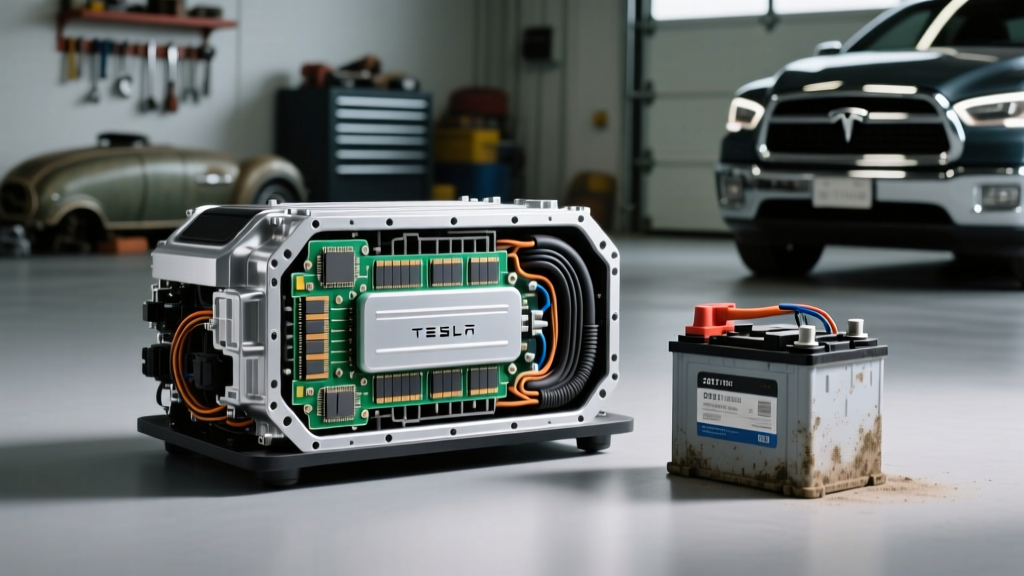
Manufacturer warranties cover defects and abnormal capacity loss below a defined threshold (typically 70% of original capacity) for 8–10 years or 80,000–175,000 miles depending on the brand. They do not cover damage from accidents, flooding, improper charging equipment, or modifications. The warranty applies to the high-voltage traction battery, not the 12V auxiliary battery that powers accessories.
How can I check my EV battery health at home?
Use your vehicle's built-in diagnostics menu (Tesla, Hyundai, BMW all provide SoH readouts), an OBD-II scanner with an EV-specific app like EVNotify or LeafSpy for cell-level detail, or request a dealer diagnostic report. For a quick estimate, compare your current real-world range against the original EPA rating — a drop of more than 15% warrants a professional check.
LFP vs NMC — which battery chemistry should I choose?
Choose LFP if you want maximum cycle life (3,000–5,000+ cycles), plan to charge daily to 100%, drive in moderate climates, and don't need maximum range per charge. Choose NMC/NCA if you need the longest EPA range, drive frequently in cold weather, or want a lighter pack for performance handling. Neither is objectively "better" — the right choice depends on your driving pattern and climate.
Will solid-state batteries make my current EV obsolete?
Not for years. Full solid-state cells won't reach volume US-market production before 2028–2030 at the earliest, and cost parity with current NMC is unlikely before 2031. Your current EV's battery is already benefiting from coating technologies derived from solid-state research. By the time solid-state packs are widely available and affordable, today's EVs will be approaching their natural replacement cycle anyway.